05-10-2026
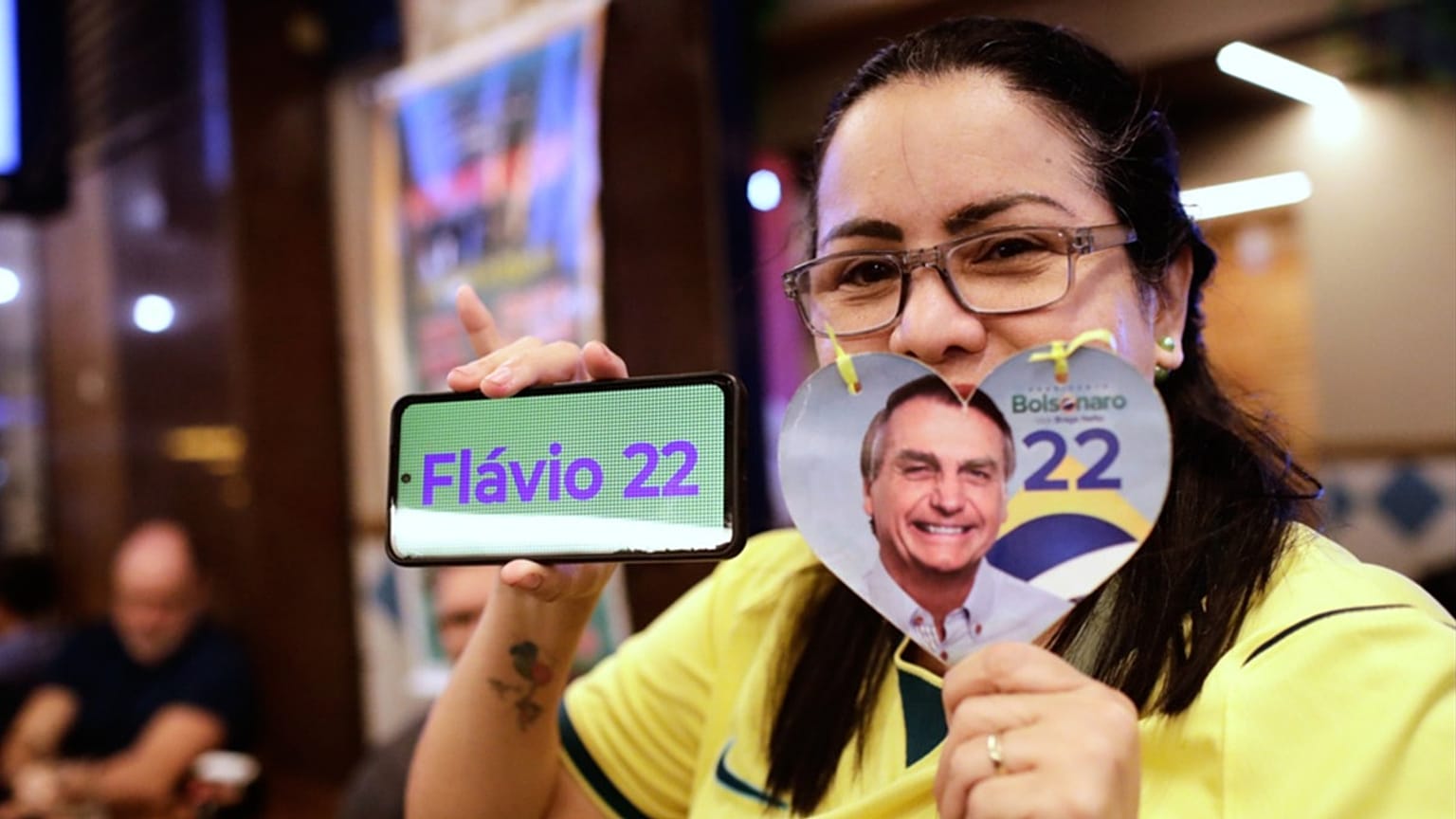
Brazil's presidential election will be decided in a runoff between conservative senator Flávio Bolsonaro and incumbent Luiz Inácio Lula da Silva after neither candidate secured the majority required to win outright. Bolsonaro received just over 56 million votes, while Lula received 53.7 million, according to the country's electoral board. The runoff is scheduled for October 25.
Bolsonaro's supporters celebrated the result. He presented it as a demand for political change and declared that it marked the end of the Workers' Party era, referring to Lula's party. Lula, who is 80 and seeking a fourth non-consecutive term, said he had expected to win in the first round and found the outcome surprising.
As the campaign enters its final stretch, both candidates are expected to focus on undecided voters and people who did not vote in the first round. Lula highlighted the number of people who stayed away from the polls and urged Brazilians to vote, describing the election as a historic moment that would define the country's future.
The article casts the runoff as consequential for Brazil, Latin America's largest economy, and its 214 million people. The next presidential term is due to begin on January 5, 2027. It also frames the election in terms of international alignment: a Bolsonaro victory, it says, would increase US influence in the region, while a Lula victory would maintain Brazil's distance from Washington and deepen ties with China.
Entities: Flávio Bolsonaro, Luiz Inácio Lula da Silva, Brazil, Brazil's electoral board, Workers' Party • Tone: analytical • Sentiment: neutral • Intent: inform
05-10-2026
Brazilian Senator Flavio Bolsonaro, son of former President Jair Bolsonaro, surprised pollsters by finishing first in the opening round of the presidential election with 47 percent of the vote, ahead of incumbent Luiz Inacio Lula da Silva’s 45.1 percent. Neither candidate passed the 50 percent threshold, so they will face each other again on October 25. Pre-election polls had suggested Lula would lead by about three percentage points, but Flavio’s result has strengthened his campaign and may reassure financial markets because of his business-friendly image.
Analysts say Lula faces a difficult path to winning the runoff. Voters who supported the other candidates—most of whom were centre-right—may be reluctant to switch to him, while about 30 million people, or 21 percent of the electorate, did not vote in the first round. Lula’s supporters have also criticized his campaign’s weaker use of social media. One expert cited the historical record that no candidate who placed second in the first round has won the presidency since 1989, though the article notes that an unusual event could change the race.
The election took place alongside congressional contests in which several members of the Bolsonaro family won seats. The Liberal Party won 121 seats in the Chamber of Deputies, compared with 70 for Lula’s Workers’ Party. Analysts link the family’s gains partly to antipetismo, or hostility toward Lula’s political movement.
A Flavio Bolsonaro victory could reshape Brazil’s foreign relations. He is expected to strengthen ties with US President Donald Trump, while Brazil’s close economic relationship with China remains significant. He has also promised to seek amnesty for his imprisoned father, which would require congressional approval. The contest reflects a broader rightward shift in parts of Latin America, while Lula’s political roots lie in the region’s earlier “pink tide.” Even if re-elected, Lula would face a conservative-dominated Congress and pressure to accommodate some right-wing demands.
Entities: Flavio Bolsonaro, Luiz Inacio Lula da Silva, Jair Bolsonaro, Brazilian presidential election and October 25 runoff, Brazil • Tone: analytical • Sentiment: neutral • Intent: analyze
05-10-2026
Brazil’s presidential election will go to a second round on October 25, pitting incumbent Luiz Inacio Lula da Silva against right-wing Senator Flavio Bolsonaro. With nearly all votes counted, Bolsonaro had about 47 percent of valid votes and Lula 44.9 percent, reversing pre-election polling that generally put Lula ahead in the first round. The outcome extends a highly polarised contest with consequences for Brazil’s domestic politics and the wider region. Lula is seeking a fourth, non-consecutive term; Flavio Bolsonaro is campaigning to restore his father Jair Bolsonaro’s political movement, while the former president is serving a 27-year prison sentence for plotting a coup after losing the 2022 election.
The article identifies three main takeaways. First, the candidates face a potentially close run-off, and voters who supported the other 10 first-round candidates could be decisive. Two candidates who together received about 5.3 million votes have said they will not endorse either contender. Second, Flavio Bolsonaro’s better-than-expected first-round showing raises questions about polling and may reflect protest votes from voters who prioritised defeating Lula. Analyst Rafael Favetti cautions that some support may have been “front-loaded,” limiting Bolsonaro’s potential to grow his backing in the run-off. Lula acknowledged that the result was unexpected and said his campaign would return stronger.
Third, right-wing parties also performed strongly in congressional elections. Bolsonaro’s Liberal Party was on track to become the largest force in the Chamber of Deputies and gain seats in the Senate. Members of the Bolsonaro family, including Michelle and Carlos Bolsonaro, won Senate seats. The results suggest that the “bolsonarista” movement remains influential despite Jair Bolsonaro being barred from running. A stronger conservative presence in Congress could constrain Lula’s agenda if he wins; a Flavio Bolsonaro victory could make it easier to pursue his priorities, including seeking amnesty for his father.
Entities: Brazil, Luiz Inacio Lula da Silva, Flavio Bolsonaro, Jair Bolsonaro, Brazilian presidential election • Tone: analytical • Sentiment: neutral • Intent: analyze
05-10-2026
Flávio Bolsonaro has won the first round of Brazil’s presidential election with almost all votes counted, taking 47% against incumbent Luiz Inácio Lula da Silva’s 45%. Neither candidate secured a majority, so they will face each other in a run-off on 25 October. Bolsonaro’s performance exceeded expectations and may give him an advantage, particularly because other right-wing candidates were eliminated. His Liberal Party also appears set to hold the strongest position in Congress. The result will determine whether Brazil, Latin America’s largest country and economy, joins the region’s growing number of right-wing-led governments aligned with the Trump administration.
The campaign has again polarised Brazil. Lula, 80, framed the contest as a choice between democracy and “barbarism,” while Bolsonaro, 45, said he wanted to “free the Brazilian people.” Lula’s support is strongest among poorer northeastern voters, women and Catholics; Bolsonaro does better in the south, among wealthier voters and evangelical Christians. Bolsonaro’s father, former president Jair Bolsonaro, is serving a 27-year sentence for masterminding a failed coup and has endorsed his son. Flávio has promised amnesty for his father and people convicted over the January 2023 riots. Lula said he had expected to win outright but remained confident of victory in the run-off.
Key campaign issues included US-Brazil relations, corruption, crime and the economy. Lula emphasized national sovereignty and accused the US of seeking to influence Brazil’s politics, an allegation Washington denies. A financial fraud scandal involving banker Daniel Vorcaro affected figures across the political spectrum. Voters also focused on street crime and organized violence: Bolsonaro proposed designating gangs as terrorist groups and building high-security prisons, while Lula cited reforms targeting criminal finances and improving investigations. Economic concerns include personal debt and slowing growth. Lula defended social programmes credited with reducing poverty, while Bolsonaro proposed spending cuts, a public debt ceiling and changes to welfare. The article also notes Lula’s environmental record and support for oil exploration, and the rise in Amazon deforestation during Jair Bolsonaro’s presidency.
Entities: Flávio Bolsonaro, Luiz Inácio Lula da Silva, Jair Bolsonaro, Brazil, Liberal Party (PL) • Tone: analytical • Sentiment: neutral • Intent: inform
05-10-2026
The BBC video report examines Brazil’s presidential election and its move to a run-off scheduled for 25 October. Millions of Brazilians voted in the first round on Sunday. The contest features President Luiz Inácio Lula da Silva, 80, who is seeking a fourth non-consecutive term, and Flávio Bolsonaro, 45, a right-wing candidate taking part in his first presidential race. Flávio is the son of former president Jair Bolsonaro, who governed Brazil from 2019 to 2022. With the election unresolved after the first round, BBC correspondent Ione Wells explains the results and the developments that led to the run-off. The brief article does not provide vote totals, describe the candidates’ platforms, or explain the specific factors behind the outcome; it introduces the election and directs attention to the BBC video for further analysis.
Entities: Brazil, Luiz Inácio Lula da Silva, Flávio Bolsonaro, Jair Bolsonaro, Ione Wells • Tone: analytical • Sentiment: neutral • Intent: inform
05-10-2026
Brazil’s presidential election will proceed to a runoff on Oct. 25 after neither incumbent Luiz Inácio Lula da Silva nor Sen. Flávio Bolsonaro received the majority needed to win in the first round. With 99.8% of votes reported, electoral authorities counted just over 56 million votes for Bolsonaro and 53.7 million for Lula. Bolsonaro characterized the result as a demand for change and the end of the Workers’ Party era, while Lula said the outcome was unexpected and vowed to begin a new campaign.
The candidates have 21 days to appeal to moderate voters. Candidates Ronaldo Caiado and Renan Santos have said they will not endorse either contender. Lula is expected to emphasize his social programs and opposition to U.S. pressure, but faces concerns about affordability and a corruption scandal. Bolsonaro is likely to focus on the cost of living, crime, and claims that Brazil should negotiate better deals with the Trump administration. He has also promised to seek his father’s release and return to politics.
The contest has broader international stakes. A Bolsonaro victory could bring Brazil closer to Washington, while Lula’s reelection would likely preserve distance from the United States and deepen ties with China. Both candidates face significant opposition: polls cited in the article indicate roughly half the population disapproves of the Bolsonaro family and roughly half disapproves of Lula’s Workers’ Party. Voters interviewed expressed sharply different views on religion, social policy, discrimination, and U.S. influence.
The article also reports confidence in Brazil’s electronic voting system. No significant fraud has been detected since its adoption in the 1990s, and the Organization of American States’ observation mission said voting proceeded smoothly and safely. Electoral officials reported no concrete indication of international interference, while voters said rapid results helped counter doubts about the process.
Entities: Flávio Bolsonaro, Luiz Inácio Lula da Silva, Jair Bolsonaro, Brazil, Brasilia • Tone: analytical • Sentiment: neutral • Intent: inform
05-10-2026
Brazil’s presidential election is headed to a runoff between incumbent Luiz Inacio Lula da Silva and Senator Flavio Bolsonaro after neither candidate won an outright majority. With more than 99% of ballots processed, Bolsonaro had 47.2% and Lula 45%. The electoral court scheduled the second round for October 25. Lula called the result unexpected but said he was confident in a runoff, while Bolsonaro described himself as pleased with the prospect of a definitive choice for a modern government.
Analysts cited by DW said the political momentum was shifting toward the right. Fabio de Sa e Silva of the University of Oklahoma said Lula still had a chance, but warned that the far right’s gains in Congress could make governing difficult even if Lula wins another term.
Lula campaigned on the Workers’ Party’s left-leaning platform, including welfare programs, state-funded development and income redistribution. At a rally in Sao Paulo, organizers said about 150,000 supporters attended. Lula framed the choice as one between strengthening democracy and “barbarism,” and between progress and backwardness.
Flavio Bolsonaro, a Liberal Party senator, called for change, campaigning on strict security policies and tax cuts while criticizing the cost of living and taxes. He has said he would pardon his father, former president Jair Bolsonaro, who is serving a 27-year sentence for attempting to overturn his 2022 election defeat. Flavio says he is more moderate than his father, though their positions overlap on issues such as gun laws and climate change.
The article describes a bitter, polarized campaign marked by online rumors and AI-generated imagery. Flavio is also under investigation over alleged corruption, money laundering and tax evasion related to financing a biopic about his father; he denies wrongdoing. Polling cited by Reuters showed a close race and a slight Bolsonaro lead in a hypothetical runoff. Voters also chose lawmakers, governors and senators.
Entities: Luiz Inacio Lula da Silva, Flavio Bolsonaro, Jair Bolsonaro, Brazil, Sao Paulo • Tone: analytical • Sentiment: neutral • Intent: inform
05-10-2026
Brazil’s presidential election will proceed to a runoff between incumbent Luiz Inácio Lula da Silva and Senator Flávio Bolsonaro after neither candidate secured the majority required to win outright. With 99.8% of votes counted, electoral officials reported just over 56 million votes for Bolsonaro and about 53.7 million for Lula. The runoff is scheduled for October 25, and the winner will lead the country’s 214 million people and South America’s largest economy.
Bolsonaro, son of former president Jair Bolsonaro and an ally of US President Donald Trump, called the first-round result a sign that Brazilians wanted change and said the Workers’ Party era was ending. Lula described the outcome as unexpected, since he had hoped to win in the first round, but said his campaign would begin again immediately. Both candidates have three weeks to appeal to moderate voters and supporters of other candidates. Several third-place contenders, including writer Augusto Cury, have said they will not endorse either finalist.
The article describes contrasting stakes in foreign policy: a Bolsonaro victory could expand US influence, while a Lula victory would likely maintain distance from Washington and strengthen ties with China. Lula’s campaign is expected to emphasize his social programs and Bolsonaro’s legal troubles. However, Lula faces an affordability crisis and fallout from a corruption scandal involving Supreme Court Justice Alexandre de Moraes and banker Daniel Vorcaro. Bolsonaro’s political family is also unpopular with a substantial share of voters, while a similar proportion disapproves of Lula’s Workers’ Party.
The result leaves the contest open despite Bolsonaro’s first-round lead. Both campaigns may need to adjust policy positions to attract other candidates’ voters. Four years earlier, Lula defeated Jair Bolsonaro by about 2.1 million votes, underscoring that the runoff remains uncertain.
Entities: Flávio Bolsonaro, Luiz Inácio Lula da Silva, Jair Bolsonaro, Brazil, Brasília • Tone: analytical • Sentiment: neutral • Intent: inform
05-10-2026
The article reports that Flavio Bolsonaro, a right-wing senator and son of former Brazilian President Jair Bolsonaro, finished ahead of incumbent President Luiz Inácio Lula da Silva in the first round of Brazil’s presidential election. With 99% of votes counted, it gives Bolsonaro 47.2% and Lula 44.9%, setting up a second-round contest on October 25. The result was unexpected, as most pre-election polls had shown Lula with a single-digit lead and he had been widely expected to win the first round.
The article emphasizes the apparent gap between polling and the vote count, saying the result could strengthen claims from Brazil’s right that major pollsters favor Lula and his Workers’ Party. It highlights Bolsonaro’s margins in the populous southern states of São Paulo, Minas Gerais and Rio de Janeiro, while noting Lula’s large wins in northeastern states including Bahia, Pernambuco and Ceará. According to the article, Lula’s regional strength was insufficient to overcome Bolsonaro’s performance in the south.
The story also situates the contest within a broader regional political trend, describing recent conservative victories in Chile, Argentina, Peru, Ecuador and Bolivia as a Latin American “red wave.” It notes Flavio Bolsonaro’s close relationship with Donald Trump and Trump’s opposition to Lula. Finally, it raises questions about the Brazilian left’s strategy in backing Lula, who is 80, has already served three presidential terms, and was viewed as the candidate most capable of uniting a divided left. The supplied article ends before completing its final paragraph.
Entities: Flavio Bolsonaro, Luiz Inácio Lula da Silva, Jair Bolsonaro, Donald Trump, Brazilian presidential election • Tone: analytical • Sentiment: neutral • Intent: analyze
05-10-2026
France 24’s Perspective segment reports a surprising first-round result in Brazil’s presidential election. According to the article, far-right candidate Flavio Bolsonaro finished ahead of leftist incumbent Luiz Inacio Lula da Silva, receiving 47 percent of the vote compared with Lula’s 45 percent. The result is described as a surprise because Bolsonaro defied most polling expectations. The segment turns to Thomas Zicman de Barros, a research fellow at CEVIPOF, the political research centre at Sciences Po University, and a columnist for RFI, for analysis of what the result may mean for the second round. The article highlights his observation that, in Brazilian political history, no candidate who was behind after the first round had gone on to win the second. This historical pattern makes the reported first-round lead especially significant, although the supplied article text does not give further details about the candidates’ platforms, the election campaign, or the expert’s broader assessment. The item is a short television segment, issued on October 5, 2026, and written by Stuart Norval. Its focus is the unexpected polling-defying result and the historical challenge facing Lula as the election proceeds to a second round. The report presents the result and expert context rather than making an explicit argument about which candidate should win. Its central takeaway is that Bolsonaro’s narrow reported lead has altered expectations, while the cited historical record suggests that overcoming a first-round deficit would be unprecedented in Brazil.
Entities: Flavio Bolsonaro, Luiz Inacio Lula da Silva, Thomas Zicman de Barros, Brazil, CEVIPOF • Tone: analytical • Sentiment: neutral • Intent: analyze
05-10-2026
Brazil’s presidential election is heading to a runoff on October 25 after neither candidate secured a majority. Senator Flávio Bolsonaro, a right-wing candidate and son of former president Jair Bolsonaro, finished ahead of incumbent Luiz Inácio Lula da Silva in a surprise first-round result. The contest unfolded amid a broader rightward shift in Latin America and tensions with the Trump administration, which has imposed tariffs on Brazilian exports and sanctioned a Brazilian Supreme Court justice. Flávio Bolsonaro has emphasized his ties to the White House, promised a tougher approach to criminal groups, and called for closer economic deals with the United States. He has also promised to seek his father’s release and return to politics. His campaign, however, is shadowed by corruption accusations of its own.
Lula retains support among voters who credit his social programs, including Bolsa Família, with improving living conditions, and among those who value his resistance to US pressure. But he faces declining approval, concerns about affordability, and a corruption scandal involving a justice connected to the investigation of Jair Bolsonaro. The article illustrates the divided electorate through voters’ contrasting views on crime, religion, LGBTQ+ rights, social welfare, and US influence. Some Bolsonaro supporters see him as a source of security and change; critics fear discrimination and a return to his father’s politics. Lula supporters stress social assistance and national sovereignty.
The election also includes races for state governors and legislators and seats in both chambers of Congress. The article reports that Brazil’s electronic voting process was proceeding normally, with the Organization of American States’ observation mission describing voting as smooth and adequately secure. It notes that no significant fraud has been detected since electronic voting was introduced in the 1990s. The provided article text ends during a statement from electoral authorities.
Entities: Luiz Inácio Lula da Silva, Flávio Bolsonaro, Jair Bolsonaro, Donald Trump, Brazil • Tone: analytical • Sentiment: neutral • Intent: inform
05-10-2026
The France 24 segment examines what Brazil’s first-round election results may reveal about the country’s changing political landscape. Eve Irvine speaks with Felipe Krause, head of Oxford University’s Brazilian Studies Programme, who describes Brazil as increasingly polarized but says the public mood is marked by “tired polarization.” In his account, many voters are exhausted and feel that the political class is offering “more of the same.” Krause characterizes the first round as a significant consolidation of the political right in government, a result presented in the headline as particularly bad for incumbent Luiz Inácio Lula da Silva. The segment also focuses on Brazil’s expanding middle class and the political appeal of entrepreneurialism and individualism. Krause argues that the movement known as Bolsonarismo has been especially effective at speaking to these constituencies, suggesting that its appeal is connected not only to partisan identity but also to social and economic values. The supplied article text does not provide further details about vote totals, specific policies, or the candidates’ campaign strategies, so its analysis is limited to these broader trends. Overall, the piece interprets the election as evidence of a stronger right and a challenge for Lula, while emphasizing voter fatigue and the middle class’s changing outlook.
Entities: Brazil, Luiz Inácio Lula da Silva, Jair Bolsonaro, Felipe Krause, Eve Irvine • Tone: analytical • Sentiment: neutral • Intent: analyze
05-10-2026
Brazil’s presidential election will go to an October 25 runoff between incumbent Luiz Inácio Lula da Silva and right-wing Senator Flávio Bolsonaro, after neither candidate won more than half of valid votes in the first round. With more than 99% counted, Bolsonaro received about 47% and Lula 45%, leaving Bolsonaro narrowly ahead. The contest echoes 2022, when Lula defeated Flávio’s father, former President Jair Bolsonaro, who is now serving a 27-year sentence under house arrest after being convicted of plotting to overturn that election.
Flávio Bolsonaro has presented the result as evidence that Brazilians want political change and pledged to continue his father’s legacy. Lula, seeking a fourth nonconsecutive term, says the campaign is beginning anew and argues that voters should weigh his opponent’s background. The strong showing by right-wing candidates—including those finishing third, fourth and fifth—could give Bolsonaro a larger pool of runoff voters. Right-wing gains in congressional and Senate races may also strengthen his political position if he wins.
The article describes a broader rightward shift and challenges facing Lula, including less enthusiasm among younger voters and the need to rebuild the coalition that elected him in 2022. Voters interviewed in Rio described fatigue with political conflict, while another said he supported Bolsonaro to try to settle the election in one round. The next three weeks of campaigning come with concerns about a possible return of political violence, which rose sharply during the 2022 runoff.
The campaign also has a prominent international dimension. With Donald Trump back in the White House, Lula has accused the United States of trying to interfere in Brazil’s election; the State Department denies the accusation. Bolsonaro supporters have displayed American flags and pro-Trump imagery, while Lula has emphasized Brazilian sovereignty. Security, corruption and the economy are expected to join U.S.-Brazil relations as major campaign issues. The runoff will test whether voters stick with Lula or endorse the rightward movement evident in the first-round results.
Entities: Luiz Inácio Lula da Silva, Flávio Bolsonaro, Jair Bolsonaro, Donald Trump, Brazil • Tone: analytical • Sentiment: neutral • Intent: inform
05-10-2026
Brazil’s presidential election is headed to an Oct. 25 runoff between incumbent Luiz Inácio Lula da Silva and Sen. Flávio Bolsonaro, after neither candidate won a majority. According to the electoral court in Brasilia, Bolsonaro received just over 55.8 million votes and Lula nearly 53.2 million. The winner will begin a term on Jan. 5, 2027, leading a country of 214 million people and Latin America’s largest economy.
The candidates’ foreign-policy approaches differ: a Bolsonaro victory could bring Brazil closer to the United States under President Donald Trump, while Lula is expected to maintain distance from Washington and deepen ties with China. In the three weeks before the runoff, both candidates must appeal to moderate voters. Two other candidates, Ronaldo Caiado and Renan Santos, won about 5.3 million votes combined but have said they will not endorse either contender.
Lula is expected to emphasize his social policies and Bolsonaro’s legal troubles. Although Lula’s approval ratings fell during his third term, his supporters credit his policies with improving lives, and his resistance to U.S. pressure has boosted his standing. He nonetheless faces an affordability crisis and a corruption scandal involving the justice who investigated Bolsonaro. Bolsonaro is likely to focus on affordability, corruption, crime, and closer economic arrangements with the Trump administration, including in rare minerals. He has also promised to seek his father Jair Bolsonaro’s release and return to politics.
Voters described competing concerns: some backed Bolsonaro for religious freedom and continuity with his father, while others feared discrimination under another Bolsonaro presidency. Lula supporters praised his social programs and opposition to U.S. influence. The article also notes that about half the population disapproves of each candidate’s political camp. Brazil’s electronic voting system, used since the 1990s, has not produced significant detected fraud; international observers said voting proceeded smoothly, and voters expressed confidence in the system.
Entities: Flávio Bolsonaro, Luiz Inácio Lula da Silva, Jair Bolsonaro, Donald Trump, Brazil • Tone: analytical • Sentiment: neutral • Intent: inform
05-10-2026
The article body was not included in the material provided; only a URL and a headline-like title are available. As a result, its reporting, evidence, context, and conclusions cannot be reliably summarized. The title suggests that the article concerns Brazil-China relations and an apparent electoral advantage for Jair Bolsonaro over Lula, but it does not establish what measure or timeframe the claimed “edge” refers to, or how the candidates’ positions on China feature in the story. No details about polling, political developments, sources, or diplomatic implications can be verified from the supplied text. A comprehensive summary would require the article itself.
Entities: Brazil, China, Brazil-China relations, Jair Bolsonaro, Lula da Silva • Tone: analytical • Sentiment: neutral • Intent: inform
05-10-2026
Brazil’s presidential election is heading to a run-off on October 25 after right-wing senator Flavio Bolsonaro unexpectedly finished first in the October 4 vote, taking 47% against incumbent Luiz Inacio Lula da Silva’s 45%. The result contradicted opinion polls that had placed Lula ahead. Neither candidate won a majority, and the article notes that the leading candidate in the first round has won every Brazilian election since the end of military rule in 1985. A Bolsonaro victory would place Brazil within a broader regional shift to the right.
The first-round result also brought major gains for the right in Parliament and a striking political resurgence for the Bolsonaro family. Flavio’s candidacy followed his father Jair Bolsonaro’s endorsement after Jair was barred from running and sentenced to 27 years in prison for attempting a coup after his 2022 election defeat. Despite campaign scandals, including a corruption investigation concerning financing of a biopic about his father, Flavio drew 56 million votes. Other family members, including former first lady Michelle Bolsonaro and Jair’s sons Carlos and Jair Renan, also won legislative seats. Flavio has presented himself as more moderate than his father, while critics warn that he represents a threat and a reversal for Brazil.
Lula, who is seeking a fourth term at nearly 81, described the contest as a struggle between democracy and “barbarism” and warned that Brazil’s sovereignty was at stake amid US pressure. US President Donald Trump said he was watching the election closely, though he did not endorse Flavio; his administration has used tariffs and sanctions in disputes involving Brazil. Lula’s record includes welfare programs that reduced poverty and falling inflation and unemployment during his current term, but voters remain frustrated by living costs, crime, and violence. Interviews in the article reflect both political fatigue and dissatisfaction with everyday expenses, helping explain why some voters changed their intended choices.
Entities: Flavio Bolsonaro, Luiz Inacio Lula da Silva, Jair Bolsonaro, Donald Trump, Brazil • Tone: analytical • Sentiment: neutral • Intent: inform
05-10-2026
Brazil’s 2026 presidential election begins with incumbent Luiz Inácio Lula da Silva facing far-right candidate Flávio Bolsonaro, according to the article’s account of the first-round race. Brazil elects its president directly, and a candidate must receive more than half of valid votes to win in the first round. Otherwise, the two highest-polling candidates will compete in a runoff three weeks later. Opinion polls identify Lula and Bolsonaro as the leading candidates, but do not show a clear favorite for the expected 25 October runoff. The winner is due to take office on 5 January 2027.
Lula, 80, is a veteran left-wing politician seeking another term. He served as president from 2003 to 2011, a period associated with commodity-driven economic growth and poverty reduction. Because Brazilian presidents may serve only two consecutive terms, a victory would prevent him from running in 2030. The article also notes that Lula was jailed on corruption charges in 2018, but his conviction was later quashed after 580 days in prison.
His principal challenger, Flávio Bolsonaro, is a 45-year-old lawyer and former senator from Rio de Janeiro. He is the son of former president Jair Bolsonaro, who is serving a 27-year sentence for masterminding a failed coup after losing the 2022 election. Jair Bolsonaro has endorsed his son and hopes to regain his freedom if Flávio wins.
The article singles out Minas Gerais as a crucial bellwether. The large, populous state has historically aligned with the eventual presidential winner since Brazil’s return to democracy in the 1980s. Jair Bolsonaro won it decisively in 2018, while Lula narrowly reclaimed it in 2022 as he won the national election. The state’s result is therefore presented as an important indicator of the outcome.
Entities: Brazil, 2026 Brazilian presidential election, Luiz Inácio Lula da Silva, Flávio Bolsonaro, Jair Bolsonaro • Tone: analytical • Sentiment: neutral • Intent: inform
05-10-2026
Brazil’s presidential election will go to a runoff on 25 October after far-right candidate Flávio Bolsonaro finished ahead of incumbent Luiz Inácio Lula da Silva but fell short of the majority needed to win outright. With 99.9% of votes counted, Bolsonaro had 47% and 56.1 million votes, compared with Lula’s 45.1% and 53.8 million. The result was stronger than expected for the right, and Bolsonaro is positioned to gain support from other rightwing candidates’ voters.
The election also brought gains for Bolsonarista candidates across Brazil’s legislatures and state governments. Members of Jair Bolsonaro’s family won congressional seats, former infrastructure minister Tarcísio de Freitas was reelected governor of São Paulo, and right- or far-right candidates won 34 of 54 Senate seats. Bolsonaro’s campaign has emphasized the Senate because senators can impeach Supreme Court justices.
Flávio Bolsonaro described the result as the end of an era for Lula’s Workers’ party. Lula acknowledged that he had expected to win in the first round, but said the runoff would give voters a clear choice between their proposals. He also argued that Bolsonaro’s past would become more apparent during the campaign. The contest takes place against the backdrop of Jair Bolsonaro’s 27-year sentence for plotting a coup after losing the 2022 election, and the failed attempt by his supporters to overturn that result.
The article describes voter frustration over the cost of living and urban violence, as well as concerns about the far right’s political rise. It also notes the role of US President Donald Trump: Lula accused him of trying to influence the election, while Flávio Bolsonaro promised closer ties. Brazil’s nearly 159 million voters also chose state and federal lawmakers and governors. The result leaves a close, consequential runoff between Lula and Bolsonaro.
Entities: Brazil, Flávio Bolsonaro, Luiz Inácio Lula da Silva, Jair Bolsonaro, Workers’ party • Tone: analytical • Sentiment: neutral • Intent: inform
05-10-2026
The supplied article excerpt reports that Senator Flávio Bolsonaro and President Luiz Inácio Lula da Silva placed first and second in the opening round of Brazil’s presidential election, setting up a runoff. It frames the contest as a rematch of the 2022 election, when Lula narrowly defeated Flávio’s father, Jair Bolsonaro, who was president at the time. The excerpt says Jair Bolsonaro, an ally of U.S. President Donald Trump, refused to accept that election result. It also recalls that his supporters stormed and vandalized Brazil’s presidential palace, Congress and Supreme Court in an assault compared to the January 6 attack in the United States. The provided text ends after this background and does not include the article’s promised five takeaways or further reporting. Accordingly, this summary is limited to the material supplied and does not infer the election’s wider results, causes or implications.
Entities: Flávio Bolsonaro, Luiz Inácio Lula da Silva, Jair Bolsonaro, Donald Trump, Brazil • Tone: analytical • Sentiment: neutral • Intent: inform