29-10-2026
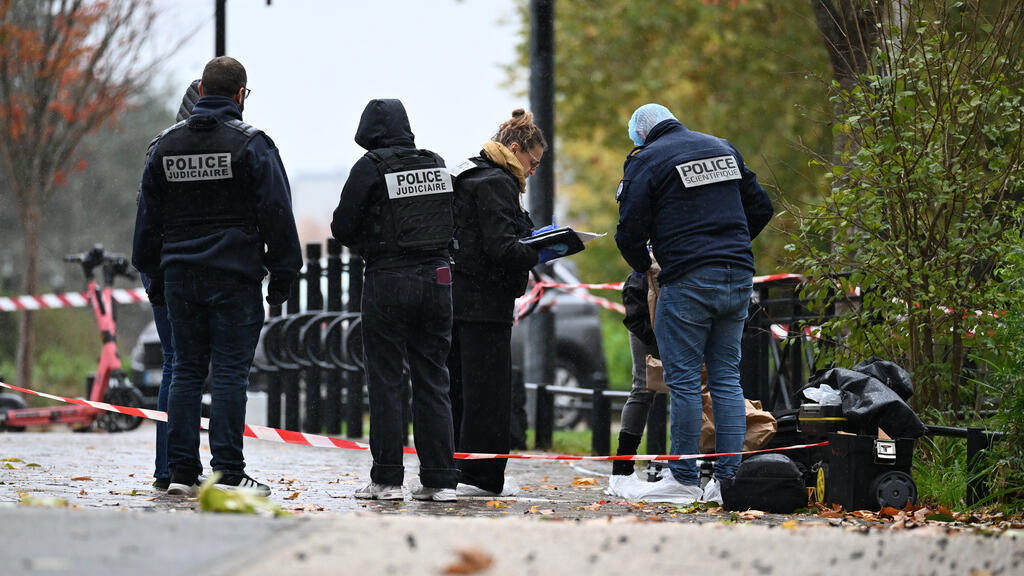
A 39-year-old suspect, identified as Kévin T., has admitted deliberately targeting people he perceived to be Muslim or of African or North African origin during shootings in Trappes and La Verrière, west of Paris, on 23 October. The attack, carried out from a car and on foot, killed 26-year-old Pengo Bossio Wangi, originally from the Democratic Republic of Congo, and injured seven others. An 11-year-old girl was among the wounded; her life is no longer in danger. Three victims remained in hospital when the prosecutor spoke, including one in life-threatening condition.
Anti-terrorism prosecutor Olivier Christen said the attack was extensively prepared. The suspect acknowledged premeditation and firing in bursts. Investigators say he bought items to improve a Second World War-era Sten-type submachine gun, as well as a police armband and handcuffs. A search of his home uncovered weapons and other items, including a silencer, along with religious texts, a copy of Adolf Hitler’s Mein Kampf, and nationalist stickers. The suspect said he chose Trappes because he considered it a hideout for Islamists. He admitted designing and ordering the stickers but denied belonging to or supporting a political party.
The suspect denied intending to commit a terrorist act, maintained that his actions were legitimate, and said he felt no regret. He also denied intending to kill children. Although he had reported psychological and psychiatric problems, a medical examination found no acute psychiatric crisis or signs of hallucinations or delusions warranting compulsory hospitalisation. Prosecutors have opened an investigation into murder and attempted murder in connection with a terrorist act, with an aggravating circumstance related to the victims’ presumed origin or religion, and have requested pre-trial detention.
President Emmanuel Macron connected the attack to what he called a climate of racism and violence, blaming far-right movements including the National Rally and groups close to it. National Rally MP Jean-Philippe Tanguy criticised Macron’s comments. The government has also announced a national tribute to the victims, to be presided over by Prime Minister Sébastien Lecornu; its date and location have not yet been announced.
Entities: Kévin T., Olivier Christen, Pengo Bossio Wangi, Emmanuel Macron, Sébastien Lecornu • Tone: analytical • Sentiment: negative • Intent: inform
29-10-2026
The France 24 video report, issued on October 29, 2026, concerns the suspect in a racist attack in Trappes, France. French anti-terrorism prosecutor Olivier Christen said the suspect had been brought before a French court. The attack killed one person and injured five others. The headline describes the suspect as having been transferred to a French court, while the short accompanying description says he had been brought before the court. France 24 International Affairs Editor Philip Turle provides further reporting in the video. The supplied page text does not include a transcript or additional details about the court proceedings, the suspect, the victims, or the circumstances of the attack, so those details cannot be established from this material. The report is presented as a brief update on the legal process following a serious attack characterized as racist. Its focus is the suspect's appearance before a court and the announcement by the anti-terrorism prosecutor, rather than an extended account of the attack or its aftermath.
Entities: Trappes, France, Olivier Christen, Philip Turle, French anti-terrorism prosecutor • Tone: neutral • Sentiment: negative • Intent: inform
29-10-2026
France 24 reports that a man suspected of carrying out a shooting in Trappes, in the Paris suburbs, has admitted deliberately selecting victims based on their perceived religion or ethnicity. Prosecutors said he targeted people who appeared to be Muslim, African, or North African. The attack took place the previous week and left one person dead and seven others wounded, including a child.
The report places the shooting against a backdrop of rising political tension in France, with the next presidential election expected the following spring, about six months away at the time of publication. It does not provide further details about the suspect, the victims, the investigation, or the circumstances of the attack. The article is a short video report, credited to Eliza Herbert, and identifies racism as a key topic. Its central focus is the suspected racial and religious targeting acknowledged by the accused and the human cost of the attack. The available text does not say whether prosecutors have formally classified the incident as a hate crime or describe any charges or court proceedings.
Entities: Trappes, Paris suburbs, France, Eliza Herbert, French prosecutors • Tone: neutral • Sentiment: negative • Intent: inform
29-10-2026
The France 24 item reports that a man suspected of carrying out a gun attack in the Paris suburb of Trappes has admitted to choosing victims on the basis of their perceived race or religion. Prosecutors said on Thursday that the suspect acknowledged targeting people who appeared to be Muslim, African, or North African. The attack took place the previous week and left one person dead and five others wounded, including a child. The report’s headline characterizes the details as “very disturbing,” while its brief description focuses on the suspect’s admission and the prosecutors’ account. France 24 correspondent Charli James reports on the case. The page identifies the story with the keywords Europe, France, and terrorism, and links it to related coverage of a racist attack in Trappes and a French anti-terrorism prosecutor’s press conference. The supplied page text does not include further details about the suspect, the victims, the circumstances of the shooting, or any charges or legal proceedings. Accordingly, the report establishes the alleged racial and religious targeting and the human cost of the attack, but does not provide enough information to draw conclusions beyond what prosecutors are quoted as saying.
Entities: Trappes, France, Paris suburbs, France 24, Charli James • Tone: neutral • Sentiment: negative • Intent: inform
29-10-2026
French President Emmanuel Macron accused far-right politicians, including members of Marine Le Pen’s National Rally (RN), of fostering an atmosphere of racism in France. He made the accusation in an interview released days after a racially motivated killing in Trappes, a diverse town southwest of Paris. The attack killed 26-year-old Pengo Bossio Wangi and injured seven others, intensifying a political and media debate about racism ahead of a presidential election.
Anti-terrorist prosecutors said the 39-year-old suspect acknowledged seeking victims of an “African or Muslim type.” Investigators also found a copy of Hitler’s “Mein Kampf” and RN-related stickers among his belongings, although the suspect said he did not support a particular party. RN lawmaker Jean-Philippe Tanguy rejected Macron’s criticism, blaming the president for the spread of antisemitism, homophobia and hatred during his nine years in office. RN senator Edwige Diaz defended a past description of Trappes as a “mini-Islamic state,” while the victim’s family lawyer, Zineb Alami, warned that rhetoric can make people seem suspicious or illegitimate.
The article describes accusations across the political spectrum. Right-wing politicians and media commentators have linked recent rioting and looting to immigration without providing evidence, while people at a memorial march blamed media coverage for inciting racial hatred. Macron’s centrist government is also criticized for not doing enough to counter racism and far-right attitudes. Sociologist Solene Brun said far-right ideas have become normalized beyond the RN and within government ranks. The dispute also involves Gender Equality and Anti-Discrimination Minister Aurore Berge, who was pressed to retract her statement that discussion of the “Great Replacement” conspiracy theory was legitimate. Authorities also reported far-right activists seeking confrontations with protesters in more than a dozen French cities.
Entities: Emmanuel Macron, Marine Le Pen, National Rally (RN), Pengo Bossio Wangi, Trappes, France • Tone: analytical • Sentiment: negative • Intent: inform
29-10-2026
In an interview with France 24, Dr Joseph Downing, a Senior Lecturer in International Relations and Politics at Aston University, discusses the growing threat of extremist right-wing ideologies in France and other democracies. The conversation follows a deadly shooting in the Paris suburbs that was allegedly motivated by racist and anti-Muslim hostility. Downing describes it as one of France’s first and most serious terror attacks inspired by right-wing nationalist and nativist ideas, and argues that far-right political violence deserves greater public and institutional attention.
Downing also challenges portrayals of ethnically diverse working-class suburbs as centres of Islamist radicalism. He says this framing stigmatizes communities whose residents are, for the most part, engaged in ordinary civic and economic life. In his analysis, the political debate increasingly links insecurity not only to crime and public order but also to national identity, migration, race and religion.
A central concern is the weakening of the democratic political centre. Economic pressures, including rising living costs and social insecurity, combine with polarizing identity narratives—circulated in part through digital media—to create opportunities for fringe movements. Such movements can gain support by offering apparently simple, divisive answers to complex problems. Downing warns that conflating racial identity, migration status and religious extremism further deepens social divisions, particularly when French citizens of African or Arab heritage are treated as perpetual outsiders.
The interview places France’s situation in a broader international context. It argues that political polarization, economic anxiety and exclusionary rhetoric pose vulnerabilities for democratic societies generally, and asks what happens when narratives of national insecurity become more influential than the social realities they claim to describe.
Entities: Dr Joseph Downing, François Picard, Aston University, France 24, France • Tone: analytical • Sentiment: negative • Intent: analyze
29-10-2026
France 24’s Spotlight interview features François Picard speaking with Dr Joseph Downing, a senior lecturer in International Relations and Politics at Aston University, about far-right extremism and democratic vulnerability in France and elsewhere. The discussion is set against a deadly shooting in the Paris suburbs that was allegedly motivated by racist and anti-Muslim hostility. Downing describes it as one of France’s first and most serious terror attacks inspired by right-wing nationalist and nativist ideas, and argues that far-right political violence deserves greater public and institutional attention.
The interview also challenges portrayals of ethnically diverse, working-class suburbs as centres of Islamist radicalism. Downing says such claims stigmatize residents, most of whom are engaged in ordinary civic and economic life. He connects the growth of fringe political movements to rising living costs, social insecurity, polarizing identity narratives spread through digital media, and the weakening of the political centre. In his view, movements at the ideological extremes can gain ground by offering simplistic and divisive answers to complex problems.
A further concern is the conflation of racial identity, migration status and religious extremism in political discourse. Treating French citizens of African or Arab heritage as perpetual outsiders, the article argues, risks deepening divisions and weakening national cohesion. The interview presents these issues as part of a wider challenge for democracies confronting polarization, economic anxiety and the normalization of exclusionary rhetoric.
Entities: Dr Joseph Downing, François Picard, Aston University, France 24, France • Tone: analytical • Sentiment: negative • Intent: analyze