29-10-2026
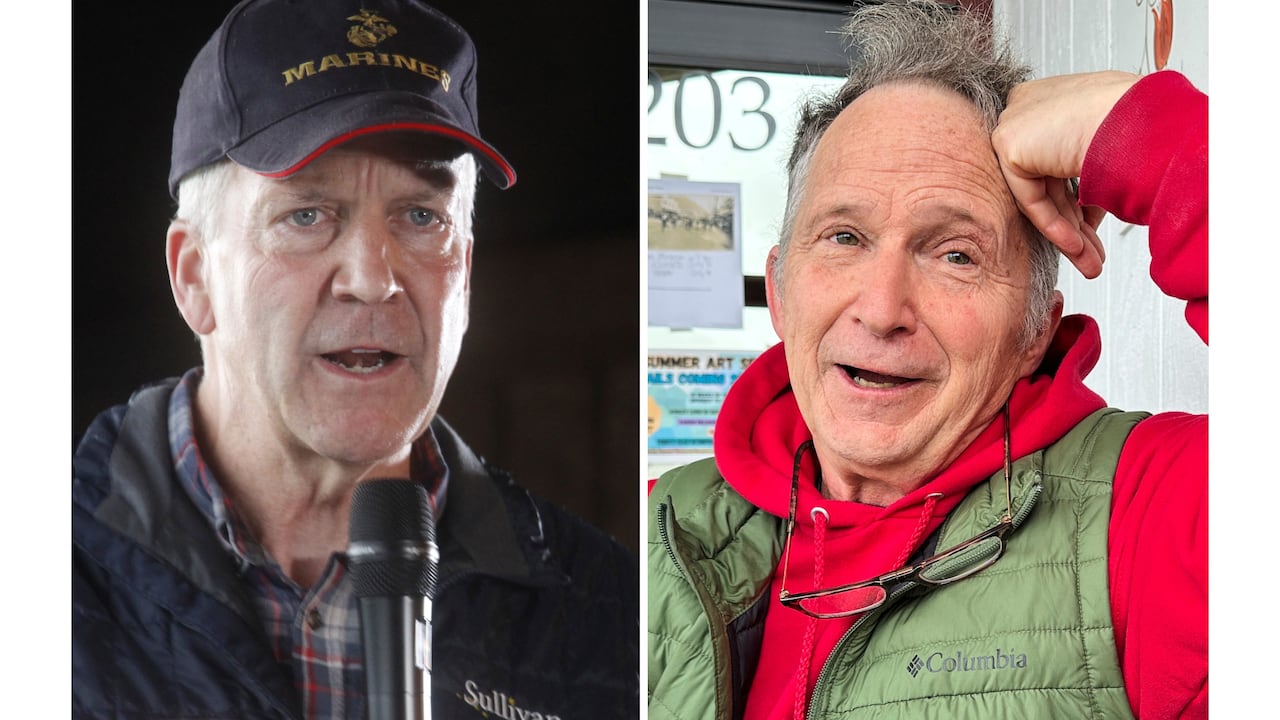
Alaska Governor Mike Dunleavy has ordered the Department of Public Safety to investigate whether an alleged effort to recruit a second candidate named Dan Sullivan for the US Senate race violated state law. The move followed a New York Times report alleging that people connected to Democratic Senate candidate Mary Peltola’s campaign and senior aides at the Democratic Senatorial Campaign Committee (DSCC) tried to recruit Dan J. Sullivan, a retired teacher, as a potential spoiler candidate against Republican incumbent Senator Dan S. Sullivan. The report said the effort was intended to dilute support for the incumbent. The BBC says it has not independently verified the Times’ reporting.
Peltola’s campaign and the DSCC deny involvement, and the retired teacher has also denied links to Peltola’s team. The incumbent and other Republicans have accused Democrats of trying to confuse voters. President Donald Trump has called for Peltola to be removed from the ballot. The Alaska Supreme Court previously rejected efforts to remove the second Sullivan, finding that no state law had been broken by his candidacy. Election-law experts say recruiting someone to run is not itself a crime, and question whether the allegations or lawsuits provide a legal basis to keep him off the ballot.
The Trump administration has filed a federal lawsuit seeking to prevent certification of the election result if the Trump-backed incumbent loses, arguing that having two candidates with similar names could confuse voters. It later amended the lawsuit to cite the Times report and Dunleavy’s announcement. Alaska election officials have asked the court to dismiss the case, while legal experts have expressed skepticism about its merits. Under Alaska’s ranked-choice voting system, voters can select both Sullivans. The dispute could affect how quickly the election result becomes clear, with control of Congress at stake in the midterms. Peltola recently paused campaigning after she and her family sustained minor injuries in a car crash.
Entities: Mike Dunleavy, Mary Peltola, Dan S. Sullivan, Dan J. Sullivan, Donald Trump • Tone: analytical • Sentiment: neutral • Intent: inform
29-10-2026
The article examines the controversy over two candidates named Dan Sullivan appearing on Alaska’s U.S. Senate ballot, and whether the candidacy of Dan J. Sullivan was encouraged as a vote-siphoning tactic against Republican incumbent Dan Sullivan. A New York Times report suggested that people connected to Democrat Mary Peltola’s campaign coordinated efforts to recruit candidates sharing the incumbent’s name. Peltola’s campaign has denied involvement with either Sullivan campaign, while Peltola herself has not fully addressed the allegations.
Dan J. Sullivan, a retired teacher and political novice who has previously registered as a Democrat, was initially removed from the ballot by Alaska’s Republican lieutenant-governor under a rule against confusing or misleading ballot names. State courts reversed that decision, ruling that election officials lacked a legal basis to exclude a qualified candidate. The name confusion matters because Republicans hold a 53–47 Senate majority and Democrats need four seats to regain control. Alaska’s electorate is small, and incumbent Sullivan won his 2014 race by just over 6,000 votes. Dan J. Sullivan received 4,107 votes—about two per cent—in the August primary despite reportedly spending nothing on staff or media.
Democrats have defended ballot-stacking as political hardball and pointed to similar tactics attributed to Republicans. However, the allegations could harm Peltola, Alaska’s first Indigenous member of Congress, and fuel public cynicism about election integrity. Republican Gov. Mike Dunleavy has ordered a state investigation into possible offences. The U.S. Justice Department has also sued to block Alaska from certifying a Peltola victory if Dan J. Sullivan remains on the ballot. The article notes that experts doubt the lawsuit will succeed: states have constitutional authority over elections, and the suit may be dismissed or become moot. It remains uncertain whether any criminal conduct occurred or what effect the controversy will have on the close Senate race.
Entities: Mary Peltola, Dan Sullivan (incumbent), Dan J. Sullivan, Alaska, U.S. Senate midterm elections • Tone: analytical • Sentiment: neutral • Intent: analyze
29-10-2026
With less than a week before US midterm elections, President Donald Trump and former president Barack Obama took active roles in campaigning, though neither is on the ballot. All 435 House seats and 35 Senate seats are being contested. Nonpartisan analysts generally see Democrats as favored to win the House, while the Senate race is close. Obama campaigned in Georgia for Democratic Senator Jon Ossoff, criticizing Trump’s tariffs and Iran war and arguing that the election concerns national values and political conduct. Trump campaigned in Ohio alongside Senator Jon Husted, who faces former senator Sherrod Brown. Trump attacked Brown over immigration and repeated criticism of Springfield, despite local officials having rejected his past claims about Haitian immigrants there.
Trump’s approval rating has fallen close to a record low amid concerns about living costs and the Iran war, but he remains influential among Republicans. About 40 million people had already voted early, compared with 45.9 million in all of the 2022 midterms. Trump’s Ohio rally drew enthusiastic supporters as well as hundreds of protesters, who interrupted him and raised signs criticizing him. Trump responded to a question about Jeffrey Epstein by saying he had expelled Epstein from Mar-a-Lago; the article notes that Epstein-related Justice Department materials include references to Trump and other prominent figures, while some allegations in those materials are unverified.
The campaign also featured exchanges over White House decor, with Obama mocking Trump’s renovations and Trump alleging that Obama left the building in poor condition. In Senate contests, Democrats need gains in Republican-leaning states to overcome the GOP’s 53–47 majority. The article reports that aides to Alaska Democratic nominee Mary Peltola were said to have helped recruit candidates who could draw votes from Republican Senator Dan Sullivan; Trump called for Peltola to leave the race and be prosecuted. In Michigan, Republican Mike Rogers campaigned with Senator Ted Cruz, while Democrat Abdul El-Sayed was scheduled to campaign with Senator Gary Peters and Senator Elissa Slotkin.
Entities: Donald Trump, Barack Obama, 2026 US midterm elections, US Senate, US House of Representatives • Tone: analytical • Sentiment: neutral • Intent: inform
29-10-2026
A federal judge in Los Angeles rejected the Justice Department’s request to stop California from counting mail ballots cast in the November 3 midterm elections by more than 20,000 registered voters the department flagged as likely non-citizens. Judge David Carter said the last-minute effort violated constitutional principles that give states control over their elections and could create disorder, undermine public trust, and disenfranchise eligible voters. The department did not say how many of the people it identified had actually submitted ballots, and Carter said it had not explained how counting ballots would interfere with federal prosecutions of illegal voting. The Justice Department appealed to the 9th US Circuit Court of Appeals, arguing that continued ballot processing was an emergency and diluted citizens’ votes. California said its safeguards against non-citizen voting are robust and challenged the federal government’s data as suspect, warning that following the request could wrongly exclude eligible voters. The dispute is part of President Donald Trump’s broader effort to increase federal involvement in elections and his claims that non-citizen voting is widespread, despite studies and state audits finding it rare. The article also describes federal actions in Alaska and Washington. In Alaska, the department sought to prevent certification of results if a Republican senator lost narrowly, citing possible confusion between candidates with similar names; state officials said they had taken steps to distinguish them. In Washington, the department asked officials not to count ballots from 400 voters it said might not be citizens. The state’s top election official said the timing appeared designed to cast unfounded suspicion on election results. Voting-rights activists are concerned that federal voter-list screening could mistakenly flag naturalized citizens.
Entities: David Carter, Donald Trump, Bill Essayli, US Department of Justice, California • Tone: analytical • Sentiment: neutral • Intent: inform
29-10-2026
A US federal judge has rejected the Justice Department’s request to stop California from counting mail ballots associated with a list of more than 20,000 people alleged to be noncitizens. Judge David Carter ruled that the late-stage effort, filed shortly before the 2026 midterm elections, conflicted with constitutional principles that give states control over election procedures. The Justice Department appealed to the Ninth US Circuit Court of Appeals.
The lawsuit is part of President Donald Trump’s broader campaign to increase federal scrutiny of alleged noncitizen voting. The article reports that the administration has issued more than 100 subpoenas seeking records on tens of thousands of voters in at least 13 states, including states with different political leanings. Noncitizens are prohibited from voting in federal elections, but legal experts say there is little evidence that such voting is widespread. They also warn that voter records could be used to challenge close election results.
Concerns have also been raised about how the federal list was assembled. Democracy Docket reported that the process appeared deeply flawed, and a whistleblower said the investigation was scrutinizing voters nationwide and could sweep US citizens into the category of potentially unlawful voters. California defended its safeguards and argued that the Justice Department relied on suspect data, putting eligible voters at risk of disenfranchisement. According to Democracy Docket, one in four people on the Los Angeles County list were born in the United States.
Entities: Donald Trump, David Carter, California, United States Department of Justice, Ninth US Circuit Court of Appeals • Tone: analytical • Sentiment: neutral • Intent: inform
29-10-2026
The France 24 video report describes the final week of campaigning ahead of the 2026 United States midterm elections. Although neither President Donald Trump nor former President Barack Obama is a candidate in the races, both featured prominently on the campaign trail on Wednesday, trading political barbs as voters prepared to choose members of Congress. The report emphasizes the potential stakes of the election: the results could alter the balance of power in Washington.
The article notes that 35 of the Senate’s 100 seats and all 435 seats in the House of Representatives are being contested the following Tuesday. It presents the outlook for the two chambers differently. Nonpartisan analysts generally consider Democrats better positioned to win a House majority, while the Senate contest is described as very close. The report does not provide details of the candidates’ remarks or explain the substance of the exchange between Trump and Obama; its focus is the prominent role of the two political figures and the approaching congressional vote. The supplied page also contains website navigation, video-player notices, and links to unrelated stories, which are not part of the report.
Entities: Donald Trump, Barack Obama, United States, Washington, Republican Party • Tone: analytical • Sentiment: neutral • Intent: inform