29-10-2026
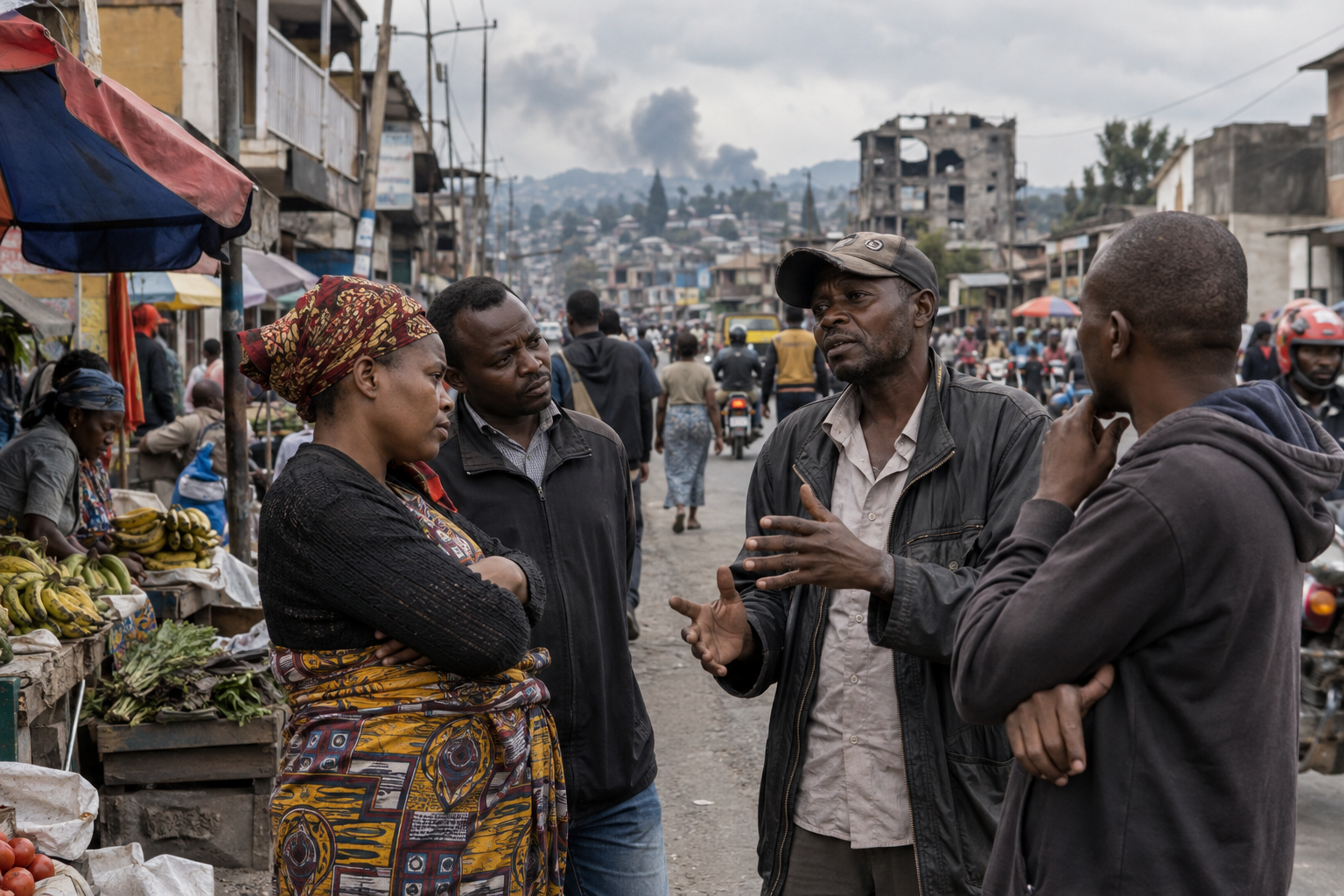
U.S. sanctions against Rwanda’s Ministry of Defence and Zigama Credit and Savings Society have drawn mixed reactions in Goma, where residents hope the measures may pressure Kigali but remain wary after previous diplomatic initiatives failed to bring lasting peace. For people living with the conflict, the central test is whether the sanctions lead to improved security and daily life, rather than simply adding to official announcements. Residents Jimmy Buhenwa and David Kalamembo express frustration and helplessness, saying earlier agreements and sanctions have not changed conditions. Michel Kamango is more hopeful that pressure could help restore peace, while Aluta Ramazani emphasizes that residents want change and peace above all.
Washington says the measures target institutions accused of supporting the Front for the Refoundation of the Nation (FRN), an armed movement led by former Congolese president Joseph Kabila. The sanctions are intended to raise pressure on Kigali and support diplomatic commitments aimed at ending the conflict in eastern Democratic Republic of the Congo. However, their ability to affect military operations or the balance of power remains uncertain. Independent analyst Fidel Banso questions whether sanctions on the Rwandan government and defence sector can influence the politico-military movement in Goma, underscoring the challenge of converting diplomatic pressure into effects on the battlefield.
The measures have also exposed the opposing positions of the two governments. Congolese authorities welcomed the sanctions, with Deputy Foreign Minister Crispin Mbadu voicing support, while Rwanda’s Foreign Minister Olivier Nduhungirehe rejected Rwanda’s responsibility for the crisis. The article concludes that sanctions may increase the financial and diplomatic costs of supporting the armed movement, but their practical impact will depend on implementation and the parties’ responses. For Goma’s war-weary residents, only tangible signs of de-escalation and improved security will show whether the measures matter.
Entities: Goma, Democratic Republic of the Congo (DRC), Rwanda, United States, U.S. sanctions • Tone: analytical • Sentiment: neutral • Intent: analyze
29-10-2026
The United States has imposed sanctions on Rwanda’s Ministry of Defence and Zigama Credit and Savings Society, accusing them of supporting the M23 rebel group in eastern Democratic Republic of Congo (DRC). Washington says the measures are intended to pressure Kigali to withdraw its troops from the DRC and stop its alleged assistance to M23 and the group’s political wing, the Congo River Alliance.
According to the US Treasury Department, Rwanda’s defence ministry directed thousands of troops to deploy across North and South Kivu provinces. The department says Rwandan forces operated alongside M23 and supplied it with military equipment, training, and other support. The United Nations has also said Rwanda backs M23, though Kigali has repeatedly denied the accusation. The DRC’s foreign affairs ministry welcomed the US sanctions.
The measures follow a US-brokered peace agreement signed in Washington months earlier by the leaders of Rwanda and the DRC. The agreement was intended to end the conflict, but fighting has continued and, according to the article, there has been little change on the ground. US Treasury Secretary Scott Bessent said the sanctions are meant to hold Kigali accountable for commitments made under the Washington Accords for Peace and Prosperity.
M23 re-emerged as a major force in eastern Congo in 2021. The article says it has taken control of large parts of the region and captured the important cities of Goma and Bukavu in early 2025. The sanctions thus come amid continuing conflict, competing claims about Rwanda’s role, and limited progress toward implementing the peace agreement.
Entities: United States, Rwanda, Rwandan Ministry of Defence, Democratic Republic of Congo, M23 • Tone: neutral • Sentiment: negative • Intent: inform
29-10-2026
The United States has sanctioned Rwanda’s defence ministry and Zigama Credit and Savings Society over alleged support for the M23 rebel group in eastern Democratic Republic of Congo (DRC). Washington says Rwandan forces fought alongside M23 and provided weapons, equipment, logistics and training. It also alleges that the financial institution enabled transactions connected to M23, military equipment purchases and the movement of gold from rebel-held areas into Kigali. The sanctions freeze assets under US jurisdiction and generally bar US individuals and businesses from dealing with the designated entities.
The measures come despite a US-brokered peace agreement, the Washington Accords, signed by the DRC and Rwanda in December 2025. The accord sought to end the conflict and expand regional trade, but fighting has continued since M23 captured Goma and Bukavu in early 2025. The rebels have also taken mineral-rich areas, and Washington alleges that minerals from those territories enter Rwanda’s supply chains. Rwanda denies supporting M23.
DRC President Félix Tshisekedi and his government welcomed the sanctions and called for Rwanda to honour the accords and withdraw its troops. Rwanda’s spokesperson Yolande Makolo said the agreement’s security commitments remain unmet, including the neutralization of the FDLR militia, which Kigali regards as a threat. She said Rwanda is prepared to implement the deal if the DRC fulfils its commitments and the mediator holds all parties accountable.
The sanctions add to earlier US measures against Rwanda’s army, senior commanders, a gold refinery and mining companies. Pressure is also emerging through Rwanda’s international sports relationships: US senators have asked the NBA to reconsider its commercial partnership with Kigali, while Rwanda has recently secured a deal to host a future Formula 1 African Grand Prix. The article also notes that M23 has joined a rebel coalition led by former Congolese President Joseph Kabila that seeks to oust Tshisekedi’s government.
Entities: Rwanda, Democratic Republic of Congo, M23, US Treasury, Scott Bessent • Tone: analytical • Sentiment: negative • Intent: inform