28-10-2026
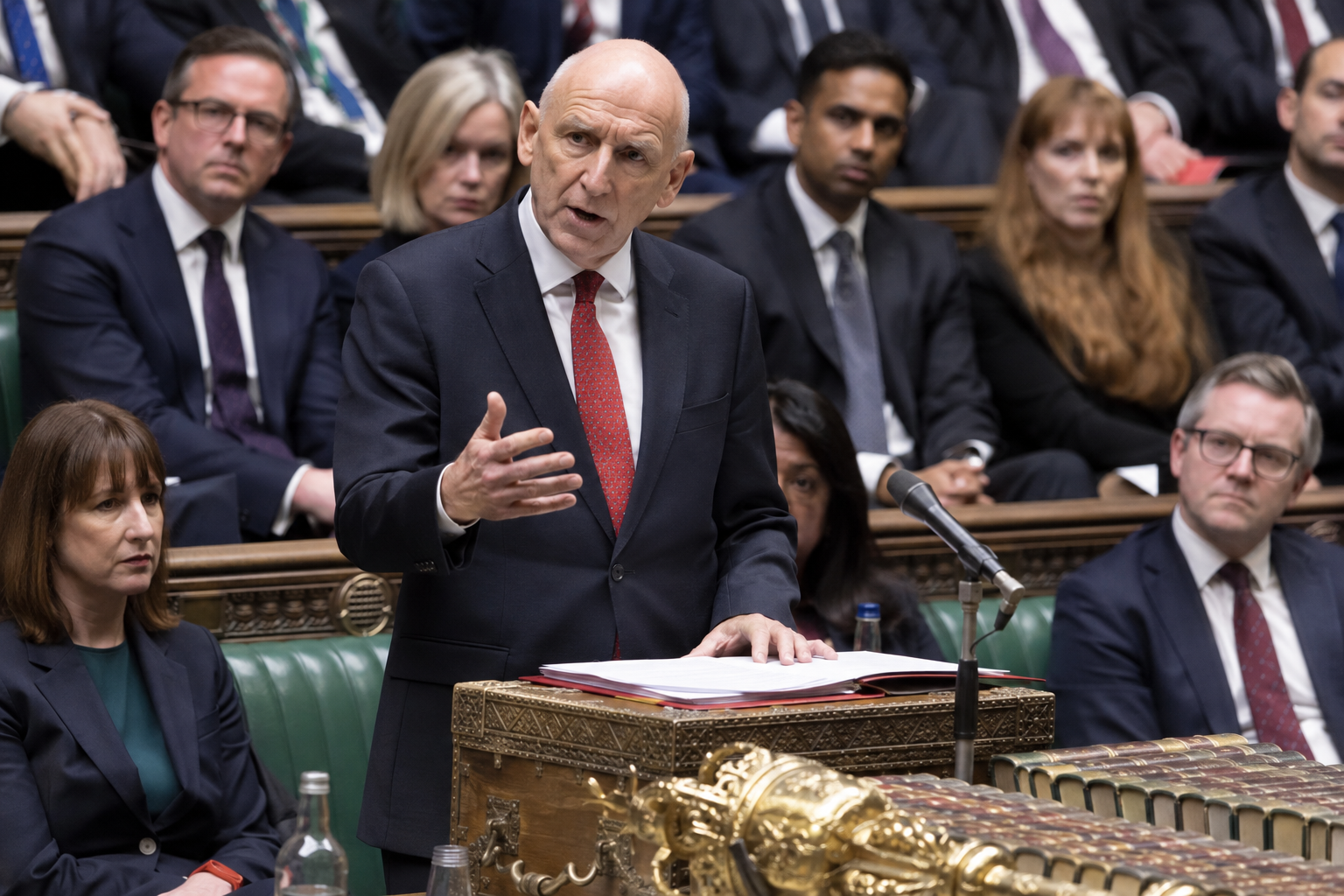
The article reports on U.K. Chancellor John Healey’s first Autumn Budget, which combines cost-of-living relief with spending on defense and artificial intelligence while seeking to maintain the government’s fiscal rules. The measures come amid rising energy costs and inflation, which reached 3.5% in September, and expectations of a possible Bank of England interest-rate increase. Healey said the package would provide families with “breathing space.” It includes removing standing charges on household gas bills, extending an electricity tax break through July 2027, and giving £100 payments to people in the four lowest local housing tax bands. Other support includes removing tariffs on more than 100 grocery products, expanding business-rate relief for some hospitality, retail and leisure companies, raising the minimum wage by 3.9%, and funding for children’s books, homelessness programs and first-time home buyers. The government will also retain a planned tax-free savings threshold and pursue welfare reforms.
On AI, Healey announced hundreds of millions of pounds for security and national sovereignty, along with a data-center “covenant” requiring investment in local communities, jobs and water protection in exchange for infrastructure support. Tax breaks for founders and funding for regional innovation hubs are also planned. The budget allocates £10 billion in additional economic and military support for Ukraine and sets out future targets for meeting NATO defense-spending commitments.
Healey said the budget complies with fiscal rules requiring day-to-day spending to be funded by revenues and debt to fall as a share of GDP. The Office for Budget Responsibility forecast £15 billion of fiscal headroom by 2029/30, modest growth, and debt rising slightly before declining. Bond yields fell during Healey’s remarks, while sterling edged lower. To fund measures, the government will raise taxes on banks, gambling businesses and vape shops, including a temporary three-percentage-point increase in the bank surcharge. Bank shares rose after the announcement, and the article notes the tax increase was less severe than some lenders had feared.
Entities: John Healey, Andy Burnham, Rachel Reeves, United Kingdom Autumn Budget, Bank of England • Tone: analytical • Sentiment: neutral • Intent: inform
28-10-2026
UK Chancellor John Healey delivered his first Budget speech, outlining measures on economic growth, household energy costs, savings for first-time buyers, pensions and care, and local taxation. The government expects GDP to grow by 1.2% in 2026, slightly above its earlier 1.1% estimate, but forecasts growth will slow to 1.0% in 2027. That is lower than the 1.6% growth forecast Labour issued in early March.
To help pay for energy support, the government will double the surcharge on profits earned by banks operating in the UK to 6%. It will also make a one-off £100 payment to 20 million households facing higher energy bills, which the article links largely to the Middle East conflict. Healey said the payment is intended to help households through the coldest months and into spring.
The Budget will replace the Lifetime ISA with a First-Time Buyer ISA. Changes to the penalty rules are intended to ensure that buyers whose desired home exceeds the purchase-price limit can recover at least their original contributions.
Healey also confirmed changes to the state pension triple lock, which raises pensions annually in line with whichever is highest: inflation, average wage growth or 2.5%. He announced a new national care service and said the measures would save £15 billion a year by the end of the 2030s and £50 billion by 2050. He presented the pension and care changes as complementary support for older people, families and the NHS.
Finally, the Chancellor set out a plan to devolve tax revenues. Local areas are to retain all business rates by the end of the decade; mayors will receive 20% of business rates revenue from next year, and from 2028 they will also receive a share of income tax receipts.
Entities: John Healey, United Kingdom, Labour government, UK Budget, GDP growth forecast • Tone: analytical • Sentiment: neutral • Intent: inform
28-10-2026
UK Chancellor John Healey presented a cautious budget intended to support households and businesses while maintaining fiscal discipline amid economic pressures from the US-Iran war, Russia’s invasion of Ukraine and global trade tensions. The government will provide a £100 payment to 20 million households, offer tax incentives to entrepreneurs and introduce a 10 per cent founders’ capital-gains rate on up to £10 million of lifetime gains for founders of successful firms. It will fund support partly through levies on banks and gambling companies and a higher tax rate on property income. Healey also said the government would restructure the energy market to reduce bills and raise military spending to 3 per cent of economic output by the end of the decade, with a future plan for meeting a 3.5 per cent of GDP NATO commitment by 2035.
The Chancellor used some of the £15 billion of fiscal headroom to cushion the effects of the Iran war on families and the economy, and promised to work with allies to end the conflict and restore shipping through the Strait of Hormuz. Markets responded calmly, reassured by the government’s commitment to borrowing rules; the 10-year government bond yield fell three basis points to about 5.31 per cent.
Healey avoided raising Capital Gains Tax, expanding the Mansion Tax or introducing a wealth tax—measures that critics say have contributed to wealthy people leaving the UK. Business and property-sector commentators broadly welcomed the absence of further tax increases, but argued the budget offered little to attract entrepreneurs and investors back. Some also criticised the property-income tax increase. Overall, the article depicts a budget that seeks to balance cost-of-living support and business incentives against market confidence and fiscal constraints, while leaving questions about whether it will reverse the outflow of wealth creators.
Entities: John Healey, Andy Burnham, Miatta Fahnbulleh, Paul Carey, United Kingdom • Tone: analytical • Sentiment: neutral • Intent: inform
28-10-2026
The U.K. has set 2030 as its target for raising defense spending to 3% of GDP, while reaffirming its NATO commitment to reach 3.5% by 2035. Finance Minister John Healey announced the target in his first annual budget, describing the period as a “new era of threat.” He previously resigned as defense minister under the prior government over what he considered inadequate spending.
Healey also announced an additional £10 billion in economic and military support for Ukraine, including loans and export finance guarantees, alongside £500 million in urgent military funding for the coming winter. He characterized the assistance as a message that Britain would support Ukraine for as long as necessary. The government will provide more detail on how it plans to meet its defense spending goals in next year’s spending review. Healey said the spending increase would need to be delivered in a fiscally sustainable way, amid strained public finances and rising borrowing costs.
Separately, the National Wealth Fund and British Business Bank are expected to deploy up to £5 billion over four years into defense, dual-use technologies, and other areas tied to national security. The investment is intended to strengthen the U.K.’s defense industrial base, support domestic supply chains, and attract private investment. IG chief U.K. market analyst Chris Beauchamp said the announcement lacked detail but suggested defense would receive funding Healey had previously argued was necessary. He added that the investment could take time to arrive. Healey also announced a £2.5 billion partnership between Rolls-Royce and the government to develop next-generation turbine engine technology.
Entities: John Healey, United Kingdom, Ukraine, Moscow, NATO • Tone: analytical • Sentiment: neutral • Intent: inform