28-10-2026
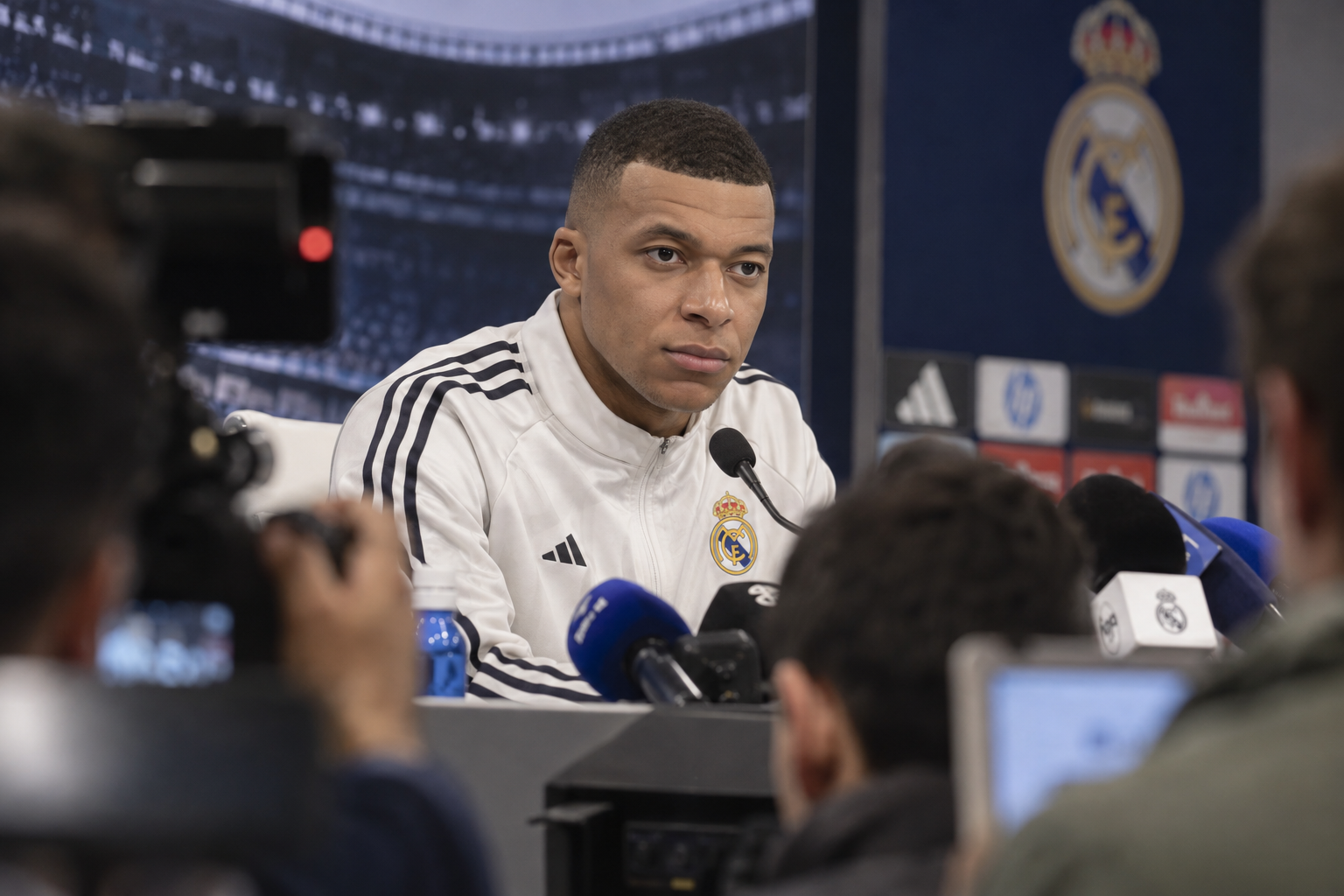
The article reports that three major Chinese brands have ended their partnerships with French football star Kylian Mbappe following controversy over his comments about a meme. The meme depicted Mbappe’s head on the body of Mao Zedong, and his remarks about it prompted a backlash in China, including criticism from Chinese fans. Mbappe has apologised, but the controversy has continued to affect his relationships with brands. The provided article text does not identify the companies, quote Mbappe’s comments or apology, or explain the specific reasons the brands gave for ending their partnerships. It presents the episode as a backlash tied to the meme and its reception in China. The report was published on 28 October 2026.
Entities: Kylian Mbappe, China, Chinese fans, French football star, Three major Chinese brands • Tone: neutral • Sentiment: negative • Intent: inform
28-10-2026
Real Madrid apologised to Chinese people after comments by Kylian Mbappe referring to former Chinese leader Mao Zedong as a “dictator” provoked a strong backlash in China. The club said it regretted any discomfort caused and emphasised its respect for China, its history, culture and citizens, including its many supporters there. Mbappe and La Liga had already apologised, but those statements did not end the negative response.
The controversy has had immediate commercial consequences. China’s state-owned streaming platform Migu plans to show nine of La Liga’s ten matches this weekend but will not broadcast Real Madrid’s game against Racing Santander. Chinese companies Mengniu, Shanghai Milkground Food Tech and Eastroc Beverage have also ended their cooperation with Mbappe. The episode underscores the commercial risks for athletes and brands in China, where satire involving Mao, who ruled from 1949 until his death in 1976, remains socially taboo.
La Liga president Javier Tebas established a crisis unit and met Chinese ambassador Yao Jing. The response is notable because Real Madrid and Tebas have had strained relations amid a power struggle in Spanish football, and the club recently called for his resignation. Both sides have set aside their differences in light of the potential short- and long-term financial damage. La Liga is considering increased engagement with Beijing, and Tebas may travel to China as the league seeks to limit losses while Chinese state television awaits further reconciliation efforts.
The remarks appeared in a video from a French podcast that has since been removed. Mbappe was discussing a humorous meme showing his face superimposed on an image of a person he described as “some guy – I think he’s a Chinese dictator”. Such memes portray Mbappe as influencing decisions at the clubs where he plays, and European media have nicknamed him “the dictator”. Asked about his apology, Chinese Foreign Ministry spokesperson Guo Jiakun said China took it seriously.
Entities: Kylian Mbappe, Real Madrid, Mao Zedong, Javier Tebas, Yao Jing • Tone: analytical • Sentiment: negative • Intent: inform
28-10-2026
Kylian Mbappé is facing commercial and media consequences in China after a video circulated in which he appeared to describe Mao Zedong as a Chinese dictator. The clip came from the French program “The Bridge” and showed Mbappé discussing a meme that superimposed his face on Mao’s. Reuters reported that it could not independently authenticate the video. Mbappé later apologized in Chinese, French and English, saying his remarks were ill-judged and had hurt Chinese communities, and expressing respect for Chinese people and their history.
China’s state broadcaster CCTV said the apology would be assessed against Mbappé’s future conduct. It had suspended La Liga coverage and matches involving the French forward, and removed advertisements featuring him. His accounts on the Chinese social media platforms Xiaohongshu and Weibo were also reportedly muted; as of October 28, CNBC could not independently confirm whether the restrictions or broadcast suspension had been lifted.
The commercial fallout included announced partnership terminations by Dongpeng Beverage, Mengniu and cheese maker Milkground. Dongpeng had introduced Mbappé as ambassador for its Bushuila sports drink in April. On and Dior reportedly removed Chinese promotional content featuring him, though neither had announced a global termination. Mbappé had approximately one million followers on each of Xiaohongshu and Weibo, and four related topics appeared among Weibo’s top ten searches on October 27.
La Liga expressed regret for the hurt caused to Chinese fans, while saying Mbappé’s personal views did not represent the league. Commentary on People’s Daily’s online platform argued that celebrities who offend public sensibilities can become liabilities for brands. China’s Foreign Ministry spokesman Guo Jiakun said words and actions that hurt Chinese people’s feelings would meet opposition across society. The article presents the incident as a rapidly escalating reputational and commercial controversy, while noting uncertainty about the authenticity of the video and the status of some restrictions.
Entities: Kylian Mbappé, Mao Zedong, China, CCTV / China Media Group, Real Madrid • Tone: analytical • Sentiment: negative • Intent: inform
28-10-2026
France 24’s Spotlight segment examines the backlash in China after Kylian Mbappé made a playful reference to a meme depicting him as Mao Zedong. Host François Picard speaks with Igor Mladenovic, a French-Serbian sports writer, sports-business analyst and former football commentator, about how an apparently casual remark by a global sports celebrity can acquire political significance across cultural boundaries. Mladenovic says he does not believe Mbappé intended to mock Mao and argues that the remark should be understood in its full context. He contrasts it with former NBA executive Daryl Morey’s explicit political statement about Hong Kong, emphasizing that the two incidents differ in intent and character. The discussion considers how historical sensitivities and international relations shape public responses to athletes’ comments, as well as the responsibilities that come with sporting fame. Athletes have the right to express personal views, Mladenovic notes, but their words can also affect clubs, leagues and countries. He ultimately characterizes the Mbappé controversy as a cultural misunderstanding, not a deliberate political provocation. In his view, Mbappé—Real Madrid’s striker and captain of France—was not making a political statement or taking a position on Mao or China.
Entities: Kylian Mbappé, Igor Mladenovic, François Picard, Daryl Morey, Mao Zedong • Tone: analytical • Sentiment: neutral • Intent: analyze
28-10-2026
The France 24 video segment examines the reaction in China to Kylian Mbappé’s playful reference to an internet meme that depicts him resembling Mao Zedong. Hosted by François Picard, the discussion features Igor Mladenovic, a French-Serbian sports writer, sports-business analyst and former football commentator based in Luxembourg.
Mladenovic presents the backlash as an example of how sport and geopolitics can become entangled in the digital age. The segment’s central question is how a seemingly harmless anecdote made by a globally prominent footballer can take on political significance and escalate into a much larger controversy. The title characterizes Mbappé’s remark as a “faux pas,” while the description emphasizes the mismatch between its playful intent and the serious response it provoked in China.
The supplied page text does not provide further details about the meme, the specific backlash, or the discussion’s conclusions. It identifies the subject and guest, but the video itself is not included in the provided material. Accordingly, the segment can be characterized as an analysis of the potential geopolitical consequences of celebrity speech and online culture, rather than as a report offering a complete account of events.
Entities: Kylian Mbappé, François Picard, Igor Mladenovic, China, Mao Zedong • Tone: analytical • Sentiment: neutral • Intent: analyze