28-10-2026
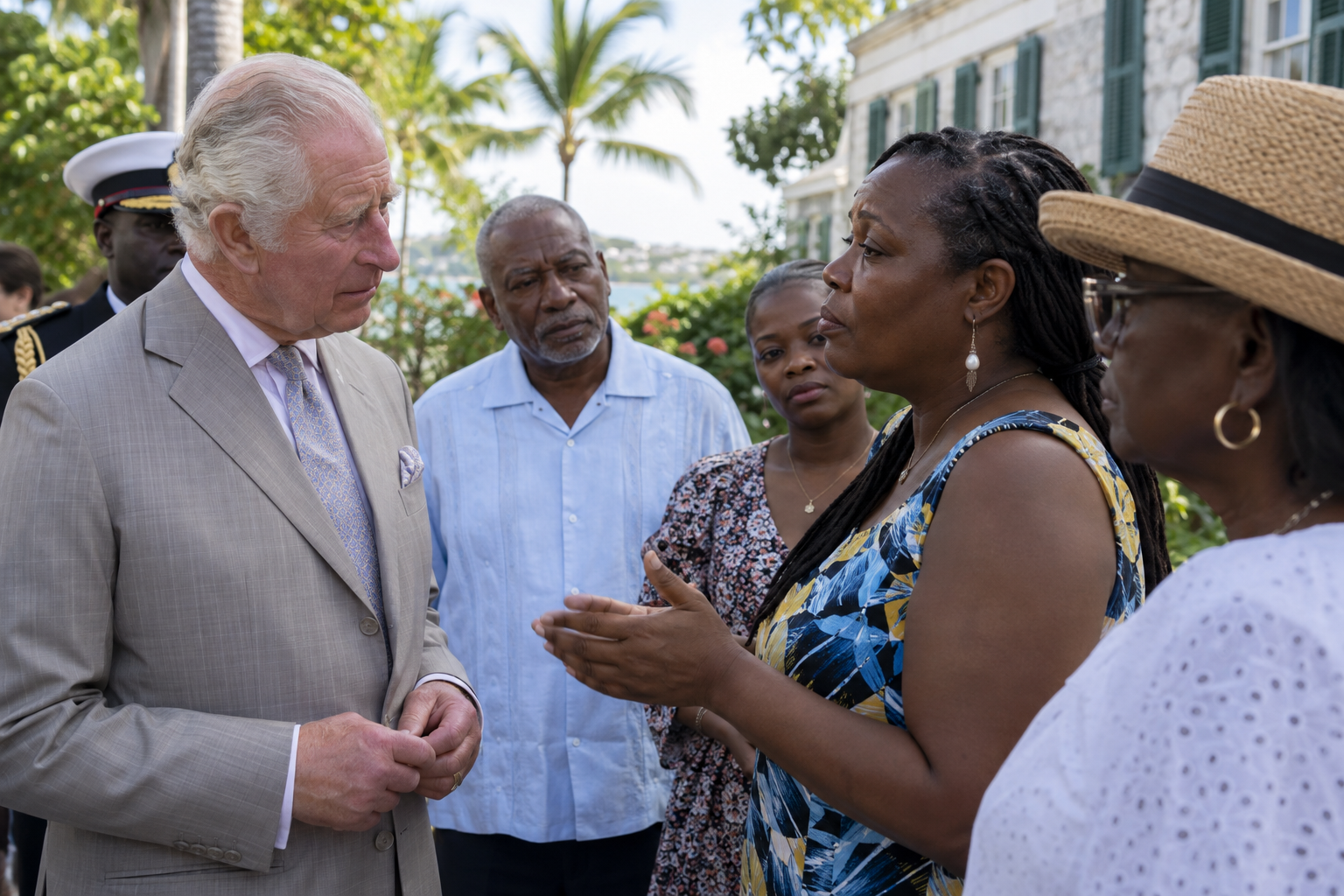
King Charles III began a nine-day Caribbean tour in the Bahamas by acknowledging the suffering and historic injustices associated with slavery. Addressing a youth rally in Nassau, he said Bahamian culture was “born out of darkness” and that it was right to recognise the past. His remarks come amid renewed calls from Caribbean nations for Britain to apologise for its role in the transatlantic slave trade and provide reparations. Buckingham Palace has said the King will not avoid discussing the colonial legacy and the slave trade, but, consistent with the UK government’s position, he will not apologise or offer reparations.
The King’s first visit to the Bahamas as monarch included meetings with Governor General Dame Cynthia A. Pratt and Prime Minister Philip Edward Davis, as well as an inspection of a guard of honour. At Clifford Park, where he had attended independence celebrations in 1973 as Prince of Wales, he spoke with young people and performers. A small group of protesters called for reparations and the return of artefacts, warning that the Bahamas could become a republic if Britain failed to show respect to former colonies.
In his speech, Charles also discussed climate change and the vulnerability of low-lying Caribbean islands. He urged young people to care for the planet, describing it as essential to life, prosperity and security. During the rest of the visit, he is expected to learn about climate risks and the Junkanoo cultural festival. Palace officials say the tour will include opportunities to reflect on slavery’s legacy, while also highlighting modern partnerships and future opportunities.
The tour, planned with the governments of the Bahamas, Guyana, and Antigua and Barbuda, will continue in Guyana with a focus on the environment and biodiversity. Charles will then travel to Antigua and Barbuda, where Queen Camilla will join him for the Commonwealth Heads of Government Meeting. Leaders from 56 Commonwealth countries are expected to discuss shared challenges, including the region’s history of slavery.
Entities: King Charles III, Queen Camilla, The Bahamas, Nassau, Guyana • Tone: analytical • Sentiment: neutral • Intent: inform
28-10-2026
King Charles III began a nine-day tour of the Bahamas, Guyana, and Antigua and Barbuda amid growing calls for Britain to apologize for slavery and provide reparations. At a youth rally in the Bahamas, he acknowledged the “great suffering and injustices of the past,” while also celebrating the country’s present achievements and future opportunities. The king, who is receiving treatment for an undisclosed form of cancer, will later attend a Commonwealth heads of government summit in Antigua and Barbuda with Queen Camilla.
The question of reparations is expected to feature at the summit. Several former British colonies are pressing for action, and Jamaica recently filed a petition in a London appeals court to advance its reparations campaign. Guyana’s President Irfaan Ali described Charles’s recognition of slavery’s “darkest days” as a first step, saying an apology should follow. Commonwealth Secretary-General Shirley Ayorkor Botchwey said it would not hurt for the king to apologize and that discussions of reparations—financial or otherwise—were timely. No modern British monarch has formally apologized, while the UK government has resisted financial compensation.
The tour also emphasizes climate change and resilience. Charles highlighted the danger to low-lying islands, noting that 90 percent of the Bahamas’ land lies below two metres. He is scheduled to meet groups working on coral restoration in Antigua and Barbuda and rainforest conservation in Guyana. Botchwey stressed that many climate-affected countries are not major polluters yet bear severe consequences. The Commonwealth summit, she said, will address climate resilience as well as trade and investment among its 56 members. The article presents the tour as a diplomatic balancing act between historical accountability and forward-looking cooperation.
Entities: King Charles III, Queen Camilla, Irfaan Ali, Shirley Ayorkor Botchwey, The Bahamas • Tone: analytical • Sentiment: neutral • Intent: inform
28-10-2026
King Charles has confirmed that the legacy of slavery will be discussed at next week’s Commonwealth heads of government meeting in Antigua, during his nine-day Caribbean tour. In the Bahamas, where he began the tour, the king acknowledged the suffering caused by slavery and said some aspects of Bahamian culture emerged from a painful past. His remarks drew criticism from reparations advocates, who said they did not address the monarchy’s responsibility or meet demands for a formal apology and practical steps toward reparatory justice.
The visit comes amid growing pressure from Caribbean leaders and a poll indicating support in Britain for dialogue on reparations. A survey by More in Common, published by the Repair Campaign, found that 40% of Britons supported a meeting on reparatory justice, while support was higher among younger respondents: 60% of people aged 18–24 and 51% of those aged 25–34. A majority of Labour and Liberal Democrat voters also backed a meeting.
Former St Vincent and the Grenadines prime minister Ralph Gonsalves urged the king to apologise and help establish a structured dialogue. The Bahamas National Reparations Committee said the king’s words were insufficient, arguing that Bahamian culture reflects agency and resilience rather than simply being born from darkness. Its chair, Niambi Hall Campbell-Dean, described the speech as hollow platitudes. Caribbean Community Reparations Commission chair Hilary Beckles called for remorse and said the king should address the continuing harm of slavery.
The article notes that King Charles acts on ministerial guidance and that the UK government has not advised him to offer an apology or reparations, in keeping with established policy. Buckingham Palace said the tour would focus mainly on contemporary partnerships and future opportunities, while also reflecting the king’s longstanding engagement with the history of slavery. The Repair Campaign called for a timetable for talks, saying previous expressions of regret and promises of dialogue had not led to meaningful progress.
Entities: King Charles III, Commonwealth heads of government meeting (Chogm), Bahamas, Antigua and Barbuda, Guyana • Tone: analytical • Sentiment: neutral • Intent: inform