28-10-2026
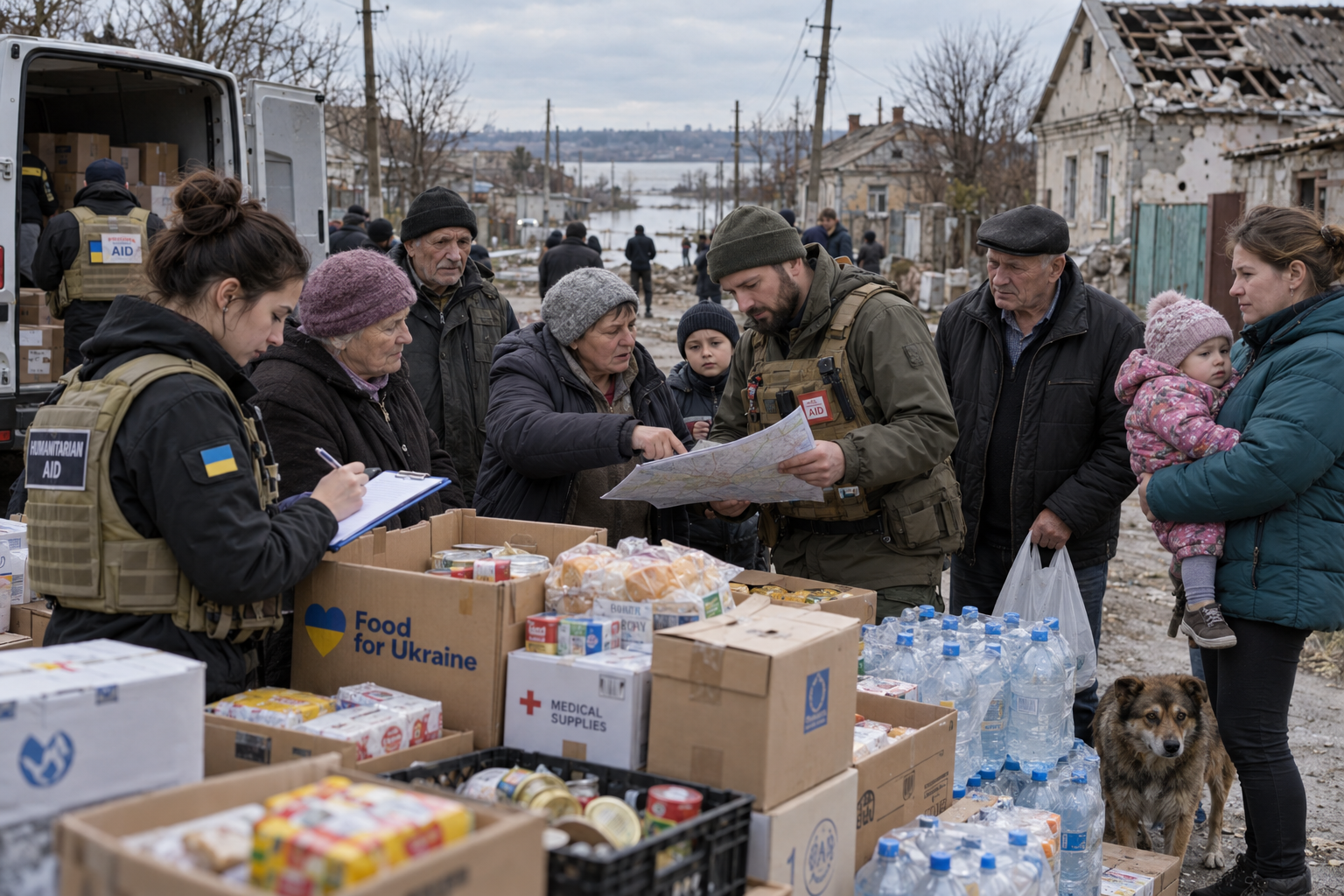
A ceasefire took effect in Russian-occupied Oleshky, in Ukraine’s Kherson region, at 3 a.m. Kyiv time on October 27, opening preparations for a possible civilian evacuation. The town has been occupied since 2022, and flooding after the destruction of the nearby Kakhovka dam in 2023 further isolated residents. Access roads were mined, and people who escaped have described severe shortages of food and medicine, as well as a lack of electricity and water. About 2,000 people remain in Oleshky; the Save Ukraine Foundation says it has rescued at least 300 civilians over the past six months.
DW interviewed Myroslava Kharchenko, a lawyer with Save Ukraine, who said she could not confirm that evacuations had begun. Mine-clearing on a road started several hours after the ceasefire, but activity inside the town is under military control and details are being kept secret for security reasons. Organizers are gathering information through closed local chat groups, checking residents’ registration details and collecting contacts for nearby relatives or neighbors because communications are unreliable. They are also identifying people with illnesses, limited mobility, or injuries who may require medical assistance.
Kharchenko said a river crossing would be extremely dangerous and had not been confirmed as an option. The likely route may cross temporarily occupied Ukrainian territory and possibly Russia before evacuees reach Ukrainian-controlled territory, though no route details have been made public. The evacuation is not expected to happen in one day. Kharchenko estimated that around 500 people may ultimately leave, while noting that fear, past provocations, and mistrust of earlier corridor efforts could lead some residents to delay or refuse evacuation.
She credited Melania Trump with drawing attention to the humanitarian crisis, characterizing the situation as genocide committed by Russia. Kharchenko cautioned that the operation’s timing remains uncertain: roads and streets inside Oleshky need mine clearance, and it is also necessary to evacuate people from a hospital and recover bodies from a nearby morgue. Identifying the dead and establishing causes of death will take time. Both Russian and Ukrainian statements have been cautious, and the operation is being conducted under strict secrecy.
Entities: Oleshky, Kherson region, Ukraine, Dnipro River, Kakhovka dam • Tone: analytical • Sentiment: negative • Intent: inform
28-10-2026
The France 24 video report, issued on October 28, 2026, says a localized ceasefire around Oleshky, a town under Russian occupation in southern Ukraine, had held for its first 30 hours. Ukraine’s human rights ombudsman, Dmytro Lubinets, reported that there had been no breaches during that period. The truce was agreed to remain in force until November 1, with the stated purpose of allowing residents to evacuate.
The report describes the town’s residents as having been unable to leave while living in near-uninhabitable conditions. It does not provide figures for how many people are expected to evacuate, details about the arrangements for their departure, or information about the parties’ monitoring of the ceasefire. The headline refers to the agreement as “Melania Trump-brokered,” while the narration describes it as a US-brokered local ceasefire; the short report does not explain the role attributed to Melania Trump.
The central development is therefore both the initial observance of the truce and the limited humanitarian opportunity it is intended to provide. The report presents the ceasefire as a temporary measure focused on civilian evacuation, rather than as a broader resolution of the conflict. It also stresses the difficult conditions facing residents of the frontline town. The video is credited to Juliette Montilly, and the accompanying image is credited to the 34th Separate Marine Brigade “Borysfen” archive, Reuters and France 24.
Entities: Oleshky, southern Ukraine, Ukraine, Russia, Melania Trump • Tone: neutral • Sentiment: neutral • Intent: inform
28-10-2026
A six-day ceasefire in and around Oleshky, a Russian-occupied city in Ukraine’s southern Kherson region, held through its first day and night, according to Ukrainian and Russian officials. The truce began Tuesday and is intended to allow a humanitarian mission to deliver food, medicine, water and medical assistance to roughly 2,000 residents, followed by the evacuation of people who wish to leave. The city has been devastated, and Russian occupying forces strictly limit access; the article says there was no information on how the aid operation was progressing. The two countries’ human rights ombudspersons reported no ceasefire violations in Oleshky for 30 hours. If sustained, the pause would be a significant truce in the more than four-and-a-half-year war, after previous attempts to halt fighting failed or quickly collapsed amid mistrust. The situation drew the attention of U.S. first lady Melania Trump, whom the White House said brokered the humanitarian mission. Pope Leo XIV also urged Ukrainian President Volodymyr Zelenskyy and Russian President Vladimir Putin to permit aid and safe civilian evacuation. The local ceasefire comes as Moscow and Kyiv continue attacks elsewhere and as the United States considers further technical talks between the sides. Proposed talks in Abu Dhabi in November had not yet been scheduled, with Washington waiting for developments in the Middle East. Ukraine’s foreign minister, Andrii Sybiha, reiterated that Kyiv would not accept any settlement that compromises its sovereignty or territorial integrity.
Entities: Oleshky, Kherson region, Ukraine, Russia, Yana Lantratova • Tone: analytical • Sentiment: negative • Intent: inform
28-10-2026
Residents of Oleshky, a Russian-occupied city in Ukraine’s southern Kherson region, fear that a temporary ceasefire and evacuation effort may not let them return to Ukrainian-controlled territory. The truce, brokered by first lady Melania Trump, is intended to allow humanitarian aid into the city and help civilians leave after months of worsening conditions and dwindling supplies. Residents worry that Russian authorities could instead transport evacuees to Russia or occupied Crimea, particularly those who wish to reach Ukraine.
Kherson city council deputy Oksana Pohomii said residents are filling out forms to leave and that demining has started along the planned evacuation route. Ukraine’s human rights commissioner, Dmytro Lubinets, reported that the first 30 hours of the ceasefire passed without incident and said the priority was to provide assistance and enable safe departures. The White House said Russia and Ukraine had agreed to pause military action temporarily, but the agreement does not specify how Russian authorities must treat residents or guarantee that people can return to Ukraine.
The Institute for the Study of War warned that occupation authorities may not provide a legitimate, uncoerced choice of destination. It also noted that Russian President Vladimir Putin called Oleshky a “Russian settlement,” although the city remains Ukrainian territory under international law. The institute said residents who received Russian passports could be treated by Russian authorities as Russian citizens, potentially leaving them without a legal route back to Ukraine.
A volunteer described life in Oleshky as impossible, citing persistent shortages and a lack of electricity, internet and functioning phones that complicate evacuation. Once home to about 24,000 people, the city has been damaged by years of fighting, with destroyed buildings, damaged infrastructure and scarce supplies. Melania Trump said evacuees would receive coordinated transportation to their preferred destination, acknowledging that some might choose Russia and others Ukraine. Her work has also helped reunite more than two dozen Ukrainian children taken by Russia with their families.
Entities: Oleshky, Kherson region, Ukraine, Russia, Melania Trump • Tone: analytical • Sentiment: negative • Intent: inform