28-10-2026
The European Union’s planned joint statement with Canada is expected to omit the phrase “associate membership,” despite European Commission President Ursula von der Leyen continuing to use that description for a closer relationship. A draft of the statement seen by CBC News instead calls for an “ever closer association” between Canada and the 27-member bloc. The statement is reportedly finalized by EU member countries, though Canada could still request changes. Sources told CBC that some EU countries opposed the associate-member label, with Germany describing it as a red line. The term had drawn attention because associate membership is not an existing status within the EU, and von der Leyen’s announcement last month that the bloc would pursue it raised questions among some European members and Canadian politicians about what it would entail.
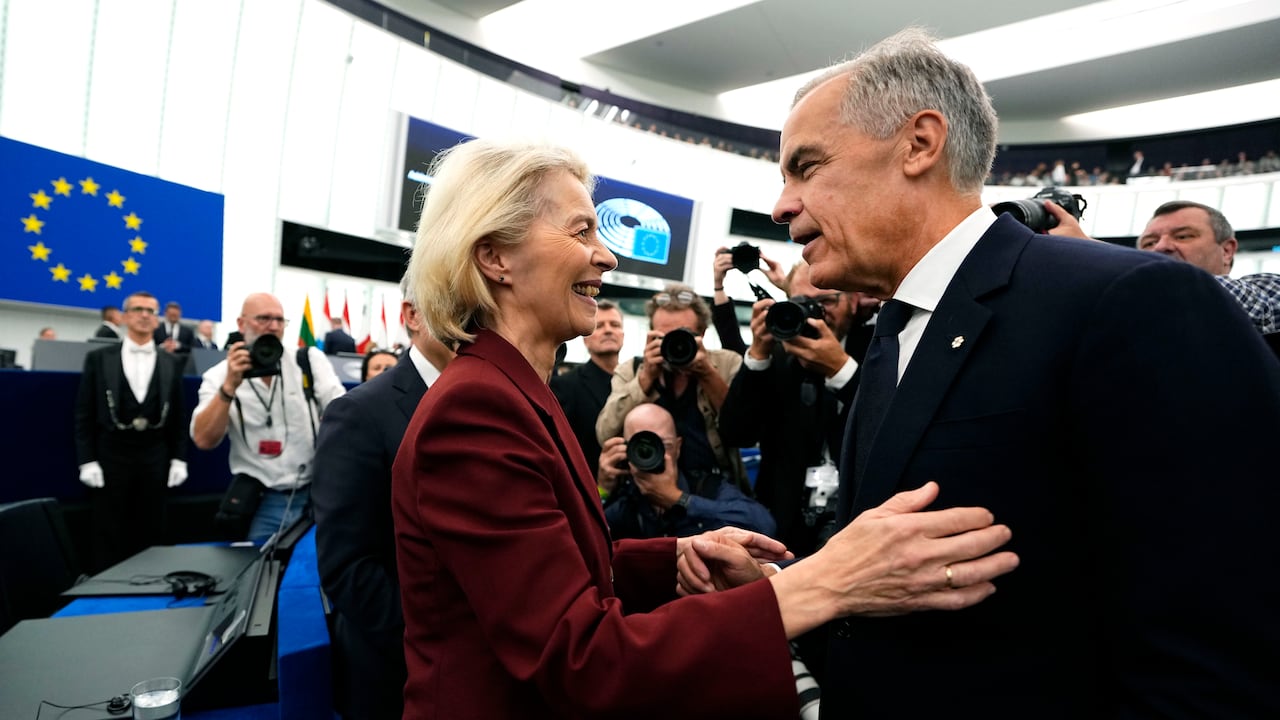
Prime Minister Mark Carney has said the name matters less than whether the relationship produces results for Canadians and supports Canada becoming more independent and sovereign. Von der Leyen, arriving in Montreal for the summit, reiterated her ambition to bring Canada closer to the EU “as associate member.” The two-day summit is taking place as Canada seeks to expand trade, investment and strategic partnerships with Europe and reduce its economic reliance on the United States amid uncertainty under President Donald Trump.
The draft statement commits both sides to a more active foreign and security policy partnership, a predictable trade environment, stronger Arctic collaboration, efforts against foreign information manipulation, and continued support for Ukraine. It also covers energy security, critical-mineral supply chains, and cooperation on artificial-intelligence security and safety. Carney is scheduled to meet business leaders and host a dinner for von der Leyen and European Council President António Costa during the summit.
Entities: Mark Carney, Ursula von der Leyen, António Costa, Canada, European Union • Tone: analytical • Sentiment: neutral • Intent: inform
28-10-2026
The European Union has removed the phrase “associate membership” from the latest draft of a joint declaration to be adopted at the EU-Canada summit in Montreal on Thursday and Friday. The wording was replaced with a commitment to “ever closer association” between the EU and Canada, stopping short of full EU membership. The change followed objections from Germany and other member states to an earlier draft. Germany was the most vocal opponent, while France, Italy and Greece also raised concerns. Germany’s position is that the declaration should explain what closer cooperation with Canada means in practice rather than use a term that is not found in EU treaties and might have significant legal implications. European Council President António Costa’s office held intensive discussions with member states, particularly Germany, to resolve the disagreement. The associate-membership proposal had been introduced at Germany’s insistence in a revised text circulated on Wednesday, after Commission President Ursula von der Leyen suggested in her State of the Union address last month that Canada could become the EU’s first associate member. The article also notes that German Chancellor Friedrich Merz had previously proposed a similar status for Ukraine as a way to provide security guarantees before it joins the bloc. Canadian Prime Minister Mark Carney has instead favoured the phrase “alliance for the future,” saying he wants the focus to be on the agreement’s substance and that the EU should decide the terminology. The latest declaration draft has been submitted again under the EU’s silent procedure. Under that process, it will be adopted unless a member state explicitly objects before the procedure concludes later that afternoon.
Entities: European Union (EU), Canada, EU-Canada summit, Montreal, “Associate membership” • Tone: analytical • Sentiment: neutral • Intent: inform
28-10-2026
The EU has retreated from the prospect of opening talks with Canada on “associate membership” after the idea, announced by European Commission president Ursula von der Leyen, drew objections from member states. A draft statement prepared for the EU-Canada summit in Montreal instead proposes defining an “ever closer association” by the next summit in 2027, explicitly short of full EU membership.
Von der Leyen’s announcement in her state of the union address surprised EU capitals. The proposal was initially viewed as a landmark opportunity to give a non-EU country unusually close ties to the bloc, and as a response to Canadian prime minister Mark Carney’s call for “middle powers” to cooperate. But diplomats and governments questioned what associate status would mean in practice, since the term has no basis in current EU treaties. They raised concerns about whether Canada might participate in EU institutions or decision-making without a vote. Germany argued that associate membership should be reserved as a possible interim stage for candidate countries such as Ukraine or Montenegro. Diplomats say the revised language is intended to retreat from the original offer without publicly embarrassing von der Leyen.
The debate is unfolding amid a trade conflict with the United States. President Donald Trump called the EU proposal “laughable” and warned that he might restrict trade with Europe if he viewed it as hostile. Carney has sought new partnerships, while a report by TD Economics said deeper EU-Canada ties could bring substantial additional trade, particularly in defence, energy, critical minerals and digital markets. Carney has also highlighted reducing reliance on Elon Musk’s Starlink network. He said Canada has no interest in formally joining the EU and that the summit begins negotiations whose results matter more than the terminology. The article notes that aligning Canadian laws with European rules could be unpopular, despite public support for stronger ties.
Entities: European Union (EU), Canada, Ursula von der Leyen, Mark Carney, Donald Trump • Tone: analytical • Sentiment: neutral • Intent: inform