28-08-2026
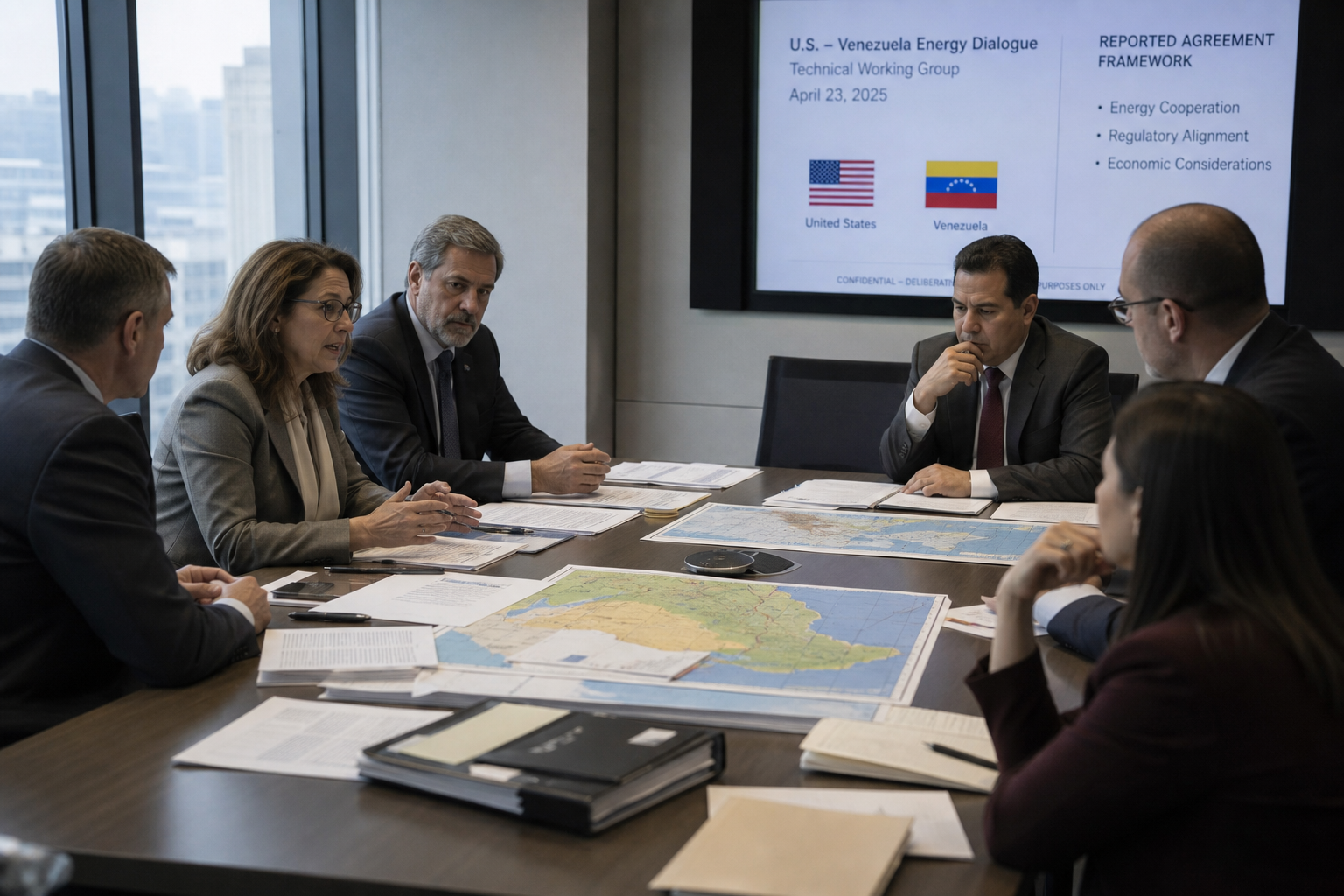
The United States is reportedly close to an agreement with Venezuela that would give Washington long-term access to selected Venezuelan oil fields, according to sources cited by Reuters. Under the proposed arrangement, American companies would develop the fields and guarantee the resulting crude supply for the United States. A lease-based legal structure is reportedly under consideration, potentially followed by auctions or tenders through which US producers would be assigned individual fields.
The proposed list includes 17 fields, ranging from undeveloped areas in Venezuela’s resource-rich Orinoco Belt to mature fields around Lake Maracaibo. Some of the latter are currently operated by a small Chinese company under a contract signed during Nicolas Maduro’s presidency. The White House referred questions to the Department of Energy, while Venezuela’s oil ministry, state oil company PDVSA and other officials did not immediately comment.
The deal could face significant legal and constitutional obstacles. Venezuela’s current hydrocarbons framework does not provide for oilfield acreage leases, and the constitution reserves core energy activities for the state. Recent reforms allow joint ventures and production-sharing agreements, but foreign companies have historically been prevented from booking Venezuelan reserves.
The reported negotiations follow Washington’s removal of Maduro from power in January and its efforts to secure reliable Venezuelan crude supplies while attracting US investment to the country’s deteriorated energy sector. Venezuela currently produces approximately 1.25 million barrels of oil per day. Caracas is also reportedly considering leaving OPEC as its relationship with Washington deepens.
The Trump administration faces political pressure over rising fuel prices ahead of the November midterm elections. Increased Venezuelan output and cheaper supplies could help ease that pressure. Washington is also seeking ways to replenish its Strategic Petroleum Reserve, which was depleted after releases linked to Russia’s invasion of Ukraine and the war involving Iran.
Entities: Donald Trump, United States government, Venezuela, Venezuelan crude reserves, Orinoco Belt • Tone: analytical • Sentiment: neutral • Intent: inform
28-08-2026
The supplied content does not include the body of the AP News article. It consists primarily of AP’s navigation menus, newsletter promotions, unrelated headlines, and section labels. The available headline and related page text indicate that President Donald Trump said the United States had reached a deal with Venezuela concerning oil. Additional AP headlines characterize the alleged arrangement as one under which the U.S. would take control of 65 billion barrels of Venezuela’s oil reserves.
Because the article text is missing, the details of the reported agreement cannot be independently summarized from the material provided. The content does not explain when the deal was reached, who negotiated it, what legal or operational authority the United States would use, how Venezuela’s government responded, or whether the arrangement had been formally signed or implemented. It also does not provide information about the distribution of revenues, control of oil infrastructure, sanctions, international reactions, or the effect on global energy markets.
The available material therefore supports only a limited description: Trump reportedly announced a major U.S.-Venezuela oil agreement involving control of a very large quantity of Venezuelan reserves. The claim appears in headline form and should not be treated as a fully documented account of the agreement’s terms. The supplied page also contains many unrelated headlines about international conflicts, U.S. politics, disasters, health, sports, entertainment, and other topics, which have been excluded from the cleaned version.
Entities: Donald Trump, United States, Venezuela, AP News, U.S.-Venezuela oil agreement • Tone: neutral • Sentiment: neutral • Intent: inform
28-08-2026
Reports that the United States is negotiating a major stake in Venezuela’s oil and gas industry have triggered anger among Venezuelan opposition figures, economists, journalists, and energy analysts. The Wall Street Journal reported that US and Venezuelan officials were in advanced discussions over direct US stakes in more than a dozen oilfields holding approximately 90 billion barrels of crude, while Reuters said the fields were located in the Orinoco Belt and Lake Maracaibo regions. Bloomberg reported that a 100-year lease was also under consideration.
The proposed arrangement has been condemned as a predatory resource grab and potentially unconstitutional. Critics argue that Venezuela’s interim government lacks the legitimacy to negotiate such a far-reaching hydrocarbons agreement, particularly because it emerged after the capture of former president Nicolás Maduro and retains several figures from his administration. Delcy Rodríguez, Maduro’s former vice-president and petroleum minister, leads the interim government, while Interior Minister Diosdado Cabello remains influential. Meanwhile, opposition leader María Corina Machado remains exiled and politically sidelined.
The article places the controversy in a broader geopolitical context. Energy historian Gregory Brew compares the proposal with early 20th-century oil concessions that gave foreign companies sweeping control over resources in Iran and Iraq. He argues that US control of Venezuelan oil could be intended to exclude China, Russia, and other potential buyers, describing the arrangement as colonial in character.
The reported deal is also presented as part of President Donald Trump’s so-called “Donroe Doctrine,” an effort to reassert US influence in Latin America and counter China’s regional presence. Although some political prisoners have been released and limited institutional reforms are being discussed, no new presidential election has been scheduled, and Machado has not been allowed to return. The article concludes that the proposed oil agreement could deepen opposition to the interim government and intensify concerns about US dominance over Venezuela’s political and economic future.
Entities: Venezuela, United States and Trump administration, Nicolás Maduro, Delcy Rodríguez, María Corina Machado • Tone: analytical • Sentiment: negative • Intent: inform