27-08-2026
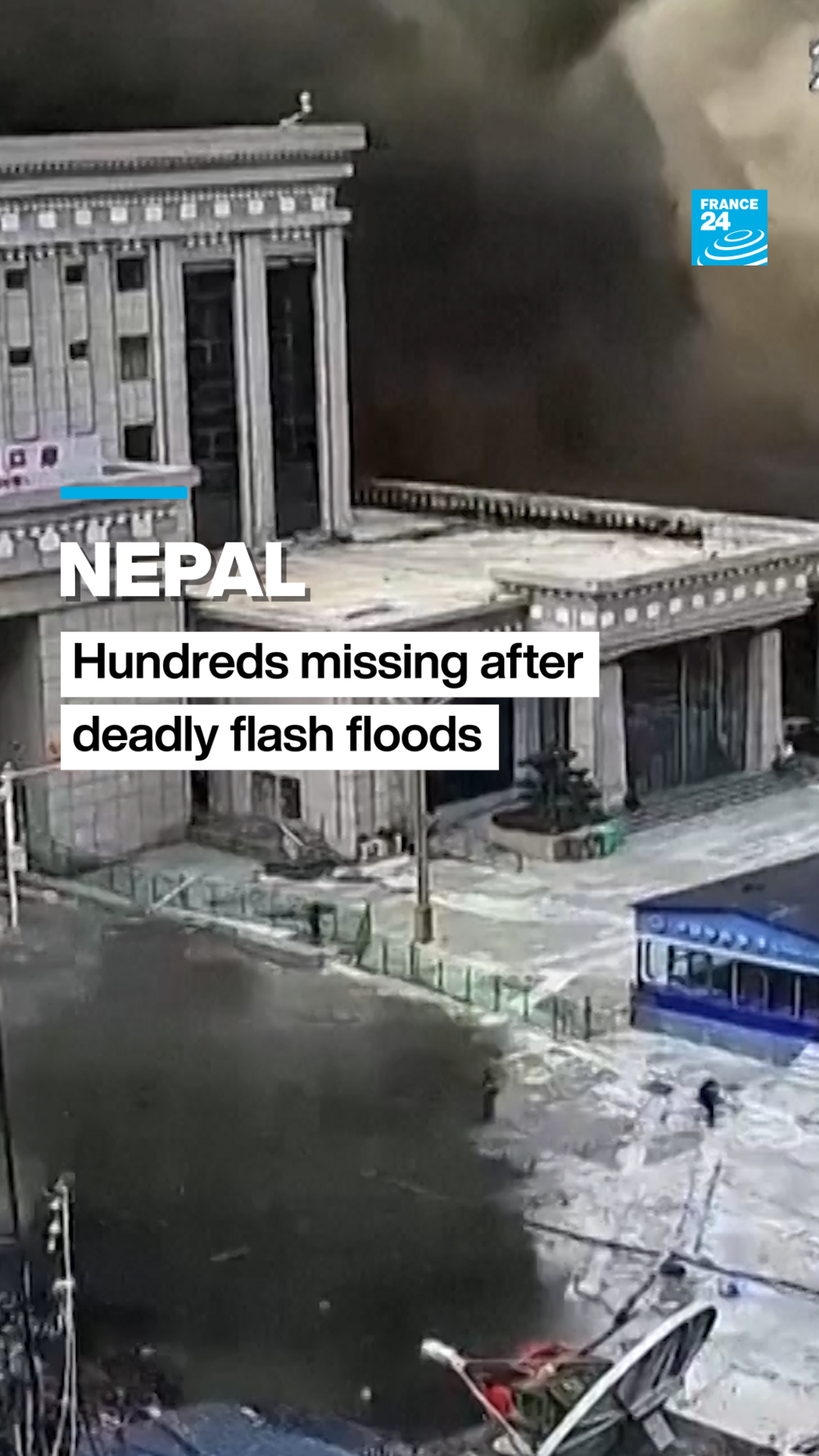
Surveillance video from Chinese social media appears to show a powerful mudslide and debris flow sweeping toward Gyirong port on the China–Nepal border. The footage depicts a wall of mud rushing through the area, while people flee and parked vehicles become surrounded by floodwater. Chinese state broadcaster CCTV reported that the disaster on the Nepalese side caused major casualties and left people missing at the port. Although the video was later removed from Chinese platforms, Agence France-Presse verified it using satellite imagery and street-view data.
The flooding occurred as rescue teams searched across Nepal and Tibet following a major border disaster. Nepalese authorities said on 27 August that at least 270 people had died and 823 remained unaccounted for, including 517 foreign tourists. On the Chinese side, state media reported three deaths and 558 people missing at Gyirong, among them 260 foreigners.
The US Geological Survey attributed the disaster to a glacial collapse that generated a massive debris flow, contradicting the initial report that a magnitude 4.4 earthquake had caused the destruction. Nearly 800 Chinese emergency workers were deployed in Tibet to assist with the response. Authorities also warned that additional flooding was possible, adding to the danger for rescue teams and communities near the affected border region.
Entities: Gyirong port, Nepal, Tibet, China, Chinese state broadcaster CCTV • Tone: urgent • Sentiment: negative • Intent: inform
27-08-2026
Rescue teams in Nepal continued searching for survivors on Thursday after catastrophic flash floods and mudflows swept through communities near the Nepal-China border. More than 350 people have reportedly died, over 1,000 remain missing, and at least 700 foreign tourists are among those unaccounted for. The disaster began when a wall of ice, mud, and rock collapsed into a mountain river, sending a destructive surge downstream.
The Nepalese army rescued more than 100 people by helicopter, while dozens of injured victims were flown to Kathmandu for advanced treatment. Helicopters are also being used to locate survivors and deliver food and other emergency supplies to isolated towns and valleys. Search operations have been severely hampered by extensive infrastructure damage: dozens of bridges were destroyed and nearly 40 kilometers of roads were damaged.
Residents described receiving warnings as floodwaters rapidly approached. Jaleshwar Kumar Sahni said a relative urged him to abandon his shops because the water would destroy them. Experts believe the event was caused by the collapse of a glacier in the mountainous region near the Nepal-Tibet border, and they warned that additional flooding remains possible.
The US Geological Survey initially reported a magnitude 4.4 earthquake near Kathmandu, but later revised its assessment, determining that the seismic signal was a magnitude 5.2 glacier collapse rather than an earthquake. The conclusion was based on seismic-station data, long-period seismic waves, and satellite imagery.
The article places the disaster within a broader pattern of instability in the Himalayan ice system, which threatens communities, infrastructure, and water supplies. Similar flooding in August 2025, linked to the overflow of a glacial lake in Tibet during high temperatures, killed nine people and damaged critical infrastructure, including a bridge connecting Nepal and China.
Entities: Nepal, Nepal-China border, Nepalese Army, Kathmandu, Tibet • Tone: urgent • Sentiment: negative • Intent: inform
27-08-2026
The supplied AP News extract reports catastrophic flooding in Nepal and Tibet, with more than 390 people dead and over 1,400 missing. A related summary states that people from more than 30 countries are among those missing following flash floods in Nepal and China. The available page text also places the disaster in the context of glacial and climate-related hazards in the Himalayas. Related AP Climate headlines describe a glacial collapse near the Nepal–China border, followed by flooding in rivers, and say satellite imagery revealed the collapse of bedrock and a glacier. Another headline characterizes the Nepal floods as evidence of growing risks to communities living near glaciers in a warming Himalayan region.
The disaster appears to involve sudden, high-impact flooding in a remote and mountainous border area, where glacier instability can rapidly release large volumes of water and debris. The reported death toll and number of missing people indicate a major humanitarian emergency, while the international makeup of those missing suggests that the affected area may include a destination for travelers or pilgrims. However, the article body itself is not present in the supplied content. Consequently, details such as the precise locations, timing, rescue and recovery operations, government statements, confirmed causes, and accounts from survivors cannot be reliably summarized without inventing information. The summary is therefore limited to the headline, subheadline, and clearly related climate headlines included in the page extract.
Entities: Nepal, Tibet, China, Himalayas, Nepal–China border • Tone: urgent • Sentiment: negative • Intent: inform
27-08-2026
The article reports that people from more than 30 countries are missing after severe flash floods struck areas of Nepal and China, including Tibet, along the Nepal-China border. The disaster is associated with a glacial collapse and the failure of bedrock and glacier formations, which sent large volumes of water into downstream river systems and caused widespread flooding in Nepal and neighboring areas.
The supplied AP News material describes the event as catastrophic. Related headlines state that more than 390 people were killed and over 1,400 remained missing in Nepal and Tibet. Another climate-focused headline in the provided content reports at least 160 deaths and hundreds missing after a glacial collapse on the border. Because the supplied text contains multiple related headlines with differing casualty figures, the exact total and geographic breakdown cannot be established from the excerpt alone.
The international scope of the missing-persons report is a central feature of the story. Victims may include foreign visitors, workers, and pilgrims, including people traveling near Mount Kailash, a sacred site in the region. The remote Himalayan setting, difficult terrain, and ongoing flooding likely complicate rescue and identification efforts, although specific response details are not included in the supplied article text.
Satellite imagery is cited as evidence that bedrock and glacier collapse preceded the flooding, linking the disaster to instability in the high-mountain environment. The story therefore concerns both the immediate humanitarian emergency and the growing risks posed by glacier-related hazards in a warming Himalaya. The available text does not include individual names, official statements, or a detailed account of rescue operations.
Entities: Nepal, China, Tibet, Nepal-China border, Mount Kailash • Tone: urgent • Sentiment: negative • Intent: inform
27-08-2026
Rescue teams are searching for hundreds of people missing after catastrophic flash floods and mudslides struck communities along the Nepal-Tibet border. The disaster followed the collapse of a glacier wall of ice, mud and rock into a mountain river. Early reports suggested an earthquake might have contributed to the collapse, but the cause remains under investigation.
More than 350 people have been confirmed dead and over 1,300 are missing, although figures vary among authorities and news agencies as recovery efforts continue. Nepal accounts for most of the deaths and missing people, while authorities reported three deaths and 558 people missing in Tibet. Global Affairs Canada said approximately 30 Canadian citizens and permanent residents are unaccounted for. Canadian consular officials are urgently trying to confirm their whereabouts and safety, working with travel agencies, local authorities, Nepalese and Chinese counterparts, and international partners. Five consular officials are being deployed to Kathmandu, and Canada has advised its citizens to exercise a high degree of caution in the border area because of the continuing risk of flooding and mudslides.
The affected region is popular with hikers and serves as a pilgrimage route to Mount Kailash, a sacred site in several religious traditions. Entire villages have reportedly been destroyed, while roads and bridges were washed away or rendered impassable, leaving communities isolated. Helicopters have been used to search for survivors and deliver emergency supplies to people trapped in towns and valleys.
Aid organizations describe extensive trauma and urgent humanitarian needs. World Vision Nepal said some children remain separated from their families because they cannot cross swollen rivers, and that emergency shelter, water, sanitation and psychosocial support are being provided. The organization called for increased international funding to support relief operations and rebuild damaged infrastructure. Survivors described the floodwaters as arriving suddenly and with the force of an explosion.
Entities: Nepal, Tibet, Nepal-Tibet border, Global Affairs Canada, Canadian citizens and permanent residents • Tone: urgent • Sentiment: negative • Intent: inform
27-08-2026
A catastrophic glacier collapse triggered massive flash floods and mudslides along the Nepal-Tibet border on Wednesday, destroying communities, roads and bridges. Reported casualties were still changing: Reuters cited at least 359 deaths and nearly 1,000 missing, while The Associated Press, citing Nepalese and Chinese authorities, reported more than 390 deaths and over 1,400 missing. Most of the deaths and missing people were in Nepal, though Tibet also suffered significant losses.
The disaster has affected citizens from several countries. Canadian Foreign Affairs Minister Anita Anand said 30 Canadians and permanent residents in Nepal and Tibet had not yet been accounted for. Global Affairs Canada is sending five consular officials to Kathmandu, while relatives of missing Port Moody, B.C., residents Dhaval and Megha Shah appealed for government assistance. Nepal’s Tourism Board said hundreds of missing people were foreign nationals, including many Indians, and China said nearly 100 Chinese citizens were missing on the Nepalese side.
Nepalese rescue teams, supported by helicopters, recovered survivors, transported injured people to Kathmandu and found bodies roughly 100 kilometres downstream. More than 100 people were rescued, including foreign nationals and workers trapped near the Trishuli hydropower project. At least 1,200 people were displaced, while damaged roads and dozens of destroyed bridges complicated operations. In Tibet, mud around Gyirong Port reached more than 1.5 metres deep, and authorities warned of further landslides.
The United Nations released $2 million US for medical care, shelter and water. The U.S. Geological Survey initially identified an earthquake but later determined that the seismic event was a magnitude 5.2 glacier collapse, based on seismic and satellite data. The article also places the disaster in the broader context of increasingly common glacier-related hazards as mountain ice melts.
Entities: Nepal, Tibet, Nepal-Tibet border, Kathmandu, Nuwakot • Tone: urgent • Sentiment: negative • Intent: inform
27-08-2026
A deadly flash flood in Nepal may have been triggered by the collapse of a large section of glacier, which possibly blocked a river before releasing a powerful surge downstream. Preliminary investigations by scientists, satellite imagery and seismic data indicate that ice and rock fell into the Lhende Khola, a tributary of the Bhote Koshi River. The resulting debris may have displaced water, formed a temporary dam and then produced a flood that raised river levels by as much as 9 meters in 30 minutes. Hundreds of people were killed, more than 1,000 remain missing, and critical infrastructure—including roads, bridges, buildings and hydropower facilities—was heavily damaged.
Scientists caution that it is too early to directly attribute the disaster to climate change. However, the Hindu Kush Himalaya is warming rapidly, causing glaciers to retreat, glacial lakes to expand, permafrost to thaw and mountain slopes to become increasingly unstable. These changes can create cascading hazards in which an avalanche or glacier collapse becomes a debris flow, river blockage and sudden flash flood. Jakob Steiner, a geoscientist at the University of Graz, described the event as part of what could become the “new normal” as temperatures rise.
The region contains the largest volume of ice outside the polar regions and supplies water to hundreds of millions of people locally and more than a billion people downstream. Researchers warn that accelerating ice loss could cause both near-term flooding and long-term water insecurity, migration and sea-level rise. The article also highlights Nepal’s vulnerability because of tourism, hydropower development and limited warning coverage. Scientists say stronger early-warning systems, glacier and slope monitoring, and faster cross-border information sharing will be increasingly necessary, although surveying the vast and unstable Himalayan landscape remains extremely difficult.
Entities: Nepal, Hindu Kush Himalaya, Langtang Lirung, Jakob Steiner, University of Graz • Tone: analytical • Sentiment: negative • Intent: inform
27-08-2026
At least 162 people were killed in Nepal after flash floods swept through communities near the Nepal-Tibet border, while hundreds of others remained missing in Nepal and Tibet. Most of the missing people were foreigners, including 33 Americans, according to Nepal’s Tourism Board. The agency initially reported 341 missing foreign nationals, while Nepalese officials said 403 people overall were unaccounted for. Chinese state media separately reported that 558 people were missing on the Tibet side of the border, including 260 foreigners, and confirmed at least three deaths there.
The disaster began when a sudden surge in the Bhote Koshi River inundated parts of Nepal’s Rasuwa district before affecting Nuwakot and Dhading. Floodwaters and mudslides destroyed villages, houses, roads, bridges, dams, power facilities and commercial routes connecting China and Nepal. Officials initially attributed the event to an earthquake and landslide, but the U.S. Geological Survey later determined that it was caused by a glacial collapse and debris flow, with no earthquake occurring.
Rescue operations have been severely hampered by Nepal’s mountainous terrain and inaccessible roads. Helicopter teams have rescued some people, but aircraft were unable to land in certain affected locations. International Red Cross officials said entire villages and markets had disappeared, leaving families without homes or livelihoods. Nepal’s Electricity Authority reported damage to six major hydropower and transmission facilities.
Nepali authorities urged residents near rivers to move to higher ground and called for intensified rescue and relief operations. Nepal’s government, the Red Cross and other agencies began coordinating medical and emergency assistance. U.S. Secretary of State Marco Rubio expressed solidarity with Nepal, and the State Department announced $500,000 in humanitarian assistance for shelter, relief supplies, and water, sanitation and hygiene services. The U.S. Embassy in Kathmandu was also working to locate and assist affected Americans.
Entities: Nepal, Tibet, Bhote Koshi River, Rasuwa, Nuwakot and Dhading districts, Kathmandu • Tone: urgent • Sentiment: negative • Intent: inform
27-08-2026
Nepal is struggling to assess and respond to a massive flash flood that has killed hundreds and left more than 1,300 people missing, including many foreign nationals. The disaster has devastated northern districts, particularly Nuwakot, Rasuwa and Dhading, where entire villages have reportedly been swept away and dozens of bridges and hydropower dams destroyed.
Residents told DW that many communities remain physically isolated after roads and bridges were destroyed and electronically cut off because electricity and mobile networks have failed. Bidhya Rajput said her home in Sole village was swept away by the Trisuli River, while her husband’s parents remain missing. She said state relief efforts have focused mainly on larger cities and that assistance had not yet reached her village. Other residents described being unable to escape because the flood rose suddenly and moved faster and more extensively than expected.
The destruction has severed key connections to Kathmandu. A major bridge linking Dhading’s district headquarters with the capital collapsed, prompting one resident to say, “We are disconnected from Kathmandu.” Nepal’s government, supported by neighboring India and China, is conducting rescue operations using police, military personnel, civilians and more than a dozen helicopters. By Thursday midday, at least 414 people, including 164 foreigners, had been airlifted to safety.
Scientists are still investigating the flood’s precise cause. Preliminary assessments suggest an avalanche on the Nepal-China border may have blocked a river, creating a landslide dam that later burst and possibly released water from a subglacial lake. Experts warn that additional glacial lakes could overflow, and Chinese authorities have reported another lake in Tibet is already overflowing, creating a continuing risk of further flooding.
Entities: Nepal, Kathmandu, Nuwakot District, Rasuwa District, Dhading District • Tone: urgent • Sentiment: negative • Intent: inform
27-08-2026
The article examines the causes, destructive power, prevention challenges, and possible climate-change links of a deadly flash flood in the Himalayan border region between Nepal and China. The disaster unfolded within about 10 minutes, when enormous quantities of water, ice, mud, and debris traveled approximately 20 kilometers downstream. Niels Hovius, head of the Geomorphology Section at the GFZ Helmholtz Centre for Geosciences, explains that scientific evidence points to a glacier collapse in the Langtang massif in central Nepal. A large section of ice broke away, creating an avalanche. Friction melted some of the ice into water, which combined with mud and debris to form a rapidly moving flow. Seismological instruments recorded what appeared to be a magnitude 4.4 earthquake, but Hovius says the signal reflected the force of the falling glacier rather than a tectonic earthquake.
The article distinguishes among three major causes of Himalayan flash floods: glacier collapses, glacial lake outburst floods (GLOFs), and landslides. Although the recent disaster was not a GLOF, all three hazards occur regularly in the region. Himalayan valleys are narrower than those in the Alps, leaving water and debris confined to smaller channels and increasing their speed and depth. The resulting damage also depends on how close communities are to the source.
Nepal faces particular difficulties in protecting residents because many people live along vulnerable river valleys and the country has few early-warning systems. Existing acoustic warning systems cover only a tiny fraction of at-risk areas. Hovius recommends expanding local warning networks, using mobile-phone push notifications, and reconsidering settlement planning so infrastructure is not concentrated beside rivers.
Although it is too early to attribute the specific glacier collapse to climate change, rising temperatures are making glaciers less stable and increasing water volumes in glacial lakes, potentially raising the risk of future disasters. Hovius expects such events to become more frequent and potentially more severe.
Entities: Nepal, China, Himalayas, Langtang massif, Niels Hovius • Tone: analytical • Sentiment: negative • Intent: analyze
27-08-2026
Rescue teams are searching for more than 1,400 people missing after flash floods and landslides devastated communities along the Nepal-Tibet border. The disaster has killed at least 472 people according to the article’s opening account, while a later Nepal police tally puts the deaths in Nepal at 469; China separately reported three deaths in Tibet. Entire villages were swept away by a tsunami-like flow of water, mud, and debris that destroyed homes, bridges, dams, roads, and vehicles.
The US Geological Survey attributed the event to a glacial collapse and debris flow rather than the magnitude 4.4 earthquake initially reported. Scientists warned that climate change is increasing glacier melt and the risks of glacial lake floods and collapses. Emergency workers, soldiers, sniffer dogs, and boats are searching for survivors and bodies. Nepal’s army said approximately 100 people remained trapped inside a tunnel at the Trishuli 3A hydropower project, although 350 people had already been rescued from the area.
Many of those missing are foreign tourists, trekkers, and Hindu pilgrims returning from Mount Kailash. Nepal reported 910 people out of contact, including 517 foreign tourists, while China said 100 additional Chinese citizens were missing. The United States said 90 citizens were unaccounted for, and nationals from several other countries were also missing. In Tibet, Chinese state media reported 558 missing people, including 260 foreigners.
Nepalese Prime Minister Balendra Shah visited affected areas and ordered immediate relief for displaced families. Chinese Premier Li Qiang also visited the affected Tibetan area. Officials warned that debris blocking a river could create a temporary lake and trigger another flood, prompting Nepal’s Flood Forecasting Division to issue a special warning. Survivors described the devastation as a giant graveyard and an inland tsunami.
Entities: Nepal, Tibet, US Geological Survey (USGS), Nepal Army, Balendra Shah • Tone: urgent • Sentiment: negative • Intent: inform
27-08-2026
A flash flood and mudslide swept through China’s Gyirong port on 26 August 2026, after a major disaster occurred across the border in Nepal. Surveillance footage showed a wall of mud and debris rushing toward the border trade hub, while people fled and parked vehicles were surrounded by rapidly rising floodwater. The incident disrupted a key crossing between China and Nepal and caused casualties and widespread disappearances on both sides of the border.
Chinese state broadcaster CCTV reported that the disaster on the Nepalese side had caused major casualties and left people missing at the port. The footage was later removed from Chinese social media platforms, but Agence France-Presse verified it using satellite imagery and street-view data.
Nepalese authorities said on 27 August that at least 270 people had died and 823 remained unaccounted for, including 517 foreign tourists. On the Chinese side, state media reported three deaths and 558 missing people at Gyirong, including 260 foreigners. Rescue teams were searching across Nepal and Tibet as emergency operations continued.
The US Geological Survey said the disaster was caused by the collapse of a glacier, which triggered a massive debris flow. This differed from an earlier report that a magnitude 4.4 earthquake had caused the disaster. Nearly 800 Chinese emergency workers were deployed in Tibet, while authorities warned that additional flooding remained possible. The report presents the event as an ongoing cross-border natural disaster involving substantial loss of life, missing people, and continuing risks to rescue operations.
Entities: Gyirong port, China, Nepal, Tibet, Chinese Central Television (CCTV) • Tone: urgent • Sentiment: negative • Intent: inform
27-08-2026
Catastrophic flooding in Nepal and Tibet has killed at least 273 people and left more than 1,300 missing, many of them foreigners and pilgrims. The U.S. Geological Survey initially attributed the disaster to a magnitude 4.4 earthquake, but later revised its assessment after reviewing seismic data and satellite imagery. The agency concluded that a massive glacier collapse and debris flow, registering as a magnitude 5.2 landslide, was the likely trigger. Climate experts at the International Centre for Integrated Mountain Development also said the flooding was probably caused by a glacial avalanche, noting that water levels in the Trishuli River rose by as much as 27 feet in 30 minutes.
The disaster severely damaged infrastructure along the Nepal-China border. Dozens of bridges were destroyed and nearly 25 miles of roads were damaged, complicating rescue efforts. Nepalese army helicopters rescued more than 100 people, while relief agencies shifted toward large-scale humanitarian operations. About 1,200 people were displaced from at least three villages.
Videos showed floodwaters sweeping away vehicles, engulfing fleeing residents, and destroying homes and bridges. The village of Soley in Nuwakot, home to roughly 25 families, was almost completely destroyed. Rescue teams continued searching for missing people as debris, mud, damaged roads, and collapsed infrastructure obstructed access to affected areas.
The flooding highlights the growing danger posed by unstable Himalayan ice to communities, transportation networks, and water supplies in a densely populated region. The article notes that similar flooding occurred in August 2025 after high temperatures caused a glacial lake in Tibet to overflow, killing nine people and damaging a bridge connecting Nepal and China.
Entities: Nepal, Tibet, China-Nepal border, U.S. Geological Survey (USGS), International Centre for Integrated Mountain Development • Tone: urgent • Sentiment: negative • Intent: inform
27-08-2026
A deadly landslide and flash-flood disaster struck Nepal’s border region with China’s Tibet on August 26, 2026. A torrent of mud, water and debris swept through communities in Nepal’s Rasuwa district, destroying homes, roads and bridges. At least 157 bodies had initially been recovered in Nepal, while later updates put the combined death toll in Nepal and China at 165. Officials warned that the number could rise as rescue teams continued searching for survivors and recovering bodies.
The disaster also caused widespread uncertainty about foreign visitors and local travellers. Nepal’s Department of Tourism said 468 people remained out of contact, including 393 foreigners and 75 Nepalis. A separate hiking group of 47 people, including two children, was reported missing; its members included Australians, Canadians, Nepalis, Americans, Britons, Singaporeans and a Russian-American dual national. Australia’s prime minister said 34 Australians were missing in the border region.
On the Chinese side, state media reported that 558 people were missing in Tibet’s Gyirong county, including 260 foreign nationals, while three deaths had been confirmed there. The United States Geological Survey said the event was not primarily an earthquake, as initially suspected, but a glacial collapse and debris flow that generated catastrophic downstream impacts in Nepal and Tibet.
International assistance began to mobilise. The United States pledged $500,000 in emergency aid and planned to deploy a disaster-response adviser. UN Secretary-General Antonio Guterres said UN teams and partners were preparing supplies and personnel to support affected communities. The France 24 liveblog tracked the evolving casualty and missing-person figures, rescue efforts and official responses.
Entities: Nepal, Tibet, China, Rasuwa district, Nuwakot district and Devighat, France 24 • Tone: urgent • Sentiment: negative • Intent: inform
27-08-2026
The article examines the environmental and geological factors behind deadly floods and landslides along the Nepal-Tibet border on August 26, 2026. At least 160 people were killed and hundreds remained missing after a fast-moving surge of mud, debris, and water overwhelmed communities. Videos showed a wall of material engulfing buildings, buses, and cars.
The precise trigger remains uncertain. Nepal’s Foreign Minister Shishir Khanal initially said an earthquake may have caused a landslide that blocked a river, eventually allowing water to break through. However, the US Geological Survey later determined that seismic energy initially attributed to a magnitude 4.4 earthquake was more likely generated by the landslide itself. The International Centre for Integrated Mountain Development found no unusual activity on the Chinese side and suggested that a rock-ice avalanche in Nepal blocked the Lhende River, producing a cascading flood.
Experts emphasized that the disaster was particularly difficult to predict because there was little or no rainfall beforehand. In the Himalayas, narrow rivers can be rapidly blocked by landslides or avalanches, creating a reservoir that may suddenly burst and send a highly destructive flow downstream. Hydrologist Hatim Sharif said such flows move like “liquid concrete” and cannot realistically be outrun; he recommended climbing at least six metres above the flow. River-level gauges could potentially provide residents with 20 to 30 minutes of warning. Scientists also warned that an upstream blockage could cause another flood.
The article discusses broader climate risks without claiming that climate change caused this specific event. Nepal is vulnerable to glacial lake outburst floods, while rising temperatures, glacier retreat, and permafrost loss may increase the likelihood of landslides and similar hazards. Researchers say a formal event-attribution study will be needed to establish any climate connection.
Entities: Nepal-Tibet border, Himalayas, Nepal, Lhende River, Devighat, Nuwakot District • Tone: analytical • Sentiment: negative • Intent: analyze
27-08-2026
The number of Canadians and permanent residents unaccounted for after catastrophic flash floods in the Nepal-Tibet border region has risen to 30, up from 25 reported by Nepal’s embassy in Ottawa. Foreign Affairs Minister Anita Anand said Global Affairs Canada is urgently working to confirm their safety and has sent five additional consular officials to Kathmandu. Canadian officials are coordinating with Nepali and Chinese authorities, as well as international partners whose citizens may also be affected.
The floods have caused extensive destruction in Nepal and Tibet, killing hundreds and leaving more than 1,400 people missing according to the article’s latest figures. The disaster affected communities, tourists, trekkers, guided-tour participants and pilgrims visiting a sacred Hindu site. Officials cautioned that casualty and missing-person figures may differ among agencies because of inconsistent data collection, reporting delays, verification problems and limited coordination during rescue operations.
Global Affairs Canada reported that 858 Canadians in Nepal and 18 in Tibet had registered with its Canadians abroad system. However, registration is voluntary and therefore does not represent the actual number of Canadians in the region.
In Nepal, police reported at least 389 deaths, more than 460 injuries and approximately 910 missing people. Local reports said those missing included Nepali tourists, army and police personnel, and residents of the Rasuwa and Nuwakot districts. Nepal’s National Tourism Board separately reported that 517 foreign nationals were missing.
In China’s Tibet Autonomous Region, state media reported three deaths and 558 missing people in Gyirong County. The provided article ends mid-sentence while describing a report from Chinese broadcaster CCTV.
Entities: Anita Anand, Global Affairs Canada (GAC), Nepal, Tibet Autonomous Region, China • Tone: urgent • Sentiment: negative • Intent: inform
27-08-2026
A series of catastrophic flash floods devastated villages in Nepal and Tibet on Aug. 26–27, 2026, leaving hundreds dead or missing, including approximately 24 to 30 Canadians, according to different figures reported in the article. The floods followed a magnitude 5.2 seismic event near the Nepal–Tibet border that was initially identified as an earthquake by the U.S. Geological Survey. Further analysis suggested the event was instead caused by the collapse of a glacier, which may have triggered a chain reaction involving falling ice, landslide debris and surging water downstream.
The article reports that the death toll rose from at least 160 in an initial account to at least 353, with more than 1,300 people missing as of Thursday. Nuwakot district was among the hardest-hit areas, with buildings buried in mud, vehicles submerged and debris caught in trees and power lines. Experts describe the flood as unusually powerful because falling ice can generate enormous kinetic energy when it strikes water.
Glaciologist Luke Copeland says the collapsed glacier may have been a hanging glacier on a steep slope. The area was not being monitored and the event occurred in a location where such a collapse was not expected, taking residents and authorities by surprise. Atmospheric physicist Kent Moore explains that warming can weaken the bond between glaciers and the rock beneath them, increasing the likelihood of ice avalanches.
Experts identify several possible contributing factors: the active monsoon season, steep and unstable terrain, ongoing snow and ice loss, and broader climate change. While glacier collapses have occurred previously in the Himalayas, specialists caution that the combination of glacial failure, landslide debris and flooding created an especially destructive event that could worsen in the coming days.
Entities: Nepal, Tibet, Nuwakot district, Himalayas, U.S. Geological Survey • Tone: urgent • Sentiment: negative • Intent: inform
27-08-2026
NPR reports on Andy Thapa, a Nepali charter and rescue helicopter pilot helping people stranded by catastrophic flash flooding near the Tibet-Nepal border. Hundreds of people have died and many more remain missing after flooding transformed parts of the mountainous region into expanses of mud, destroying or obscuring houses, roads and vegetation. Thapa describes seeing survivors trapped in mud, sometimes with half their bodies submerged, while rescue crews struggled to find places to land or safely lower rescuers.
Over roughly 20 flights in two days, Thapa personally evacuated more than 120 people. Many survivors were covered in mud, injured or visibly traumatized, with some suffering broken hands or legs and unable to speak. He recounts one particularly devastating case: a man who said he had lost nine of the 10 members of his family in front of him.
Thapa has flown the most seriously injured survivors to Kathmandu, Nepal’s capital, while transporting others to a nearer staging area. Rescue operations remain difficult because of the weather and the region’s inaccessible terrain. On the day of the interview, Thapa had to leave several hundred people sheltering in a tunnel after worsening weather made flying impossible. He said, however, that the people in the tunnel were safe and had enough food. Despite the continuing danger and logistical challenges, Thapa planned to return to the air the following day to continue rescuing those still stranded.
Entities: Andy Thapa, Nepal, Tibet-Nepal border, Kathmandu, Nepali helicopter company • Tone: urgent • Sentiment: negative • Intent: inform
27-08-2026
Devastating flash floods along the Nepal-Tibet border have killed more than 400 people and left more than 1,000 missing. The U.S. State Department estimates that about 90 Americans are among those unaccounted for, although it has reported no confirmed deaths of U.S. citizens. The U.S. Geological Survey said a glacial collapse triggered the flooding, revising an initial report that the disaster was caused by a magnitude 4.4 earthquake.
The floods swept away roads, bridges and entire villages. Chinese surveillance footage showed a wall of mud and debris overwhelming buildings and roads, while survivors described homes and communities being buried or washed away. More than 600 foreign nationals may be missing, including people from India, the United Kingdom, Australia and Canada. India reported 290 citizens who could not be contacted, while Chinese officials said 558 people were missing on the Tibetan side, including 260 foreign nationals. Many victims and missing people were Hindu pilgrims traveling to Kailash Mansarovar.
Rescue operations have been severely hindered by destroyed infrastructure and mountainous terrain. Thirty-five bridges and about 25 miles of roads were damaged in Nepal, leaving aid workers dependent on helicopters and temporary bridges. World Vision estimates that more than 30,000 households could be affected, with children, women and people with disabilities especially vulnerable to hunger, exposure and poor sanitation.
The United States, United Nations, Switzerland, India, the United Kingdom, Canada and Australia have offered aid, equipment or assistance. Experts say the disaster is part of a worsening pattern linked to climate change. Himalayan temperatures are rising faster than the global average, destabilizing glaciers and increasing the likelihood of glacial collapses, avalanches and deadly floods. Scientists warn that insufficient data makes it difficult to identify communities most at risk.
Entities: Nepal-Tibet border floods, Nepal, Tibet, Nuwakot district, Santa Tamang • Tone: urgent • Sentiment: negative • Intent: inform
27-08-2026
About 90 U.S. citizens remained unaccounted for Thursday after catastrophic flash floods and mudslides struck a border region between Nepal and China, according to U.S. officials. The State Department said it had no reports of American deaths and confirmed that three Americans had been rescued. President Donald Trump said the United States had communicated with Nepalese leaders and offered assistance, although he estimated that 50 to 60 Americans were in the affected area and acknowledged that authorities had not completed a full accounting.
The missing Americans included travelers on pilgrimages to Mount Kailash in Tibet, a site sacred to Hindus, Buddhists and other faiths. The Isha Foundation said 22 of 77 people connected to its Mount Kailash groups were American citizens. Spiritual leader Jaggi Vasudev, known as Sadhguru, said the travelers were at an immigration center in Gyirong, Tibet, when the disaster occurred.
Families and friends used social media to seek information about missing relatives, including a Virginia woman traveling with a tour group, a Texas couple celebrating a birthday and a mother traveling with her 14-year-old daughter. The article highlights the case of Venus Rajnikant Patel, a 45-year-old Indian-born American who had recently moved from St. Louis to Cincinnati. His friend Jolene Gosha said Patel was staying at a hotel near the border and expressed hope that he had survived, while acknowledging fears that he had not.
Local authorities reported that more than 160 people had died and hundreds remained missing across northern Nepal. A suspected avalanche apparently triggered the massive floods and landslides. Rescue operations included military helicopter evacuations, while images showed a wall of mud and water destroying buildings near the Nepal-China border. The Isha Foundation, an India-based spiritual organization with a U.S. campus in Tennessee, was identified as one of the groups involved in organizing pilgrimages to the region.
Entities: Nepal, China-Nepal border, Mount Kailash, Tibet, Gyirong immigration center • Tone: urgent • Sentiment: negative • Intent: inform
27-08-2026
A barrier lake formed by landslides after devastating flash flooding in Nepal is raising fears of a second major disaster. The natural dam is located near the junction of the Tsogyal River and the Purupqiangzangbu River, where the Chinese Ministry of Water Resources says it is at high risk of breaching. The ministry is monitoring the situation and warned that the blockage could release another destructive surge of water.
The barrier lake is already overflowing and is estimated to contain about 2 million cubic meters of water. Experts expect an additional 3 million cubic meters to flow into it during the next 72 hours. Specialists from the International Centre for Integrated Mountain Development said this lake, along with other blockages across the region’s river systems, could trigger further flooding and additional casualties.
The threat follows Wednesday’s flash flood, which Nepali officials described as devastation “beyond imagination.” Experts believe the initial disaster was caused by the collapse of a glacier upstream, producing a massive wall of water and debris. Geologist Bishal Nath Upreti of Tribhuvan University in Kathmandu described it as a “tsunami from the sky” and one of Nepal’s largest disasters.
Nepali police reported that more than 350 people had been killed and over 1,300 remained missing, including 826 people in Nepal and 558 in China-controlled Tibet. Many of those missing were tourists. Nepal’s tourism board said 54 Americans had been confirmed dead and at least 65 others remained missing. The potential breach of the newly formed lake has intensified concerns that communities already devastated by the flooding could face another deadly torrent.
Entities: Nepal, Tsogyal River, Purupqiangzangbu River, Shyaphrubesi village, Trishuli River • Tone: urgent • Sentiment: negative • Intent: warn
27-08-2026
A glacier collapse in the Himalayas triggered catastrophic flash floods along the Nepal-China border, killing more than 390 people and leaving over 1,400 missing, according to the article. Around 8:40 a.m. Wednesday, a large section of ice broke away from a glacier approximately 17,000 feet above sea level and crashed into a valley. The resulting ice avalanche gathered rocks and other debris before striking the Lhende River, roughly 12 miles from the border. The debris temporarily dammed the river, but the blockage later failed, releasing an estimated 20 million cubic meters of water in a devastating surge described by officials as a “tsunami from the sky.”
The flood produced a wall of water, mud, and debris reportedly reaching 33 feet high. It destroyed villages along 40 to 50 kilometers of the Bhote Koshi and Trishuli river systems, damaged or buried infrastructure, and sent a mudslide into the Gyirong port in China-controlled Tibet. An initial U.S. Geological Survey report attributed the event to a magnitude 4.4 earthquake near Kathmandu, but subsequent analysis of seismic data and satellite imagery determined that no earthquake had occurred and that the disaster was caused by glacial collapse and debris flow.
The flooding also affected hundreds of foreign pilgrims traveling to Mount Kailash in southwestern China. Missing people include 63 American citizens, nine British pilgrims, and at least 77 travelers associated with India’s Isha Foundation. Among the missing Americans are Ramesh and Neelam Sharma, an elderly couple on pilgrimage.
More than 5,000 Nepalese army and police personnel have been deployed for rescue operations. Helicopters have been used because approximately 25 miles of roads were damaged and 19 bridges destroyed. More than 100 people were rescued on Thursday, although continuing landslides, deep mud, and damaged infrastructure are complicating the response.
Entities: Glacier collapse, Nepal-China border, Himalayas, Ice avalanche and debris flow, Lhende River • Tone: urgent • Sentiment: negative • Intent: inform
27-08-2026
A catastrophic flash flood on the Nepal-Tibet border has killed at least 356 people and left nearly 1,400 missing, most of them tourists and pilgrims. The disaster struck mountainous areas popular with trekkers and visitors to Kailash Mansarovar, sweeping away villages, roads, bridges, vehicles, power plants and other infrastructure in Nepal and Tibet. In Nepal, authorities reported 353 bodies recovered, while Chinese state media reported three deaths on the Tibetan side. Almost 600 foreign nationals were among 826 people missing in Nepal, including citizens of India, the United States, Australia, Britain and Canada. China reported another 558 missing in Tibet, at least 260 of them foreign nationals.
The flood was initially linked by Nepali officials to a possible earthquake, but the US Geological Survey said the reported seismic event was actually caused by the collapse of glacial rock and ice, with no earthquake occurring. Satellite imagery indicated that a landslide of ice and rock triggered a debris-filled flood in the Lhende River near the Rasuwagadhi border crossing. Experts said the Himalayas’ steep terrain increases the risk of such disasters.
Rescue operations have been severely hampered by the destruction of roughly 40km of roads and dozens of bridges, as well as power outages caused by damage to hydroelectric infrastructure. Nepal’s army rescued more than 100 people by helicopter, while injured survivors were transported to Kathmandu. Rescue teams also recovered bodies hundreds of miles downstream in Chitwan district. China deployed hundreds of emergency workers, vehicles, sniffer dogs and speedboats, and Premier Li Qiang visited the affected border area.
Survivors described walls of water and mud arriving with almost no warning. Many families remained without information about missing relatives, while one survivor said his wife was swept away and presumed buried. The UN pledged support, and the US announced $500,000 in emergency assistance. A Nepalese tour company said 47 members of one group were missing, including Australians, Canadians, Americans, Britons, Singaporeans and Nepalis.
Entities: Nepal, Tibet, China, Rasuwa district, Nuwakot and Dhading • Tone: urgent • Sentiment: negative • Intent: inform
27-08-2026
A catastrophic flash flood along the Nepal–China border has killed at least 469 people, with more than 1,000 others still missing in Nepal and neighbouring Tibet, according to Reuters. The disaster occurred after a wall of ice, mud and rock collapsed into a mountain river, sending a destructive surge through towns and valleys in the Himalayas. The floods swept away a road linking Kathmandu with Lhasa, a route used by trekkers and pilgrims, and left thousands of people stranded without access to basic supplies.
Nepalese authorities are conducting an urgent search-and-rescue operation, using helicopters to look for survivors and deliver emergency supplies to isolated communities. Rescue teams are also working in difficult conditions to reach areas affected by the flooding and debris.
The UAE announced a $10 million humanitarian aid package to support relief operations in Nepal and Tibet. The assistance will be distributed through the UAE Aid Agency under the direction of President Sheikh Mohamed. Dr Tareq Al Amiri, chairman of the agency, said the UAE was committed to supporting humanitarian responses to disasters worldwide. He added that an agency team was coordinating with local authorities and international organisations to ensure aid reaches affected communities.
The article also reports on the human impact of the disaster through the experiences of survivors treated at Tribhuvan University Teaching Hospital in Maharajgunj. Girilal Budhathoki, who was receiving medical care, said the flood had killed his wife and child and destroyed his family. His brother Newall described the moment he learned that Girilal had survived while most of their relatives had not, saying that nobody had been prepared for the disaster. The account highlights both the scale of the devastation and the continuing emotional trauma faced by survivors.
Entities: Nepal, Tibet, China, Kathmandu–Lhasa route, Trishuli, Tribhuvan University Teaching Hospital • Tone: urgent • Sentiment: negative • Intent: inform
27-08-2026
Flash floods and mudslides along the Nepal-Tibet border have killed at least 162 people and left more than 1,000 missing across Nepal and China’s Tibet region, according to figures reported on August 27, 2026. Early reports cited much lower casualty numbers, indicating that the toll was still developing. Authorities said a wall of mud and rock collapsed into a Himalayan river, sending destructive floodwaters through towns and valleys and sweeping away homes, roads, bridges and power infrastructure.
Nepal’s Rasuwa district, including Syapru Besi and Timure, was among the worst-affected areas. Officials said rescue helicopters could not land because river levels remained too high. More than 600 foreigners were reportedly among those missing, while the Nepal Tourism Board separately reported 384 missing travellers, including 291 foreign nationals. In Tibet, officials warned of “major casualties” after a mudslide struck the Gyirong border crossing, severing road, communications and electricity links.
The cause of the disaster had not been confirmed. Nepal’s foreign minister said an earthquake may have triggered an avalanche, while authorities also recalled a deadly Bhote Koshi River flood in 2025 that was attributed to the draining of a supraglacial lake in Tibet. The latest floods affected about 430 megawatts of electricity generation, more than 12 percent of Nepal’s national hydropower capacity.
Police, soldiers and other emergency personnel were deployed to rescue survivors and move residents from low-lying areas. Nepalese officials urged people living near the Bhote Koshi River to seek higher ground and remain alert. China’s President Xi Jinping called for “all-out” search efforts and stronger monitoring and early-warning systems to prevent further disasters. The flooding also threatened a major cross-border transport and trade route, recalling last year’s destruction of a bridge linking Nepal and China.
Entities: Nepal-Tibet border floods, Nepal, Tibet, China, Rasuwa district, Gyirong county and Gyirong port • Tone: urgent • Sentiment: negative • Intent: inform
27-08-2026
Satellite images from Planet Labs show the dramatic transformation of valleys near Nepal’s border with Tibet after a deadly flash flood on August 26, 2026. Areas that were green and snow-covered before the disaster became covered by brown debris, sediment, ice and boulders. Experts including Vikram Gupta of Sikkim University and Dan Shugar of the University of Calgary believe the event began when the lower section, or snout, of a glacier broke away at roughly 5,200 metres and crashed into a valley about 1,200 metres below. The resulting ice-and-rock avalanche generated a destructive surge that moved through the Lhende, Bhote Koshi and Trishuli river systems.
Initial reports suggested that an earthquake may have triggered the disaster, but the US Geological Survey later determined that the recorded seismic activity was produced by the glacier collapse, falling debris and subsequent movement rather than by a separate earthquake. Satellite images also showed a sharp loss of snow cover shortly before the flood, although experts said it was too early to establish whether warmer conditions contributed to the collapse. The article places the event within Nepal’s broader glacier loss, noting that a 2023 UN assessment found substantial ice loss and accelerating melt linked to global warming.
The disaster caused extensive damage in Rasuwa and nearby districts, including destroyed or disrupted roads, homes, power infrastructure and hydropower facilities. Rescue efforts were hindered by poor weather, failed communications and inaccessible terrain. Nepalese authorities had recovered 157 bodies, while more than 400 tourists remained unaccounted for, including about 340 foreigners. Chinese state media reported deaths and missing people in Tibet’s Gyirong area. The flood also raised concerns downstream in India, prompting evacuations and heightened monitoring in Bihar and Uttar Pradesh. India offered humanitarian assistance to Nepal, while officials continued assessing the risk of further flooding.
Entities: Nepal, Tibet and the Nepal-China border, Planet Labs satellite imagery, Ice-and-rock avalanche, Glacier collapse • Tone: analytical • Sentiment: negative • Intent: inform
27-08-2026
A construction worker in Nepal recorded the moment floodwaters and mud swept into Mailung, an area in Rasuwa district, forcing workers to run for safety. The footage captures the sudden arrival of the floodwaters and the dangerous conditions faced by people at the site. The incident is described as a mudslide, with flooding damaging roads and bridges and cutting off access to the affected area.
The worker who filmed the event was later rescued by helicopter. More than 100 other people were also evacuated by air after the damage made road travel difficult or impossible. The report highlights both the immediate danger posed by the mudslide and the emergency response that followed.
Published by Al Jazeera on 27 August 2026, the short news video focuses on firsthand footage from the construction site rather than providing a broader account of the causes or scale of the flooding. It documents the workers’ scramble to escape, the destruction of transport infrastructure, and the subsequent helicopter rescue. The report offers a concise account of a disaster in Nepal and the efforts to bring those affected to safety.
Entities: Nepal, Mailung, Rasuwa district, Construction worker, Floodwaters • Tone: urgent • Sentiment: negative • Intent: inform
27-08-2026
France 24 reports on the International Red Cross and Red Crescent Movement’s response to a major natural disaster in Nepal, where entire villages and communities have reportedly been washed away. In an interview with France 24 presenter François Picard, Tommaso Della Longa, spokesperson for the International Federation of Red Cross and Red Crescent Societies, describes the scale and complexity of the emergency.
Della Longa says the immediate challenge is not only the extent of the destruction but also the difficulty of reaching affected populations. Roads, bridges and communications systems have been swept away, isolating communities and complicating rescue and relief operations. The Red Cross’s first priorities are search and rescue, followed by the delivery of life-saving assistance to people in urgent need.
The response is further complicated by the personal circumstances of local Red Cross volunteers. Many are working to support their own communities while coping with the loss of their homes or relatives. Their involvement highlights both the importance of local responders and the human cost of the disaster among those providing assistance.
Although emergency operations are still focused on locating survivors and delivering immediate aid, the Red Cross is also beginning to prepare for longer-term recovery. The report emphasizes that rebuilding will require sustained humanitarian support because infrastructure damage has disrupted access, communications and the ability to coordinate relief.
The segment presents Nepal’s disaster as both a large-scale logistical emergency and a deeply personal crisis. It focuses on the organization’s mobilization, the obstacles facing rescuers and the sacrifices made by volunteers responding in devastated communities.
Entities: Nepal, International Federation of Red Cross and Red Crescent Societies, Red Cross, Tommaso Della Longa, François Picard • Tone: urgent • Sentiment: negative • Intent: inform
27-08-2026
The supplied text contains the article’s headline, byline and opening paragraph, but not the full Washington Post report. The headline states that flash floods along the Nepal-China border killed at least 300 people. The accompanying lead says rescue teams are searching for hundreds of people who remain missing after catastrophic flooding struck the Himalayan region. The floods reportedly destroyed homes, inundated roads and caused bridges to collapse, indicating extensive damage to both communities and transportation infrastructure.
The available excerpt presents the disaster as an ongoing humanitarian emergency rather than a concluded event. Rescue operations are still underway, and the large number of missing people suggests that the final death toll could rise. The text does not provide specific locations, casualty figures by country, details about the cause of the flooding, weather conditions, or information about government and international relief efforts.
The supplied page also includes reader-comment material describing a glacial collapse and mud avalanche, linking the disaster to global warming and criticizing the response and media coverage. Because those comments are separate from the article text and are described as an AI-generated summary of reader reactions, they should not be treated as verified reporting in the article itself.
Overall, the excerpt conveys the immediate scale and severity of the floods while emphasizing the continuing search for survivors and missing people. A complete assessment of the event would require the missing portions of the original article, including confirmed casualty figures, eyewitness accounts, official statements and scientific explanations.
Entities: The Washington Post, Aoife Walsh, Joshua Yang, Nepal-China border, Himalayan region • Tone: urgent • Sentiment: negative • Intent: inform