27-08-2026
Japanese avant-garde artist Yayoi Kusama has died at the age of 97. Her studio announced on her official website that she died on August 14, although no cause of death was provided. The statement said Kusama continued painting until her final days and expressed a commitment to carrying forward her message of love, creativity, hope and strength through art.
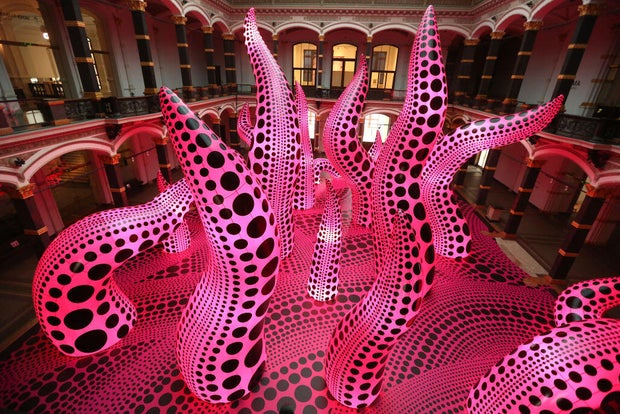
Kusama was internationally known for transforming hallucinations and psychological distress into an expansive artistic practice featuring obsessive polka-dot paintings, pumpkin motifs, mirrored “infinity rooms”, soft sculptures and experimental performances. In 2024, the National Gallery of Victoria in Melbourne mounted a major retrospective containing nearly 200 works, including an unprecedented number of infinity rooms. By April 2025, the exhibition had attracted more than 500,000 visitors, making it the most visited exhibition in Australian history. Her works are also held or displayed by the National Gallery of Australia in Canberra and the Art Gallery of New South Wales in Sydney.
Born in Matsumoto City in 1929, Kusama experienced visual and auditory hallucinations, anxiety and dissociation from childhood. She moved to New York at 27 to pursue art and quickly became part of the avant-garde scene, exhibiting alongside Andy Warhol, James Rosenquist and Claes Oldenburg. Her early installations included phallic soft sculptures and the room-sized work Aggregation: One Thousand Boats Show. During the 1960s, she also staged anti-war “Kusama Happenings”, experimental films, public performances and events associated with the hippie movement.
At the 1966 Venice Biennale, she unofficially presented Narcissus Garden, an installation of 1,500 mirrored balls that she sold to visitors. She later represented Japan at the 1993 biennale, becoming the first solo woman to do so. After returning to Japan, Kusama voluntarily entered a mental hospital around 1977 and continued working daily at a nearby studio. She described art as her method of coping with pain, anxiety and fear, and said in 2017 that she continued to experience hallucinations that inspired her paintings.
Entities: Yayoi Kusama, National Gallery of Victoria, National Gallery of Australia, Art Gallery of New South Wales, Matsumoto City, Japan • Tone: analytical • Sentiment: neutral • Intent: inform
27-08-2026
Yayoi Kusama, the acclaimed Japanese contemporary artist whose paintings, sculptures and immersive installations were defined by vivid polka dots and repetitive motifs, died Aug. 14 at a hospital in Tokyo at age 97, according to the Yayoi Kusama Studio. Her studio said she continued painting until her final days and devoted her life to exploring “forever love and eternal soul.”
Kusama became one of Japan’s most respected artists, exhibiting internationally at institutions including New York’s Museum of Modern Art and Whitney Museum of American Art. Her signature imagery—dots, nets, swirls and other repeated forms—was inspired in part by hallucinations she said she had experienced since childhood. Although she spent decades in and out of psychiatric institutions, she pursued her career with determination and became one of the first Japanese women to move to New York to develop her art, arriving in 1957.
She initially faced poverty and obscurity in a New York art scene dominated by “action painting,” but continued developing her distinctive style. Her experimental performances in the late 1960s, including anti-war “happenings,” attracted media attention, and she formed friendships with artists such as Andy Warhol, Georgia O’Keeffe and Joseph Cornell. Her work later expanded to films, novels, sculptures and immersive mirror installations.
Kusama achieved widespread recognition later in life, collaborating with fashion brands such as Louis Vuitton and licensing her designs for consumer products. Her work sold for millions at auction, and Japan awarded her the Order of Culture in 2016. Despite being labeled pop, avant-garde and feminist, she resisted categories that she felt failed to capture her art. The article portrays her as both vulnerable and defiant: a shy person who feared “everything,” yet an “artistic revolutionary” who remained committed to painting and hoped her work would continue inspiring people after her death.
Entities: Yayoi Kusama, Yayoi Kusama Studio, Tokyo, Japan, New York City, Museum of Modern Art • Tone: emotional • Sentiment: positive • Intent: inform
27-08-2026
Japanese artist Yayoi Kusama has died at the age of 97. The article traces her career from childhood hallucinations and social pressures in Japan to her emergence as an internationally recognized avant-garde artist. Kusama began seeing dots and net-like patterns around age 10, experiences she later connected to psychological distress and transformed into recurring artistic motifs. She described her art as an expression of her life and mental illness, while treating creative work as both a survival strategy and a form of therapy.
After studying at the Kyoto School of Arts and Crafts, Kusama held exhibitions in Matsumoto before leaving Japan for New York in 1958. Supported initially by her mother and encouraged by Georgia O’Keeffe, she became part of the New York avant-garde. Her repetitive “Infinity Net” paintings, soft sculptures and performances attracted attention, although the article emphasizes that male contemporaries often achieved greater commercial success. Kusama addressed sexism, sexuality and war through works such as “Traveling Life” and through provocative antiwar “happenings” involving self-obliteration, nudity and sexual imagery.
Her 1966 installation “Narcissus Garden,” consisting of 1,500 mirrored spheres displayed at the Venice Biennale, criticized the commercialization of the art world. Kusama later represented Japan at the Biennale in 1993 and eventually achieved enormous global popularity. Exhibitions at The Broad in Los Angeles and Tate Modern in London sold out rapidly, while her works reached multimillion-dollar auction prices.
Kusama returned to Japan in 1973 and lived in a psychiatric clinic in Tokyo while continuing to produce paintings, sculptures and installations. Her immersive “Infinity Rooms,” polka-dot works and themes of infinity made her one of the world’s best-known contemporary artists. Despite lifelong mental-health challenges, she remained productive until late in life and expressed gratitude to her audience, saying she created art for the healing of humanity.
Entities: Yayoi Kusama, Georgia O’Keeffe, Andrew Solomon, Stephan Diederich, Museum Ludwig • Tone: analytical • Sentiment: neutral • Intent: inform
27-08-2026
Japanese artist Yayoi Kusama, internationally renowned for her polka-dotted sculptures, pumpkins, infinity nets and mirrored “Infinity Rooms,” has died at age 97. Her representative, David Zwirner, said she died of multiple organ failure at a Tokyo hospital on Aug. 14, 2026. Kusama’s work transformed personal obsessions, hallucinations and repetitive patterns into immersive art that explored infinity, identity and humanity’s place in the cosmos. She once wrote that Earth was “only one polka dot among a million stars in the cosmos.”
Born in Matsumoto, Japan, Kusama grew up in a family that owned a seed nursery and endured forced labor in a parachute factory during World War II. She experienced hallucinations from childhood and used drawing to manage the fear they caused. After discovering Georgia O’Keeffe’s work, Kusama wrote to the American artist, who encouraged her to pursue art and travel to the United States.
Kusama moved to New York in the late 1950s and became part of the avant-garde scene. During the Vietnam War, she staged provocative antiwar happenings, including painting polka dots on protestors’ bodies and sending President Richard Nixon an open letter proposing sex in exchange for ending the war. Her work shocked audiences, but she also faced sexism and exoticization in the male-dominated art world.
After returning to Japan in the early 1970s, Kusama lived in a psychiatric institution while continuing to create art in a nearby studio. Her international reputation grew through exhibitions at institutions including the Smithsonian’s Hirshhorn and London’s Tate. The Yayoi Kusama Museum opened in Tokyo in 2017, and her imagery later appeared on commercial products. Despite her immense popularity, Kusama consistently described art as essential to her survival and identity.
Entities: Yayoi Kusama, David Zwirner, Georgia O’Keeffe, Richard Nixon, Richard Castellane • Tone: analytical • Sentiment: neutral • Intent: inform
27-08-2026
Japanese artist Yayoi Kusama, internationally renowned for her vivid polka dots and immersive installations, has died at 97. Her studio said she died Aug. 14 at a hospital in Tokyo, though it did not disclose the cause. The studio described Kusama as continuing to paint until her final days and pledged to carry forward her message of love, hope and strength through art.
Kusama was one of Japan’s most respected contemporary artists, with work exhibited at institutions including New York’s Museum of Modern Art and Whitney Museum of American Art, as well as Germany’s Museum Ludwig. Her repetitive motifs—dots, nets, swirls and wormlike forms—appeared on paintings, sculptures and museum installations, producing a vibrant psychedelic style. She said the imagery reflected hallucinations she had experienced since childhood.
After leaving Japan for New York in 1957, Kusama endured poverty and obscurity while developing a style that differed from the era’s dominant action painting. She organized provocative anti-war performances, befriended artists such as Andy Warhol, Georgia O’Keeffe and Joseph Cornell, and produced works including “Macaroni Girl,” “The Visionary Flowers” and “Mirrored Corridor.” Although she was diagnosed with mental illness and spent decades in and out of a psychiatric institution, she continued working with remarkable persistence.
In later years, Kusama achieved broad international fame and made her art accessible through collaborations with brands such as Louis Vuitton and licensed products. Her work sold for millions, and in 2016 she received Japan’s Order of Culture. Kusama repeatedly insisted that she would paint until her death and hoped her art would remain meaningful for thousands of years. Museums, artists and admirers around the world mourned her, including Tokyo Gov. Yuriko Koike and artist Yoshitomo Nara, who called her “Kusama-sensei,” or teacher.
Entities: Yayoi Kusama, Yayoi Kusama Studio, Tokyo, Japan, Museum of Modern Art, Whitney Museum of American Art • Tone: emotional • Sentiment: negative • Intent: inform
27-08-2026
Yayoi Kusama, the Japanese artist whose polka dots, pumpkins and immersive Infinity Mirror Rooms made her one of the world’s most recognizable contemporary artists, has died aged 97. Her company, Yayoi Kusama Inc, said she died in a Tokyo hospital on 14 August and continued painting until her final days.
Born in Matsumoto in 1929, Kusama endured an unhappy childhood, including abuse from her mother and hallucinations in which flowers appeared to swarm and speak to her. Drawing became a way to cope with these experiences. After studying traditional nihonga painting in Kyoto, she rejected the conventional future planned for her and moved to New York in 1958.
There, she developed her Infinity Net paintings and later her soft sculptures, installations and performances. Her work explored infinity, repetition, sexuality and “self-obliteration,” often reflecting her psychological experiences. Although she worked alongside movements such as pop art and minimalism, Kusama argued that the art establishment marginalized her and that male artists appropriated ideas she had pioneered.
Her provocative activities included naked “body festivals,” a 1966 presentation of Narcissus Garden at the Venice Biennale, a same-sex wedding performance and protests against the Vietnam War and the Soviet invasion of Czechoslovakia. After the death of artist Joseph Cornell in 1972 and worsening mental-health problems, Kusama returned to Japan. In 1977, she entered a psychiatric hospital in Tokyo, where she lived permanently while working daily at a nearby studio.
Recognition arrived later in life, particularly after her 1993 Venice Biennale presentation and the global popularity of her mirrored rooms and pumpkin installations. Her work became especially suited to social-media photography, helping make her exhibitions hugely popular. The article presents Kusama as both a pioneering avant-garde artist and a late-blooming global superstar whose career transformed personal distress into influential, widely accessible art.
Entities: Yayoi Kusama, Yayoi Kusama Inc, Infinity Mirror Rooms, Matsumoto, Japan, New York • Tone: analytical • Sentiment: positive • Intent: inform
27-08-2026
The Washington Post obituary reports the death of Yayoi Kusama, the influential Japanese artist known for her distinctive polka-dot paintings and mirrored “infinity rooms.” Kusama died Aug. 14 at a hospital in Tokyo at the age of 97. The supplied article excerpt describes her as a beguiling figure associated with the 1960s avant-garde, a period when artists challenged established conventions and explored experimental forms of expression.
The excerpt emphasizes the unusual trajectory of Kusama’s public career. After participating in the avant-garde, she disappeared from public view for decades. Despite that long absence, she eventually achieved global recognition late in life. Her repeated use of polka dots became one of her defining artistic signatures, while her mirrored installations—often called “infinity rooms”—became especially popular with contemporary audiences and on social media because of their immersive, visually striking environments.
The article presents Kusama’s career as one marked by both early experimentation and a later worldwide resurgence. Her work’s ability to create a sense of wonder and its distinctive visual language helped make her one of the most recognizable modern artists. The excerpt does not provide details about the cause of death, her family, funeral arrangements, or the full chronology of her career. It also includes website material about comments, recommended stories, newsletters, and subscription offers, which is unrelated to the obituary and has been excluded from the cleaned text.
Overall, the available passage serves as a concise obituary introduction: it announces Kusama’s death, identifies her age and location at death, and highlights the artistic innovations and late-life popularity that defined her public legacy.
Entities: Yayoi Kusama, Juno Carmel, The Washington Post, Tokyo, Japan • Tone: emotional • Sentiment: negative • Intent: inform