28-08-2026
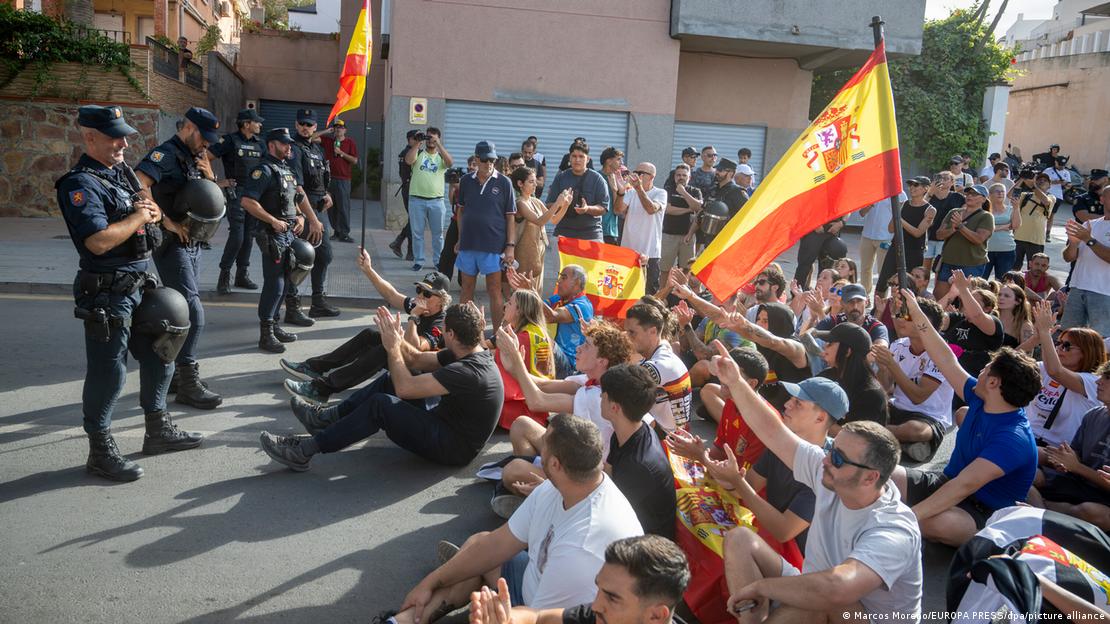
The article reports an escalation of anti-migrant protests in Ceuta, a Spanish territory, where demonstrators targeted shelters being used by migrants. According to the report, protesters dismantled and burned migrant tents, disrupting the temporary accommodation provided for people who had recently arrived. The demonstrations also obstructed a Red Cross convoy transporting essential supplies, specifically food and water, to those affected.
Police were deployed in response to the unrest. The protesters’ stated demand was that recent migrants be deported. The reported actions therefore involved both physical damage to migrant shelters and the interruption of humanitarian assistance. The incident highlights tensions surrounding migration in Ceuta and the risks faced by migrants when political protests interfere with aid and basic services.
The report does not provide further details about the number of protesters or migrants involved, whether anyone was injured or arrested, the extent of the damage, or how long the aid convoy was blocked. It also does not include statements from the Red Cross, Spanish authorities, or the migrants themselves. The available account focuses on the escalation of the protests, the burning of shelters, the obstruction of humanitarian supplies, and the police response. The article was published on 28 August 2026.
Entities: Ceuta, Spain, Anti-migrant protesters, Migrants, Migrant shelters • Tone: urgent • Sentiment: negative • Intent: inform
28-08-2026
Violence has escalated in Ceuta, a Spanish exclave in North Africa, one month after tens of thousands of migrants crossed from Morocco into the city. Local tensions have grown as several thousand migrants, many of them children, remain in Ceuta and sleep on beaches and streets. Residents say they feel unsafe and are worried about pressure on public services, while opposition parties accuse Spain’s socialist-led government of mishandling the crisis.
According to figures from Ceuta’s mayor, at least 72,000 people crossed into the city on 30 and 31 July, mostly by swimming around a border fence. At least 100 people died during the crossing. Most migrants returned to Morocco within hours, but several thousand remained. Anti-migrant demonstrations that were initially peaceful have recently turned violent. Locals blocked Red Cross workers from distributing food and water, migrant camps were set alight on Trampolín beach, and clashes occurred with police. These incidents followed the arrest of 12 migrants accused of attacking a military vehicle. Vigilante groups have reportedly pursued migrants, while journalists and film crews have also faced threats.
The government has appealed for calm and accused the conservative People’s Party and far-right Vox of inflaming tensions. Vox politician José María Figaredo is being investigated over comments urging that migrants be “hunted down”. The government has centralised management of the crisis, apologised to residents who felt abandoned, and proposed moving migrants into public buildings while their legal status is processed.
The crisis has also revived disputes over the role of Morocco and the sovereignty of Ceuta and Melilla. Right-wing and far-left politicians allege Morocco helped facilitate the crossing to pressure Spain, while Prime Minister Pedro Sánchez’s government blames people traffickers and describes Morocco as a reliable partner. Morocco continues to claim the territories, a position Spain has firmly rejected.
Entities: Ceuta, Morocco, Spain, Melilla, Pedro Sánchez • Tone: analytical • Sentiment: negative • Intent: inform
28-08-2026
Protesters in Ceuta, a Spanish enclave in North Africa, clashed with police on Thursday after setting fire to parts of a migrant camp on a beach. Spanish television footage showed demonstrators throwing objects into the flames, while police pushed them back and migrants moved toward a pier. Earlier, about 70 people reportedly attacked a military vehicle with stones and other objects. Local residents also attempted to block Red Cross vehicles from delivering food, shouting slogans including “They should leave” and “Out with the Red Cross.”
The unrest follows a mass influx of migrants from Morocco in July, when more than 70,000 people—or approximately 72,000 according to another account—entered Ceuta in the hope of reaching mainland Europe. Most later returned to Morocco, but thousands remain in Ceuta, living on beaches or streets. The Spanish government estimates that fewer than 7,000 migrants remain, while Ceuta officials put the number at at least 10,000. The enclave has a population of about 84,000.
The situation has created increasing political pressure for Prime Minister Pedro Sánchez’s left-wing government. Spain’s conservative opposition accuses Madrid of failing both migrants and Ceuta’s residents and is calling for stricter migration policies. The government has accelerated efforts to identify migrants and determine who can be returned to Morocco, while approving additional funding for unaccompanied minors who qualify for special protection. The crisis has also intensified divisions within the European Union.
Humanitarian conditions remain severe. Many migrants lack food and shelter, and more than 80 people are believed to have died while attempting to reach Ceuta. Residents have complained about insecurity and poor sanitary conditions. Authorities have established emergency shelter, and the government plans to transfer around 500 girls, some reportedly as young as 10 or 11, to mainland Spain. However, migrants continue to sleep outdoors, and tensions between residents, authorities, aid groups and migrants remain high.
Entities: Ceuta, Morocco, Spain, Spanish government in Madrid, Pedro Sánchez • Tone: urgent • Sentiment: negative • Intent: inform
28-08-2026
Spain has asked the European Union’s border agency, Frontex, to help process migrants who remain in Ceuta after crossing from Morocco in late July. Spanish Interior Minister Fernando Grande-Marlaska requested assistance from Beate Gminder, the European Commission’s director general for migration and home affairs, and asked for 10 additional Frontex officers to support migrant screening.
More than 70,000 people reportedly crossed into Ceuta, a Spanish territory in North Africa with approximately 80,000 residents, creating a major EU migration emergency and prompting strong criticism of Spain’s leftist government. Although most migrants were quickly returned to Morocco, at least 5,000 remained in Ceuta.
Spain cannot simply deport the remaining migrants as a group. International law and Spanish court rulings require individual assessments before people can be returned. The government has also ruled out transferring the migrants to mainland Spain, fearing additional criticism from the political opposition and some EU member states.
The continued presence of migrants has intensified tensions in Ceuta. Residents have staged protests, some of which have become violent. Migrants have established a camp on Trampolin Beach, where tents have reportedly been attacked and set on fire. During one protest, migrants allegedly stoned an army vehicle, injuring a soldier and other migrants. Twelve migrants were arrested, while El Pais reported that 11 migrants were expelled from the territory, citing sources at Ceuta’s main court.
The situation has also raised concerns about the welfare of unaccompanied minors and the authorities’ capacity to protect and process those remaining in the enclave. Frontex’s proposed involvement is intended to help Spain manage screening procedures while it deals with legal constraints, public anger, and strained local resources.
Entities: Spain, Ceuta, Frontex, European Border and Coast Guard Agency, Fernando Grande-Marlaska • Tone: neutral • Sentiment: negative • Intent: inform
28-08-2026
Ceuta’s authorities say the Spanish North African enclave is facing an extreme crisis after at least 72,000 migrants entered from Morocco over several days in July. Spain has asked the European Commission to provide assistance from Frontex, Europol and the European Union Agency for Asylum to help identify, interview and process migrants who remain in Ceuta irregularly. Because of limited space, some interviews and screening procedures are expected to be conducted electronically. Madrid has also requested that Operation Minerva, a joint Spanish-Frontex border operation, be extended until 2 September.
Spain’s Interior Ministry announced additional border-control measures, including extensions to the Tarajal and Benzú breakwaters, maritime containment buoys, drone surveillance, light intervention vessels and remotely operated underwater equipment. Ceuta’s Assembly unanimously called for immediate action, warning that the city was “on the verge of collapse.” President Juan Vivas said the influx had disrupted the enclave’s normal way of life and urged the government to return migrants to their countries when legally permitted.
Tensions have increased as thousands of migrants reportedly remain on Ceuta’s streets and beaches. Residents have protested, and some demonstrations have led to clashes with police and the burning of migrants’ belongings. A soldier was injured after migrants allegedly threw stones at troops, while several Moroccan migrants were arrested in separate incidents involving attacks on police officers.
Interior Minister Fernando Grande-Marlaska appealed for calm and condemned violence by both protesters and migrants. The government says every person must be identified to determine whether they qualify for asylum or should be deported, while unaccompanied migrant children must receive special protection. Right-wing and far-right parties have demanded the mass return of migrants, but Grande-Marlaska accused them of encouraging hatred and confrontation. Ceuta and Melilla remain the European Union’s only land borders with Africa.
Entities: Ceuta, Spain, Morocco, European Commission, Frontex • Tone: urgent • Sentiment: negative • Intent: inform
28-08-2026
Spain’s left-wing government has urged calm in Ceuta after protests over migrants escalated into clashes between local residents and police. The unrest follows a mass influx in July, when approximately 60,000 people crossed from Morocco into the Spanish North African enclave over several days, triggering a Europe-wide migrant alert. Although the government says most migrants have since left, thousands reportedly remain in Ceuta, a densely populated territory of about 80,000 people and 18.5 square kilometres.
Demonstrations intensified on Thursday at a beach where migrants had been sleeping. Residents reportedly destroyed a migrant camp, and some migrants’ belongings were burned. In a separate incident, a soldier was injured after migrants threw stones at troops. Twelve Moroccan migrants were arrested, followed by two additional arrests after an alleged attack on a police officer.
Interior Minister Fernando Grande-Marlaska called for an end to all violence, arguing that violence could not resolve Ceuta’s complex problems. Ceuta’s regional leader, Juan Vivas, said peaceful demonstrations demanding a return to normality were legitimate but warned that authorities would act against vandalism and anyone taking the law into their own hands.
Right-wing and far-right parties have called for all migrants to be detained and returned to their countries of origin. Grande-Marlaska accused those parties of encouraging hatred and confrontation. The government maintains that every migrant must be individually identified to determine eligibility for asylum or possible deportation, while unaccompanied migrant children must receive special protection. Ceuta and Melilla are Spain’s two North African territories and form the European Union’s only land borders with Africa.
Entities: Ceuta, Melilla, Spain’s left-wing government, Morocco, Fernando Grande-Marlaska • Tone: neutral • Sentiment: negative • Intent: inform