28-08-2026
Six months after the United States and Israel launched attacks on Iran, the conflict has reached a stalemate with no clear path to a lasting settlement. The initial goal of the offensive was reportedly to overthrow Iran’s hard-line clerical leadership and install a pro-Western government. Instead, Iran’s leadership survived the assassination of senior figures and weeks of bombing, while the population largely ignored calls to revolt. The result, according to former US diplomat Barbara Leaf, has been a more radical and resilient regime.
Iran has used its strategic position to retaliate against Gulf states hosting US troops and to exert pressure on the Strait of Hormuz, disrupting global energy markets. Brent crude has remained about 22% above its pre-war level after months of volatility. A ceasefire agreed to by Donald Trump in April and a subsequent agreement signed with Iran in June both failed to produce a durable peace.
The conflict has also exposed weaknesses in the US security guarantees on which Gulf Arab nations have relied for decades. Israel has again fought regional adversaries without decisively defeating them, while prospects for normalising relations with Saudi Arabia have weakened. Iran’s new hard-line leadership, headed by Supreme Leader Ayatollah Mojtaba Khamenei, has strengthened ties with military allies and warned that continued economic pressure could halt oil exports from the Persian Gulf.
Inside Tehran, public opinion is divided. Many residents describe severe economic hardship and say sanctions and inflation have made everyday life increasingly difficult. Others emphasize national unity, pride in Iran’s survival, and resistance to American pressure. Analysts caution that Iran may be mistaking its ability to withstand the war for an outright victory, and that its leverage through the Strait of Hormuz may not be sufficient to achieve all of its objectives.
Entities: Iran War, United States, Israel, Iran, Strait of Hormuz • Tone: analytical • Sentiment: negative • Intent: analyze
28-08-2026
Iran is preparing a list of conditions that must be met before it will reopen the Strait of Hormuz, according to Mohsen Rezaei, secretary of Iran’s Supreme National Security Council. Rezaei said mediators had asked Tehran to specify its demands and that ending the regional war was one of Iran’s conditions.
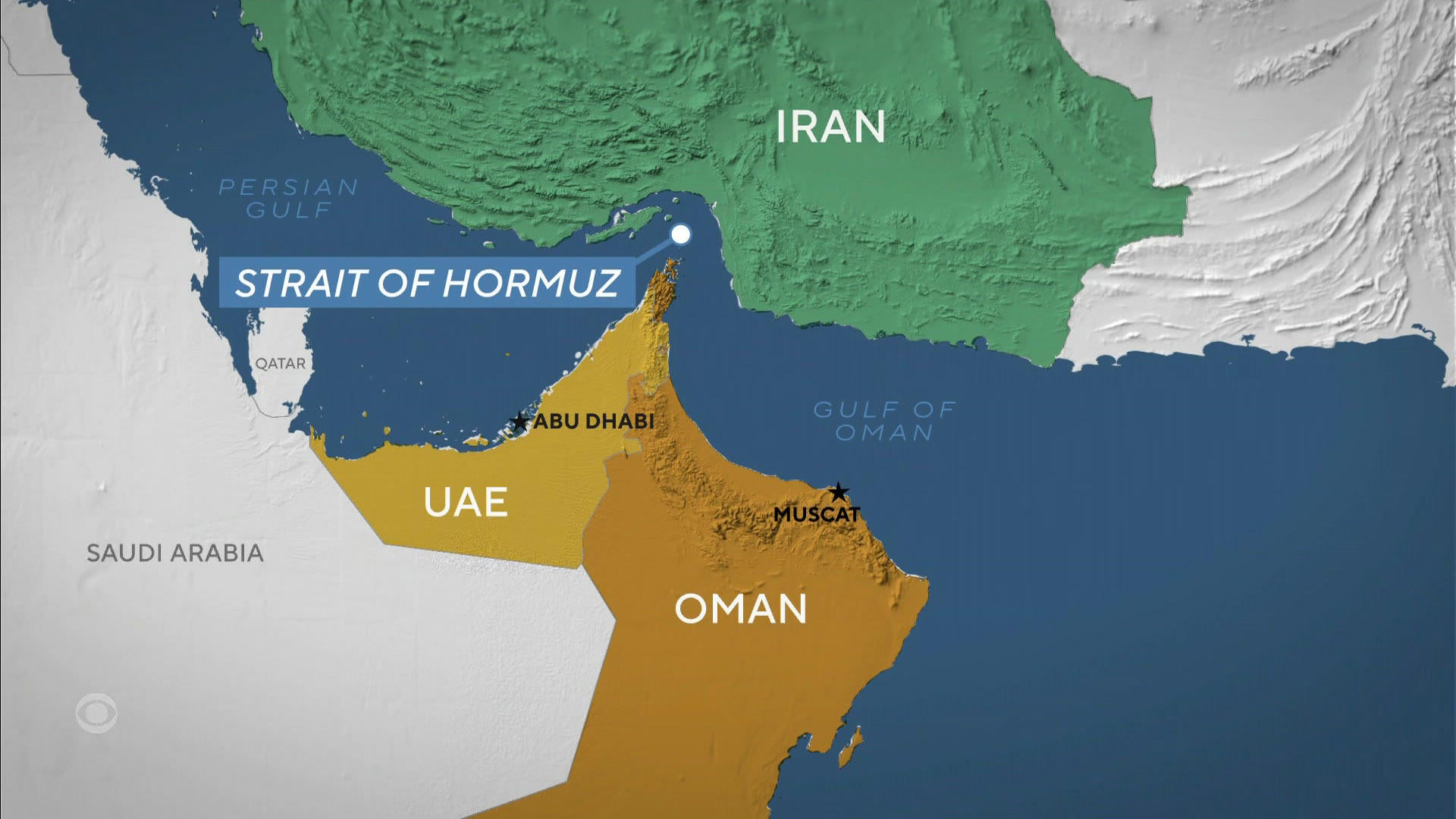
His comments came during a visit to Tehran by Qatar’s prime minister, the third delegation from a mediating country to visit Iran within a week after trips by officials from Pakistan and Oman. Qatar said discussions focused on creating a temporary shipping corridor through the strait and cooperating on mine clearance. Rezaei said Iran and Oman had agreed on a route passing through both countries’ territorial waters, with vessels using a central channel if the United States met Tehran’s demands.
Iranian officials said Washington would need to take practical steps before the waterway could be reopened. An Islamic Revolutionary Guard Corps spokesperson listed several requirements: lifting the blockade of Iranian ports, compensating Iran for war damages and removing sanctions.
The dispute follows the effective closure of the strait after a US-Israeli bombing campaign began on February 28. The waterway briefly reopened under a June memorandum of understanding, under which Iran was expected to clear mines and allow ships to pass free of charge for 60 days, while the United States lifted its blockade and eased sanctions. Iran later closed the strait again, accusing Washington of violating the agreement. The United States responded by reinstating its blockade. Although the memorandum formally expired on August 17, both sides had abandoned it weeks earlier.
US President Donald Trump said the strait was open and claimed US forces had cleared mines and that millions of barrels of oil were passing through it. However, a US administration source said the blockade remained in place and that no talks were scheduled. Trump separately said he was in no hurry to resume negotiations with Iran.
Entities: Iran, Strait of Hormuz, Mohsen Rezaei, Supreme National Security Council, Qatar • Tone: analytical • Sentiment: neutral • Intent: inform
28-08-2026
This Al Jazeera liveblog reports on the continuing US-Israel conflict with Iran and its effects on shipping, energy markets, regional security and civilians. US Treasury Secretary Scott Bessent said the naval blockade of Iranian ports and the related “Operation Economic Outcast” would further damage Iran’s economy. He claimed the United States had helped move 130 million barrels of oil through the Gulf during the previous 14 days, while Iran had moved none.
US Senator Mark Kelly criticized President Donald Trump’s handling of the conflict, arguing that the administration has limited options: escalate with ground troops, withdraw, or pursue economic pressure while rebuilding strained European alliances. Kelly said Americans were already paying more for fuel and food, and condemned attacks that killed Iranian children. He argued that diplomacy, economic pressure and restored alliances would be preferable to further military escalation.
Shipping traffic through the Strait of Hormuz remained sharply reduced. Preliminary Kpler data cited by Reuters showed five commodity vessels crossed the waterway, compared with 17 the previous day and a 10-day average of 15. Oil prices nevertheless moved lower, with Brent and West Texas Intermediate heading toward weekly losses.
The liveblog also describes the impact on Iranian fishermen in Bandar Abbas, where sanctions, fuel shortages, higher equipment costs, bombing threats, sea mines and the naval blockade have reduced fishing activity and raised seafood prices. Other updates include Israeli shelling near Damascus, which reportedly caused no injuries, and Syria’s demand for a complete Israeli withdrawal from territory it says Israel controls unlawfully.
Additional analysis examines Israeli political divisions through the historical Altalena episode and tracks Trump’s frequent Truth Social posts about Iran during the six-month conflict. The supplied article ends during an incomplete update about Trump keeping “all options” open.
Entities: Iran, Donald Trump, Scott Bessent, Mark Kelly, United States naval blockade • Tone: urgent • Sentiment: negative • Intent: inform
28-08-2026
The article examines the Iran war at its six-month mark, emphasizing the absence of a clear diplomatic or military resolution and the increasingly mixed signals from U.S. President Donald Trump. Although Trump has claimed that U.S. military strikes and a blockade of the Strait of Hormuz achieved American objectives, he has also said he is not in a hurry to resume negotiations with Tehran. The administration has shifted its public focus toward economic pressure, including a campaign described as “Operation Economic Outcast,” while reportedly preparing to return diplomatic personnel to several Middle Eastern missions.
The conflict has produced significant human, economic and geopolitical costs. U.S. Rep. Adam Smith cited 19 American service members killed and more than 750 wounded, along with thousands of civilian deaths across the region. Iran has suffered damage to its leadership, disrupted fuel supplies and sharp price increases, including an estimated 60 per cent rise in rice prices and a 150 per cent increase in beef prices. The International Monetary Fund forecasts that Iran’s economy will contract by more than five per cent this year.
The war has also disrupted shipping through the Strait of Hormuz, with commercial activity estimated at only 5 to 15 per cent of prewar levels. U.S. Defence Secretary Pete Hegseth estimated military costs at $37.5 billion US, though Democrats and outside analysts argue the figure understates the broader expense and impact on weapons stockpiles. Critics also say the conflict has increased global instability, strained relations with U.S. allies and contributed to higher domestic prices.
While most Republicans have not opposed the war, Rep. Thomas Massie has argued that the administration violated the War Powers Act by continuing military operations beyond the statutory deadline. The article concludes that the administration may have missed an opportunity to exploit Iran’s domestic unrest through less costly political and economic pressure.
Entities: Iran war, Donald Trump, United States, Israel, Strait of Hormuz • Tone: analytical • Sentiment: negative • Intent: inform
28-08-2026
The article reports a renewed diplomatic push involving Iran, Qatar, Pakistan and Oman as the nearly six-month Iran war continues to disrupt shipping through the Strait of Hormuz. An Iranian military-linked news outlet says Iranian and Omani officials have agreed on a temporary shipping route, but implementation would depend on the United States lifting its naval blockade and returning to the terms of an earlier truce. Qatar’s foreign minister traveled to Tehran to discuss conditions for resuming direct negotiations, while Pakistan and Qatar continue efforts to mediate between Washington and Tehran.
President Trump says Iran is seeking a deal and that the U.S. blockade and sanctions have severely damaged the Iranian economy. Iranian officials publicly maintain that the Strait will remain closed unless Washington returns to the temporary agreement. The article highlights conflicting claims about access to the waterway: Trump says it is open and that U.S. forces have assisted 24 oil tankers, while U.S. Central Command says 75 ships have been redirected by the blockade. Trump also claims the Strait has been cleared of mines, although U.S. allies reportedly question whether demining is complete.
The conflict is also producing wider regional and strategic consequences. Pakistan agreed to help strengthen Kuwait’s military through training, capacity building and border-management assistance, reflecting Gulf states’ interest in alternative security arrangements. The United States is considering possible sanctions against Chinese banks that cooperate with Iran, despite China’s rejection of the sanctions as illegal and unilateral. Separately, American and NATO officials warn that Patriot missile interceptor stocks in Europe have fallen to “beyond critical” levels because weapons have been transferred to the Middle East to defend against Iranian drones and missiles. The article presents diplomacy, maritime restrictions, sanctions and military-resource shortages as interconnected effects of the ongoing conflict.
Entities: Iran, United States, Strait of Hormuz, Donald Trump, Qatar • Tone: analytical • Sentiment: negative • Intent: inform
28-08-2026
The article reports a renewed diplomatic effort to end the nearly six-month war between the United States and Iran, centered on a proposal involving the Strait of Hormuz. An Iranian military-linked news outlet says Iranian and Omani officials have agreed on a temporary shipping route through the strait. Iran reportedly wants the United States to lift its naval blockade of Iranian ports and return to the terms of an earlier truce before implementing the plan. Qatar’s foreign minister visited Tehran to discuss conditions for renewed dialogue, while Qatar and Pakistan continued efforts to bring Washington and Tehran back into direct negotiations.
The diplomatic push comes as President Trump offers conflicting signals. He has claimed the United States is achieving a major victory and that Iran is “begging to make a deal,” while also saying the war will continue as long as necessary and that his administration is not seeking talks. Iranian officials have maintained that the strait will remain closed to shipping unless the previous agreement is restored. The U.S. military says its blockade has redirected 75 vessels entering or leaving Iranian ports.
The article also examines the economic and geopolitical consequences of the conflict. Treasury Secretary Scott Bessent is seeking China’s cooperation in an effort to economically isolate Iran, but Beijing has rejected the sanctions as illegal and unilateral. China remains an important buyer of Iranian oil and has pledged to protect its interests, potentially worsening U.S.-China tensions.
A six-month assessment concludes that the war has not produced the transformation sought by the United States and Israel. Iran’s leadership survived attacks and appears more hardened, Gulf Arab states are questioning their reliance on U.S. security guarantees, and hopes for Saudi-Israeli normalization have weakened. Pakistan’s new defense agreement with Kuwait further illustrates regional efforts to develop alternative security arrangements. The supplied article ends during an incomplete update about the blockade.
Entities: Iran, United States, Strait of Hormuz, Oman, Qatar • Tone: analytical • Sentiment: negative • Intent: inform
28-08-2026
Iran is urging countries to resist implementing U.S. sanctions against Tehran, calling compliance with Washington’s measures complicity in enforcing what it described as the United States’ “illegal will.” The appeal comes as Iran outlines conditions for reopening the Strait of Hormuz, a strategically important shipping route through which a significant volume of global oil normally passes.
The White House announced an “economic D-Day” campaign against Iran, threatening countries that continue doing business with Tehran after six months of war. The shift toward economic pressure followed a period of military conflict. President Donald Trump said the United States was not seeking talks with Iran, but Iranian Foreign Minister Abbas Araghchi said diplomacy could still resume if Washington reduces pressure, respects Iran’s rights, communicates respectfully and honors its commitments. He said renewed negotiations depend on the United States recognizing that pressure is ineffective.
Iranian official Mohsen Rezaei added that any understanding over Hormuz would need to address wider regional conflicts. He called for an end to military operations in Lebanon, Gaza and Syria, an Israeli withdrawal from Lebanon and an end to attacks on Syria. Rezaei said these issues must be resolved before trust with Washington can be rebuilt.
Shipping through Hormuz remains severely restricted. Iran has permitted a temporary, limited corridor, while Oman and Iran have discussed a joint shipping route and mine-clearing mission. The U.S. Central Command said its forces had helped clear mines and facilitate the passage of about 1,500 commercial vessels and 750 million barrels of crude. However, Kpler data showed only five ships crossed the strait on Tuesday, compared with roughly 130 per day before the war. Oil prices edged lower as markets monitored crude flows, while a return to formal U.S.-Iran negotiations appeared unlikely in the near term.
Entities: Iran, United States, Abbas Araghchi, Donald Trump, Mohsen Rezaei • Tone: analytical • Sentiment: negative • Intent: inform
28-08-2026
Iran has tied the reopening of the Strait of Hormuz to a broader end to military conflicts across the Middle East, raising the stakes for any negotiations with the United States. Mohsen Rezaei, secretary of Iran’s Supreme National Security Council, said in an interview with Lebanese outlet Al Manar TV that an agreement on maritime access would require an end to military operations in Lebanon, Gaza and Syria. He specifically demanded an end to the Gaza conflict, an Israeli withdrawal from Lebanon and a halt to Israeli attacks on Syria. Rezaei said the strait could not be separated from the region’s wider conflicts and that Washington would need to demonstrate its commitment before Iran would restore trust.
Diplomatic progress appears unlikely in the near term. The Wall Street Journal reported that President Donald Trump’s administration is not interested in returning to the framework of a June memorandum of understanding with Iran. Instead, Trump is reportedly waiting to determine whether intensified economic pressure will succeed. The United States recently announced an “economic D-Day” campaign targeting Iran and countries that conduct business with it, signaling a shift away from direct military action toward sanctions and other economic measures.
Iran is permitting a temporary, limited shipping corridor through Hormuz, while future access will depend on discussions with Washington. Oman and Iran have also considered a joint shipping route and a mine-clearing mission. U.S. Central Command said American forces had helped clear mines and facilitate the passage of about 1,500 commercial vessels carrying 750 million barrels of crude oil. However, Kpler data showed only five ships crossed the strait on Tuesday, compared with roughly 130 per day before the war began, underscoring the continuing disruption to a critical global oil route.
Entities: Strait of Hormuz, Iran, United States, Donald Trump, Mohsen Rezaei • Tone: analytical • Sentiment: negative • Intent: inform
28-08-2026
Six months after the United States and Israel launched a major war against Iran, the Iranian regime remains in power despite severe military, economic and human losses. The initial five-week bombing campaign, conducted from February 28 to April 8, killed senior Iranian leaders, including Supreme Leader Ayatollah Ali Khamenei, and largely destroyed Iran’s air force, air defenses and navy. Iran’s missile and drone capabilities were also damaged, but the country retains enough weapons to threaten Israel and Gulf states. It has also used control of the Strait of Hormuz, a crucial route for global oil and gas shipments, as leverage. The disruption has raised energy and commodity prices worldwide, while negotiations with Oman to reopen the waterway remain opposed by the Trump administration.
Diplomatic efforts have stalled. Although Washington initially said it would pursue talks after the ceasefire, negotiations failed to produce a breakthrough, and the United States has continued periodic airstrikes and introduced new sanctions through Operation Economic Outcast. Iran’s economy is suffering from war damage, an oil blockade, long-term mismanagement, inflation above 80% and a projected 5.4% contraction this year.
Nevertheless, analysts say the regime’s internal control remains solid. The leadership has adopted a harder line, even as some senior officials reportedly believe that prolonged conflict threatens the government’s survival and favor renewed negotiations. For ordinary Iranians, the consequences include shortages, unaffordable medical care, debt and a sharp decline in living standards. The war has killed 3,375 Iranians and injured more than 33,000, while 18 U.S. service members have died and hundreds have been injured. The article concludes that neither side appears capable of achieving a decisive victory, making compromise the most realistic outcome.
Entities: Iranian regime, United States, Israel, Tehran, Ayatollah Ali Khamenei • Tone: analytical • Sentiment: negative • Intent: analyze
28-08-2026
The article examines whether new oil pipelines can reduce the strategic importance of the Strait of Hormuz, as claimed by Treasury Secretary Scott Bessent. Bessent predicted that within two years, 50% to 70% of energy products currently shipped through the strait could instead move through underground pipelines, making the waterway “irrelevant.” Energy analysts and the International Energy Agency (IEA) strongly dispute that assessment.
The United Arab Emirates expects a $3 billion pipeline expansion to Fujairah to begin operating next year, while Saudi Arabia and other Gulf producers are pursuing projects that will take several more years. Even after those projects are completed, analysts estimate that more than 10 million barrels of oil per day—roughly half of prewar levels—could still need to pass through Hormuz. Planned bypass capacity is expected to reach only 10 million to 12 million barrels per day, compared with approximately 20 million barrels per day before the Iran war.
Experts also emphasize that alternative pipelines and ports remain vulnerable to attack. The Bab el-Mandeb strait is another potential route, but Iran-aligned Houthi attacks have threatened shipping there. Iraq is exploring pipeline routes through Turkey, Syria and Jordan, though these plans face political and security obstacles. Liquefied natural gas presents an even greater challenge because it cannot be transported through oil pipelines; Qatar, a major LNG exporter, remains dependent on routes affected by Iran’s influence.
Analysts say the shipping disruption will continue to produce elevated oil, natural gas and food prices. They argue that bypass infrastructure can provide partial relief during instability but cannot replace Hormuz or resolve the underlying conflict. A durable regional political settlement, rather than pipelines alone, is needed to restore reliable energy flows.
Entities: Strait of Hormuz, Scott Bessent, Iran, United States, International Energy Agency (IEA) • Tone: analytical • Sentiment: negative • Intent: analyze
28-08-2026
The article examines the US-Israel war against Iran as it reaches its six-month mark, highlighting the widening gap between President Donald Trump’s earlier promises and the conflict’s continuing reality. Trump had repeatedly characterized the intervention as a short “little excursion” that would last only weeks and had pledged to keep the United States out of “endless wars.” However, the war remains unresolved, and Trump now says he is “not in a hurry” to bring Iran back to negotiations.
Trump argues that the US campaign of bombing and blockade has severely damaged Iran’s leadership, military and economy. He claims Iranian forces are struggling to pay their troops and have limited remaining capacity. Nevertheless, the administration has shifted its strategy away from additional military action and toward intensified economic pressure. The new approach focuses on threatening sanctions against countries and entities that continue doing business with Tehran.
The change in strategy comes as officials consider declining US munitions stockpiles after months of fighting. This has raised concerns that the prolonged war could weaken American military readiness elsewhere in the world. The article presents the sanctions policy as both a response to the limits of continued military operations and an attempt to force Iran into a weaker position.
Trump’s increasingly relaxed public statements about the war’s duration suggest that his earlier expectation of a quick victory is fading. While he continues to portray Iran’s government as being under severe strain, he also says the United States is not currently seeking talks. The article therefore depicts a conflict that has become protracted, costly and strategically uncertain, despite the president’s repeated claims that Iran is close to collapse.
Entities: Donald Trump, United States, Israel, Iran, Tehran • Tone: analytical • Sentiment: negative • Intent: analyze
28-08-2026
Diplomatic efforts to reopen the Strait of Hormuz have intensified, with Iran preparing a list of conditions under which it would restore normal shipping through the strategically vital waterway. Qatari Prime Minister and Foreign Minister Sheikh Mohammed bin Abdulrahman Al Thani visited Tehran on Aug 27 and urged Iranian leaders to respect freedom of navigation under international law. Qatar and Pakistan previously helped broker a June memorandum of understanding that produced a ceasefire and proposed arrangements for shipping, but the agreement collapsed after Iran and the United States disagreed over Tehran’s authority to control traffic. Iran’s Supreme National Security Council secretary, Mohsen Rezaei, said Tehran had agreed with Oman on a shared shipping corridor, including sections in both Iranian and Omani waters. He said vessels could use a designated central channel if the United States accepted Iran’s conditions. Those demands have previously included lifting sanctions, ending the US blockade of Iranian ports and providing compensation. It remains uncertain whether Iran will modify them sufficiently to satisfy Washington. The United States has shifted away from negotiations toward economic pressure, while Tehran and Washington have exchanged increasingly hostile statements. US military officials say American forces have cleared sea mines and helped commercial vessels transit the strait. However, shipping remains far below normal levels because of continuing Iranian threats and uncertainty over the waterway’s security. US Central Command said 1,500 commercial vessels carrying nearly 750 million barrels of crude had transited with American assistance, but tracking services estimate traffic at only 5 per cent to 15 per cent of normal volumes. The International Maritime Organisation has recorded 70 incidents since the war began, resulting in 19 seafarer deaths.
Entities: Strait of Hormuz, Iran, Qatar, Oman, United States • Tone: analytical • Sentiment: negative • Intent: inform
28-08-2026
The head of US Central Command, Admiral Brad Cooper, said US forces have cleared internationally recognised shipping lanes in the Strait of Hormuz of sea mines allegedly laid by Iran. Using divers, special operations forces and aircraft, the military cleared the strait’s traffic separation scheme and assisted nearly 1,500 commercial vessels in passing through the waterway.
According to Cooper, the assisted ships transported almost 750 million barrels of crude oil to global markets. He said international shipping lanes were now open and that commercial traffic was gaining momentum. Cooper also stated that Iran had been unable to export oil since the United States resumed a naval blockade in mid-July. US forces reportedly turned back approximately 75 vessels that attempted to breach the blockade and disabled three others after they failed to comply with orders.
Washington is seeking to restore commercial traffic through the Strait of Hormuz, a crucial route for global energy supplies. However, shipping data indicates that activity remains below pre-conflict levels. Kpler data reported by Reuters showed that only 10 commodity vessels passed through the strait on Wednesday, compared with a 10-day average of about 15 vessels.
Oil flows are also significantly reduced. More than 20 million barrels per day previously moved through the strait before the conflict began on February 28, but current flows remain only a fraction of that level. The article therefore presents the US military’s assertion that the lanes have been cleared alongside evidence that shipping and energy exports have not yet returned to normal.
Entities: Strait of Hormuz, Iran, United States Central Command (CENTCOM), Admiral Brad Cooper, US military • Tone: analytical • Sentiment: neutral • Intent: inform