25-10-2026
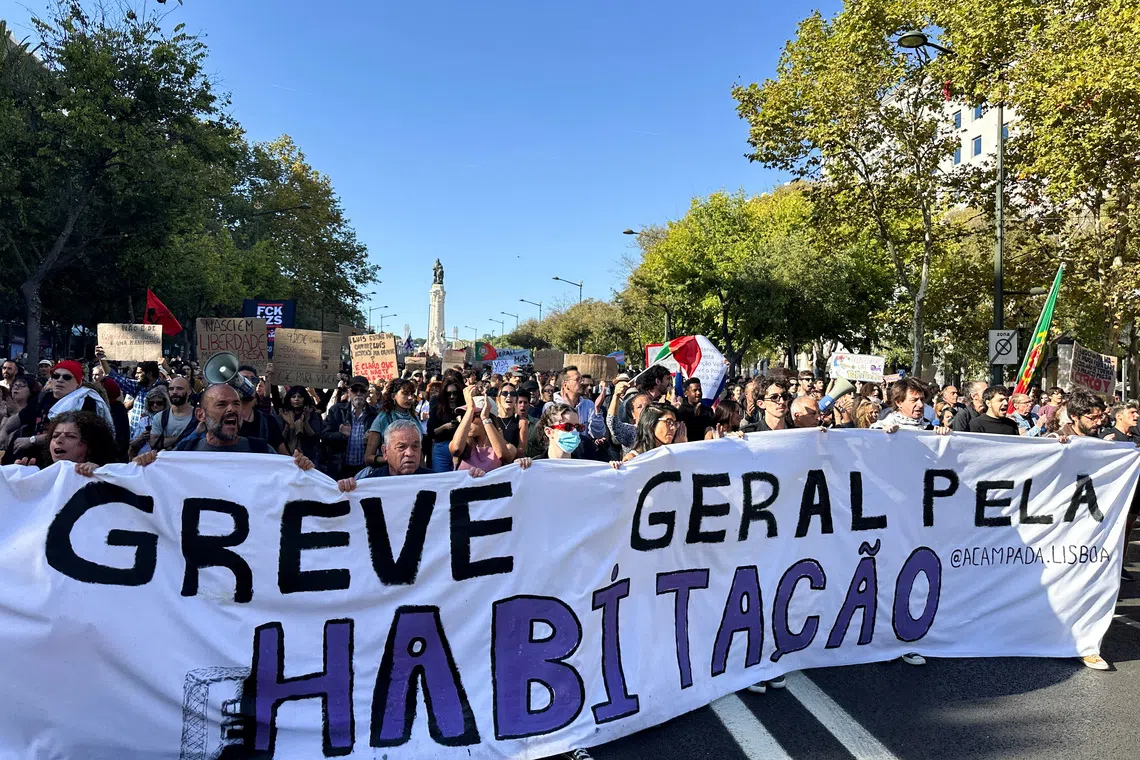
Portuguese police dismantled housing protest camps in Lisbon and Porto on October 25, arresting 31 people in total. In Lisbon, dozens of officers, some accompanied by police dogs, entered the camp at Rossio Square shortly after 2 a.m. and baton-charged demonstrators. The camp had been established after thousands marched through the city on Saturday, with protesters pitching more than 100 tents. Police had warned that the tents would be removed and that people who resisted could face disobedience charges. A smaller camp of around 50 tents in Porto was also cleared.
Police described the operations as proportionate and said those arrested in Lisbon were released later and expected to appear in court on Monday. Authorities reported seven minor injuries among officers and protesters across the two operations. The activist group Casa para Viver, or Homes to Live, said 60 people were hurt and called for another demonstration outside parliament on Tuesday. The group condemned the early-morning police action as repression rather than a response to the housing crisis.
The protests reflect Portugal’s severe affordability problems. Home prices have more than doubled since 2017, while rents for new leases have nearly doubled. Young people are among those most affected, and the Bank of Portugal estimates a national shortage of 300,000 homes—roughly equivalent to Lisbon’s entire housing stock. Protesters say high rents and living costs are putting households under pressure and demand that the government withdraw a bill that would make evictions easier and end rent caps on new leases. The legislation has passed its first parliamentary reading; the far-right Chega party abstained. The demonstrations are part of wider European discontent over housing shortages and rising rents, including recent protests in Spain and demonstrations in Paris that broadened from student concerns to opposition to government economic policies.
Entities: Portugal, Lisbon, Rossio Square, Porto, Praça D. João I • Tone: analytical • Sentiment: negative • Intent: inform
25-10-2026
Police in Lisbon and Porto moved to dismantle protest camps set up by people demanding affordable housing, leading to arrests and reported injuries early Sunday. The protests had been taking place amid Portugal’s housing crisis, with tents in Lisbon’s Rossio Square and Porto’s Praça D. João I becoming points of friction with authorities over several weeks.
Police said they intervened after dialogue ended to put an end to what they described as illegal encampments, reporting 31 arrests for disobedience. A spokeswoman for the Porto camp told news agency Lusa that there had been 37 minor injuries and two arrests. Protesters said police used batons and described the operation as intimidating and disproportionate. In both cities, demonstrators formed human chains as officers cordoned off the squares and moved in. Firecrackers were heard during the operation, and bystanders in Porto sang “Grândola Vila Morena,” a song associated with Portugal’s 1974 revolution that ended decades of dictatorship.
The camps’ organisers say they will return. Their demands include reversing the tenancy law, preventing evictions when people have no alternative housing, limiting property purchases by real-estate funds, renovating vacant buildings and capping rents. The previous day, large crowds had taken part in peaceful demonstrations, accusing the government of failing to address the housing crisis. The article reports the overnight police action and the competing accounts of the operation, while noting the broader housing-policy demands behind the protests.
Entities: Catarina dos Santos, Lisbon, Porto, Rossio Square, Praça D. João I • Tone: neutral • Sentiment: negative • Intent: inform
25-10-2026
Portuguese police cleared a housing-protest encampment in Lisbon’s Rossio Square shortly after 2 a.m. on Oct. 25, arresting several demonstrators and causing minor injuries, though the number of arrests and injuries was not immediately known. Officers moved in after warning protesters to remove their tents or face dismantling, and threatening disobedience charges against anyone who resisted. The encampment had more than 100 tents, set up after thousands marched along a major avenue. Hundreds of people gathered to defend it, following the police dismantling of a similar camp at the same square on Oct. 20.
The demonstrations respond to Portugal’s worsening housing affordability crisis. Home prices have more than doubled since 2017, and rents for new leases have nearly doubled. Young people are among those most affected. Student Vitor Gomes said housing speculation, concentrated wealth and growing inequality made him pessimistic about the future. Left Bloc lawmaker Fabian Figueiredo, who was present, called the police response disproportionate, arguing that protesters had been peaceful and there had been no public disorder.
Demonstrators are also opposing a government bill that would make evictions easier and end rent caps on new leases. The measure has passed its first parliamentary reading; the far-right Chega party abstained. The Bank of Portugal estimates that the country is short 300,000 homes, a deficit equivalent to Lisbon’s entire housing stock. The Lisbon action is part of a broader wave of housing protests, with similar demonstrations reported in Belgium, France, Italy and Spain.
Entities: Lisbon, Rossio Square, Portugal, Vitor Gomes, Fabian Figueiredo • Tone: analytical • Sentiment: negative • Intent: inform