25-10-2026
Venezuelan opposition leader and Nobel laureate María Corina Machado returned to Venezuela on Sunday, making her first appearance in the country since leaving in December. Her return comes amid uncertainty over Venezuela’s democratic future after U.S. forces removed President Nicolás Maduro in January and the Trump administration supported longtime Maduro ally Delcy Rodríguez as interim president. Rodríguez was initially authorized to serve for 90 days, but remains in office without an election being scheduled.
Machado announced her arrival online with the words “I am here. With you.” Supporters greeted her at a church in Lara state, where they applauded, embraced her and called for freedom. Opposition figure Edmundo González confirmed her arrival and said he would join her soon. U.S. President Donald Trump said he hoped Machado was safe, while praising her and saying the United States was doing well in Venezuela.
Machado had gone into hiding after being briefly detained following a protest in January 2025. She later escaped the country and appeared in Norway, where she received the 2025 Nobel Peace Prize for her work promoting democratic rights and pursuing a peaceful transition from authoritarian rule. She and her allies have since pressed for a date for a presidential election. U.S. officials have instead stressed economic stabilization and rebuilding institutions before voting.
The article recounts the disputed 2024 election, in which Machado was barred from running and González took her place. Credible evidence indicated González won decisively, but the ruling-party-controlled National Electoral Council declared Maduro the victor. Repression followed, with more than 2,000 people detained and reports of forced disappearances, torture and other rights violations.
Machado’s return had been delayed by multiple unsuccessful attempts, which her party attributed to obstacles including a cancelled boat trip and denied landing permits. Venezuelan authorities deny blocking her return, while U.S. officials deny holding her back and say they sometimes advised against returning for safety reasons. Secretary of State Marco Rubio has said Machado has the right to return, while arguing elections should wait until Venezuela’s economy and institutions are stabilized.
Entities: María Corina Machado, Nicolás Maduro, Delcy Rodríguez, Edmundo González, Donald Trump • Tone: analytical • Sentiment: neutral • Intent: inform
25-10-2026
Venezuelan opposition leader and Nobel Peace Prize laureate María Corina Machado has returned to Venezuela after nearly ten months in exile. She announced her arrival on X with the message, “I am here. With you.” Machado had left the country in December 2025 to receive the Nobel Peace Prize in Oslo and subsequently conducted much of her political activity from the United States and Panama. Her return followed seven reported attempts over the previous three months, which her party says Venezuelan authorities blocked. Some observers believed the United States had helped prevent her return, given President Donald Trump’s expressed satisfaction with interim President Delcy Rodríguez; Secretary of State Marco Rubio denied that claim.
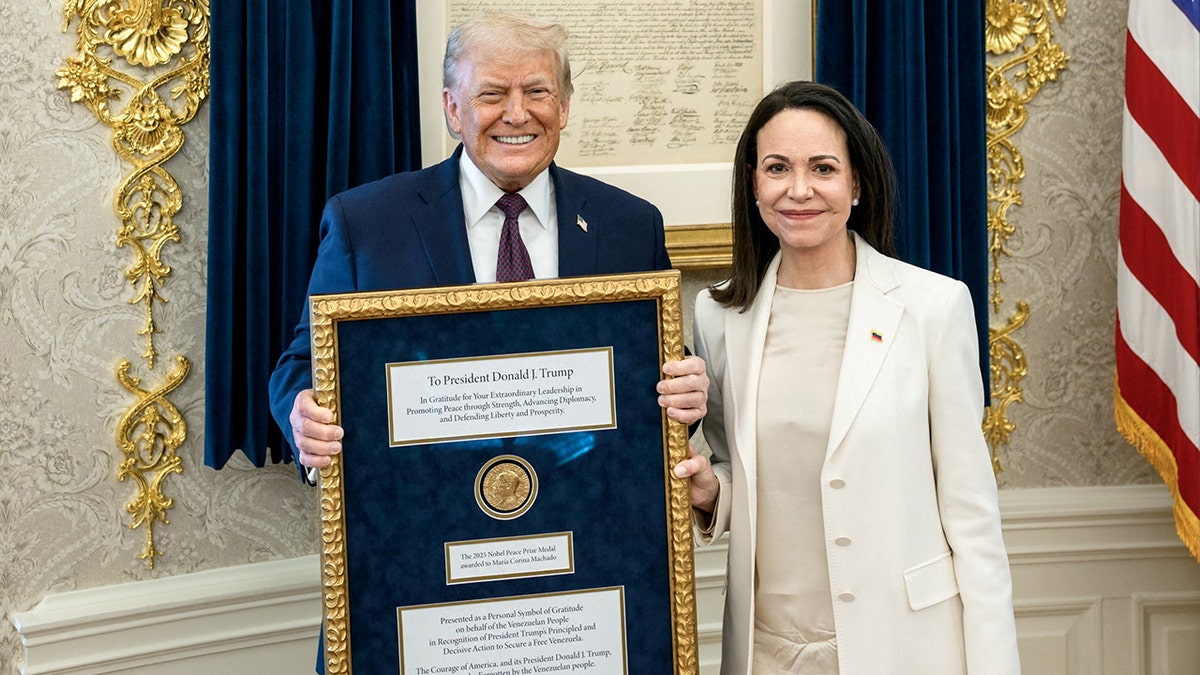
After Machado’s return, Rubio said US-supported reconciliation talks had made it possible, pointing to the release of hundreds of political prisoners and the return from exile of hundreds of opposition figures. Trump told reporters he did not know about Machado’s return but hoped she was safe, and said the United States was doing well in Venezuela. He also referred to Machado having given him her Nobel Prize.
Machado had been seeking to re-establish her political role while negotiations over Venezuela’s future proceeded without her direct participation in the country. In the week before her return, she called on Venezuelans to take to the streets and urged the government to set a date for presidential elections. Trump has praised Rodríguez, formerly Nicolás Maduro’s deputy, as her government has met US demands, especially regarding access to Venezuelan oil. Machado had accused Rodríguez’s government of fearing her return. Rodríguez had not immediately commented on Machado’s arrival. The article concludes that the central question is now what role Machado can play in a political landscape shaped by negotiations among Chavismo, opposition groups and the United States.
Entities: María Corina Machado, Nicolás Maduro, Delcy Rodríguez, Donald Trump, Marco Rubio • Tone: analytical • Sentiment: neutral • Intent: inform
25-10-2026
Venezuelan opposition leader María Corina Machado returned to Venezuela on Sunday after spending nearly a year abroad, re-entering the country amid a political transition following the U.S. capture and removal of Nicolás Maduro in January. Machado announced her return on social media, writing, “I'm here. With you all,” but did not reveal her location or explain how she had returned. Opposition figure Edmundo González, who ran for president in 2024 after Machado was barred from the race, confirmed her arrival and said he would join her soon.
President Donald Trump said he had not known about Machado’s return but expressed hope that she would be safe. He described her as “a very nice woman” and referred to her recent presentation of her Nobel Peace Prize to him. Machado received the 2025 Nobel Peace Prize for her opposition to Maduro’s government.
The article says Venezuela remains under acting President Delcy Rodríguez, Maduro’s former vice president and a longtime ally, with U.S. backing and no presidential election scheduled. Rodríguez has stayed in office beyond the period she was initially authorized to serve. Trump has praised the relationship with her administration and cited agreements involving Venezuelan oil and U.S. businesses. In September, he said it was too early to consider elections, while Machado and her allies have pressed for a date, arguing that democratic governance is necessary for long-term stability.
Machado’s return may complicate relations among the opposition, the interim government and Washington. Reuters reported that U.S. officials had asked her to delay returning. She spent much of 2025 in hiding after a brief detention following an opposition protest, then secretly left Venezuela and surfaced in Norway in December to receive her Nobel Prize. Separately, a faction of the opposition and Rodríguez’s government held talks this month on reforms to the Supreme Court and electoral authorities ahead of eventual elections; Machado’s movement did not participate.
Entities: María Corina Machado, Nicolás Maduro, Delcy Rodríguez, Donald Trump, Edmundo González • Tone: analytical • Sentiment: neutral • Intent: inform
25-10-2026
Venezuelan opposition leader and Nobel Peace Prize laureate Maria Corina Machado announced that she had returned to Venezuela on October 25, 2026, after spending more than ten months in exile. Her announcement on X was her first public appearance since December. Exiled opposition figure and former presidential candidate Edmundo Gonzalez Urrutia welcomed her return, describing it as an important moment for Venezuelans and saying he hoped to join her soon in advancing the country toward freedom.
Machado left Venezuela covertly in late 2025 to receive the Nobel Peace Prize in Norway. Her party says Venezuelan authorities blocked at least seven attempts by her to return. Before leaving, she had spent 11 months in hiding after being briefly detained following a protest in January 2025. The award recognized her peaceful opposition to the authoritarian government of then-president Nicolás Maduro.
The article places Machado’s return amid uncertainty over Venezuela’s democratic future and the United States’ influence. In the month after she fled, US forces captured Maduro and took him to New York to face criminal charges. US President Donald Trump has received praise from Machado for the operation, but Washington has allowed Maduro’s deputy, Delcy Rodríguez, to serve as interim president. The article says Rodríguez has remained in the role beyond her authorized term and that no election has been scheduled.
Machado and her allies are seeking a date for a presidential election, while US officials have prioritized economic stabilization. The report presents her homecoming as a significant political development but underscores the unresolved questions surrounding Venezuela’s transition and the timing of elections.
Entities: Maria Corina Machado, Edmundo Gonzalez Urrutia, Nicolás Maduro, Donald Trump, Delcy Rodríguez • Tone: analytical • Sentiment: neutral • Intent: inform
25-10-2026
Venezuelan opposition leader and Nobel Peace Prize laureate María Corina Machado returned to Venezuela on October 25, 2026, after spending ten months abroad. She announced her arrival on social media, writing, “I'm here, with you all.” Her first public appearance was at the Church of Santa Rosa in Lara state, where worshippers quickly gathered around her. She then traveled to Caracas, where hundreds of supporters surrounded her car; she posted “Here” upon reaching the capital.
Machado’s return presents a challenge to interim President Delcy Rodríguez, who assumed power after U.S. forces captured former president Nicolás Maduro in January. Machado has urged that elections be held soon, while the U.S. administration has said Venezuela should stabilize first. The article notes that Washington has repeatedly sidelined Machado despite her prominence in the opposition.
Machado went into hiding in January 2025 after being briefly detained following a protest. She later left Venezuela in a clandestine escape and reappeared in Norway in December, where she received the Nobel Peace Prize for her peaceful opposition to Maduro’s authoritarian government.
Opposition figure Edmundo González, who contested Maduro in the disputed 2024 presidential election and is now in exile in Spain, welcomed her return as an important day for Venezuelans. He described Machado as returning with the country’s “sovereign voice” and said he expected to join her soon to advance the cause of freedom.
President Donald Trump said he had not known about Machado’s return, called her “a very nice woman,” and expressed hope that she was safe. Secretary of State Marco Rubio attributed her return to U.S.-supported reconciliation talks and said the United States expects political freedoms to be respected. Rubio described the talks as Venezuela’s best opportunity in thirty years to achieve a free and fair election and an enduring democracy.
Entities: María Corina Machado, Venezuela, Caracas, Barquisimeto, Lara state • Tone: analytical • Sentiment: neutral • Intent: inform
25-10-2026
Nobel Peace Prize-winning Venezuelan opposition leader María Corina Machado returned to Venezuela on Sunday, making her first public appearance in the country since leaving late last year over concerns for her safety. She had been barred from running for office for 15 years and was still technically considered a fugitive by the Venezuelan government because she had been prohibited from leaving when she departed. After returning, she was seen entering a church in Caracas. Opposition leader Edmundo González confirmed her presence and said her return would help lead and guide the country’s political process.
Machado’s return comes after a dramatic change in Venezuela’s leadership: former president Nicolás Maduro was captured by US special forces in January and is facing drug-trafficking charges in the United States. Maduro’s former vice president, Delcy Rodríguez, is serving as interim president and has maintained contact with Trump administration officials, including Secretary of State Marco Rubio. The Trump administration has expressed support for elections and reforms but has not set a timeline, and it continues to work with Rodríguez on priorities including oil. Trump previously dismissed the idea of Machado taking over as Venezuela’s leader, saying she lacked popular support. Asked about her return, he called her a “very nice woman,” referred to her having given him her Nobel Prize, and said he hoped she was safe.
The article also reviews the disputed 2024 presidential election. González had replaced Machado as the opposition candidate, and evidence suggested he defeated Maduro by a wide margin, but Maduro was declared the winner amid allegations of electoral misconduct. US officials have urged Venezuela to release political prisoners and make other reforms. Machado has called for authorities to set a date for the next election and recently endorsed Florida Republican Rep. María Elvira Salazar for reelection. How Machado managed to reenter Venezuela remains unclear.
Entities: María Corina Machado, Nicolás Maduro, Edmundo González, Delcy Rodríguez, Donald Trump • Tone: analytical • Sentiment: neutral • Intent: inform