25-10-2026
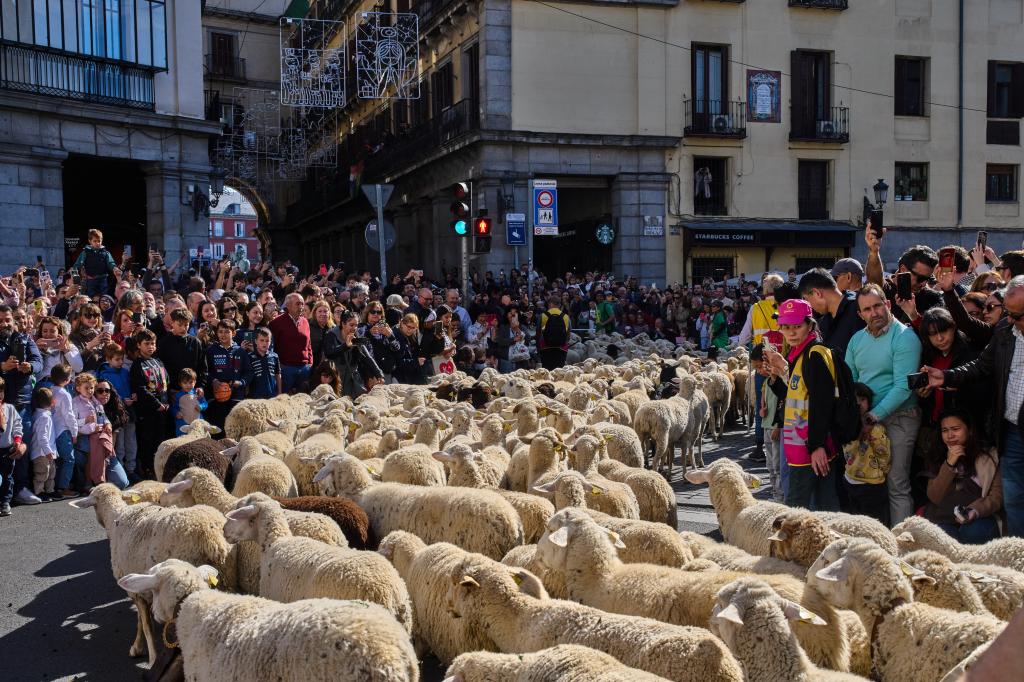
Madrid’s annual Transhumance Festival brought 1,250 sheep and 160 goats through the city, turning streets and squares usually dominated by traffic into a procession watched by residents and tourists. The flock set out from Casa de Campo, crossed Puente del Rey and continued through the historic centre. Bells, bleating animals and folk music contributed to the festive atmosphere. Some shepherds wore traditional clothing, carried lambs or offered treats to their animals.
The event celebrates transhumance, the centuries-old practice of moving livestock between summer and winter pastures along vías pecuarias, or traditional drovers’ routes. At Plaza de la Villa, officials performed a symbolic payment of 50 maravedís per thousand animals, a ceremony whose history dates to 1418.
This year, the procession’s route was changed to avoid Puerta del Sol. Housing campaigners had established a protest camp there following the eviction and subsequent death of an 87-year-old local resident. The festival also draws attention to the environmental role of traditional grazing: livestock consume vegetation that could otherwise become flammable undergrowth, helping to reduce wildfire risk. The event thus combines a public celebration of rural heritage with a reminder of the practical benefits associated with pastoral practices.
Entities: Transhumance Festival, Madrid, Casa de Campo, Puente del Rey, Plaza de la Villa • Tone: neutral • Sentiment: neutral • Intent: inform
25-10-2026
More than 1,400 sheep and goats paraded through Madrid on Sunday for the city’s 33rd annual Transhumance Festival. The flock—1,250 sheep and 160 goats—set off from Casa de Campo, crossed the Puente del Rey and continued through the historic centre. Residents and tourists gathered along the route to watch, take photographs and follow the procession, accompanied by the sound of bells, bleating animals and folk music. Some shepherds wore traditional clothing, carried lambs or gave treats to their animals, while the livestock passed through streets and squares usually dominated by traffic.
The festival celebrates transhumance, the centuries-old movement of livestock between summer and winter pastures along designated drovers’ routes, known in Spanish as vías pecuarias. At Plaza de la Villa, officials also performed a traditional symbolic payment of 50 maravedís per thousand animals, a ceremony said to date from 1418.
The route was changed this year to avoid Puerta del Sol, where housing campaigners had established a protest camp after the eviction and subsequent death of an 87-year-old local resident. The article also points to the environmental role of traditional grazing: animals eat vegetation that might otherwise become flammable undergrowth, helping reduce wildfire risks. Overall, the procession combined a public celebration of rural heritage with a reminder of the historical and practical significance of pastoral traditions.
Entities: Madrid, Transhumance Festival, Casa de Campo, Puente del Rey, Plaza de la Villa • Tone: neutral • Sentiment: positive • Intent: inform
25-10-2026
Madrid’s annual Transhumance Festival brought thousands of sheep and goats through the capital on Sunday, attracting tourists and local spectators. The event celebrates the traditional seasonal movement of livestock between grazing grounds, a practice known as transhumance. Madrid developed along an ancient network of livestock routes that once crossed open fields and woodland in the area now occupied by the city. This year, however, organizers changed the parade’s historic route to avoid Puerta del Sol, where housing activists have established a protest camp.
The demonstrations gained momentum last month after the eviction of María del Carmen Abascal, an 87-year-old woman who had lived in her downtown home for seven decades. Known as Maricarmen, she died in hospital shortly after being evicted. The sheep and goats were instead guided through other central streets, with bells and bleats accompanying the procession.
The festival also draws attention to the environmental role of traditional grazing. Livestock can clear brush and other flammable undergrowth, helping to limit the spread of wildfires. Despite those environmental benefits and the tradition’s cultural significance, transhumance is declining in Spain. A population exodus from the interior began around 1950, as younger generations left rural communities for jobs and opportunities in cities. Modern farming methods have further reduced the practice, which is now maintained by a small group of Spanish farmers. Madrid has held the festival since 1994, and similar events take place in towns and smaller cities in Italy, France, and California.
Entities: Madrid, Transhumance Festival, Puerta del Sol, María del Carmen Abascal (Maricarmen), Spain • Tone: analytical • Sentiment: neutral • Intent: inform