25-06-2026
The article reports that the International Atomic Energy Agency (IAEA) expects its inspectors to visit Iranian nuclear sites as part of a preliminary US-Iran peace agreement, despite public disagreements between Washington and Tehran over the extent of access. IAEA chief Rafael Grossi said inspections will happen and that the agency is working out the dates, procedures, and locations, emphasizing that the agreement explicitly places the dilution of Iran’s highly enriched uranium under IAEA supervision. Iran’s deputy foreign minister, however, said access to damaged nuclear facilities and nuclear material would be dealt with only in a final deal with the United States, after sanctions relief and other practical steps.
The article places these remarks in the broader context of ongoing diplomatic efforts following a 12-day US-Israeli war with Iran in June 2025, during which Iranian nuclear sites were bombed. US Secretary of State Marco Rubio was simultaneously traveling in the Gulf to reassure allies that any deal would not weaken regional security. The preliminary understanding reportedly includes commitments on nuclear material and the Strait of Hormuz, with the US lifting a naval blockade on Iranian ports. It also notes that oil prices fell after the agreement and that some ships have already passed through the strait under a UN evacuation scheme.
The piece further explains the stakes of inspection access: the IAEA says it still lacks information about the location and status of Iran’s enriched uranium stockpile, some of which is believed to be in underground tunnels at Isfahan. The article reviews the history of Iran’s nuclear program, including the 2015 deal, Trump’s withdrawal from it in 2018, and Iran’s subsequent breaches of enrichment limits. Overall, the story frames the dispute as a mix of technical verification, political signaling, and regional security concerns, with a final agreement still pending.
Entities: International Atomic Energy Agency (IAEA), Rafael Grossi, Iran, United States, Marco Rubio • Tone: analytical • Sentiment: neutral • Intent: inform
25-06-2026
The article argues that the Trump administration’s Iran negotiations should be viewed through the lens of Hezbollah, which the piece describes as Iran’s most valuable and dangerous proxy. It says that although the recent U.S.-Iran memorandum of understanding does not name Hezbollah explicitly, one of its clauses about ending hostilities in the region effectively covers the group because Hezbollah’s attacks and military activity are central to Tehran’s regional strategy. The article quotes foreign policy experts who say Hezbollah is not merely an allied militia but a forward arm of Iran’s Islamic Revolutionary Guard Corps (IRGC) and Quds Force, created, trained, armed, and funded by Tehran.
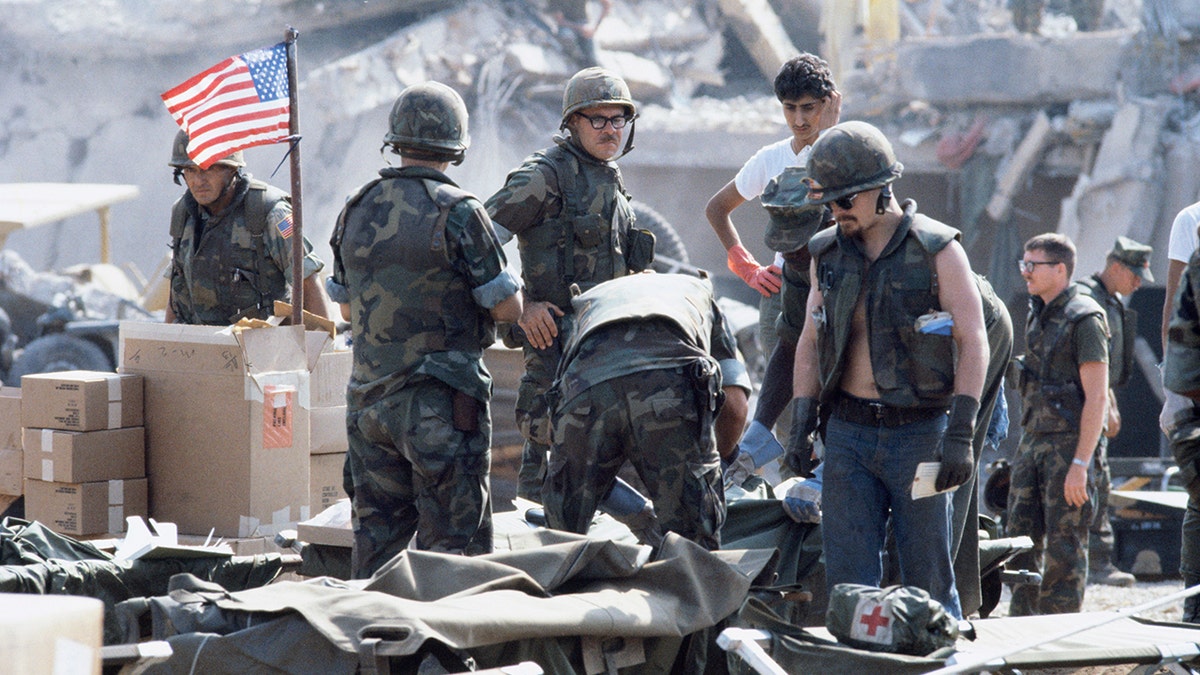
It emphasizes Hezbollah’s long record of violence against Americans, citing the 1983 Marine barracks bombing in Beirut, attacks on U.S. embassies, airplane hijackings, and its support for Iraqi militias responsible for the deaths of more than 600 U.S. soldiers. The article also references Hezbollah’s role in training al Qaeda in the use of suicide car bombs and notes a 2025 U.S. District Court ruling connecting Iran, through Hezbollah, to the torture of Lebanese American Amer Fakhoury. Secretary of State Marco Rubio is quoted as saying that any meaningful end to regional conflict is impossible while Iranian proxies such as Hezbollah and Hamas continue missile and drone attacks and terrorism. Overall, the piece frames Hezbollah as a major obstacle to any sustainable U.S.-Iran deal and as a direct threat to American and Israeli security.
Entities: Hezbollah, Iran, Trump administration, Marco Rubio, Lisa Daftari • Tone: analytical • Sentiment: negative • Intent: analyze
25-06-2026
US Secretary of State Marco Rubio traveled through Gulf states to reassure regional allies that Washington will protect their interests as it negotiates a final settlement to the Middle East war with Iran. In Kuwait City, Rubio said the United States would remain fully aligned with Gulf partners and would not take any action that undermines their security. His trip included meetings with leaders in Kuwait and the United Arab Emirates, followed by a Gulf Cooperation Council session in Bahrain.
The article frames the diplomacy against the backdrop of the recent US-Iran conflict, during which Iran launched missiles and drones at Gulf states and disrupted oil and gas flows through the Strait of Hormuz. The initial US-Iran arrangement created a 60-day negotiating process but did not resolve Gulf concerns about Iran’s missile program, proxy forces, or control over the strait. Rubio reaffirmed US support for free navigation and rejected the idea of fees or tolls for shipping through Hormuz, while Iran signaled it intended to preserve control and possibly charge maritime service fees.
The story also highlights Iran’s attempt to portray the deal as a victory, as well as parallel discussions involving Qatar, Oman, Saudi Arabia, Iraq, and Iran about the strait and broader reconciliation. It notes that technical US-Iran talks are expected to resume soon. Separately, the piece mentions Lebanon, where ceasefire stability remains linked to the wider regional conflict, with Hezbollah and Israel exchanging accusations over renewed violence. Overall, the article presents an ongoing diplomatic effort to manage a fragile postwar settlement while trying to prevent further escalation and reassure anxious Gulf allies.
Entities: Marco Rubio, Donald Trump, Mark Rutte, Iran, United States • Tone: analytical • Sentiment: neutral • Intent: inform