24-06-2026
New York’s Democratic primary produced a strong showing for candidates backed by Mayor Zohran Mamdani, a democratic socialist who is trying to push the city’s Democratic Party further left. The biggest result came in New York’s 10th congressional district, where incumbent Dan Goldman lost to progressive challenger Brad Lander by a wide margin. The race highlighted deep divisions inside the party, especially over Israel and the Gaza war, since Goldman was supported by pro-Israel groups while Lander has accused Israel of genocide in Gaza.
Two other Mamdani-endorsed democratic socialists also won: Claire Valdez defeated Brooklyn Borough President Antonio Reynoso in the 7th district, and Darializa Avila Chevalier, a Columbia University doctoral student and pro-Palestinian protest participant, unseated longtime incumbent Adriano Espaillat in the 13th district. Mamdani celebrated those victories as proof of his growing influence and of a movement centered on working-class politics, while also framing them as evidence that voters want “better Democrats.”
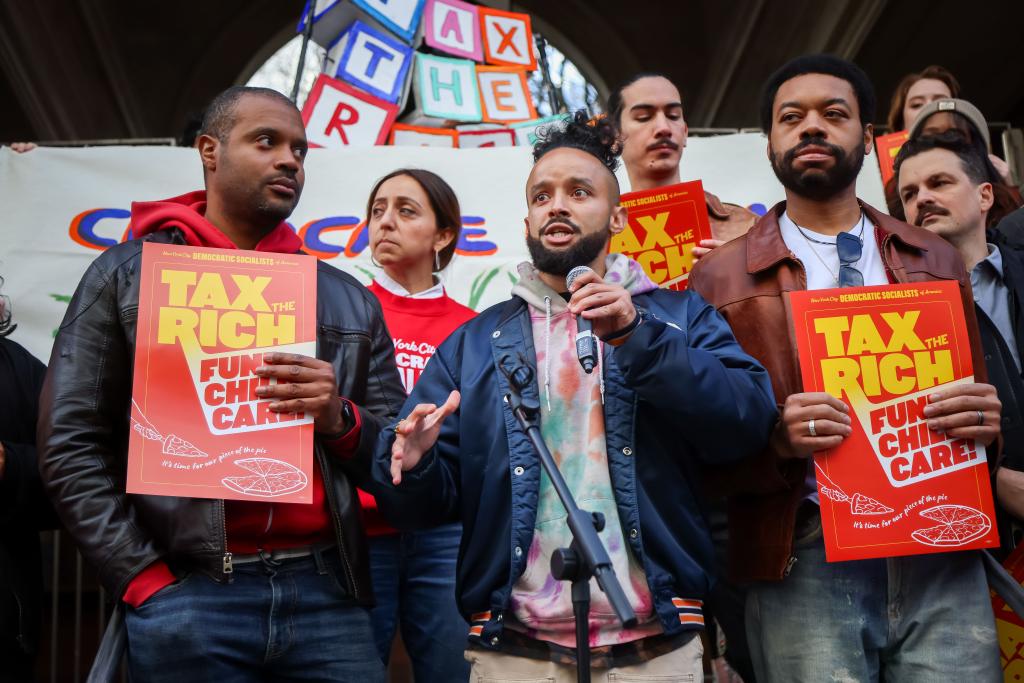
The results were not welcomed by establishment Democrats, who worry that openly left-wing candidates could struggle in swing districts during the general election and that slogans such as “abolish ICE” and “tax the rich” may be politically damaging. House Democratic leader Hakeem Jeffries downplayed the implications, saying a few primary results would not redefine House Democrats. The article presents the primaries as a test of Mamdani’s political reach and a broader struggle over the direction of the Democratic Party in New York and nationally.
Entities: Zohran Mamdani, Dan Goldman, Brad Lander, Claire Valdez, Darializa Avila Chevalier • Tone: analytical • Sentiment: neutral • Intent: inform
24-06-2026
Three candidates endorsed by New York City Mayor Zohran Mamdani won Democratic primaries for U.S. House seats in New York City, giving the mayor and his political allies a significant boost in local Democratic politics. The winners included Brad Lander, who defeated incumbent Rep. Dan Goldman in the 10th District; Darializa Avila Chevalier, who beat incumbent Rep. Adriano Espaillat in the 13th District; and Claire Valdez, who won the open 7th District race after Rep. Nydia Velázquez chose not to seek reelection. The article frames these victories as part of the broader rise of Mamdani-aligned progressive politics, with the Democratic Socialists of America backing Chevalier and Valdez and Mamdani emphasizing a vision of electing “better Democrats” focused on working people.
The story also highlights a competitive race in Manhattan’s 12th District, where state Assemblyman Micah Lasher defeated Alex Bores and other contenders, including Jake Schlossberg, grandson of President John F. Kennedy. That contest drew intense outside spending, with two PACs tied to major artificial intelligence companies spending a combined $20 million to support or oppose Bores. Overall, the article suggests that the primary results reflect both the strength of progressive organizing in New York City and the growing influence of money and tech industry interests in local Democratic races. The winners are widely expected to prevail in the general election because of the districts’ heavy Democratic lean.
Entities: Zohran Mamdani, Brad Lander, Dan Goldman, Darializa Avila Chevalier, Adriano Espaillat • Tone: analytical • Sentiment: neutral • Intent: inform
24-06-2026
Tuesday’s primaries offered a mixed but revealing picture of the political mood inside both parties. In New York City, Mayor Zohran Mamdani scored a major ideological victory as candidates he backed won three congressional primaries, including two defeats of incumbent Democrats. The results boosted the city’s democratic socialist wing and highlighted growing unrest within the Democratic Party, especially over leadership, party direction, and the war in Gaza and Israel policy. At the same time, not all Democratic contests moved left: moderate or establishment-aligned candidates prevailed in some races, including New York’s 12th District, Utah’s 1st District, and Iowa’s Senate primary, suggesting the party remains split between progressive energy and electability concerns.
The article argues that these outcomes foreshadow larger fights ahead of the 2026 midterms and the 2028 presidential primary, where Democrats will have to navigate a base eager for change but divided on ideology. It also emphasizes that Israel remains a central fault line, with candidates and voters increasingly willing to challenge long-standing pro-Israel orthodoxy. On the Republican side, Donald Trump’s sway over South Carolina GOP voters appeared weaker than expected, underscoring that his influence is not absolute even in red states. Overall, the article portrays a party system in flux, with Democratic primaries becoming a battleground over identity, foreign policy, and the future leadership of the party.
Entities: Zohran Mamdani, Darializa Avila Chevalier, Claire Valdez, Brad Lander, Adriano Espaillat • Tone: analytical • Sentiment: neutral • Intent: inform
24-06-2026
The article reports a strong showing for Democratic Socialists of America (DSA)-backed candidates in New York state Democratic primary elections, describing the results as a socialist “red wave” that could significantly expand the group’s influence in Albany. According to early vote totals cited in the piece, seven of eight DSA-endorsed candidates were poised to win, potentially lifting the group’s representation to 14 seats from nine if they also prevail in the general election. The article highlights several notable upsets, including DSA challengers defeating incumbent Democratic Assembly members Erik Dilan, Stefani Zinerman, and Jenifer Rajkumar in Brooklyn and Queens.
The story also details victories by other DSA-aligned or Mamdani-backed candidates across New York City. These include Aber Kawas winning a Queens-area state Senate nomination, Illapa Sairitupa taking a crowded Lower East Side/Chinatown primary, Diana Moreno retaining a special-election Assembly seat, and Samantha Kattan winning an open Queens seat. It notes that one DSA-endorsed challenger, Conrad Blackburn, failed to unseat Harlem Assemblyman Jordan Wright, while other races saw establishment or non-DSA figures lose to left-wing challengers, such as Jessica Ramos being defeated by Jessica Gonzalez-Rojas and Eddie Gibbs losing to Diana Ayala.
Throughout, the article frames the primaries as a major victory for New York’s socialist wing and a setback for more traditional Democratic incumbents, emphasizing the growing organizational strength of the DSA, the influence of Mayor Zohran Mamdani, and the shifting balance of power in Albany.
Entities: Democratic Socialists of America (DSA), Albany, Zohran Mamdani, New York State Legislature, New York State Senate • Tone: negative • Sentiment: negative • Intent: inform
24-06-2026
The article reports that a slate of candidates backed by New York City Mayor Zohran Mamdani won or was projected to win several Democratic congressional primaries in New York City, signaling an expansion of his influence beyond city government and toward national politics. The most notable result was Darializa Avila Chevalier’s narrow lead over incumbent Rep. Adriano Espaillat in New York’s 13th Congressional District, a race the article frames as an AOC-style upset. Former city Comptroller Brad Lander and state Assemblywoman Claire Valdez were also projected winners in their respective races, and the article suggests these victories could help spread Mamdani’s “socialist wave” to Washington.
The story emphasizes the ideological alignment between Mamdani and the winning candidates, highlighting their support for left-wing priorities such as opposition to Israel’s policies in Gaza, divestment from Israel, cutting U.S. arms sales to Israel, abolishing ICE, and aggressive housing measures like seizing property from bad landlords. It notes that Lander, though not a DSA member, moved further left in the campaign and echoed criticism of corporate PAC money and the U.S.-Israel relationship.
The article also underscores the political tensions Mamdani’s endorsements created among establishment Democrats and even some progressives, including backlash from retiring Rep. Nydia Velázquez. Avila Chevalier’s past social media posts and controversial statements are cited as evidence that critics viewed her as too radical, though she apologized and still prevailed. Overall, the piece frames the primary results as both a major win for the socialist left and a sign of deepening ideological conflict within the Democratic Party.
Entities: Zohran Mamdani, Darializa Avila Chevalier, Brad Lander, Claire Valdez, Adriano Espaillat • Tone: negative • Sentiment: negative • Intent: inform
24-06-2026
The article examines whether Zohran Mamdani’s surprise 2025 mayoral primary victory in New York City has created a broader turnout wave for other Democratic candidates in 2026 congressional primaries. The answer, according to the piece, appears to be no: turnout in the city’s congressional primaries was running well below the level seen in last year’s mayoral race, and observers said the expected surge of younger voters had not fully materialized. By mid-afternoon, just over 367,000 people had voted citywide, or a little over 10% of registered Democrats, compared with more than 1 million votes in the 2025 mayoral primary that Mamdani won.
The story focuses on several heavily contested districts where Mamdani and the Democratic Socialists of America were actively backing insurgent candidates. Those races include Adriano Espaillat vs. Darializa Avila Chevalier in the 13th District, Brad Lander vs. Dan Goldman in the 10th, and Claire Valdez’s challenge in the race to replace Nydia Velazquez in the 7th. Mamdani also endorsed Lander and Valdez, while remaining neutral in the race to replace Jerrold Nadler.
Political experts quoted in the article say the lower turnout is expected because competitive mayoral primaries usually draw more voters than midterm congressional contests. They also note that, although turnout is lower, the level is still above the 2022 gubernatorial primary. The piece’s main point is that Mamdani’s 2025 success has not clearly translated into the same kind of high-energy mobilization in these House primaries, especially among younger voters.
Entities: Zohran Mamdani, Andrew Cuomo, Democratic Socialists of America (DSA), New York City, Harlem • Tone: analytical • Sentiment: neutral • Intent: inform
24-06-2026
Mayor Zohran Mamdani emerged as a powerful political force in New York City after helping propel a series of congressional primary candidates to victory, including challengers who defeated established incumbents backed by the city’s political establishment, major labor unions, and Democratic leadership. The article portrays Mamdani’s involvement as an unusually aggressive and risky intervention for a newly elected mayor, but one that appears to have paid off by proving he can translate his own political brand and activist energy into wins for allied candidates.
The victories are significant not only for New York City politics but for the Democratic Party nationally. Mamdani’s slate aligned around his progressive economic agenda and, notably, a strong anti-Israel stance, reflecting a broader shift in public opinion among parts of the electorate and within the party’s left flank. The article highlights wins by Brad Lander, Claire Valdez, and Darializa Avila Chevalier, the latter two in particularly surprising races that upset more established and better-connected opponents.
At the same time, the piece emphasizes the tensions Mamdani’s strategy created within his own coalition. He alienated former allies such as key labor groups, Representative Nydia Velázquez, and House Democratic leader Hakeem Jeffries, raising questions about intraparty unity and the future direction of Democrats. Party strategists warn that Republican attacks may exploit some of the more controversial candidates’ past comments. Overall, the article frames the election as a seismic moment for the Democratic left and a major test of Mamdani’s influence, ambition, and willingness to take political risks.
Entities: Zohran Mamdani, Democratic Party, New York City, House Democratic leader Hakeem Jeffries, Democratic Socialists of America (DSA) • Tone: analytical • Sentiment: neutral • Intent: analyze