24-06-2026
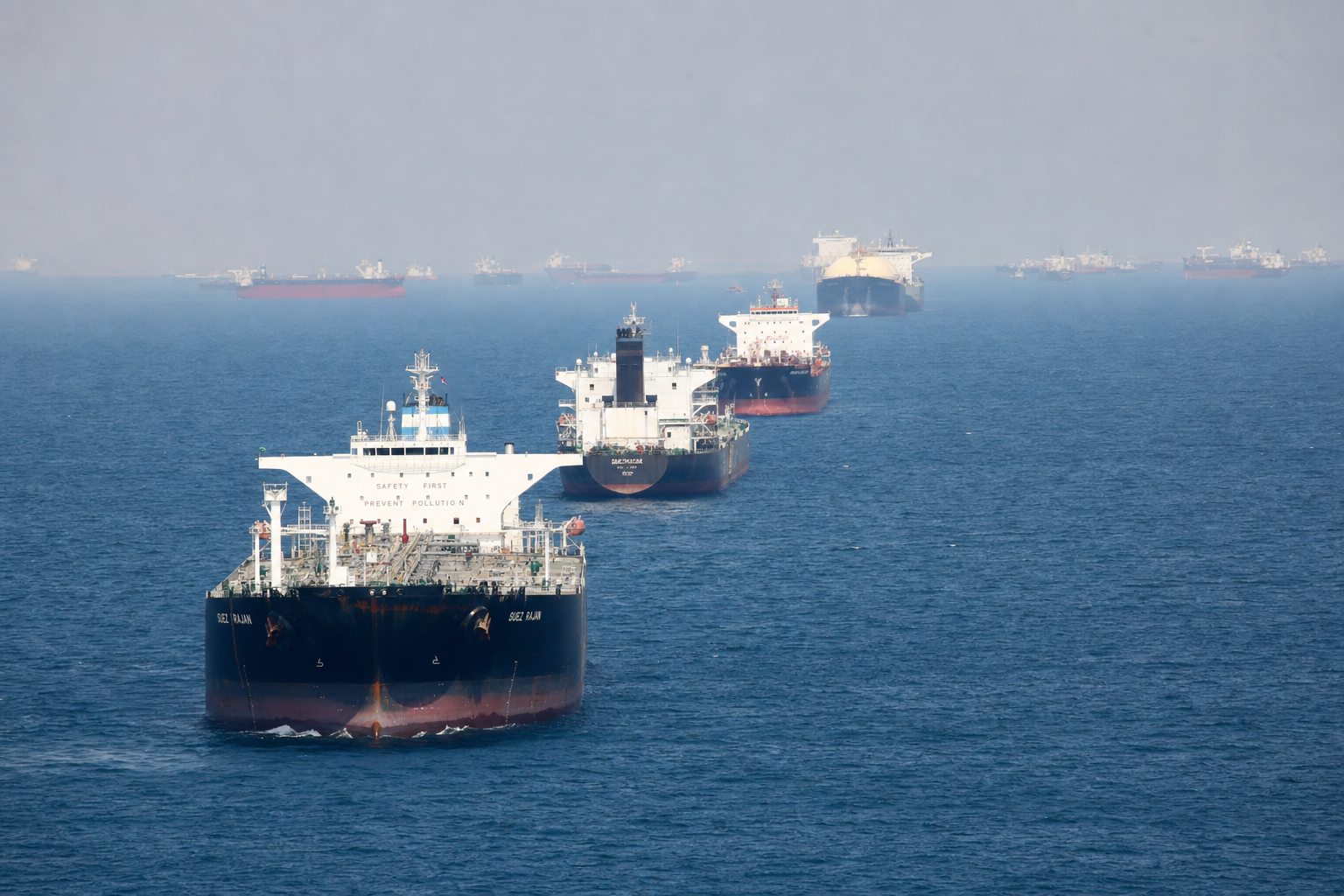
The article reports that shipping through the Strait of Hormuz has partially resumed after the US and Iran reached a deal aimed at ending the war and easing pressure on maritime traffic. New data from maritime intelligence firm Kpler, analyzed by BBC Verify, shows at least 172 vessels crossed the strait since the deal was signed, including 42 on Saturday, but daily traffic remains far below the pre-conflict average of about 138 crossings. More than 200 tankers are reportedly waiting inside the strait, while Brent crude prices have fallen to their lowest level since the war began.
The article explains that many recent transits involve vessels linked to Iran, reflecting the lifting of the US naval blockade and the US Treasury’s easing of sanctions on Iranian oil and petrochemical exports until 21 August. At the same time, some normal commercial traffic has also resumed, including LNG tankers bound for Qatar and cargo vessels leaving the Gulf. Ship movements continue to favor the Iranian-approved northern route and, increasingly, a southern route near Oman, while the central shipping lanes remain discouraged because of mine risks.
Despite the agreement’s commitment to allow safe passage for 60 days and to work with Oman on future administration of the strait, uncertainty remains. Iran’s new passage permit requirement, conflicting Iranian statements about whether the strait is open, and warnings from the Joint Maritime Information Center about mines and active clearance operations are all contributing to caution among shipowners. Overall, the article portrays a fragile and uneven reopening of one of the world’s most important shipping chokepoints.
Entities: Strait of Hormuz, US-Iran deal, Kpler, BBC Verify, Brent crude • Tone: analytical • Sentiment: neutral • Intent: inform
24-06-2026
The article reports that the UN’s International Maritime Organization (IMO) plans a large-scale evacuation of more than 11,000 sailors stranded in and around the Strait of Hormuz after months of disruption linked to the US-Israel war with Iran. IMO secretary-general Arsenio Dominguez said the evacuation will be coordinated with Iran, Oman, the US, other regional coastal states, and maritime industry partners, and that safety guarantees have been secured for navigation. The story places the evacuation in the context of a fragile interim US-Iran deal that appears to have ended the conflict but remains disputed in key details, especially over nuclear inspections and Iran’s military capabilities. Donald Trump claimed Iran had agreed to high-level, long-term nuclear inspections, while Iran insisted the UN watchdog would not be able to inspect bombed nuclear sites. Iran’s president also reiterated that Tehran would never negotiate about its defensive capabilities, while Pakistan’s prime minister said ballistic missiles were not part of the talks. Separately, US Secretary of State Marco Rubio, touring Gulf states, warned that no country may impose tolls or fees on the Strait of Hormuz, calling it an international waterway. The article emphasizes the economic and maritime consequences of the strait’s closure, noting that it previously drove Brent crude above $100 a barrel and disrupted energy and commodity shipments. Although traffic has resumed, vessel movement remains well below normal and many tankers are still waiting to pass.
Entities: UN International Maritime Organization (IMO), Arsenio Dominguez, Strait of Hormuz, Iran, United States • Tone: analytical • Sentiment: neutral • Intent: inform
24-06-2026
Oil prices fell in Asian trading on Wednesday as fears of supply disruption through the Strait of Hormuz eased and investors received signs that maritime traffic could normalize. Brent crude for August dropped 0.91% to $76.38 a barrel, while U.S. West Texas Intermediate fell 0.94% to $72.52. The decline came as more than 11,000 seafarers were cleared to transit the key shipping route after safety guarantees were secured, according to the International Maritime Organization. The article also highlights a political response from U.S. President Donald Trump, who accused oil companies of failing to pass along lower crude prices to consumers and said he had instructed the Department of Justice to investigate possible price gouging. Energy experts quoted in the piece said gasoline prices do not respond instantly to crude moves because of refining, taxes, and lag effects. The story links oil market weakness to improving supply-route conditions, while also noting that supply chain pressures could ease gradually rather than immediately as shipping through the Strait of Hormuz normalizes.
Entities: Brent crude, West Texas Intermediate (WTI), Strait of Hormuz, Donald Trump, Department of Justice (DOJ) • Tone: analytical • Sentiment: neutral • Intent: inform