25-06-2026
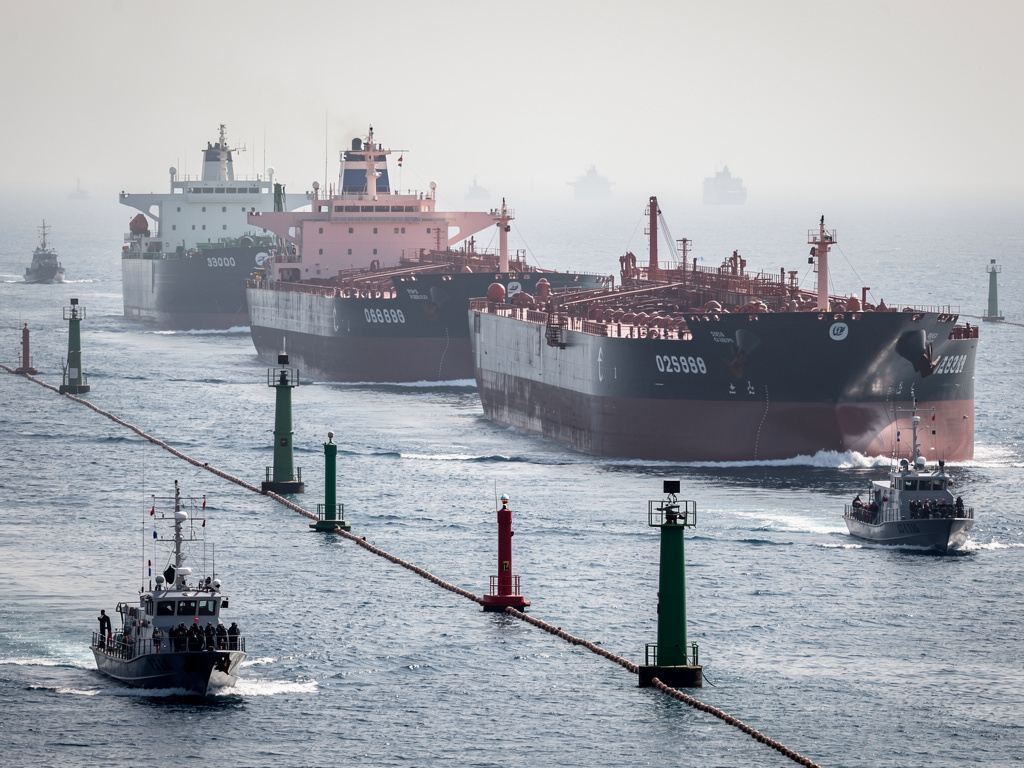
Iran’s Islamic Revolutionary Guard Corps (IRGC) issued a sharp warning that any new shipping route through the Strait of Hormuz established without Tehran’s coordination would be considered unacceptable and dangerous, and that vessels ignoring Iran’s instructions could face enforcement action. The statement underscores Iran’s determination to maintain control over the strategic chokepoint even after the United States and Iran signed a memorandum of understanding to reopen the waterway. According to the IRGC Navy, only routes designated by Iran are permitted, and ships must coordinate via an official communication channel before transiting. The warning followed a proposal from a maritime information group that suggested an alternative southern route through Omani territorial waters, which it said had been cleared of mines and was recommended for passage.
The article notes that shipping activity has begun to recover, but only tentatively. MarineTraffic reported that transits tripled to 93 over the weekend compared with the prior comparable period, yet volumes remain well below prewar levels when more than 100 vessels crossed daily. Even with a modest rebound, operators are still navigating cautiously and using a mix of Iranian, Omani, and International Maritime Organization route patterns. The U.S. Treasury previously sanctioned Iran’s Persian Gulf Strait Authority, accusing it of trying to extort global maritime trade, and Treasury Secretary Scott Bessent said Washington would not tolerate any tolling system on Hormuz. Analysts warn that if Iran retains operational control or influence over the Strait, oil flows may never fully return to earlier levels, potentially keeping transits below prewar norms for the foreseeable future.
Entities: Iran, Islamic Revolutionary Guard Corps (IRGC), IRGC Navy, Strait of Hormuz, United States • Tone: analytical • Sentiment: neutral • Intent: inform
25-06-2026
Oil prices fell on Thursday as markets reacted to signs that supply constraints easing in the Persian Gulf could restore more crude to global markets. Brent and U.S. West Texas Intermediate erased much of the war-related premium that had built up after months of disruption around the Strait of Hormuz, a strategic chokepoint that was effectively blockaded after fighting broke out between the United States and Iran in late February. The key development was that more than 20 oil tankers carrying roughly 35 million barrels of crude had begun passing through the strait after Washington and Tehran reached an agreement to reopen the route. That progress raised expectations that stranded vessels would resume deliveries, with many shipments expected to reach Asia by early August.
The article notes that traders viewed this as a sign global crude supplies should improve, and Citi said the worst may be over for commodity strategies that had been hurt by the conflict-driven spike in near-term oil prices. Citi also said its base case is a broader de-escalation, and it expects Brent to fall further, to the $60-$65 range over the next six to 12 months, as traffic through the Strait of Hormuz normalizes. However, the piece also emphasizes that risk has not disappeared: Iran’s Islamic Revolutionary Guard Corps Navy warned that safe passage would only be allowed through routes approved by Tehran, and said vessels violating instructions would face action. Overall, the article portrays a market easing after a supply shock, but still exposed to geopolitical uncertainty.
Entities: Oil prices, Brent crude, WTI crude, Strait of Hormuz, Persian Gulf • Tone: analytical • Sentiment: neutral • Intent: inform
25-06-2026
Oil prices fell Thursday as markets continued to unwind the wartime spike that began after the Iran conflict erupted in February. The key driver behind the decline was a preliminary agreement between the United States and Iran to reopen the Strait of Hormuz, a vital shipping lane for Middle Eastern oil and gas exports. As efforts accelerated to clear a backlog of tankers stranded in the Persian Gulf, traders became less worried about major supply disruptions, pushing Brent crude and West Texas Intermediate both about 1 percent lower. Brent came close to its prewar level, while WTI also moved down toward its earlier range.
The article notes that the price retreat in crude has not yet fully shown up at the pump. U.S. gasoline prices remained unchanged from the previous day at a national average of $3.93 a gallon, although they were still more than 30 percent higher than when the war began. Diesel also edged lower by two cents to $4.98 a gallon, but remained up 33 percent since the conflict started. The piece briefly broadens into other market moves, reporting gains in Asian equities and U.S. stock futures, especially in technology shares boosted by Micron Technology’s strong results and renewed enthusiasm for artificial intelligence-related companies. Overall, the article links easing geopolitical tensions and improving shipping conditions to falling oil prices, while emphasizing that consumer fuel costs remain elevated and may lag behind crude declines.
Entities: Oil prices, Brent crude, West Texas Intermediate (WTI), Strait of Hormuz, Persian Gulf • Tone: analytical • Sentiment: neutral • Intent: inform