23-07-2026
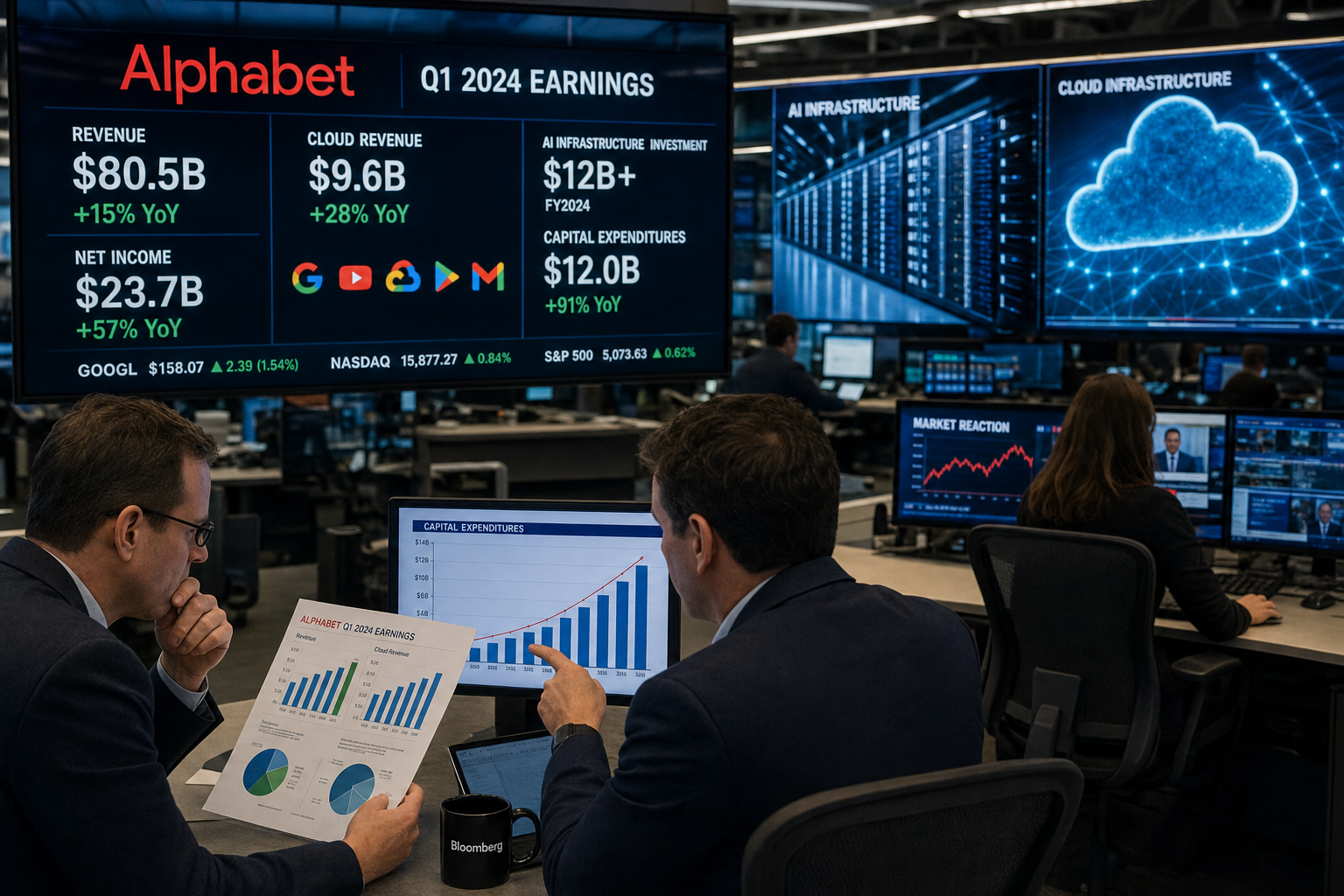
Alphabet, Google’s parent company, reported strong revenue growth but saw its free cash flow turn negative as it poured heavily into artificial intelligence infrastructure. The BBC article says Alphabet’s free cash flow fell to minus $5.9bn for the first time in at least a decade, even as quarterly revenue rose 23% to $119.8bn. The main driver was a sharp increase in capital spending tied almost entirely to AI, with Alphabet spending $45bn in the second quarter and expecting total AI-related spending to reach as much as $205bn this year, up from a previous estimate of $190bn. Google CFO Anat Ashkanazi told analysts that demand for AI still exceeds the company’s investment, while CEO Sundar Pichai argued the AI shift is still in its early stages and that the company is being disciplined about returns. Despite the revenue gains, Alphabet’s stock fell 4% in after-hours trading, reflecting investor concern about the scale of AI spending and its effect on cash generation. The article also places Alphabet’s spending in the broader context of Big Tech’s AI race, noting Tesla’s own negative free cash flow and increased investment plans on the same day.
Entities: Alphabet, Google, AI infrastructure, free cash flow, capital expenditures • Tone: analytical • Sentiment: neutral • Intent: inform
23-07-2026
Alphabet and Tesla opened tech earnings season with strong revenue results but were punished by investors over the scale of their artificial intelligence-related spending. Both companies reported negative free cash flow in the second quarter and signaled that capital expenditures will remain elevated, raising concerns that near-term cash generation is being sacrificed for long-term AI infrastructure, robotics, and autonomous-driving bets. Alphabet’s stock fell more than 3% after it raised its full-year capex outlook to $195 billion to $205 billion and said free cash flow would stay under pressure as it builds out data centers and technical infrastructure to support AI demand. Tesla shares dropped 4% after the company reiterated more than $25 billion in capex for the year and reported a sharp increase in spending tied to self-driving, AI, robotics, and factory retooling for products such as Cybercab and Optimus. The market reaction suggests investor scrutiny is intensifying around whether these huge investments will generate enough future returns, especially as cheaper open-source AI models, cautious corporate spending, and looming earnings reports from other tech giants add uncertainty to the broader AI trade. Despite the selloff, some analysts argued both companies’ core businesses remain strong and that the spending could pay off over time.
Entities: Alphabet, Tesla, Google, Sundar Pichai, Elon Musk • Tone: analytical • Sentiment: negative • Intent: inform
23-07-2026
The article argues that Alphabet’s second-quarter earnings were strong enough to show real AI-driven momentum, but not clean enough to inspire immediate investor enthusiasm. Revenue beat expectations and operating income improved, yet the headline earnings were inflated by a huge one-time gain from equity investments in SpaceX and Anthropic. Excluding that windfall, the company’s operational earnings were closer to a modest miss. The market responded negatively in after-hours trading, reflecting broader investor worries about Alphabet’s rising AI-related capital expenditures, negative free cash flow, and a still-uncertain payoff timeline for its spending spree.
Beyond the mixed quarter, the piece emphasizes several concerns: Google Search revenue fell short of expectations, investors remain uneasy about monetization changes caused by AI features in Search, and Alphabet’s increased capex guidance for 2026 to $195 billion-$205 billion deepens worries about cash burn. The article also notes the added overhang of the company’s $85 billion fundraising effort and $40 billion ATM share program, which may add stock supply to the market. At the same time, it highlights positive evidence that Alphabet’s AI strategy is gaining traction, especially in Google Cloud, Gemini app usage, enterprise API demand, and YouTube engagement.
Despite the imperfections, the article ultimately frames Alphabet as a long-term buying opportunity. It credits the company’s vertically integrated AI stack, custom TPUs, dominant consumer products, and management’s willingness to compete at multiple model price points. The conclusion is that the stock weakness looks more like a temporary opportunity than a reason to abandon the position, though the author does not recommend rushing to buy immediately.
Entities: Alphabet, Google, Sundar Pichai, Anat Ashkenazi, SpaceX • Tone: analytical • Sentiment: neutral • Intent: analyze