21-10-2026
The Straits Times’ Oct 21, 2026, “While You Were Sleeping” roundup covers five international stories. US special envoy Steve Witkoff is due to travel to Russia after meeting Ukrainian President Volodymyr Zelensky and leaders of Norway and Finland in Oslo. US President Donald Trump urged Kyiv to end its war with Moscow. Zelensky’s visit comes amid strained US-Ukraine relations, Ukrainian complaints about withheld military support and intelligence, and concern over Trump’s recent gestures toward Moscow. Ukraine said it was again receiving early warnings of Russian missile attacks, while Trump’s approach has drawn bipartisan criticism in Congress and concern in Europe. A separate report says a Russian military satellite passed within 100 metres of a Finnish-operated ICEYE spacecraft under US contract that supports Ukraine’s military, prompting concern about Russian activity in space.
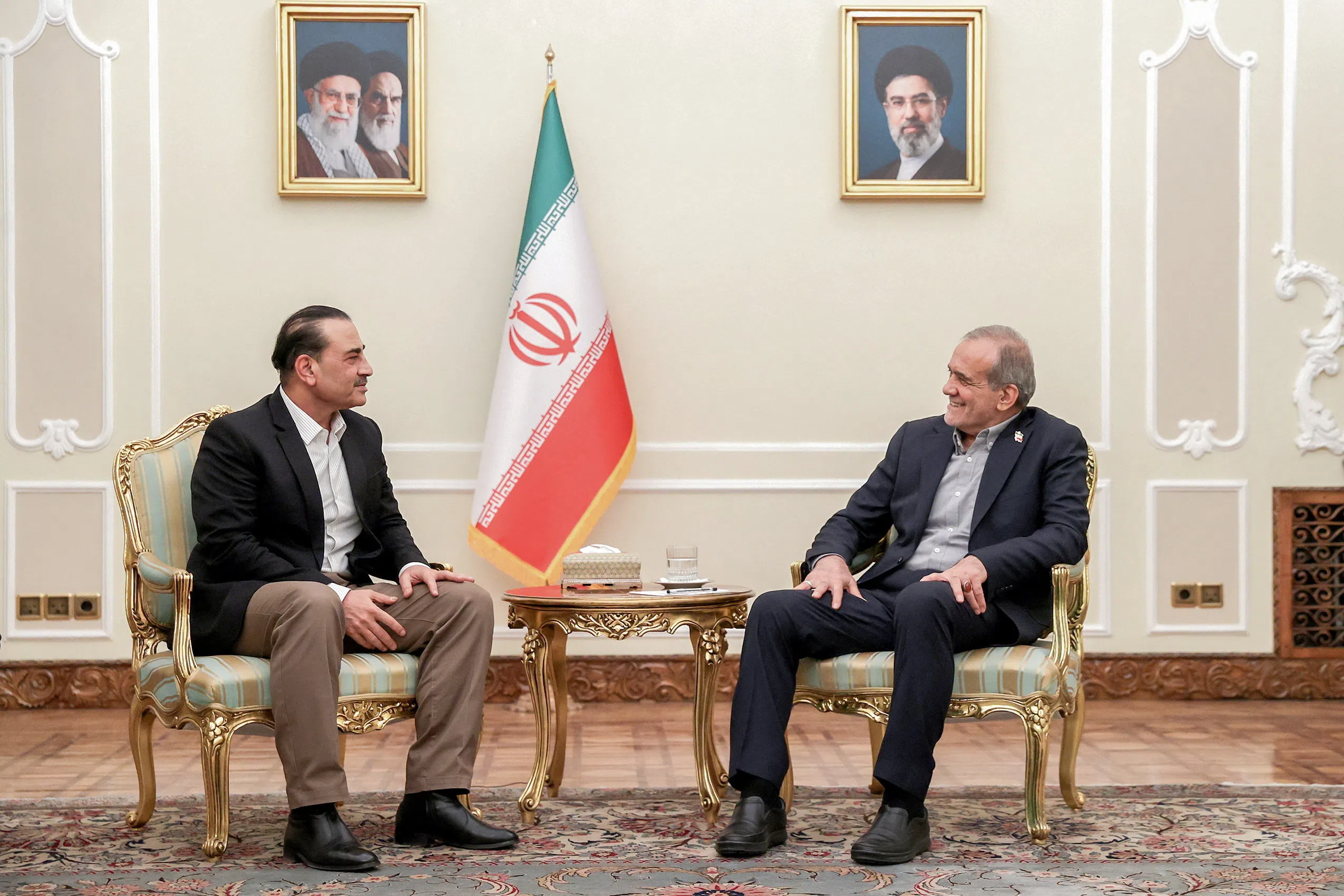
Iran told Pakistan’s army chief that it would not negotiate with Washington until Tehran’s demands were met. The position reflects a tougher stance despite Pakistani mediation; an earlier interim peace agreement reached in June quickly unravelled when fighting resumed. In Japan, a flight was cancelled after a small snake was found aboard an aircraft at Fukuoka Airport. The airline said the non-venomous juvenile Japanese striped snake was about 40 centimetres long, was discovered under the carpet by a mechanic, and was later captured. Its route onto the aircraft is unknown, and the airline said it had never experienced such an incident before.
In football, Liverpool came back from two goals down to beat Villarreal 4-3 at Anfield and preserve a perfect Champions League start. Paris Saint-Germain beat Barcelona for a third consecutive win in the campaign, while Manchester City defeated AEK Athens 5-1, with Phil Foden scoring a hat-trick.
Entities: Steve Witkoff, Volodymyr Zelensky, Donald Trump, Russia-Ukraine war, Oslo • Tone: neutral • Sentiment: neutral • Intent: inform
21-10-2026
Ukrainian President Volodymyr Zelensky said he would consider an immediate ceasefire that freezes the current front lines as a possible route to ending the war with Russia through diplomacy. Speaking on Fox & Friends, he described a freeze as a minimum step and said Ukraine would then seek security guarantees from President Donald Trump and European countries to prevent renewed Russian aggression or occupation. The interview included a question about whether Ukraine would give up the Donbas region to secure peace. Zelensky rejected that proposal as unfair, arguing that Russia is not winning on the battlefield and is trying to pressure Ukraine into surrendering territory. He acknowledged that Ukrainians are tired and want the war to end as soon as possible, while emphasizing that they also want to remain in their own country. The article presents Zelensky’s remarks against the backdrop of continuing fighting and recent meetings involving Ukrainian, European, Russian, and US figures. It notes that Zelensky’s willingness to freeze the front lines would not, as described, settle the territorial dispute or constitute a stated agreement to cede Ukrainian land. Rather, he framed it as a ceasefire that could open the way to negotiations, provided that Ukraine receives credible security guarantees. The article also reports that Russian forces have been struggling on the battlefield, a point used to contextualize Zelensky’s rejection of pressure to relinquish the Donbas.
Entities: Volodymyr Zelensky, Russia, Ukraine, Donald Trump, Brian Kilmeade • Tone: neutral • Sentiment: negative • Intent: inform
21-10-2026
After diplomatic meetings in Oslo and St Petersburg, BBC Russia editor Steve Rosenberg assesses whether the war in Ukraine is any closer to ending. Although Norway’s prime minister called the Oslo discussions “good and constructive,” and participants floated the possibility of a leaders’ summit involving Donald Trump, Volodymyr Zelensky and Vladimir Putin, the article argues that such a meeting is not imminent. Putin has shown little interest in meeting Zelensky except in Moscow, while the Kremlin has indicated that trilateral talks might resume in Abu Dhabi next month only at a technical level.
Rosenberg highlights comments from Putin’s foreign policy aide, Yuri Ushakov, who said the Oslo discussions offered little useful for resolving the conflict. Ushakov also described the prospects for peace vaguely, saying he did not know how close the parties were but that events were moving in that direction. The article suggests Putin currently has little incentive to end the war: Ukraine’s air defences are strained, winter could give Russia an opportunity to intensify attacks, and Trump’s recent actions—including pausing some sanctions, agreeing to buy Russian diesel and sharply criticising Zelensky—may ease pressure on Moscow.
Russian MP and television presenter Evgeny Popov praises Trump’s efforts for peace, while openly endorsing peace on Russia’s terms. Rosenberg concludes that a Putin-Zelensky-Trump meeting may not happen soon, but a meeting between Putin, Trump and China’s Xi Jinping on the sidelines of next month’s APEC summit is possible. Some commentators are already calling such a gathering “The New Yalta,” invoking the 1945 conference that shaped postwar Europe. For Putin, the article suggests, participation would offer a chance to return to the top table of global politics after nearly five years of war.
Entities: Steve Rosenberg, Vladimir Putin, Volodymyr Zelensky, Donald Trump, Xi Jinping • Tone: analytical • Sentiment: negative • Intent: analyze