21-10-2026
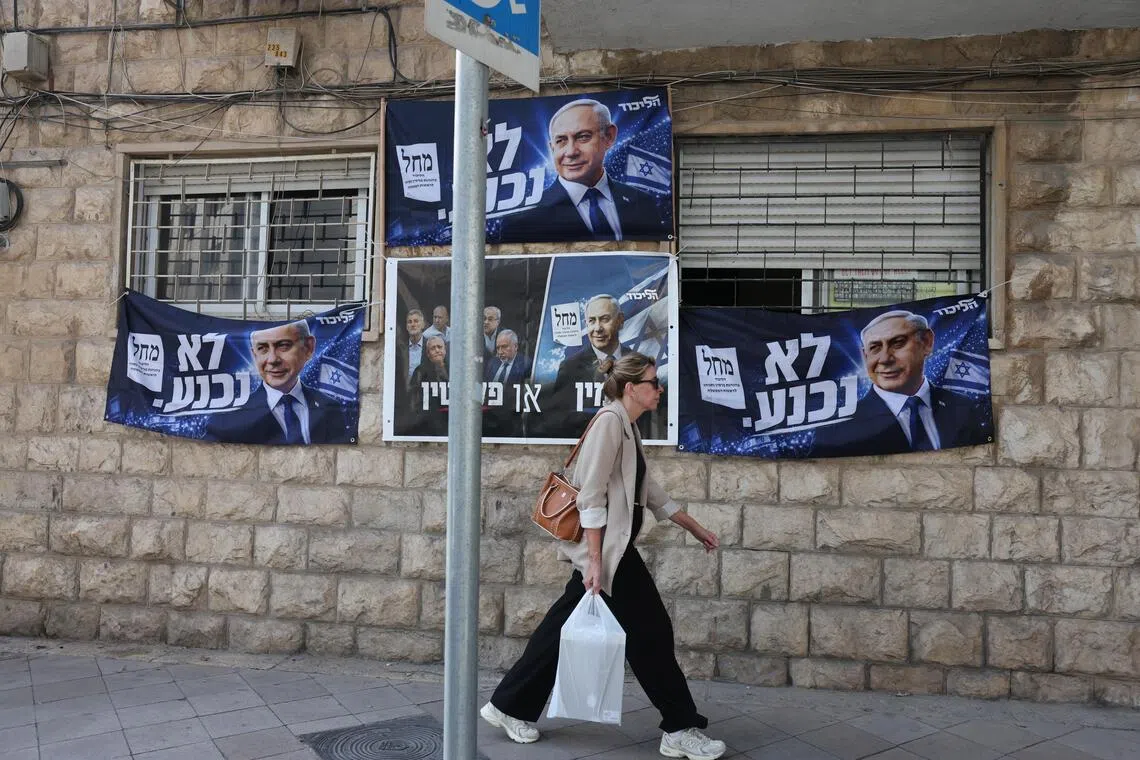
Israel’s October 27 election is unlikely to fundamentally alter the country’s approach to Iran, Palestinians or regional security, according to policymakers and analysts interviewed in the article. The strategic outlook shared by much of Israel’s political and security establishment was hardened by Hamas’s October 7, 2023 attacks and subsequent wars in Gaza, Lebanon and Iran. Analysts describe its current doctrine as focused on confronting Iran, maintaining buffer zones beyond Israel’s borders and using military force to deter threats.
The main difference between a government led by Benjamin Netanyahu and one led by his opponents is expected to be the degree and presentation of those policies, not their direction. Analysts say both major political camps oppose Palestinian statehood and support continued settlement expansion, though a successor government might seek to improve Israel’s international standing by acting more quietly or restraining some settler violence. They also warn that settlement growth, Palestinian frustration and the absence of a political path forward could produce conditions for a wider uprising.
Netanyahu has advocated pre-emptive action and described his aim as toppling Iran’s clerical regime. His potential victory, supported by far-right partners, could encourage a more aggressive campaign and further marginalise diplomacy. However, analysts question whether military action can force Iran to abandon its security interests without a ground invasion. Iran may be able to outlast its opponents, while the conflict could strengthen its resolve to seek a nuclear deterrent. Although Iran-aligned groups such as Hezbollah and Hamas have been weakened, the broader network has survived.
The article also highlights a dilemma for Gulf leaders: they object to Netanyahu’s policies in Gaza, the West Bank, Syria and Lebanon, yet some see him as a forceful opponent of Iranian influence. Overall, the election is presented less as a turning point than as a test of whether the region is entering a prolonged confrontation with unresolved conflicts.
Entities: Benjamin Netanyahu, Gadi Eisenkot, Aviv Bushinsky, Ghassan al-Khatib, Donald Trump • Tone: analytical • Sentiment: neutral • Intent: analyze
21-10-2026
Israel’s Oct 27 election is expected to produce no outright winner, leaving the formation of a government dependent on negotiations among parties in the 120-seat Knesset. Under Israel’s proportional-representation system, a government needs the support of at least 61 lawmakers. Polls place Prime Minister Benjamin Netanyahu’s right-wing and far-right bloc and an opposition bloc associated with former military chief Gadi Eisenkot at roughly 50 to 52 seats each. New right-wing parties near the electoral threshold, as well as Arab parties, could determine which side can assemble a majority.
The article outlines four possible outcomes. First, parties could negotiate a conventional coalition, though bargaining may be lengthy and governments can be unstable; Netanyahu took 58 days to form his government after the November 2022 election. Second, a candidate might govern as a minority, relying on case-by-case support. The Joint List and Raam, which polls suggest could win 12 to 14 seats combined, might provide support, although opposition leaders are wary of publicly aligning with Arab parties because of hostility among some Jewish voters. Netanyahu has made that prospect a campaign issue.
Third, Netanyahu and Eisenkot could form a national unity government, potentially excluding both Arab parties and Netanyahu’s far-right and ultra-Orthodox partners. A poll found 55% preferred unity over another election if the vote produced no clear majority. A similar Netanyahu–Benny Gantz power-sharing arrangement followed the 2020 election cycle, but collapsed after a year. President Isaac Herzog is reportedly exploring a renewed arrangement, though opposition to it is expected, especially among opponents who view the election as a referendum on Netanyahu.
Finally, if no candidate can form a government, Israel could hold another election. The country previously held four elections between April 2019 and March 2021 amid coalition failures. A designated candidate generally has 28 days to form a coalition, with a possible 14-day extension, although other procedures could delay a new vote.
Entities: Benjamin Netanyahu, Gadi Eisenkot, Isaac Herzog, Benny Gantz, Mansour Abbas • Tone: analytical • Sentiment: neutral • Intent: inform
21-10-2026
Gadi Eisenkot, a former Israeli army chief and leading challenger to Prime Minister Benjamin Netanyahu, said he would categorically refuse to serve in a government led by Netanyahu, including under an arrangement in which the two politicians shared power through a rotation. Eisenkot made the statement on Oct 21, days before Israel’s Oct 27 election. His campaign has questioned Netanyahu’s fitness to serve, particularly in light of his failure to prevent Hamas’s Oct 7, 2023 attack.
Polls suggest that Netanyahu’s right-wing coalition and the opposition camp associated with Eisenkot are closely matched, each projected to win roughly 50 to 52 seats in the 120-member Knesset. With neither side expected to secure a majority alone, commentators have raised the possibility of a unity government. Eisenkot did not rule out unity government arrangements altogether, while former prime minister Naftali Bennett, whose party is polling third, said including Netanyahu would not be an issue for him.
Any such arrangement could face legal complications. Israeli law bars people facing charges from serving as ministers, although that restriction does not apply to the prime minister. Netanyahu is on trial on several corruption charges, which he denies. An Oct 16 poll found that 55 per cent of respondents would prefer a unity government to holding another election if the vote produces no clear winner.
The article also recalls a precedent: in 2020, Netanyahu and centrist Benny Gantz overcame their political hostility to form a power-sharing government, agreeing to rotate the premiership. That deal followed three elections in less than a year, but the government lasted only 13 months.
Entities: Gadi Eisenkot, Benjamin Netanyahu, Naftali Bennett, Benny Gantz, Israel • Tone: analytical • Sentiment: neutral • Intent: inform