21-10-2026
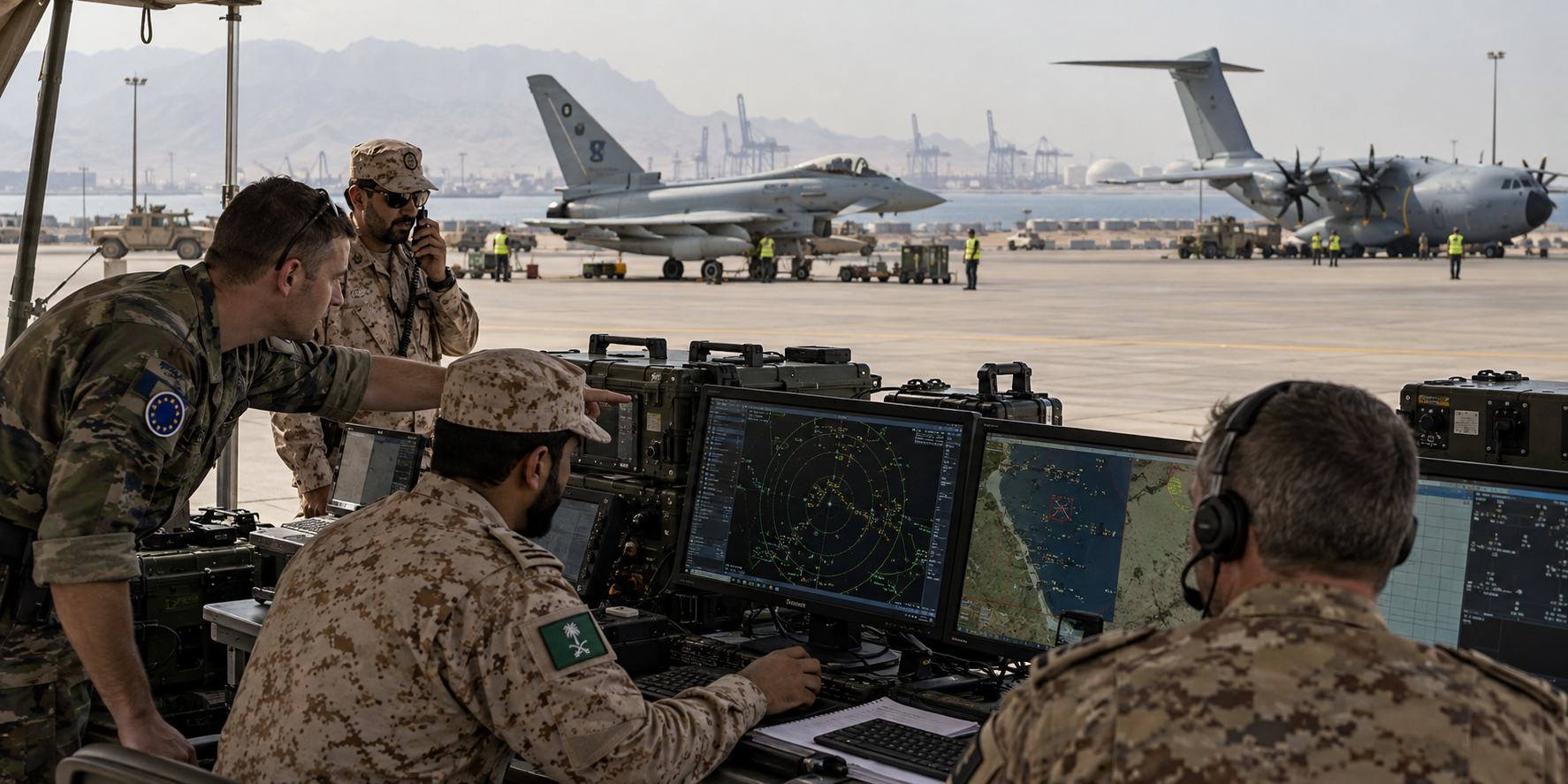
The United Kingdom and France are sending military assets to Saudi Arabia as Houthi missile and drone attacks intensify, raising questions about whether the European countries could be drawn into the Saudi-Houthi conflict in Yemen. Both governments describe their support as defensive. France says it is providing assistance under an earlier agreement, including soldiers, radars and air-defence systems to help protect Yanbu, a Red Sea port and export hub. The UK plans to deploy Typhoon fighter jets for defensive air patrols, military advisers and an A400M transport aircraft.
Analysts say the moves aim to protect Saudi energy exports important to European markets, reinforce Gulf partnerships amid limited direct US military support, and deter further Houthi attacks. They also say the deployments could strengthen Saudi air defences and free Saudi aircraft for other missions. The British role appears broader than France’s: experts describe UK patrols as capable of intercepting incoming missiles and drones, while French assistance is more focused on protecting infrastructure. Saudi Arabia has its own substantial combat-aircraft fleet, but analysts say it needs additional defensive coverage across its large territory and around critical energy facilities.
The arrangements come amid uncertainty over support from other partners. US President Donald Trump reportedly declined Saudi requests to join strikes on the Houthis, while a regional defence pact involving Türkiye and Pakistan has not been ratified in Türkiye. Egypt has also postponed a parliamentary vote on authorising military support.
The central risk is that the Houthis may see European involvement—particularly British support connected to Saudi aircraft operating in Yemeni airspace—as offensive. That could lead them to target British or French forces, potentially including personnel elsewhere in the region, or to threaten European shipping through the Bab al-Mandeb strait. European casualties or major attacks on Saudi civilians or energy infrastructure could prompt pressure for retaliation or a deeper military role. Analysts stress that deterrence is uncertain and that neither the UK nor the other pact signatories want to be pulled into a prolonged conflict inside Yemen.
Entities: United Kingdom, France, Saudi Arabia, Houthis (Ansar Allah), Yemen • Tone: analytical • Sentiment: neutral • Intent: analyze
21-10-2026
The United Kingdom says it will deploy Royal Air Force Typhoon fighter jets, an A400M transport aircraft and advisers to help defend Saudi Arabia against Houthi missile and drone attacks. The Ministry of Defence describes the jets’ role as defensive and says they will not attack the Houthis. The deployment comes as fighting intensifies in Yemen: the Houthis have targeted Saudi sites, including oil facilities and Riyadh’s main airport, while the Saudi-led coalition has attacked Houthi positions. The article places the decision in the context of a UK-Saudi military relationship dating to 1915, when Britain allied with Abdulaziz Ibn Saud against the Ottoman Empire and provided money and weapons. After the Saudi kingdom was founded in 1932, military ties grew through arms purchases, beginning with British Lightning jets and trainers in the 1960s. Britain also considered sending an RAF squadron during Yemen’s 1960s civil war, but Saudi Arabia ultimately accepted aircraft and civilian pilots instead. The 1985 Al-Yamamah oil-for-arms agreement for Tornado and Hawk aircraft became one of Britain’s largest export deals; a related corruption investigation was discontinued in 2006 on national-security grounds. British aircraft later operated from Saudi bases during and after the 1990–91 Gulf War. Saudi Arabia agreed in 2007 to buy 72 Typhoons, and a proposed purchase of 48 more, discussed in 2018, stalled after Germany restricted exports following the killing of journalist Jamal Khashoggi. Germany lifted its objection in 2024. The article also outlines legal and political controversy over arms sales connected to Yemen: a UK court found in 2019 that licences had been issued unlawfully without proper assessment of possible breaches of humanitarian law, though sales resumed in 2020. It notes that British Typhoons joined US attacks on Yemen in 2024 after Houthi attacks on Red Sea shipping. The supplied article ends mid-sentence.
Entities: United Kingdom, Saudi Arabia, Royal Air Force Typhoon, Houthis (Ansar Allah), Yemen • Tone: analytical • Sentiment: neutral • Intent: inform
21-10-2026
The United Kingdom will deploy Royal Air Force Typhoon fighter jets to Saudi Arabia to help defend the kingdom against escalating attacks by Yemen’s Houthi rebels. The UK Ministry of Defense said the aircraft will protect cities and critical infrastructure from drones and missiles, but will not conduct offensive strikes against Houthi targets in Yemen. British Defense Secretary Wes Streeting condemned the attacks, particularly those on Riyadh’s international airport, which he said had been targeted 20 times since early October. Reports say strikes on the airport have killed at least 18 people and wounded hundreds this month.
The deployment follows a Saudi request and expands military assistance London announced in September. Britain will also provide an Atlas A400M transport aircraft and military advisers, and has extended by 90 days its offer of air-to-air refueling for Saudi aircraft operating against the Houthis.
The support comes as Yemen’s civil war intensifies after a years-long truce collapsed in September. Houthi attacks have increasingly hit Saudi oil facilities and civilian infrastructure. The rebels have also imposed a naval blockade and attacked tankers, disrupting oil exports and contributing to higher energy prices. Separately, Yemeni authorities said a Houthi strike on Monday killed 58 people at a training camp for Saudi-backed government security forces. Saudi Arabia and the United States accuse Iran of supporting the Houthis; Tehran denies the allegation.
The conflict is also affecting Saudi Arabia’s economic ambitions. The kingdom postponed its flagship Future Investment Initiative conference, known as “Davos in the Desert,” until 2027. The event had been scheduled for October 26–29 and was expected to draw international financiers. Media reports said major banks and private equity firms had raised security concerns about attending. The conference is part of Saudi Arabia’s effort to attract foreign investment and diversify its economy beyond oil.
Entities: United Kingdom, Royal Air Force Typhoon fighter jets, Saudi Arabia, Yemen, Houthi rebels • Tone: neutral • Sentiment: negative • Intent: inform