21-10-2026
The article explains how Iran’s uranium-enrichment programme has again become a major obstacle to a US-Iran ceasefire, nearly eight months into the US-Israel war on Iran. The conflict has contributed to a global energy crisis and spread regionally, while negotiations have yet to produce a permanent ceasefire. A June memorandum of understanding focused primarily on reopening the Strait of Hormuz and said Iran would not acquire or develop nuclear weapons. It left key details of the nuclear issue unresolved, and the parties failed to reach a comprehensive agreement within the memorandum’s 60-day period. Analysts attributed its collapse in part to differing interpretations of its clauses.
Iran says enrichment is its right under the Non-Proliferation Treaty and that its enriched uranium will remain in the country. Security official Mohsen Rezaei reportedly said not even a particle would leave Iran, while also making further negotiations conditional on US confidence-building steps. Iran’s demands include lifting the US naval blockade, waiving sanctions and releasing frozen assets; Tehran has offered to reopen the Strait of Hormuz in return. Iranian lawmaker Alaeddin Boroujerdi said Iran is not seeking nuclear weapons.
The US position is that Iran must not acquire a nuclear weapon and must make a long-term, verifiable commitment not to rebuild its nuclear programme. President Donald Trump says US bombing destroyed Iran’s nuclear facilities, and Vice President JD Vance has called for a meaningful reduction in enrichment capacity. Secretary of State Marco Rubio says any decision to end the war rests with Trump and that the US will not support a deal that could enable an Iranian nuclear weapon.
The June memorandum proposed international-supervised downblending as a minimum approach, but did not set quantities, a target enrichment level or a timetable. It also left open the possibility of Iran reducing enrichment domestically rather than surrendering its stockpile. The article presents these unresolved terms, opposing demands and the broader war as substantial barriers to a negotiated settlement.
Entities: Iran, United States, Israel, Donald Trump, JD Vance • Tone: analytical • Sentiment: negative • Intent: inform
21-10-2026
The article follows developments in the U.S.-Iran war, emphasizing competing accounts of Russia’s support for Tehran, the possibility of further U.S.-Israeli military action, diplomatic efforts, and growing regional risks. Iran’s foreign minister said the country’s relationship with Russia had never been closer, contradicting President Donald Trump’s assertion that Moscow was doing little to help Iran. Russian Foreign Minister Sergey Lavrov, visiting Tehran, condemned U.S. and Israeli attacks as illegal. Israeli Prime Minister Benjamin Netanyahu has suggested to Trump that the two countries have “a job to finish,” while Defense Secretary Pete Hegseth confirmed an unannounced visit to Israel and a meeting with Netanyahu.
Trump said the U.S. was doing well in the war and that he was deciding how to win, despite the conflict having lasted nearly eight months—far longer than his initial estimate. Iran, meanwhile, says it will not resume negotiations unless Washington ends its threats, sanctions, and pressure campaign. President Masoud Pezeshkian conveyed that position to Pakistani military chief Asim Munir, whose country has helped mediate talks. Pezeshkian also met Lavrov.
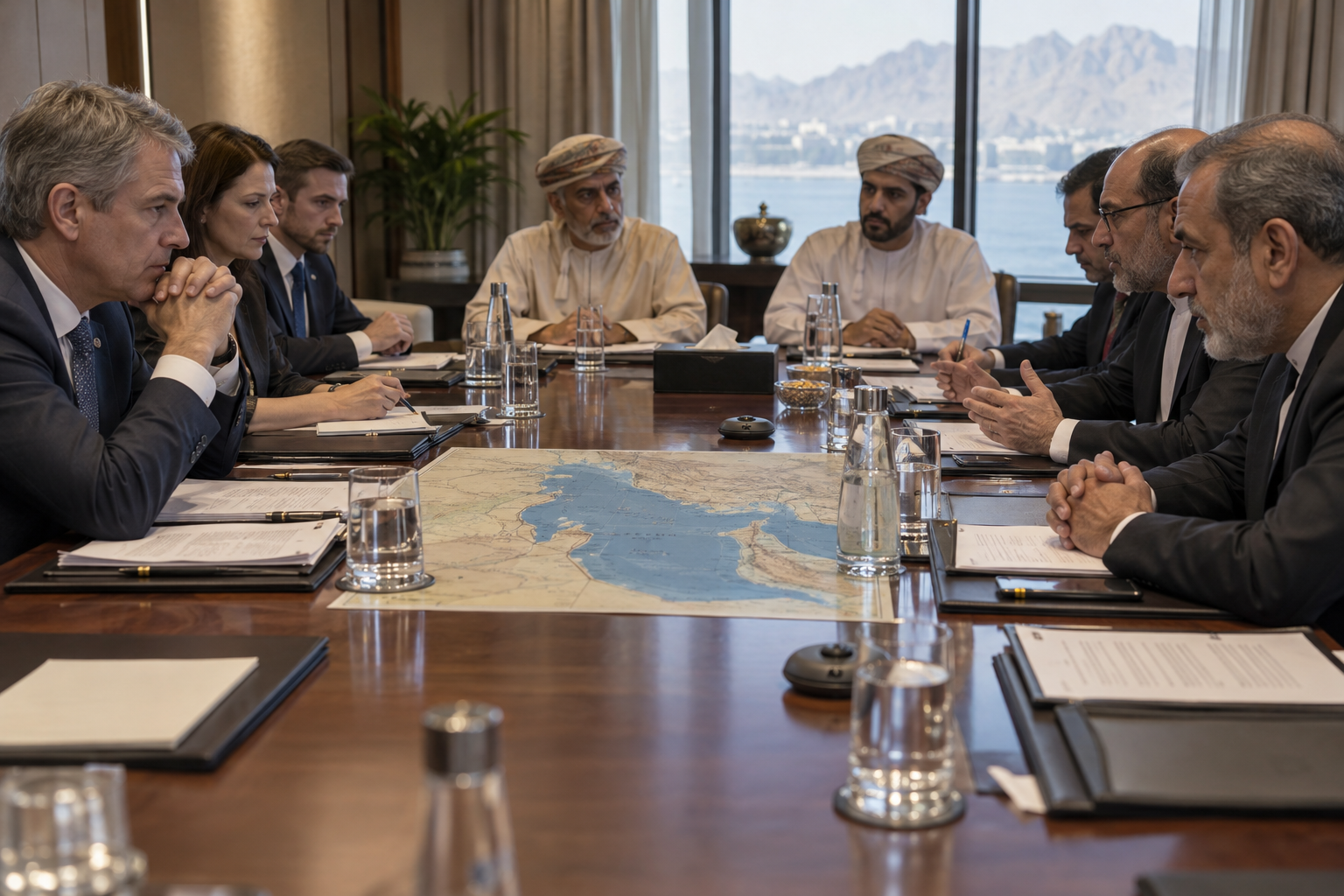
The conflict’s effects are spreading across the region. U.S. diplomatic missions warned Americans in several Middle Eastern countries that Houthi attacks could expand and disrupt travel, following a deadly strike on Riyadh’s airport that killed an American. Iran’s Revolutionary Guards said mines had struck three tankers attempting to cross the Strait of Hormuz along routes Tehran considers illegal, though the supplied article text cuts off before completing the account of the third vessel. The article also reports King Charles III’s praise for Oman’s mediation and “constructive neutrality” during Sultan Haitham bin Tariq’s state visit to Britain. Oman has served as a mediator between Washington and Tehran, and its location beside the strategically important Hormuz waterway underscores its diplomatic role.
Entities: Iran, Russia, United States, Donald Trump, Masoud Pezeshkian • Tone: analytical • Sentiment: negative • Intent: inform
21-10-2026
Iranian Foreign Minister Abbas Araghchi said indirect negotiations with the United States are continuing through mediators over a seven-day ceasefire proposal Iran presented in September. The proposal would end the U.S. naval blockade of Iranian ports and vessels, lift sanctions on Iranian oil sales, reopen the Strait of Hormuz and release frozen Iranian assets. Araghchi said the U.S. wants to add clauses and argued that Washington, rather than Tehran, is obstructing progress. Pakistan and Qatar are among the countries facilitating the talks. President Trump rejected the proposal last month; he has since said the U.S. is doing well in the war but has not decided whether to pursue a “nice” or “not nice” victory. The conflict has lasted nearly eight months, despite Trump’s earlier prediction it would take only weeks. Iran has said it will not return to negotiations unless the U.S. drops sanctions and pressure.
Entities: Abbas Araghchi, Donald Trump, Yadollah Javani, Yahya Saree, Iran • Tone: analytical • Sentiment: negative • Intent: inform
21-10-2026
The supplied page content is insufficient to summarize the liveblog’s substantive reporting. It contains the headline, “Iran war live: US warns peace deal with Tehran is extremely difficult,” along with a live-update count and website promotional text, but no individual updates, explanations, quotes, or other article body. The headline indicates that the liveblog concerns the war involving Iran, the United States and Israel, and reports a US warning that reaching a peace agreement with Tehran would be extremely difficult. It does not explain who issued the warning, what obstacles were cited, whether negotiations were under way, or how events were developing. Those details cannot be established from the text provided. The page appears to be a live news format, which would normally contain a sequence of updates, but none of those updates are included here. Accordingly, this summary is limited to the headline and does not infer additional facts about the conflict or diplomacy. The remaining supplied text is an advertisement prompting readers to enable alerts and is not part of the article’s reporting.
Entities: Iran, United States (US), Israel, Tehran, Iran war • Tone: urgent • Sentiment: negative • Intent: inform