21-09-2026
The article examines the high-stakes diplomatic environment surrounding the United Nations General Assembly in New York, where more than 100 presidents and prime ministers are expected to gather. The U.N. anticipates 73 heads of state, 45 heads of government, 49 ministers, 11 vice presidents and one crown prince. Delegations have submitted about 1,000 requests for bilateral meetings, while 168 events are scheduled during the high-level week. A U.N. spokesperson characterized the atmosphere as “high stress.”
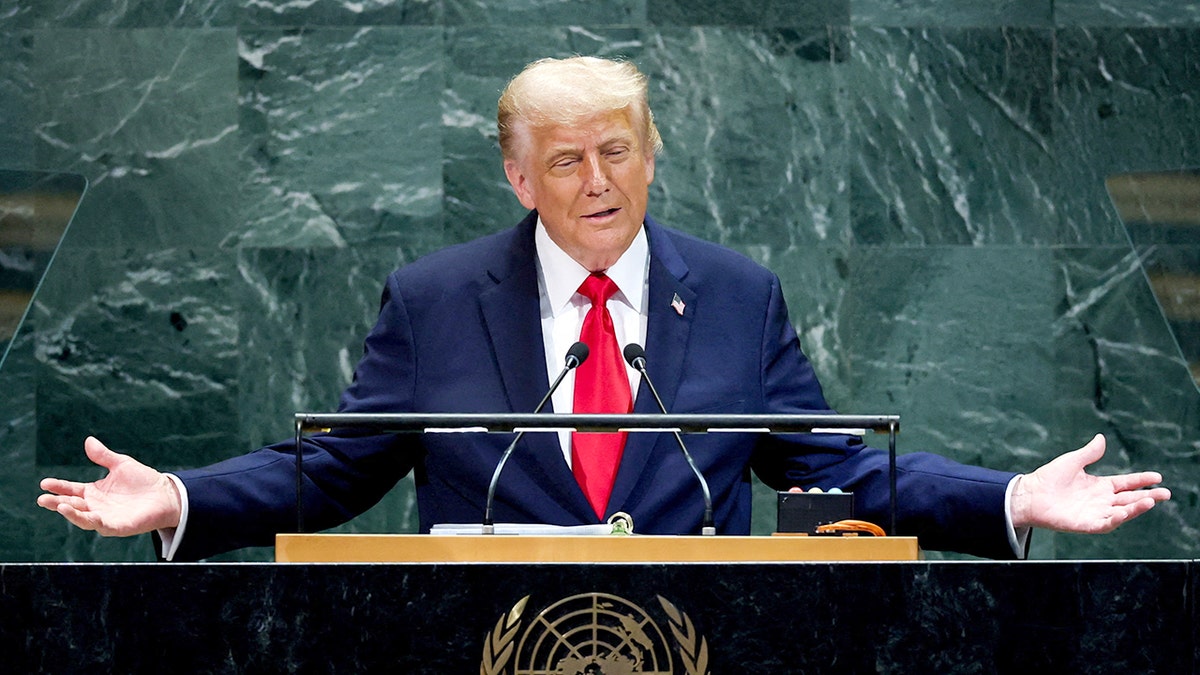
The General Debate is taking place amid the continuing U.S.-Iran war, conflict involving Iran-backed Houthis and disruptions to Red Sea shipping, as well as Russia’s war against Ukraine, Israeli-Palestinian tensions, Sudan, climate change and artificial intelligence. President Donald Trump is expected to attend, along with Iranian President Masoud Pezeshkian, Ukrainian President Volodymyr Zelenskyy, Israeli Prime Minister Benjamin Netanyahu and Russian Foreign Minister Sergei Lavrov. The article notes that the prolonged Iran conflict has strained Washington’s relationships with European and Asian partners.
Beyond formal diplomacy, the article focuses on competition among countries for influence in the United States. BGR Analytics’ 2026 BGR Impact Index ranks 197 countries and economies using economic, cultural, diplomatic, institutional and geopolitical indicators. Japan ranks first, followed by Germany, Canada, the United Kingdom and South Korea. The index also incorporates newer forms of influence, including social media. BGR analyzed 4.9 trillion pieces of data over a year to assess how online campaigns affect perceptions in the United States. Overall, the article presents the General Assembly as both a venue for negotiations and a contest for American attention, visibility and influence.
Entities: Donald Trump, United Nations General Assembly, United Nations, New York City, Iran • Tone: analytical • Sentiment: neutral • Intent: analyze
21-09-2026
As world leaders gather for the United Nations General Assembly, artificial intelligence and autonomous weapons are emerging as major topics of international concern. Former Colombian President and 2016 Nobel Peace Prize laureate Juan Manuel Santos is scheduled to participate in a demonstration showing how drones can be used either beneficially or lethally. The demonstration is intended to illustrate the growing risks posed by autonomous systems, which may be capable of identifying people and making decisions to reward or attack them.
Santos says drones are increasingly being used by organized crime groups in Colombia, throughout Latin America, and in Africa, sometimes more effectively than by governments. He chairs The Elders, a group of former leaders focused on four major global threats: nuclear weapons, climate change, pandemics, and artificial intelligence. Santos argues that AI development is becoming difficult to control and that the United States and China must agree on international principles governing the technology.
U.N. Secretary-General António Guterres has called for safeguards to prevent an AI safety race and to ensure that artificial intelligence is trustworthy, transparent, accountable, and centered on human dignity. The U.N. Security Council is also meeting on AI during the General Assembly week. Richard Gowan of the International Crisis Group says a new international agency for AI regulation is unlikely soon, but growing risks could lead more countries to support international agreements.
The effort faces substantial obstacles, including geopolitical divisions and ongoing conflicts. Santos says the United Nations has reached an inflection point and should revive the spirit of cooperation that led to its creation 80 years ago. Despite the divisions, he believes the General Assembly remains an important venue for countries to discuss how to manage shared global threats.
Entities: United Nations General Assembly, United Nations Security Council, Artificial intelligence, Autonomous weapons, Drone technology • Tone: analytical • Sentiment: neutral • Intent: inform
21-09-2026
World leaders are gathering at United Nations headquarters in New York for the 81st General Assembly amid what Secretary-General António Guterres calls an “era of deep uncertainty.” The meeting is Guterres’ final high-level U.N. week before his term ends at the close of the year. He is expected to press leaders on de-escalation in the Middle East, freedom of navigation through the Strait of Hormuz and the Bab el-Mandeb, and a ceasefire in Ukraine. However, U.N. observers do not expect major diplomatic breakthroughs.
The war involving Iran will be a major focus. Iranian President Masoud Pezeshkian is scheduled to speak one day after President Trump, although the Iranian delegation will be smaller than last year because the United States denied visas to some officials and imposed restrictions on the delegation’s movements. Guterres’ efforts to open the Strait of Hormuz for fertilizer shipments have made little progress.
Ukraine will also feature prominently, with President Volodymyr Zelenskyy seeking support from European allies as another winter of war approaches. Russia’s veto power has limited the Security Council’s role, while Foreign Minister Sergey Lavrov is expected to represent Moscow.
In the Israel-Palestinian conflict, the United States again denied a visa to Palestinian Authority President Mahmoud Abbas, who will deliver a prerecorded address. Israeli Prime Minister Benjamin Netanyahu is expected to defend Israel’s policies in Iran and Gaza amid protests and criticism of the International Criminal Court.
The gathering will also highlight shifting global power. Leaders from India, Germany, South Africa and China are expected to send substitutes, creating what analyst Richard Gowan calls a “split-screen” moment as Chinese and U.S. leaders meet in Washington while other leaders address a sparsely attended General Assembly.
Other issues include Venezuela’s political transition and the contested race to replace Guterres. No consensus has emerged among Security Council members, and the United States could block candidates before the end-of-year deadline.
Entities: United Nations General Assembly, António Guterres, Donald Trump, New York, Iran conflict and Strait of Hormuz • Tone: analytical • Sentiment: negative • Intent: inform
21-09-2026
World leaders are gathering in New York for the annual high-level session of the United Nations General Assembly amid worsening international crises and deep political divisions. UN Secretary-General Antonio Guterres has warned that the world faces three existential threats: climate change, armed conflict and the potential dangers of runaway artificial intelligence. The article describes a global situation in which climate shocks, rising prices, inequality and economic disruption are placing additional pressure on hundreds of millions of people.
The meeting is expected to focus heavily on ongoing wars and conflicts in Iran, Gaza, Ukraine, Sudan, Congo and Myanmar. A central question is whether governments can use the UN and other forms of international cooperation to bring these conflicts to an end. Leaders will also confront the effects of global warming, blocked shipping routes and disrupted supply chains, which are increasing living costs and slowing economic growth.
The future and effectiveness of the United Nations itself will also be under discussion. At 81 years old, the organisation’s most powerful institutions still reflect the balance of power established by the victorious nations of World War II rather than the realities of the 21st century. The UN’s 193 member states have agreed to a broad reform package, including changes to the Security Council. The council’s five permanent members—the United States, Russia, China, Britain and France—retain substantial influence through their veto powers.
Guterres is due to leave office at the end of the year, although no clear successor has emerged. His departure adds another layer of uncertainty to a summit already focused on whether international institutions can respond effectively to interconnected global threats.
Entities: United Nations, UN General Assembly, Antonio Guterres, New York, Climate change and global warming • Tone: urgent • Sentiment: negative • Intent: inform
21-09-2026
Janine di Giovanni examines whether the United Nations can restore its credibility as the 81st General Assembly opens in New York and Antonio Guterres prepares to deliver his final address as secretary general. She portrays the UN as operating in a world where multilateralism has weakened, wars have multiplied, and the organization has limited leverage over powerful states. Guterres, who took office in 2016, leaves amid criticism that he failed to push forcefully enough for peace in Ukraine and the Middle East, although his defenders would point to his humanitarian efforts and constrained diplomatic options.
The assembly’s official theme, “Restoring Trust, Managing Transformation,” is presented as somewhat ironic because progress toward the Sustainable Development Goals has stalled, with only one-third of the 17 goals reportedly on track. Di Giovanni argues that the most consequential diplomacy will occur away from the public speeches, in private meetings among leaders and officials.
The wars in Iran, Gaza, Ukraine and Sudan are expected to dominate discussions. France will again promote a two-state solution, while Ukraine faces diminishing international attention despite continued Russian aggression. Drawing on her recent visit to Kyiv, Di Giovanni describes Ukrainians as exhausted and increasingly isolated, while warning that the use of artificial intelligence and autonomous weapons could make future warfare even more dangerous. Benjamin Netanyahu is also expected to face protests and diplomatic pressure in New York, while navigating political difficulties at home.
Climate change will receive attention after a summer of floods, fires and extreme heat, with rising sea levels particularly threatening Pacific and Caribbean island states. Yet Di Giovanni questions whether these vulnerable countries can secure meaningful attention while wars and geopolitical crises dominate the agenda. Overall, the article presents UNGA as an important venue for diplomatic contact but a weakened institution struggling to convert discussion into action.
Entities: United Nations, 81st UN General Assembly (UNGA), Antonio Guterres, Janine di Giovanni, Sustainable Development Goals • Tone: analytical • Sentiment: negative • Intent: analyze
21-09-2026
Iraq and Jordan are expected to join US President Donald Trump’s meeting with Gulf officials during the United Nations General Assembly’s high-level week in New York, with Egypt also likely to participate. The meeting comes as US-Arab diplomacy intensifies over Iran, its regional proxies and the future of the conflict between Washington and Tehran.
The Houthis’ expanding control of Yemen’s western coast and areas around the strategic Bab Al Mandeb strait, along with escalating attacks on Saudi Arabia, are expected to be central topics. US Ambassador to the UN Mike Waltz said Iran is increasingly supplying the Houthis with sophisticated weapons, including drones and cruise missiles, after previously focusing on Hezbollah. He described the activity as part of a decades-long confrontation with Iran.
UAE diplomatic adviser Anwar Gargash called for a “new mindset” in relations with Tehran and argued that discussions about regional stability and development should occur not only between Iran and the United States but also directly between Iran and Arab states. He said Gulf countries may need to prepare to deal with an unstable Iran for an extended period.
Diplomatic activity ahead of the UNGA debate included meetings involving US Secretary of State Marco Rubio, Arab officials and international media. The talks are also expected to address Iraq’s September 30 withdrawal of the US-led coalition against ISIS and the unresolved question of whether Iran-backed militias in Iraq will be disarmed.
The article reports that sources in Tehran, Aden and Cairo say Iran helped the Houthis plan and carry out their campaign, using Yemen as an additional pressure point in its conflict with the US. Arab diplomatic engagement is expected to reach its highest level in years through meetings and side events during the UN gathering.
Entities: Donald Trump, Iraq, Jordan, Gulf Cooperation Council (GCC), Egypt • Tone: analytical • Sentiment: negative • Intent: inform
21-09-2026
The article is a live-update page covering the 2026 United Nations General Assembly in New York. Its headline highlights remarks by a United Arab Emirates official, identified as Gargash, who says that Arab states need a “new mindset” and must maintain dialogue with Iran. The page frames regional diplomacy and engagement with Iran as a central issue for Arab governments.
The article also previews several major international developments expected to feature during the gathering. World leaders are assembling in New York to present their positions and priorities, while the UN General Assembly’s High-Level General Debate is scheduled to begin on Tuesday and continue through Monday. This year’s stated theme is “restoring trust, managing transformation,” suggesting a focus on rebuilding confidence in international cooperation while responding to global political and technological change.
Alongside the UN coverage, the live page lists a planned summit in Washington between US President Donald Trump and Chinese President Xi Jinping. The meeting is expected to focus on trade, Taiwan and artificial intelligence. The page also carries an allegation from Michael Waltz that Iran is supplying the Houthi movement with sophisticated weapons, adding a security and regional-conflict dimension to the coverage.
The supplied text consists primarily of the article headline, introductory updates and website metadata rather than the full sequence of live reports. It therefore establishes the main topics and expected events but does not provide detailed accounts of speeches, negotiations or subsequent developments. The page was updated on September 21, 2026, at 5:04 a.m.
Entities: UN General Assembly 2026, New York, United Arab Emirates, Gargash, Arab states • Tone: analytical • Sentiment: neutral • Intent: inform
21-09-2026
The National’s editorial argues that although the United Nations is constrained by political divisions, inadequate enforcement powers and institutional inefficiency, it remains essential to international cooperation. The 81st UN General Assembly’s high-level week provides an opportunity to reassess the organisation’s purpose in a world transformed since its creation in 1945. Wars in Gaza, Ukraine and Sudan have highlighted the weakness of the international system, while divisions within the Security Council have frequently prevented decisive action. International law and UN resolutions can also be ignored by member states, and the organisation has struggled to respond quickly to climate change and the rapid development of artificial intelligence.
However, the editorial says the UN was never intended to function as a world government. Its value lies in providing a permanent forum where all countries can participate and where adversaries can maintain communication when bilateral relations fail. The organisation also supplies standards, institutions and agencies that help address problems no country can solve alone, including pandemics, climate change, humanitarian crises and social development.
The article points to measurable progress toward the UN’s Sustainable Development Goals, including expanded access to education and social safety nets, increased representation of women in parliaments, improved internet and electricity access, ecosystem conservation and climate agreements such as the UAE Consensus. During the Covid-19 pandemic, the UN coordinated logistics, scientific cooperation and vaccine distribution.
The editorial concludes that the UN requires urgent reform, greater efficiency and stronger accountability, especially within the Security Council. Nevertheless, the limitations of unilateral action are a stronger reason to improve the institution than to abandon it. The selection of the next Secretary-General will therefore be important, as the organisation must find a leader capable of renewing international cooperation while addressing emerging global challenges.
Entities: United Nations (UN), 81st UN General Assembly, UN Security Council, Gaza war, War in Ukraine • Tone: analytical • Sentiment: positive • Intent: persuade
21-09-2026
The article reports that British Prime Minister Andy Burnham is preparing for his first meeting with US President Donald Trump during a trip to New York for the United Nations General Assembly. The meeting will focus on Ukraine, the risks and opportunities associated with artificial intelligence, and efforts to promote stability in the Middle East, where the costs of ongoing conflict are rising.
Burnham’s meeting with Trump is notable because he previously said he would refuse to meet the US president. His decision to engage with Trump now reflects the responsibilities of his new office and the importance of the US-UK relationship. Burnham became prime minister only two months before the reported trip.
The article also highlights a significant foreign-policy decision announced by Burnham. Britain will send a Royal Air Force aircraft to assist Saudi Arabia in responding to attacks by Iran-backed Houthi rebels in Yemen. According to the UK government, the aircraft will refuel Saudi planes carrying out defensive missions. Burnham said the move was intended to protect Britain’s interests as well as those of the wider region.
The Saudi support comes as Burnham faces complex choices involving regional security, relations with allies, and Britain’s role in international affairs. His UN debut and meeting with Trump provide an early test of his approach to diplomacy and global crises. The article presents these developments as part of a broader agenda involving conflict, emerging technology, and international cooperation, while emphasizing the tension between Burnham’s previous political position on Trump and the practical demands of leading the United Kingdom.
Entities: Andy Burnham, Donald Trump, United Kingdom/Britain, Saudi Arabia, Iran-backed Houthi rebels • Tone: analytical • Sentiment: neutral • Intent: inform
21-09-2026
The supplied excerpt introduces President Donald Trump’s upcoming diplomatic engagements with China and the United Nations. According to the headline, Trump is expected to speak at the U.N. and host Chinese President Xi Jinping, but these activities will occur against a backdrop of strained relationships with traditional U.S. allies. The article’s opening focuses on Trump’s planned trip to Joint Base Andrews on Wednesday to greet Xi, presenting the meeting as a major encounter between the United States and its most significant geopolitical counterpart.
The central framing is that Trump is entering this diplomatic moment in a position of increasing isolation. The phrase “stands alone” suggests that his administration’s approach to foreign policy has alienated allies while simultaneously requiring engagement with China, a leading strategic and geopolitical rival. The excerpt therefore establishes a contrast between Trump’s prominent international schedule and his diminished support among partners.
The passage does not provide details about which allies have been alienated, the specific policies responsible, the substance of Trump’s U.N. address, or the agenda for Xi’s visit. It also does not describe China’s response or offer reactions from U.S. officials and foreign governments. Based solely on the material provided, the article appears likely to analyze the diplomatic consequences of Trump’s foreign-policy posture and how his relationship with allies affects his dealings with China and other international institutions. The overall presentation is analytical and concerned, emphasizing the tension between high-level diplomacy and growing political isolation.
Entities: Donald Trump, Xi Jinping, Michael Birnbaum, The Washington Post, United Nations (U.N.) • Tone: analytical • Sentiment: negative • Intent: analyze
21-09-2026
NPR’s Michel Martin interviews Mark Malloch-Brown, a former United Nations deputy secretary-general, about whether the organization remains relevant amid a growing number of global conflicts. Malloch-Brown argues that the U.N. largely mirrors the divided state of the world: with 65 interstate conflicts, more than at any time since World War II, the organization’s effectiveness is constrained by the political conditions created by its member states. Strong leadership can occasionally help the U.N. perform better than the international environment around it, but it cannot entirely overcome global fragmentation.
Malloch-Brown gives the U.N. a “pretty sorry record” in addressing conflicts. Although he acknowledges the difficulty of making progress on major-power disputes involving Iran, the Middle East and Ukraine, he is particularly frustrated by the lack of diplomatic movement in Sudan. He says Sudan’s war, which has produced one of the world’s worst humanitarian crises, could potentially be eased through determined diplomacy that brings regional and national actors together.
The interview also examines the upcoming selection of a new secretary-general as a possible turning point. Malloch-Brown says the Security Council’s gridlock and the General Assembly’s size limit the institution, but they also create room for a creative and energetic secretary-general to identify areas of agreement, initiate mediation and achieve early diplomatic successes. He considers the new leader’s first 100 days especially important for rebuilding momentum and authority.
Seven candidates are currently in the race. Malloch-Brown identifies Rebeca Grynspan of Costa Rica and Carolyn Rodrigues-Birkett of Guyana as the leading contenders, describing both as capable, ethical and experienced. However, he says neither has yet generated broad enthusiasm and suggests that the eventual winner may not yet have entered the contest.
Entities: Mark Malloch-Brown, Michel Martin, United Nations, U.N. Secretary-General selection, U.N. Security Council gridlock • Tone: analytical • Sentiment: negative • Intent: analyze
21-09-2026
NPR’s Up First briefing previews the week’s United Nations General Assembly in New York, where global leaders will discuss conflicts, artificial intelligence, climate change and other international issues. Secretary-General António Guterres will attend his final high-level General Assembly before leaving office in December. Brazilian President Luiz Inácio Lula da Silva and President Donald Trump are scheduled to speak early in the proceedings. Trump’s conflict with Iran is expected to overshadow his effort to portray himself as a peacemaker, while Iran’s president is due to address the gathering the following day. The U.N. has offered to monitor civilian shipping in the Strait of Hormuz, though the effort has made little progress. Trump is also scheduled to meet Chinese leader Xi Jinping amid continuing competition and mistrust between the two countries, particularly over artificial intelligence.
The briefing examines Trump’s proposal for a 250-foot triumphal arch in Washington, D.C. He says the structure should include a military complex with areas for snipers and weapons. The proposal has drawn more than 100,000 public comments, legal challenges and criticism that Trump is bypassing Congress and normal approval processes in an effort to expand executive power.
The Federal Aviation Administration is preparing an $875 million artificial-intelligence system called Strategic Management of Airspace, Routes and Trajectories, or SMART. The system would analyze schedules, weather and other data to reduce congestion and potential conflicts, but it will not replace human controllers. Critics note that it does not resolve the FAA’s shortage of thousands of controllers.
The Department of Homeland Security is investigating an incident in Austin in which a federal immigration agent shot and injured Venezuelan migrant Wilber Rafael Garces Perez. DHS says he was shot during an operation and remains in federal custody; his attorney says he was sitting in his car when he was shot.
The newsletter also features Ms. Rachel’s first album, the precarious work of fishing communities at Chennai’s Kasimedu Fishing Harbour, and the death of NPR editor and reporter Rose Friedman at age 38.
Entities: United Nations General Assembly, António Guterres, Donald Trump, Iran conflict and Strait of Hormuz, Luiz Inácio Lula da Silva • Tone: analytical • Sentiment: neutral • Intent: inform