21-09-2026
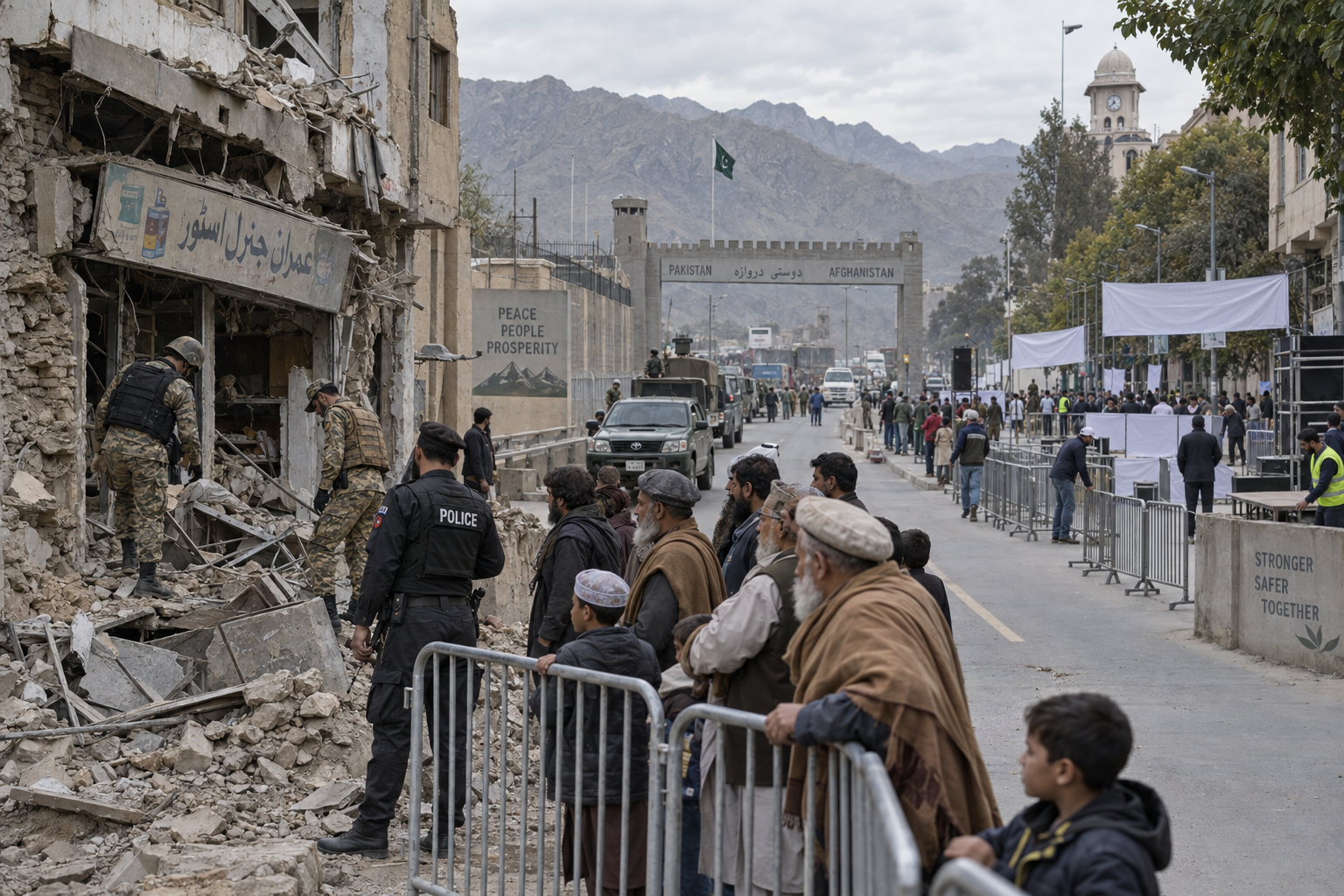
Pakistan says it carried out airstrikes in northeastern Afghanistan on Monday against facilities it described as terrorist and suicide-bomber training sites. The Pakistani Ministry of Information and Broadcasting said three targets were destroyed with “precision and accuracy,” claiming that 28 terrorists, including several suicide bombers, were killed and that weapons and ammunition were also destroyed.
Afghanistan’s Taliban authorities gave a sharply different account. Deputy government spokesperson Hamdullah Fitrat said the strikes hit Kunar and Paktika provinces and killed three civilians. He reported that a house in Kunar’s Nurgal district was completely destroyed, killing three members of one family and wounding four others. He also said that a shop and an unoccupied house in Paktika were damaged or destroyed. The competing claims could not be independently verified.
The strikes followed a deadly militant attack in Pakistan’s northwestern city of Kohat. A suicide bombing and a 20-hour gun battle at a district police headquarters killed at least 31 people, including 16 police officers. Ittehad-ul-Mujahideen Pakistan, a local militant group linked to Tehreek-i-Taliban Pakistan (TTP), claimed responsibility.
Pakistan and Afghanistan have experienced tense relations since the Taliban returned to power in 2021. Islamabad accuses Afghanistan of sheltering the TTP and Baloch separatist groups that carry out attacks in Pakistan, while the Taliban government rejects the accusations and describes militancy in Pakistan as an internal issue. The latest strikes threaten three months of relative calm following major clashes in February, when Pakistan declared itself to be in an “open war” with Afghanistan. Retaliatory strikes and cross-border fighting since then have reportedly killed hundreds, raising concerns that the latest escalation could trigger a broader conflict.
Entities: Pakistan, Afghanistan, Taliban government, Ministry of Information and Broadcasting of Pakistan, Hamdullah Fitrat • Tone: analytical • Sentiment: negative • Intent: inform
21-09-2026
At least three people were killed and several others injured in a Pakistani airstrike targeting Afghanistan’s northeastern Kunar province, according to Tolo News, which cited a provincial official. The strike reportedly followed a suicide bombing at a police station compound in northwestern Pakistan and has heightened fears that tensions between Islamabad and Kabul could escalate into open conflict.
Relations between Pakistan and Afghanistan have been strained for years over allegations that militant groups operate from Afghan territory and launch attacks into Pakistan. The two countries experienced their most serious military confrontation in years in February, and the latest strike came days after Taliban officials warned that Afghanistan would respond militarily to any Pakistani attack.
Taliban spokesperson Zabihullah Mujahid rejected Pakistan’s accusations that groups such as the Tehreek-e-Taliban Pakistan (TTP) recruit, train, arm, and deploy fighters from Afghanistan. Citing Article 51, he said Afghanistan had the right to defend itself if Pakistan violated its territory. Mujahid described any Pakistani military operation inside Afghanistan as a breach of Afghan sovereignty that could provoke a strong response.
Mujahid also denied that the Taliban administration shelters the TTP or supports armed groups conducting attacks against other countries. He argued that Pakistan should address its own internal security challenges, including violence linked to the TTP and Baloch armed groups, which he said predated the Taliban’s return to power in 2021.
Despite the threats of retaliation, Mujahid said Kabul remained open to dialogue. He proposed improved intelligence-sharing and broader bilateral cooperation, and supported Saudi Arabia playing a mediating role because of its relationships with both countries. The airstrike nevertheless threatens to further damage already fragile relations and could trigger another confrontation along the shared border.
Entities: Pakistan, Afghanistan, Kunar province, Kabul-Islamabad relations, Pakistani airstrike • Tone: urgent • Sentiment: negative • Intent: inform
21-09-2026
Pakistan is preparing for possible nationwide protests and marches toward Islamabad as the government warns that prolonged disruption could cost the economy approximately $400 million, or PKR 120 billion, each day. The demonstrations involve two separate political campaigns: Pakistan Tehreek-i-Insaf (PTI), which plans a nationwide protest and march on September 27 to demand the release of imprisoned party founder Imran Khan, and Jamaat-i-Islami (JI), which is protesting against the petroleum levy and has begun its own march toward the federal capital.
Information Minister Attaullah Tarar said the government, police and interior ministry would prevent groups from reaching Islamabad if they intended to cause disruption. He referred to an Islamabad High Court ruling prohibiting political parties from blocking public roads or restricting citizens’ movement. Finance Minister Muhammad Aurangzeb estimated that strikes, sit-ins, long marches and road closures could cause daily losses of PKR 86 billion in services, PKR 25 billion in industry and PKR 9 billion in agriculture, along with approximately PKR 17 billion in lost government revenue.
Aurangzeb also warned that protests could worsen existing business problems caused by higher freight and insurance costs and supply-chain disruptions linked to tensions around the Strait of Hormuz and Bab al-Mandab. He highlighted the vulnerability of Pakistan’s information-technology sector, saying previous internet disruptions during civil unrest had reduced IT exports by as much as 80 percent.
Authorities have intensified preparations by placing hundreds of shipping containers at Islamabad’s entry points, reviewing security at sensitive locations and putting major hospitals on high alert. The government has expressed concern over allegedly provocative statements by PTI leaders and warned of possible violence, while saying it remains in contact with JI and hopes to resolve the dispute through dialogue.
Entities: Pakistan, Islamabad, Pakistan Tehreek-i-Insaf (PTI), Jamaat-i-Islami (JI), Imran Khan • Tone: urgent • Sentiment: negative • Intent: inform