21-09-2026
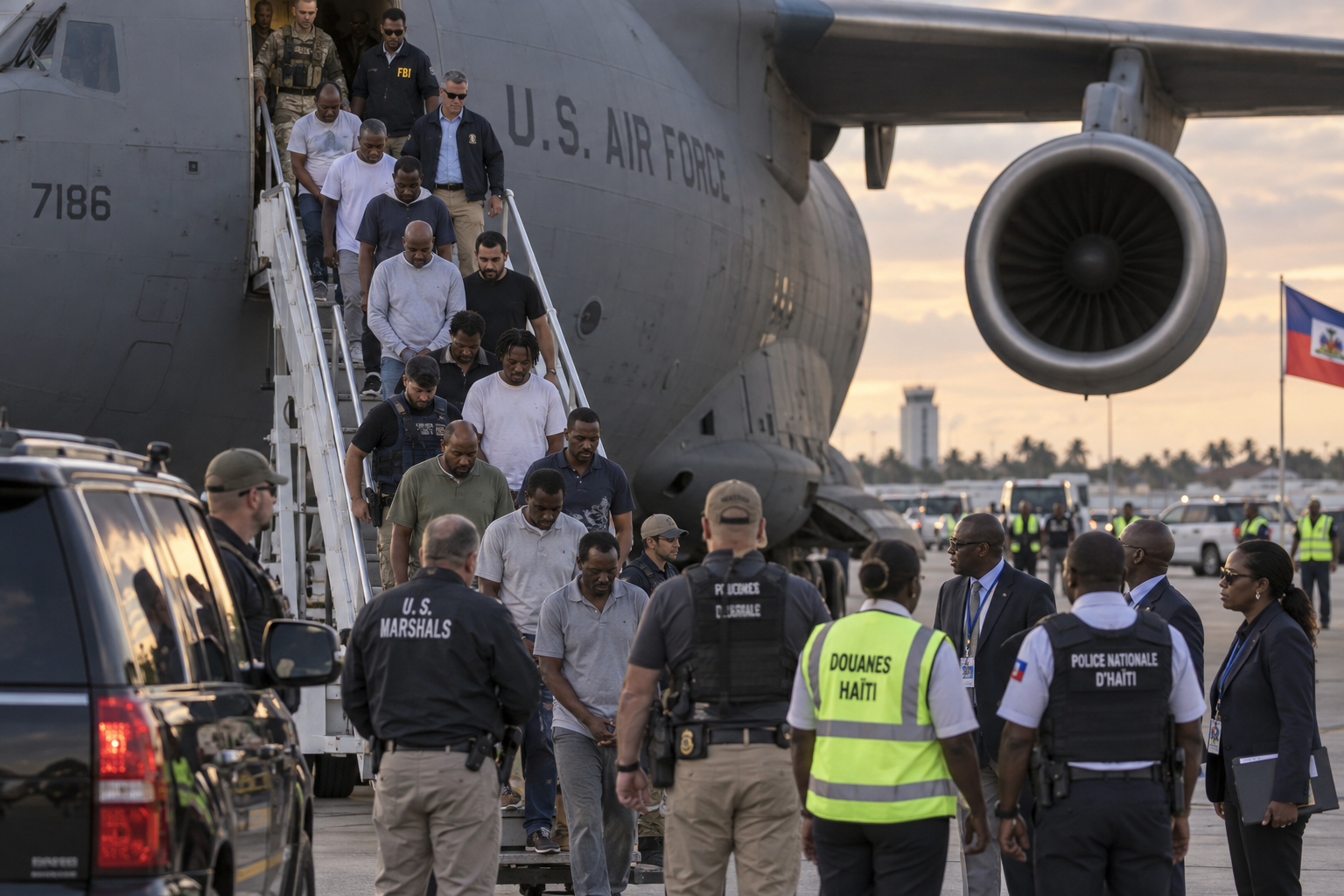
Eighteen suspects arrested in connection with the July 2021 assassination of Haitian President Jovenel Moïse are being extradited from Haiti to the United States, where they will face prosecution in Florida. The transfer ends a prolonged and troubled judicial process in Haiti, which has been hampered by gang violence, threats against judges, resignations and the takeover of a Port-au-Prince courthouse.
The suspects include 17 Colombian former soldiers and Joseph Badio, a former Haitian Ministry of Justice employee who was part of an anti-corruption unit. Badio is considered a central figure in the case. Defense lawyers for other suspects have described him as the mastermind of a plot that used a purported plan to arrest Moïse as cover for his assassination. Authorities, however, have said some participants intended to stage a coup rather than kill the president. The Colombian soldiers have testified that they were beaten, threatened and forced to sign documents they could not understand.
The U.S. attorney for the Southern District of Florida said the extraditions represent a new phase in efforts to identify everyone who financed, facilitated or carried out the killing. Haitian authorities said they surrendered the suspects to enable their trials, acknowledging that proceedings in Haiti face serious difficulties. Relatives of the Colombian detainees said the extradition was unexpected and expressed concern about their health after years in Haiti’s notoriously harsh prisons.
The United States has already convicted four men in the case, while at least five others have pleaded guilty and received life sentences. Those convicted include business figures linked to CTU, a South Florida company allegedly intended to receive government contracts under a proposed replacement for Moïse. Christian Sanon, a Haitian-American accused of being selected to replace the president, is still awaiting trial. Authorities also continue to seek fugitive suspects, including Dimitri Hérard, a former National Palace security chief.
Entities: Jovenel Moïse, Haiti, Port-au-Prince, United States federal courts in Florida, Joseph Badio • Tone: analytical • Sentiment: negative • Intent: inform
21-09-2026
Eighteen people allegedly involved in the July 2021 assassination of Haitian President Jovenel Moïse have been transferred from Haiti to the United States to face federal charges. The suspects, including Haitian and Colombian operatives, arrived in Miami aboard a U.S. military aircraft and were escorted by FBI and Department of Homeland Security agents. Their transfer comes as U.S. authorities unsealed an indictment describing a conspiracy that was organized and financed largely in South Florida.
Federal prosecutors allege that the defendants used fraudulent Paycheck Protection Program loans to fund the operation, purchasing weapons, ammunition, tactical equipment and the services of former Colombian soldiers. The charges include conspiracy to kill or kidnap a person abroad and wire fraud. Some suspects allegedly impersonated Drug Enforcement Administration agents to gain entry to Moïse’s residence, where the president was killed in his bedroom.
According to investigators, the original plan was to overthrow Moïse and install a new government. Prosecutors contend that the plot escalated into assassination because the defendants sought access to lucrative Haitian government contracts. Miami FBI official Brett Skiles characterized the motive as greed, saying the conspirators believed regime change would benefit their U.S.-based business interests.
The four alleged ringleaders were convicted in Miami in May and face life imprisonment. Prosecutors said they recruited about two dozen former Colombian soldiers and supplied them with money, firearms, ammunition and tactical vests.
Haitian Justice Minister Patrick Pelissier confirmed the transfer, noting that Haitian judicial proceedings have been delayed despite progress in the United States. Haitian human rights activist Pierre Espérance called the situation a disgrace for Haiti’s justice system and urged reforms that would enable complex cases to be tried domestically. The assassination deepened Haiti’s political crisis and contributed to the growing influence of armed groups.
Entities: Jovenel Moïse, Kash Patel, Brett Skiles, Jason Reding Quiñones, Patrick Pelissier • Tone: urgent • Sentiment: negative • Intent: inform
21-09-2026
Eighteen suspects linked to the 2021 assassination of Haitian president Jovenel Moise have been transported to Florida, where they are expected to stand trial, according to US officials. The transfer is part of an expanding US prosecution concerning an alleged mercenary plot against Moise.
Moise, who was 53, was shot and killed on July 7, 2021, at his private residence in Haiti. The article reports that the attack involved approximately 20 military-trained Colombian mercenaries who had been hired to carry out the operation. Despite the assault, Moise’s security detail did not intervene to protect him.
The case has involved arrests across multiple locations and countries. FBI special agent Brett Skiles said the arrests demonstrated the agency’s ongoing determination to hold everyone involved in the alleged plot accountable. His statement, posted on X, characterized the operation as both multinational and geographically wide-ranging.
The suspects’ transfer to Florida marks a significant development in the US proceedings and reflects the prosecutors’ effort to broaden the case surrounding Moise’s killing. The report does not provide details about the individual suspects, the specific charges they face, the timing of their trials, or the circumstances of their extradition. It also does not describe the broader political consequences of the assassination in Haiti.
The article presents the development as a law-enforcement and judicial action following a high-profile political murder. Its focus is on the movement of the suspects to the United States, the alleged use of Colombian mercenaries, and the FBI’s stated commitment to pursuing all participants in the plot.
Entities: Jovenel Moise, Haiti, Florida, United States, FBI • Tone: neutral • Sentiment: negative • Intent: inform