21-07-2026
The article focuses on Spanish footballer Lamine Yamal’s celebration after Spain’s 1-0 win over Argentina in the World Cup final, but it emphasizes that the spotlight was partly stolen by his three-year-old brother, Keyne. Footage of Keyne’s exuberant reactions from the stands quickly spread across social media, making him an unexpected viral star of the tournament. The piece describes how Keyne has become a familiar presence around Lamine Yamal, often appearing in his social media posts, and notes that his joy seems to deeply move the young footballer, who says his little brother means everything to him. The article also frames the final as a symbolic passing of the torch, since Lamine Yamal faced Lionel Messi—who once held him as a baby years earlier—and Messi had publicly praised Yamal before the match. Spain’s victory is highlighted as Yamal’s latest milestone, making him the youngest player ever to win both the European Championship and the World Cup.
Entities: Lamine Yamal, Keyne, Spain, Argentina, Lionel Messi • Tone: analytical • Sentiment: positive • Intent: inform
21-07-2026
Spain erupted in celebration after its 2026 World Cup victory over Argentina, with jubilant scenes in Barcelona, Madrid, and other parts of the country. Yet alongside the national pride, some Spanish fans expressed irritation over President Trump’s behavior during the trophy ceremony in New Jersey. According to the article, Trump walked onto the stage with FIFA president Gianni Infantino to present Spain’s trophy and then remained beside the team while players posed for photos, despite appearing to be nudged to step aside. That moment became a point of debate among fans interviewed by CBS News: some saw his presence as acceptable or even politically fitting, while others considered it disrespectful and attention-seeking, arguing that the celebration should have belonged solely to the players and coaches.
The article contrasts those criticisms with the overwhelming joy felt across Spain after only the nation’s second men’s World Cup title. In Barcelona’s Gothic Quarter, locals gathered to celebrate, while in Rocafonda, the hometown of teenage star Lamine Yamal, a watch party ended in fireworks and flares. Barcelona later hosted large street celebrations, and officials expected up to a million people in Madrid for an open-top bus parade honoring the team. Overall, the story blends a sports triumph report with a political-cultural angle, showing how a World Cup victory became a moment of national pride, public festivity, and debate over Trump’s role in the trophy photo-op.
Entities: Spain, Barcelona, Madrid, Rocafonda, Catalunya Plaza • Tone: analytical • Sentiment: positive • Intent: inform
21-07-2026
Spain captured the 2026 FIFA World Cup title with a hard-fought 1-0 win over Argentina at MetLife Stadium in New Jersey, ending a tense final that remained scoreless through 90 minutes and much of extra time. Ferran Torres, who entered as a substitute, scored the match’s lone goal in the opening moments of the second extra-time period, finishing a bouncing ball in the box past Argentina goalkeeper Emiliano Martínez. Spain had dominated much of the match statistically, outshooting Argentina 20-3 and controlling corners and possession, but had to wait 106 minutes for the breakthrough. Argentina played the entire extra period with 10 men after Enzo Fernández was sent off for a second yellow card near the end of regulation.
The victory gave Spain its second men’s World Cup title and made it the first nation to hold both the men’s and women’s World Cup trophies at the same time. It also extended Spain’s unbeaten run to 38 matches and completed a tournament in which Spain allowed only one goal across eight games, a record for the fewest conceded by a champion. Goalkeeper Emiliano Martínez kept Argentina in the game with a record 12 saves in a World Cup final, but it was not enough to prevent Spain’s triumph. The article also highlights the high-profile spectacle around the final, including performers, celebrities, global political figures, and security preparations at the largest World Cup in history, staged across the United States, Canada, and Mexico.
Entities: Spain, Argentina, Ferran Torres, Emiliano Martínez, Enzo Fernández • Tone: neutral • Sentiment: neutral • Intent: inform
21-07-2026
Spain’s World Cup victory sparked a major celebration in Madrid, where fans filled the streets on Monday to honor the national team after its 1-0 win over Argentina. The article, presented as a CNN video item, centers on the atmosphere of public celebration following the championship and references CNN reporting from the scene. The win is framed as a national moment of pride, with the parade serving as the public culmination of Spain’s tournament success. The piece is brief and primarily descriptive, focusing on the fact of the victory, the location of the celebration, and the enthusiasm of supporters. It also includes embedded site video promotion and links to other unrelated trending clips, but the actual news content is limited to Spain’s parade and the fans’ response to the team’s triumph.
Entities: Spain, World Cup, Madrid, Argentina, Janelle Olisea • Tone: positive • Sentiment: positive • Intent: inform
21-07-2026
The article is a roundup of the most viral, internet-driven moments from the 2026 FIFA World Cup, arguing that the tournament’s cultural footprint extended far beyond the stadiums. While Spain’s title win is noted, the piece emphasizes how memes, short videos, celebrity reactions, fan antics, and social-media posts made the event unforgettable online. It highlights the scale of digital engagement, including FIFA’s TikTok account generating billions of views and millions of fan-created videos across platforms. The article then lists a series of standout viral moments, many of them funny or absurd: Lionel Messi reaction memes, the “Cucurella cat,” Kylian Mbappé’s slow-motion stare, an AI-generated Erling Haaland eating video, Madonna riding with Ronaldo and Ronaldinho, Anya Taylor-Joy and Victoria Beckham reactions, Merlin the duck in Mexico, Lamine Yamal’s younger brother Keyne, Haaland taking a souvenir home, a lip-read moment involving Mexico’s manager, fan invasions by the Tartan Army and Oranje Army, Mick Jagger’s apparent bad luck, Belgium trolling the U.S. with the Trump dance, and more. Overall, the article frames the World Cup as both a sporting event and a massive social-media spectacle, where the most memorable images were often those that became jokes, reactions, or shareable clips rather than match highlights.
Entities: 2026 FIFA World Cup, Spain, United States, Canada, Mexico • Tone: analytical • Sentiment: neutral • Intent: inform
21-07-2026
FIFA has launched an investigation into Argentina after a heated post-match altercation following its 1-0 loss to Spain in the World Cup final at MetLife Stadium. The controversy began when Argentina midfielder Leandro Paredes appeared to strike Spain’s Eric Garcia in the throat, knocking him down, and then shoved Spain’s Gavi when he tried to step in. The confrontation escalated briefly as players from both teams rushed toward the scene before order was restored and Spain resumed celebrating its championship victory.
The governing body said it had reviewed match reports and, under article 36 of the FIFA Disciplinary Code, appointed a Disciplinary and Ethics Prosecutor to examine possible rule violations tied to the post-match incidents. FIFA said further details would come later, once the prosecutor’s report is complete. The article notes that the outcome and timing of any punishment remain unclear.
Beyond the scuffle itself, Argentina is described as facing broader criticism for its conduct during and after the final. The team reportedly turned its backs on Spain during the post-match ceremony and avoided media obligations by bypassing the mixed zone. Spain midfielder Dani Olmo also criticized Argentina’s behavior, saying the important issue was the values players project and that Spain intended to enjoy its victory.
Entities: FIFA, Argentina, Spain, World Cup final, MetLife Stadium • Tone: analytical • Sentiment: negative • Intent: inform
21-07-2026
This article is a post-2026 World Cup guide for readers who want to keep following the tournament’s biggest stars once they return to club football. Tim Spiers frames the World Cup as a finished global spectacle and then focuses on what comes next for a selection of standout players, explaining their tournament performances, their current club situations, and where fans can continue to track them on The Athletic. The piece highlights Lionel Messi, Kylian Mbappe, Erling Haaland, Lamine Yamal, Cristiano Ronaldo, Folarin Balogun, and Jude Bellingham, with each mini-profile linking World Cup impact to the player’s next season at club level.
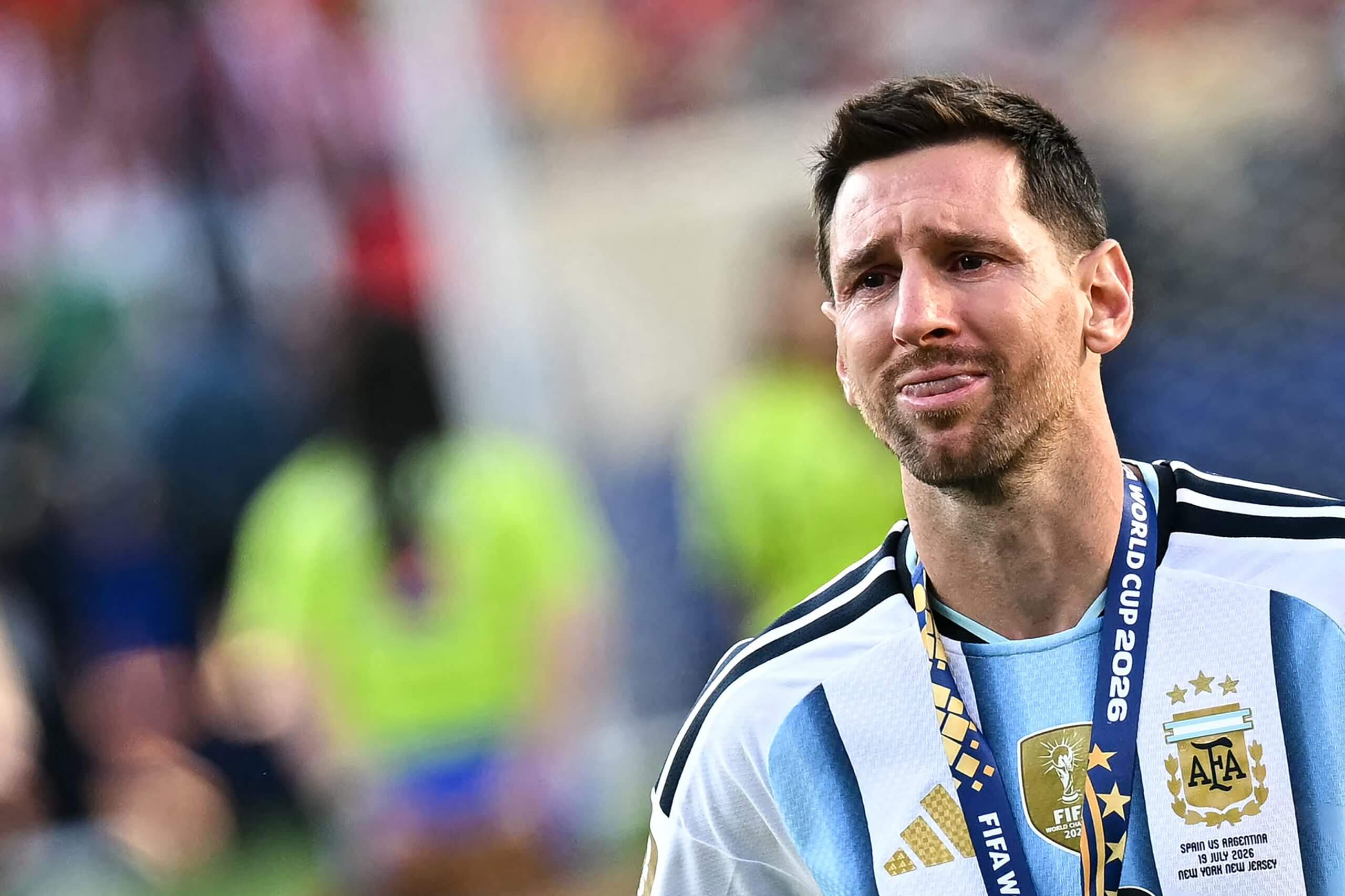
Messi is presented as still brilliant but ultimately unable to carry Argentina past Spain in the final, before returning to Inter Miami and Major League Soccer. Mbappe is described as the tournament’s most prolific scorer, with a historic goal total that strengthens his claim as one of football’s greats, and he heads back to Real Madrid after a difficult team season. Haaland is depicted as the central figure in Norway’s breakthrough World Cup run, then returning to Manchester City for a new managerial era. Yamal is celebrated as a teenage champion and Barcelona’s key future star. Ronaldo’s historic sixth World Cup and record-breaking scoring streak are noted alongside his return to Saudi Arabia with Al Nassr. Balogun is positioned as a breakout U.S. star who may use his elevated profile to advance his career at Monaco. Bellingham is shown as having delivered his strongest international tournament for England before resuming his quest to help Real Madrid regain major trophies.
Overall, the article functions as both a World Cup recap and a practical fan guide, offering quick context, forward-looking club expectations, and links to follow each player on The Athletic.
Entities: 2026 World Cup, Lionel Messi, Argentina, Inter Miami, Kylian Mbappe • Tone: analytical • Sentiment: neutral • Intent: inform
21-07-2026
A 13-year-old boy died and two other young people were injured after part of the Árbol Gordo fountain in Ciudad Rodrigo, Salamanca province, collapsed during celebrations in Spain following the national football team’s World Cup victory. According to emergency services, several people had climbed onto the fountain while celebrating Spain’s win when the structure gave way around 00:30 local time. One of the injured children was taken to hospital with a possible broken leg, and authorities later requested police and psychological support for the boy’s family. The town hall described the event as a tragedy and said it hoped the others affected would recover quickly. The article places the incident in the wider context of Spain’s victory over Argentina in the World Cup final, noting that celebrations had turned fatal and referencing other recent deaths linked to World Cup celebrations in Mexico City. Overall, the piece is a concise report focused on the deadly accident, the emergency response, and the human cost of public celebrations gone wrong.
Entities: Spain, Argentina, Ciudad Rodrigo, Salamanca province, Castilla y León • Tone: negative • Sentiment: negative • Intent: inform