21-07-2026
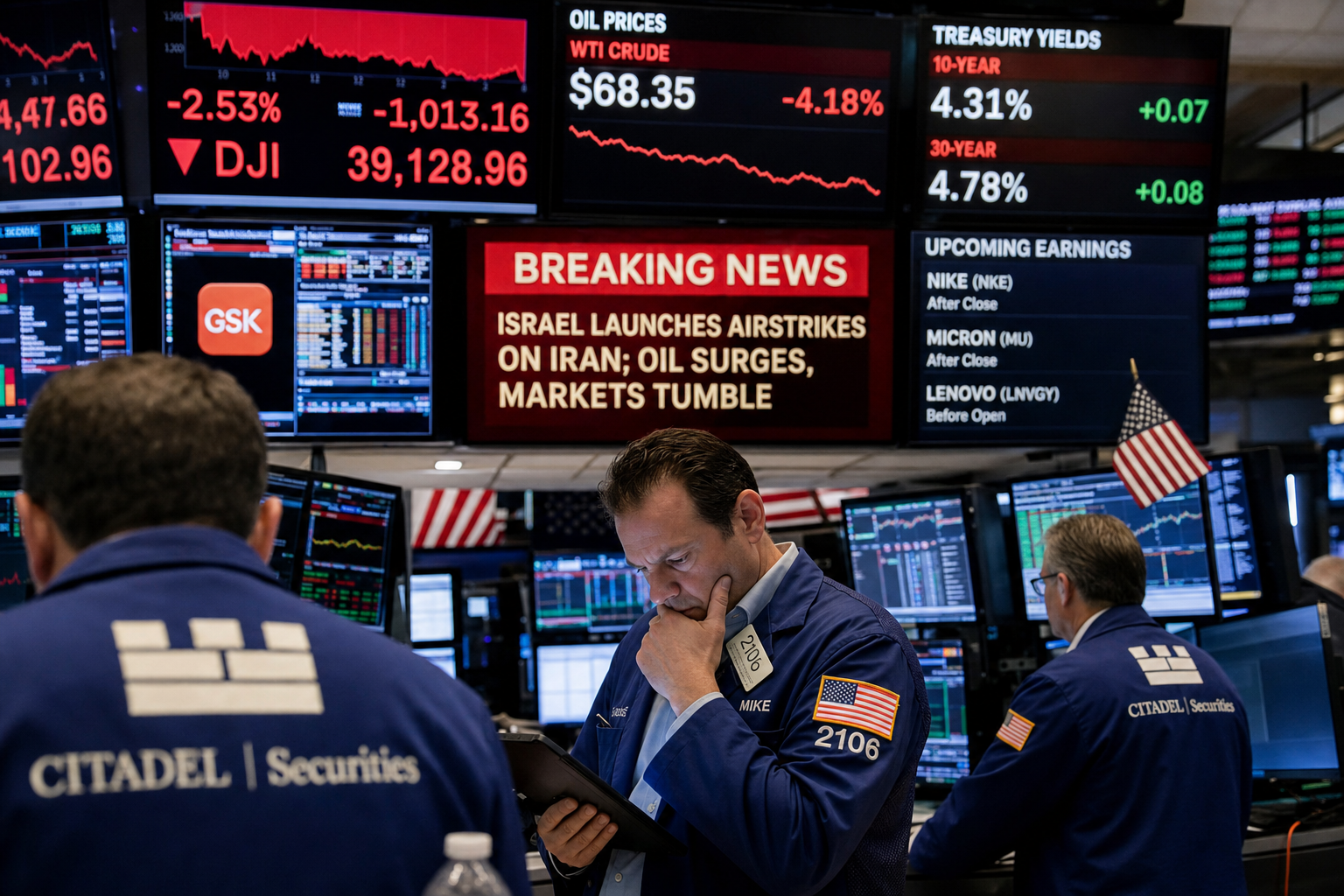
U.S. stocks moved lower in regular trading Monday as higher oil prices and geopolitical tensions weighed on sentiment, while stock futures pointed higher early Tuesday on hopes that the market could stabilize. The Dow fell 307 points, with Apple sharing most of the pressure after a 2% drop, while the S&P 500 and Nasdaq also finished slightly lower. Energy markets were a key driver: crude prices rose after comments from President Donald Trump about Tehran, adding to concerns about Middle East escalation and inflation pressure. At the same time, semiconductor stocks recovered some of the prior week’s losses, helping limit broader weakness.
The article frames the week as potentially quiet but sensitive to technical trading, geopolitical headlines, and earnings results. Strategists said lofty expectations may limit the upside from corporate reports, even as investors look for guidance on artificial intelligence spending and executive outlooks for the second half of the year. Major earnings due later in the week include Alphabet, IBM, and Tesla, while General Motors, 3M, and Chubb were scheduled to report sooner.
The piece also tracks broader global market and macro developments. Treasury yields edged lower, though analysts warned they remain vulnerable to oil-driven inflation and conflict risks. Oil prices eased slightly on Tuesday as mediation hopes offset fresh tensions in the Middle East. In Asia, markets were mixed, with gains in Japan and South Korea offset by weaker performance in Australia and China/Hong Kong. A separate political and economic note from the U.K. reported that new Prime Minister Andy Burnham appointed John Healey as finance minister, signaling a shift toward a new economic model and adding another source of policy uncertainty for markets.
Entities: Stock market, Dow Jones Industrial Average, S&P 500, Nasdaq Composite, Apple • Tone: analytical • Sentiment: neutral • Intent: inform
21-07-2026
Former National Counterterrorism Center Director Joe Kent is again calling for the withdrawal of U.S. military forces from the Middle East, arguing that keeping troops and bases in the region increases the risk of a mass-casualty attack amid the escalating conflict with Iran. In a Sunday post on X, Kent urged President Donald Trump to remove U.S. personnel immediately, saying the administration still has the political strength to declare victory and leave before more American casualties occur. His remarks came after U.S. Central Command reported additional U.S. deaths and injuries tied to Iranian attacks and the recovery of unidentified remains in Jordan, as well as the killing of a service member in Iraq during a controlled detonation of unexploded ordnance from a downed Iranian drone. Kent framed the U.S. military presence as a liability and a relic of an outdated strategy, arguing that withdrawal would deny Iran targets and reduce the justification for attacks on shipping and neighboring states. He also said sanctions relief could be offered in exchange for freedom of navigation in the Strait of Hormuz. The article places Kent’s comments in the context of his resignation from his counterterrorism post earlier in the year, where he said Iran did not pose an imminent threat and blamed pressure from Israel and its U.S. supporters for the war.
Entities: Joe Kent, National Counterterrorism Center, U.S. forces, Middle East, Iran • Tone: analytical • Sentiment: negative • Intent: inform
21-07-2026
Steve Forbes is quoted urging the Trump administration to maintain maximum pressure on Iran’s Tehran-based regime and to keep the Strait of Hormuz open as an uncompromising U.S. priority. Speaking at Freedom Fest in Las Vegas, Forbes frames freedom of navigation as a core American foreign-policy principle rooted in Thomas Jefferson and reinforced by historical precedents such as the War of 1812 and the First Barbary War. He argues that the Strait of Hormuz is an international waterway and that commercial traffic should pass through it without tolls or restrictions.
Forbes says the U.S. should continue hammering Iran militarily and politically, suggesting that strong airpower could be sufficient but not ruling out ground action if necessary. He links the issue to broader Western support, saying the U.S. and Israel should be able to help bring down what he calls an “evil regime” while encouraging elements within the Iranian military that want change. He also warns against a premature or “fake ceasefire,” insisting that diplomacy has run its course and that the U.S. should not back away from sustained pressure.
The article also notes that the U.S. has been striking targets in Iran for nine consecutive days and includes a brief aside in which Forbes praises Trump’s reported willingness to provide Patriot missile licensing to Ukraine. Overall, the piece presents Forbes as strongly hawkish on Iran and supportive of Trump’s hardline foreign-policy posture.
Entities: Steve Forbes, Donald Trump, Tehran regime, Iran, Strait of Hormuz • Tone: urgent • Sentiment: negative • Intent: inform