21-07-2026
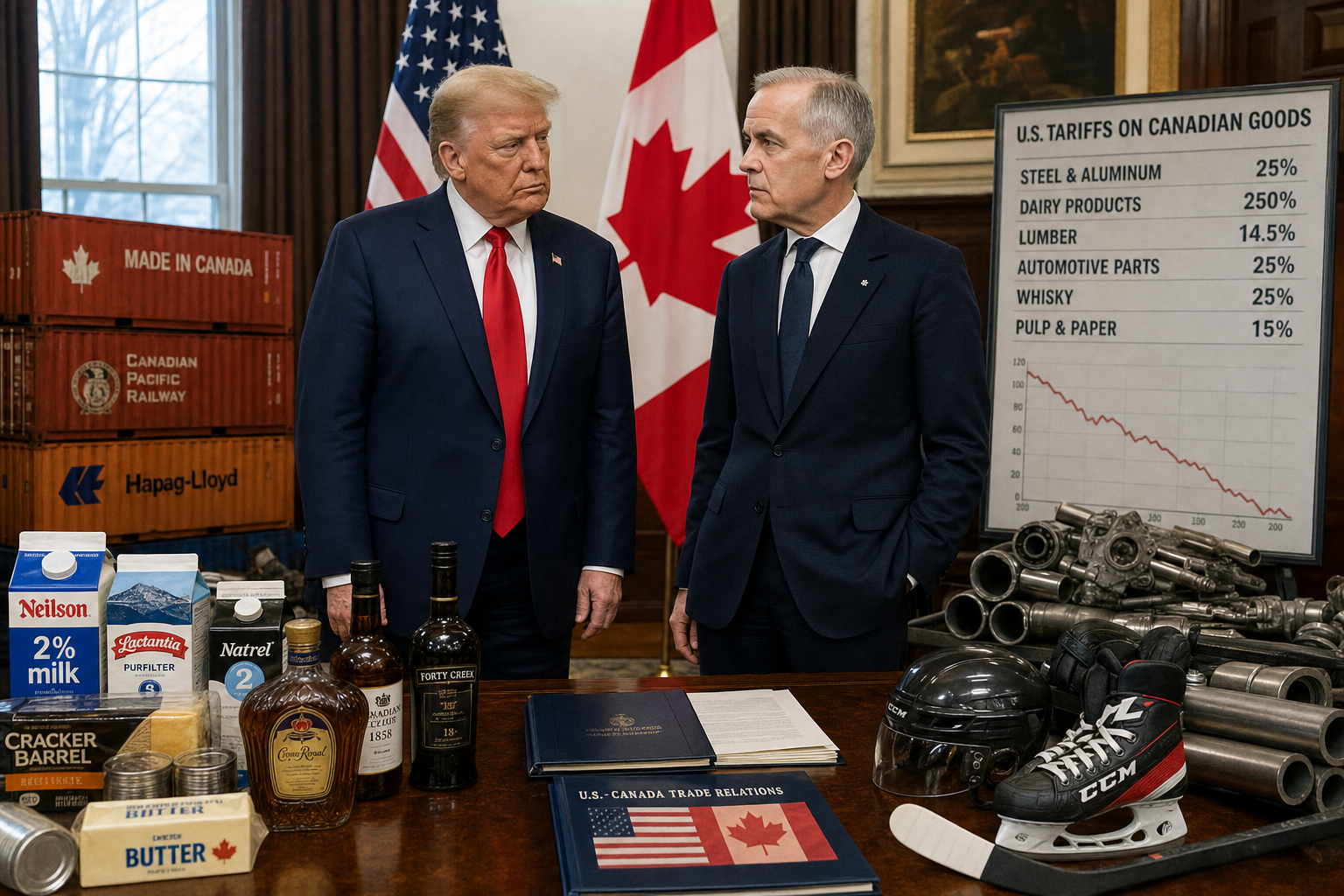
US President Donald Trump has sharply escalated trade tensions with Canada by imposing 50% tariffs on a wide range of Canadian goods, citing what he described as unequal treatment of US cars, dairy, and alcohol. The new measures, announced under Section 338 of the 1930 Tariff Act and set to take effect in 30 days, hit consumer and industrial products including wine, hockey sticks, and cement, though major sectors such as energy, potash, critical minerals, and fish are exempt. Prime Minister Mark Carney responded that Canada is prepared to “intensify” trade talks with Washington in the coming weeks, while also framing the US action as part of a broader pattern of unilateral trade moves that violate the USMCA and threaten Canadian sovereignty.
The article explains that this latest move builds on already-high tariffs and counter-tariffs affecting steel, aluminum, copper, lumber, and autos, and highlights the deeply integrated nature of North American manufacturing. It also notes longstanding disputes over Canada’s dairy supply management system and provincial boycotts of US alcohol. The piece places the announcement in a wider legal and trade context, including the US decision not to renew USMCA in its current form and a recent Supreme Court ruling that limited Trump’s use of emergency powers for tariffs. Business and trade leaders on both sides urged a negotiated solution, warning that failure to make progress could trigger more retaliation and further harm to North American commerce.
Entities: Donald Trump, Mark Carney, Canada, United States, Mexico • Tone: analytical • Sentiment: negative • Intent: inform
21-07-2026
President Trump is escalating the long-running U.S.-Canada trade dispute by imposing 50% tariffs on a broad range of Canadian goods, including hockey equipment, alcoholic beverages, milk, and other products. The tariffs, announced in a series of proclamations and set to take effect on Aug. 19, are justified by the White House as a response to what it calls Canada’s “unreasonable, unequal, and discriminatory” trade actions against American goods. The administration says the new levies are retaliation for Canadian tariffs and restrictions that were imposed after Trump’s earlier tariff rounds, and it is using Section 338 of the Tariff Act of 1930, a rarely invoked authority that can impose duties of up to 50% on countries deemed to discriminate against U.S. commerce.
The article notes that the tariffs will apply even to goods covered by the U.S.-Mexico-Canada Agreement (USMCA), which had previously shielded much trade from the dispute. A senior administration official insisted the move does not mean the U.S. is entering a trade war, while also saying the administration remains open to negotiation. U.S. Trade Representative Jamieson Greer framed Canada as a retaliatory outlier among U.S. partners. Canadian Prime Minister Mark Carney responded that Canada’s measures merely matched Trump’s tariffs and said Ottawa is willing to negotiate and modernize USMCA.
Business and trade groups on both sides warned the new tariffs could deepen tensions and hurt consumers and industries, especially hospitality and spirits producers. The article places the move in the broader context of strained relations between the two countries, including border-security disputes, prior tariff rounds, retaliation against U.S. alcohol, threats over wildfire smoke, and Trump’s refusal to guarantee renewal of USMCA beyond 2036.
Entities: Donald Trump, Mark Carney, Jamieson Greer, Canadian Chamber of Commerce, Distilled Spirits Council of the United States • Tone: analytical • Sentiment: negative • Intent: inform
21-07-2026
CNBC’s Daily Open reports that President Donald Trump has revived one of his signature economic tactics by imposing 50% tariffs on certain Canadian exports, a move aimed at addressing what the White House describes as discriminatory trade practices against U.S. industries such as motor vehicles, alcohol, and dairy. The piece explains that the tariffs are being enacted under Section 338 of the Tariff Act of 1930 and would take effect 30 days after Trump signs the proclamations. The article also highlights the escalating military conflict involving Iran, noting Trump’s statement that Tehran will “pay” for the deaths of American service members. It cites rising U.S. casualties and ongoing strikes, which have contributed to market unease.
The market reaction described in the article is mixed: oil prices rose on geopolitical threats, though they later eased somewhat in Asian trading, while U.S. stock indexes slipped. The article emphasizes that defense and conflict-related developments are weighing on sentiment, even as the tech sector continues to show strength. AMD rallied after unveiling Helios, a rack-scale AI system intended to compete with Nvidia’s leading products, and Microsoft’s adoption of the system boosted its shares. Alphabet also gained after reports that it is developing a new server chip designed to improve Gemini model performance.
The article closes with a lighter note about FIFA appearing to crop Trump out of a World Cup celebration photo, prompting the White House to post its own images. Overall, the piece blends geopolitical and market analysis with a brief tech update and a touch of political trivia.
Entities: Donald Trump, Canada, White House, Tariff Act of 1930, Section 338 • Tone: analytical • Sentiment: neutral • Intent: inform