20-09-2026
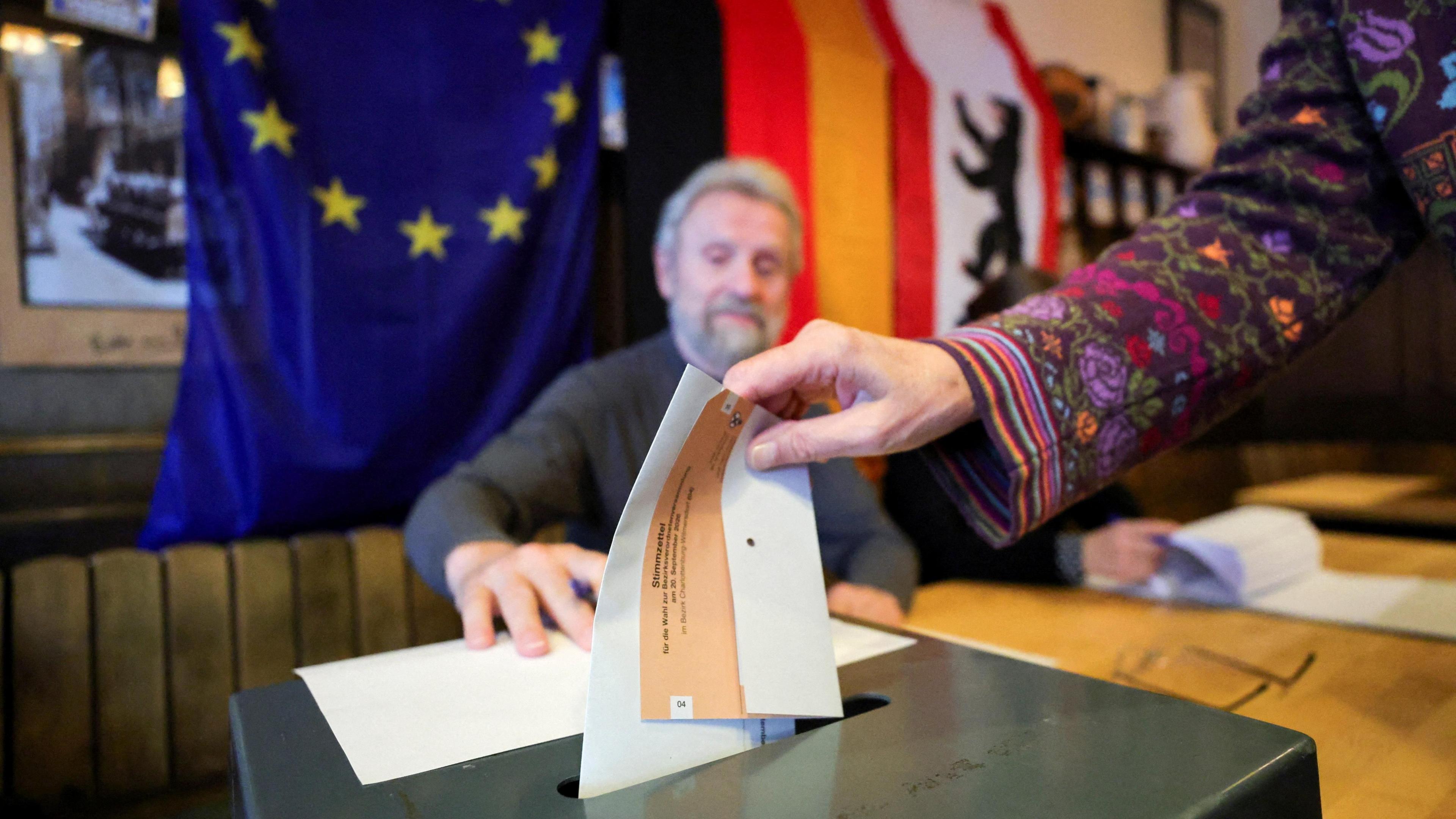
Local elections in Berlin and Mecklenburg-Vorpommern are being held amid growing pressure on German Chancellor Friedrich Merz. Opinion polls suggest that Merz’s Christian Democratic Union (CDU) could suffer serious setbacks: it is competing with Die Linke for first place in Berlin, while in Mecklenburg-Vorpommern it is only narrowly above the 5% threshold required to enter the state parliament. A poor result could intensify speculation that Merz may be replaced before the end of his term, although he has insisted that he will remain in office.
The elections follow a major victory for the far-right Alternative for Germany (AfD) in Saxony-Anhalt, where the CDU’s vote was reportedly halved. The AfD is seeking another breakthrough in Mecklenburg-Vorpommern, particularly in eastern Germany, where its anti-immigration, Russia-friendly and nationalist platform has gained support. The centre-left SPD, however, has recovered late in the campaign under state premier Manuela Schwesig, who is presenting herself as an opponent of the AfD and attempting to unite anti-AfD voters.
Merz’s approval ratings have fallen amid economic stagnation, high energy costs, immigration disputes and criticism of his blunt communication style. His decision to move right on immigration has not weakened the AfD and has alienated voters on the left. Even some CDU candidates have questioned whether he can connect with ordinary people, though party leaders continue to defend him and argue that he inherited many of Germany’s problems.
Merz is scheduled to meet senior CDU figures after the vote and has cancelled a planned trip to New York, apparently to manage the political fallout. His coalition is also preparing economic, tax and welfare reforms for parliament. A collapse in his position would create further instability in Germany and Europe, especially because Merz is a strong supporter of Ukraine during a period of heightened concern about Russian aggression.
Entities: Friedrich Merz, Christian Democratic Union (CDU), Alternative for Germany (AfD), Social Democratic Party (SPD), Die Linke (The Left) • Tone: analytical • Sentiment: negative • Intent: analyze
20-09-2026
Sixteen months into his term, German Chancellor Friedrich Merz is facing record-low public approval and intensified criticism following the CDU’s poor performance in Saxony-Anhalt’s state election. Only 13% of respondents in an early-September Deutschlandtrend poll said Merz was doing a good job. His communication style has also alienated some audiences, prompting public speculation about whether he retains the confidence of his Christian Democratic Union (CDU), its Bavarian sister party, the Christian Social Union (CSU), and coalition partner, the center-left Social Democratic Party (SPD).
The article explains that removing a German chancellor is difficult because the Basic Law gives the office strong constitutional protection. Merz could resign voluntarily, although he appears determined to remain in office. The article cites Willy Brandt’s 1974 resignation as an example of a chancellor stepping down without bringing down the coalition. Brandt was replaced within 10 days by fellow Social Democrat Helmut Schmidt, who secured an absolute majority in the Bundestag.
A second possibility is a constructive vote of no confidence. Under this procedure, lawmakers do not simply vote against a chancellor; they must simultaneously agree on a replacement. The article recalls how Helmut Schmidt was removed in 1982 after the FDP abandoned his coalition and joined the CDU/CSU behind Helmut Kohl. However, such a scenario is considered highly unlikely for Merz because the CDU/CSU and SPD do not want to end their coalition, there is no obvious alternative candidate, and conservative lawmakers are generally loyal to their leaders.
The article concludes with an overview of Germany’s chancellors since 1949, describing the political careers and legacies of Merz, Olaf Scholz, Angela Merkel, Gerhard Schröder, Helmut Kohl, Helmut Schmidt, Willy Brandt, Kurt Georg Kiesinger, Ludwig Erhard, and Konrad Adenauer.
Entities: Friedrich Merz, Christian Democratic Union (CDU), Christian Social Union (CSU), Social Democratic Party (SPD), German Bundestag • Tone: analytical • Sentiment: negative • Intent: inform
20-09-2026
Germans are voting in state elections in Berlin and Mecklenburg–Western Pomerania, contests that could intensify pressure on Chancellor Friedrich Merz and his governing Christian Democratic Union (CDU). The elections follow a strong performance by the far-right Alternative for Germany (AfD) in Saxony-Anhalt earlier in September, raising the possibility of further gains for the party.
In Berlin, the CDU is facing a close contest with Die Linke. The left-wing party has particularly strong support among younger voters and is campaigning on measures to address the city’s housing crisis. In Mecklenburg–Western Pomerania, the main race is between the governing Social Democratic Party (SPD) and the AfD. The AfD is leading in recent polls, but it faces a significant challenge from SPD minister-president Manuela Schwesig, who has held the position since 2017. The CDU is also at risk of failing to clear the 5% threshold needed to remain in the state parliament.
Polling suggests Die Linke has edged ahead of the CDU in Berlin, while the AfD leads the SPD in Mecklenburg–Western Pomerania. Any significant gains by either the far right or far left could further weaken Merz, who became chancellor in May 2025 and has experienced declining popularity.
Voters interviewed by AFP expressed dissatisfaction with the political status quo. Berlin resident Moritz Lembke-Oezer said he feared an AfD victory but intended to vote for Die Linke to punish the CDU and support its housing proposals. In Schwerin, pensioner Peter Sommer said he favored an AfD victory so the party would be forced to demonstrate whether it could govern effectively. The results could therefore shape both regional politics and perceptions of Merz’s national leadership.
Entities: Friedrich Merz, Christian Democratic Union (CDU), Alternative for Germany (AfD), Die Linke, Social Democratic Party (SPD) • Tone: analytical • Sentiment: negative • Intent: inform
20-09-2026
France 24 reports that regional elections are taking place in Berlin and the predominantly rural German state of Mecklenburg-Western Pomerania. The contests are being closely watched because they are viewed as an important political test for Friedrich Merz, Germany’s centre-right chancellor. The article focuses on whether a poor performance by Merz’s political camp could trigger a leadership crisis serious enough to force him to resign.
According to the report, Merz has already taken steps to manage the possible consequences of the elections. He has scheduled a crisis meeting and chosen to miss this week’s United Nations General Assembly in order to remain in Germany and address the domestic political fallout. These decisions suggest that the elections could have significant implications for the stability and authority of his government.
The report places the elections within a broader debate about the strength of Germany’s centre-right and the continuing rise of the far-right Alternative for Germany, or AfD. The party is identified as a key focus of the regional contests and of wider concerns about the state of German democracy. Related France 24 coverage indicates that the AfD is seeking breakthroughs in additional regions, although this article does not provide election results or confirm whether the party has gained power.
The central question is therefore prospective rather than settled: could disappointing regional results undermine Merz’s position sufficiently to make his resignation unavoidable? The piece presents this as a matter for political analysis rather than reporting an actual decision to step down. It includes analysis by Yann Wernert, a senior policy fellow at the Jacques Delors Centre in Berlin, with video by Alison Sargent.
Entities: Friedrich Merz, Germany, Berlin, Mecklenburg-Western Pomerania, German regional elections • Tone: analytical • Sentiment: neutral • Intent: analyze
20-09-2026
The France 24 report examines whether Germany’s far-right Alternative for Germany (AfD) party can achieve another electoral breakthrough in two eastern states. The article was published on 20 September 2026, shortly after the AfD won its first major regional election in Germany. It focuses on voting in Berlin, the national capital, and Mecklenburg-Western Pomerania, a largely rural northeastern state. Polls in both regions had opened when the report was published.
The article presents the elections as an important test of the AfD’s growing influence in Germany and of the strength of the country’s democratic mainstream parties. It specifically highlights the party’s attempt to build on its recent regional victory and asks whether that success can be repeated in two additional states. The report also places the elections within the broader national political context by mentioning Chancellor Friedrich Merz and his support for Stefan Evers, the candidate leading Merz’s party’s campaign in Berlin.
France 24 correspondent Jörg Taszman provides the report from Berlin. However, the supplied text contains only the introduction to the video report and does not include polling figures, campaign reactions, voter interviews, or the final election results. Consequently, it establishes the political stakes and identifies the locations and major figures involved, but it does not state whether the AfD ultimately won either election. The central issue is therefore the potential expansion of the far right’s regional power in Germany, particularly in the country’s eastern states.
Entities: Alternative for Germany (AfD), Germany, Berlin, Mecklenburg-Western Pomerania, Jörg Taszman • Tone: analytical • Sentiment: neutral • Intent: inform
20-09-2026
German voters are set to vote in state elections in Mecklenburg-Western Pomerania and Berlin, contests expected to increase pressure on Chancellor Friedrich Merz and his governing Christian Democratic Union (CDU). The elections follow a major setback in Saxony-Anhalt on September 6, where the far-right Alternative for Germany (AfD) came close to securing an absolute majority. The result has unsettled Germany and attracted wider European attention because the AfD views regional victories as steps toward winning the 2029 federal election.
The AfD has grown from a fringe eurosceptic party into Germany’s most popular political force. It advocates tougher deportation measures, restoring energy ties with Russia and leaving the euro. Although polling suggests it will not win either of the upcoming state elections, the party is expected to reinforce its recent gains and intensify debate over the established parties’ refusal to form coalitions with it—the so-called “firewall” strategy.
Merz’s personal approval ratings have fallen as low as 14 percent. He has struggled to deliver the economic revival promised when he was elected, while unpopular pension, tax and healthcare reforms, along with repeated communication mistakes, have weakened public support. CDU leaders continue to back him because replacing him would be constitutionally difficult and would not solve Germany’s underlying economic problems.
In Mecklenburg-Western Pomerania, the CDU risks its worst-ever result and could fail to enter the state parliament. The centre-left Social Democrats, led by popular premier Manuela Schwesig, are narrowly ahead of the AfD in recent polling. Rising fuel prices have made economic relief a central issue, prompting Merz to announce tax cuts on gas and diesel.
In Berlin, housing affordability dominates the campaign. The Left Party has moved ahead of the CDU, while the AfD has risen to third place, illustrating its growing support even in the liberal capital.
Entities: Friedrich Merz, Christian Democratic Union (CDU), Alternative for Germany (AfD), Mecklenburg-Western Pomerania, Berlin • Tone: analytical • Sentiment: negative • Intent: inform