20-09-2026
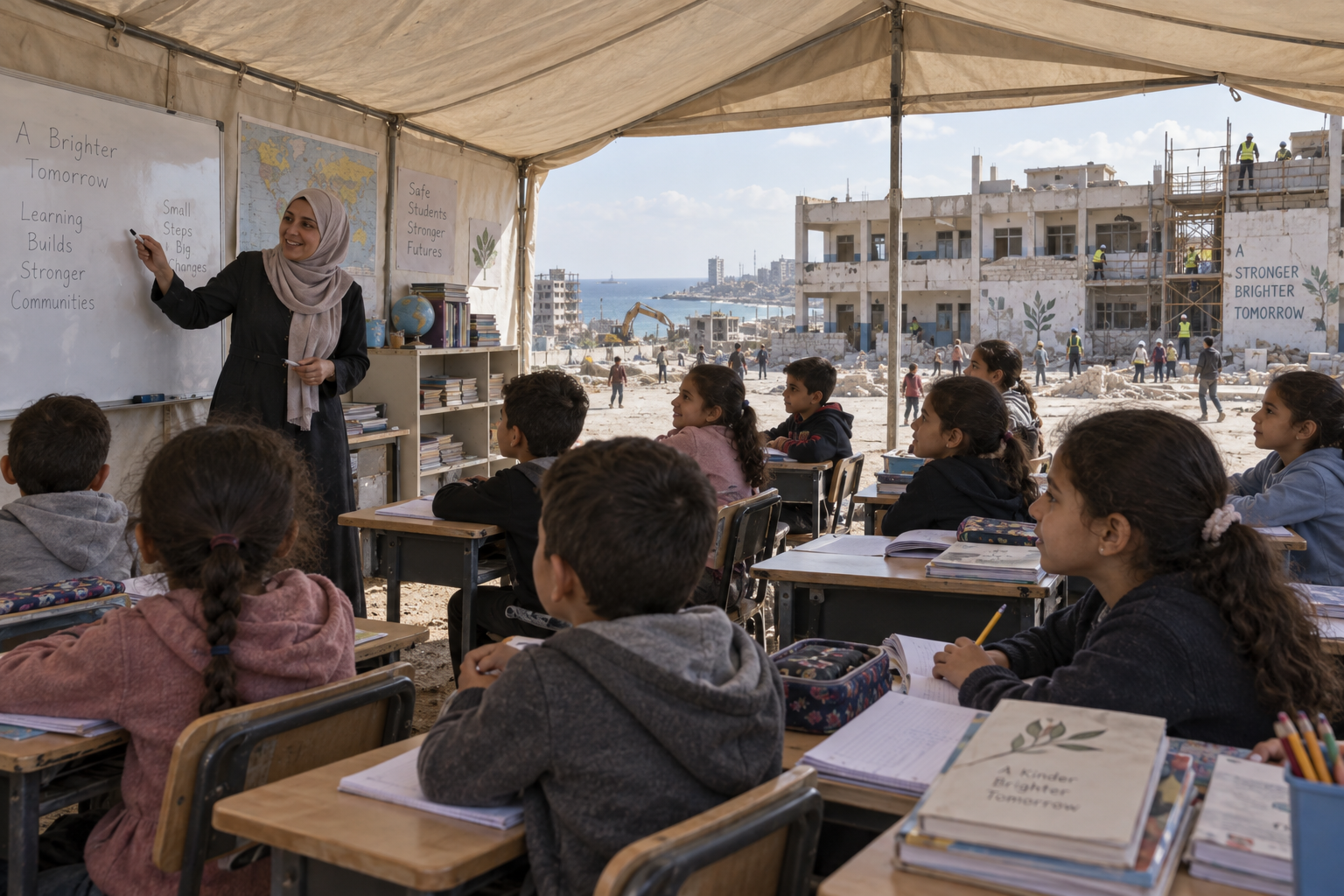
In Gaza City, children have returned to face-to-face education after nearly three years of disruption caused by war, displacement and the destruction of schools. The new school year began on September 19, with approximately 541,000 students resuming education through schools, tents and other temporary learning spaces. For families such as Rana Totah’s, sending children back to school represents a return to routine and family life after years in which survival needs, displacement and insecurity took priority over education.
Totah’s children previously relied on irregular, volunteer-led learning initiatives. At times, they had to fetch water and help their family obtain basic necessities instead of attending lessons. The temporary Gaza Municipality school they now attend operates in about 10 tents in western Gaza City. Teachers report that students often arrive without textbooks, stationery, desks or chairs, while continuing Israeli bombardment and the threat of renewed disruption make the learning environment unsafe.
According to UNICEF, nearly 98 percent of Gaza’s school buildings have been damaged since October 2023, and more than 93 percent require major rehabilitation or complete reconstruction. Around 700,000 children aged four to 17 missed formal face-to-face schooling for almost three consecutive years, including approximately 420,000 who had no in-person learning at all. Some students studied virtually with teachers in the West Bank, while others attended informal programs.
Teachers and school administrators are trying to restore education despite severe shortages. In one tent, mathematics teacher Nesma Nahid Abu Asim teaches sixth-grade students sitting on mattresses with notebooks on their laps. At Ahbab Shujayea School, more than 300 younger students study on the ground, using cardboard because desks, chairs and school supplies are unavailable. Restrictions on goods entering Gaza have also affected the delivery of notebooks, school bags and stationery.
Despite these conditions, teachers and students describe education as a right and a source of hope. Eleven-year-old Osama Alayleh says he is happy to return to school, even though he would prefer a conventional classroom. For educators, reopening schools is an important step toward normal life, but they hope temporary tents will eventually be replaced by safe, permanent classrooms.
Entities: Gaza City, Gaza, Rana Totah, Nesma Nahid Abu Asim, Osama Alayleh • Tone: analytical • Sentiment: negative • Intent: inform
20-09-2026
The article reports that tens of thousands of Palestinian children in Gaza have returned to classrooms for the beginning of a new school year. Their education is resuming in makeshift learning spaces because most schools across the Gaza Strip have been destroyed during nearly three years of relentless Israeli attacks. The return to learning therefore represents both an attempt to restore some normality for children and a response to the extensive damage inflicted on Gaza’s education infrastructure.
The article, presented as an Al Jazeera report by journalist Hani Mahmoud, highlights the difficult conditions under which schooling is restarting. Rather than returning to functioning, conventional school buildings, many children are studying in temporary facilities established to compensate for the loss of schools. The report places this development within the broader Israel-Palestine conflict and emphasizes the prolonged disruption experienced by Palestinian children.
Although the excerpt does not provide further details about the locations of the makeshift classrooms, the number of schools destroyed, or the specific experiences of students and teachers, it conveys the scale of the educational crisis through its reference to tens of thousands of children and the destruction of most schools in the strip. The story’s central focus is the tension between devastation caused by continued attacks and the effort to preserve children’s access to education. Its framing is factual and concise, while also underscoring the humanitarian consequences of the conflict and the resilience involved in reopening classrooms under extraordinary circumstances.
Entities: Gaza Strip, Palestinian children, Hani Mahmoud, Al Jazeera, Israel-Palestine conflict • Tone: urgent • Sentiment: negative • Intent: inform
20-09-2026
Children in Gaza have returned to school as a new academic year begins, but they are entering a severely damaged education system after years of war and displacement. At a UNRWA-run school in Nuseirat, some classrooms lack desks entirely, forcing students to sit on blankets, while other children use old desks damaged during the conflict.
The war has disrupted nearly every aspect of children’s lives. Many have been repeatedly displaced by airstrikes and shelling, while some have spent their days searching for water and food rather than attending classes or spending time with friends. For families such as Asmaa Al-Hour’s, the return to school offers a welcome sense of routine. Her children were eager to attend, and her daughter had spent years wishing she could simply visit a school.
UNRWA says more than 280,000 children are currently attending its schools and educational tents. However, the agency’s education infrastructure has suffered extensive losses. Tawfiq al-Hourani, who leads UNRWA’s education program, said the agency had 182 fully equipped schools three years ago but has lost more than 95 percent of them. The remaining facilities are often occupied by displaced people.
Schools resumed operations in November following an October ceasefire, but education remains under severe strain because buildings are damaged and many are being used as shelters. UNICEF reported that, as of April, approximately 700,000 children aged 4 to 17 had missed nearly three years of formal in-person education, while around 420,000 had received no face-to-face learning since October 2023. The return to school therefore represents both a fragile restoration of normality and a reminder of the immense rebuilding challenge facing Gaza’s children and educators.
Entities: Gaza, Nuseirat, Gaza children returning to school, War and displacement, UNRWA • Tone: emotional • Sentiment: negative • Intent: inform