19-09-2026
Russian forces carried out a broad series of missile, drone, and artillery attacks across Ukraine, killing at least eight people and injuring more than 20, according to regional Ukrainian officials. Ukraine’s Air Force said Russia and forces based in occupied Crimea launched 174 drones and two Zircon antiship missiles overnight. Ukrainian air defenses intercepted or jammed 141 targets, while debris fell in several locations. The Air Force said the Zircon missiles did not hit their intended targets.
Russia’s Defense Ministry separately claimed that Geran-4 Seeker loitering drones struck two commercial vessels in the Black Sea: a Ukrainian dry-cargo ship sailing toward Odesa and a tanker docked at the port of Odesa. Moscow asserted, without independent confirmation in the article, that both vessels were carrying military supplies.
The heaviest reported civilian casualties occurred in the Kharkiv and Kherson regions. Kharkiv Governor Oleh Syniehubov said attacks on 14 settlements killed five people and injured 15, while Kherson Governor Oleksandr Prokudin reported three deaths and five injuries after shelling in 25 communities. Infrastructure and civilian property, including apartment buildings, homes, a cell tower, a gas pipeline, warehouses, a clinic, and a shopping center, were damaged in several regions. Two additional people were injured in the Dnipropetrovsk region.
Poland temporarily scrambled fighter jets and raised its air-defense systems to their highest readiness because of the Russian strikes near its border. Polish authorities said no violation of Polish airspace occurred and later returned ground-based systems to standard duty, while continuing to monitor the situation.
Russia also claimed advances along several front-line sectors, including territory it said totaled more than 5,300 square kilometers during the year. It reported intensified fighting near Zaporizhzhia and the Kramatorsk-Slovyansk area.
Entities: Russia, Ukraine, Black Sea, Ukrainian Air Force, Russian Ministry of Defence • Tone: urgent • Sentiment: negative • Intent: inform
19-09-2026
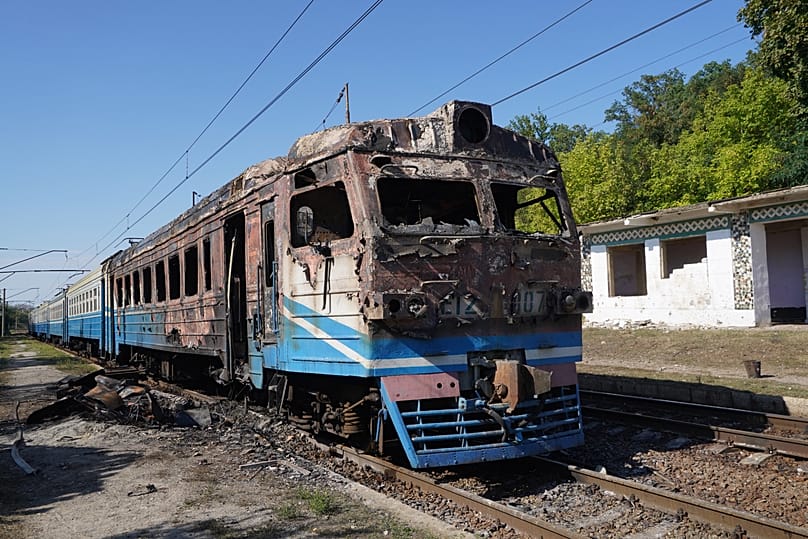
CBC News reports that Russia has intensified drone attacks against Ukraine’s railway system, striking trains, locomotives and rail infrastructure across the country. The network spans approximately 20,000 kilometres and has become essential because Ukrainian airspace is closed. It transports civilians, grain, humanitarian aid and other goods, including supplies moving through Poland while shipping routes in the Black Sea remain dangerous.
The attacks have caused growing disruption and casualties. At least one person was killed and seven injured when a drone struck a commuter train in the Kharkiv region. Ukrainian officials say two dozen railway workers have been killed and more than 80 injured in strikes this year, while approximately 300 locomotives and 120 passenger carriages have been damaged. New rules prohibit passengers from boarding or leaving trains during red alerts, and railway officials advise evacuees to move at least 200 metres from trains and tracks.
The article follows passengers and railway workers coping with the heightened danger. Seventeen-year-old Anastasia Rybalchenko was evacuated from a train near Kropyvnytskyi and later heard explosions while sheltering in a field. Train steward Yulia Zaletska describes stress and fear among staff, particularly on eastern routes, while conductor Andrii Hul’ says workers must continue operating trains despite sleeping in shelters and facing repeated air raids.
Russia says railway hubs supporting Ukraine’s military are legitimate targets, while Ukrainian President Volodymyr Zelenskyy argues that the attacks are intended to damage the economy and disrupt daily life. The article also notes the use of faster jet-powered drones, which Ukrainian officials say are harder to intercept and are being produced in large numbers. A strike near Poland’s border illustrates the widening geographical risk and has contributed to concerns about regional security.
Entities: Russia, Ukraine, Ukrainian rail network, Ukrainian Railways, Russian jet-powered drones • Tone: analytical • Sentiment: negative • Intent: inform
19-09-2026
Ukraine is intensifying efforts to protect its railway system after a sharp increase in Russian drone attacks on locomotives, stations, and rail infrastructure. Ukrzaliznytsia, the state rail operator, reported more than 1,600 attacks during the first eight months of 2026. Several recent incidents targeted passenger trains near Kyiv, Mykolaiv, Volhynia, and the Yahodyn border crossing near Poland. In one case, an onboard monitoring system detected an approaching drone, allowing the train to be evacuated approximately 15 minutes before it was hit. Ukrainian officials believe a diplomatic train carrying former European leaders may have been the intended target of another attack.
Russia has damaged or destroyed more than 500 Ukrainian locomotives since its full-scale invasion began in 2022, with more than half of those attacks occurring in 2026. Officials say locomotives are particularly vulnerable because their large thermal signatures make them easy to detect, while strikes can ignite fuel or cause fires that disrupt entire sections of track. Replacing locomotives is difficult because they must be ordered years in advance and must be compatible with Ukraine’s Soviet-era broad-gauge railway system. Ukraine is negotiating with international partners and has signed a contract with Alstom, with deliveries expected to begin next year. Existing trains are also being repaired.
President Volodymyr Zelenskyy has ordered stronger protection for critical infrastructure and logistics, including expanded electronic warfare, mobile fire teams, air-defense lines, backup routes, and additional funding. Ukrzaliznytsia has established monitoring centers that track drones and trains, but faster jet-powered Shahed-type drones leave less time to respond. The railway is increasing precautionary stops, using buses in high-risk areas, directing trains toward shelters, and providing passengers and staff with emergency guidance and psychological support. Winter preparations include blankets, rain jackets, heating equipment, and other supplies because evacuations will become more difficult in severe weather.
Entities: Ukraine, Russian drone attacks, Ukrzaliznytsia, Kyiv, Mykolaiv • Tone: analytical • Sentiment: negative • Intent: inform
19-09-2026
Russian attacks across Ukraine killed at least 11 people and injured dozens during the 24 hours covered in the report, according to regional authorities. Kharkiv Oblast suffered the highest reported casualties, with five people killed and 15 wounded. Governor Oleh Syniehubov said Russian forces used two missiles, five guided aerial bombs and nearly 60 drones against locations including Kharkiv, Balakliia, Lypkuvativka, Velykyi Burluk and Slatyne.
In the southern Kherson region, two people were killed and five injured by a combination of drone attacks, airstrikes and artillery shelling. Regional authorities said strikes damaged critical and social infrastructure, residential areas, five apartment buildings and seven private homes. Administrative buildings, shops, a cell tower, a utility building, a gas pipeline and private vehicles were also damaged or destroyed.
In Donetsk Oblast, one person was killed in Kramatorsk and 13 people were injured elsewhere in the region. Sumy Oblast reported three fatalities: a 51-year-old man and a 45-year-old woman died when a guided missile struck a high-rise building, while a 32-year-old man was killed in a drone attack. Authorities said Russian forces attacked 21 settlements in the region with drones, mortars, artillery and guided aerial bombs.
Separately, Ukraine’s air force said Russia launched two Zircon missiles from the Kursk region and 174 drones overnight. Ukrainian air defenses reportedly shot down or neutralized 141 targets, with strikes recorded at 15 locations. Poland’s Armed Forces Operational Command activated air-defense measures and scrambled aircraft in response to the attacks, describing the actions as preventive measures intended to protect Polish airspace, particularly areas near the conflict zone.
Entities: Russia, Ukraine, Ukrainian Air Force, Kharkiv Oblast, Kharkiv • Tone: neutral • Sentiment: negative • Intent: inform