19-09-2026
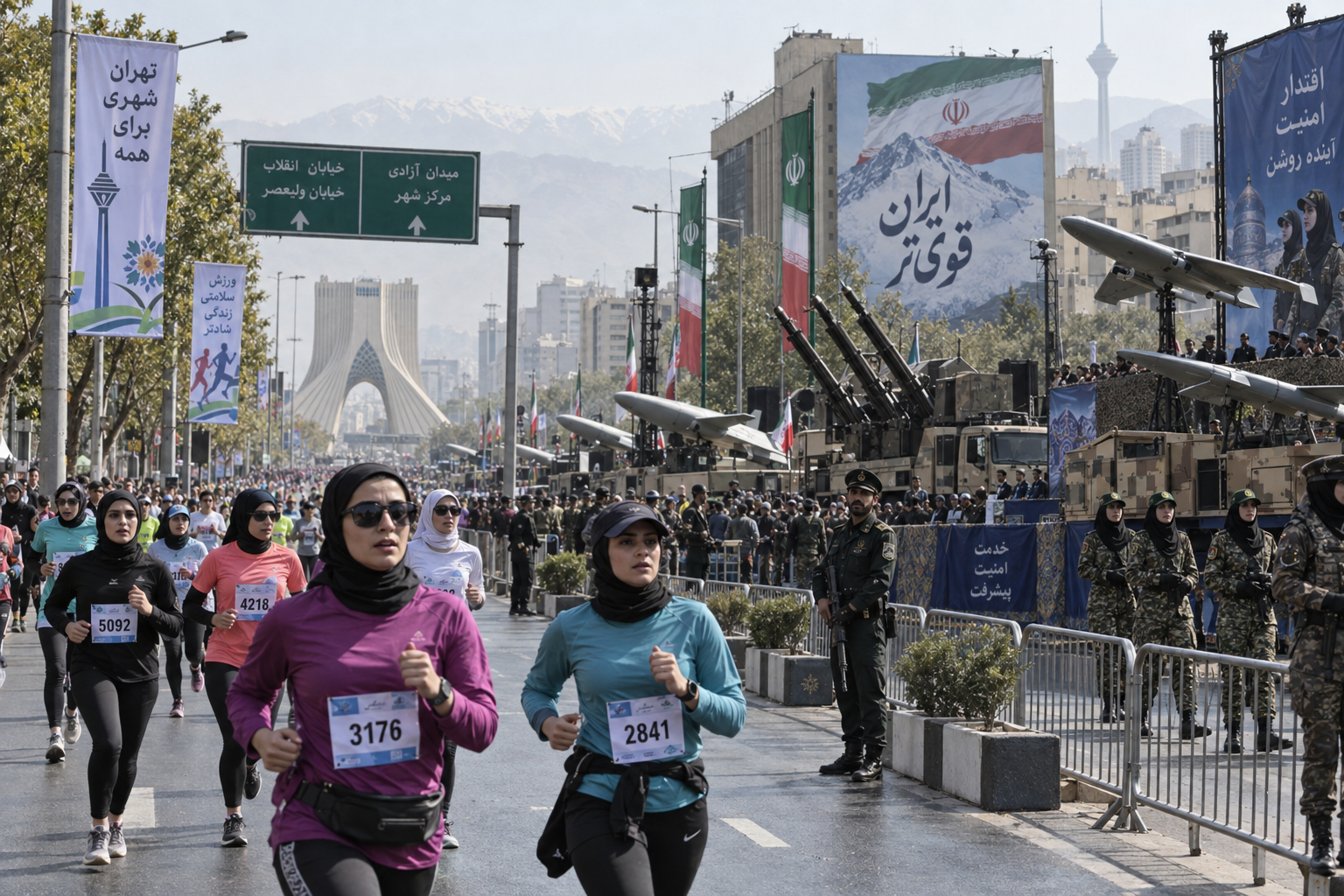
The Al Jazeera report describes a large mobilisation event in Tehran that presented Iran’s military preparedness and public support during an ongoing conflict involving Iran, Israel and the United States. Hundreds of thousands of people reportedly marched through the Iranian capital as part of Iran’s mobilisation campaign, with participants pledging to take up arms. The event included a prominent display of military and security equipment, including anti-aircraft guns and Shaheed drones. Armed women were also seen among the participants, adding to the event’s broader message of national readiness and collective participation.
The report characterizes the gathering as a “show of force,” suggesting that the march was intended not only as a public mobilisation effort but also as a demonstration of Iran’s capacity and willingness to respond militarily. The presence of weapons and drones in a major public procession emphasized the campaign’s military dimension rather than presenting it solely as a political rally.
The article provides a concise account of the event and does not identify specific organizers, political leaders, speeches, casualties or operational plans. It also does not independently assess the number of marchers beyond describing them as numbering in the hundreds of thousands. The report was published on 19 September 2026 and focuses primarily on what was visible in Tehran: a large crowd, armed women, anti-aircraft weaponry and Shaheed drones. Overall, the coverage highlights the scale and militarized character of Iran’s mobilisation campaign while presenting the information in a direct, factual news style.
Entities: Iran, Tehran, Al Jazeera, Iran’s mobilisation campaign, Hundreds of thousands of marchers • Tone: urgent • Sentiment: negative • Intent: inform
19-09-2026
The article reports that hundreds of Iranian women participated in a race in Tehran without wearing the hijab, defying Iran’s laws on mandatory veiling. The event is described as one of the largest public demonstrations of opposition since the 2022 “Women, Life, Freedom” protests, which made women’s rights and resistance to state restrictions a prominent issue in Iran.
The report presents the race as a visible act of collective defiance. By emphasizing the number of unveiled runners and the public setting in Tehran, it portrays the event as a significant challenge to restrictions on women’s clothing and public behavior. The article does not provide detailed information about the race organizers, the government’s immediate response, or whether participants faced arrests or other consequences.
It also highlights a simultaneous and contrasting event in the capital. On the same day, veiled women reportedly marched in support of the Iranian government and the country’s war effort. This juxtaposition is characterized as a “tale of two cities,” suggesting a sharp divide between women publicly challenging official policies and others expressing support for the state.
The short Al Jazeera NewsFeed report therefore focuses on the symbolic and political significance of the race rather than offering extensive background or analysis. Its central theme is the contrast between women rejecting compulsory veiling and women participating in a pro-government demonstration. The article frames the Tehran race as an important display of dissent while noting the competing public mobilization in support of the authorities.
Entities: Iranian women, Tehran, Iran, Unveiled runners, Tehran race • Tone: neutral • Sentiment: neutral • Intent: inform
19-09-2026
Tehran presented two sharply contrasting images on Friday: women running a 10-kilometre race, some without the headscarves required by Iranian law, while a large state-organised military rally displayed armed forces and hijab-wearing female participants. The juxtaposition illustrates the tension between growing public challenges to Iran’s mandatory dress code and the Islamic Republic’s efforts to demonstrate mobilisation and loyalty amid heightened conflict and repression.
The women’s race took place at Velayat Park, with female and male competitors running in separate divisions. The women’s event began at 5:30 a.m., and published photographs showed some participants wearing conventional athletic clothing without headscarves. The event proceeded despite the recent cancellation of the Mahan Run in Kerman after religious authorities objected to co-ed participation. Organisers of the Tehran Marathon now face a judicial case over alleged violations of legal and religious standards. The article also recalls legal action following a similar incident at a Kish Island marathon in December 2025.
Elsewhere in the capital, the Jan-Fada-ye Iran, or “Iran’s Self-Sacrificers,” rally reportedly attracted more than 300,000 people. Basij forces, volunteers and senior officials, including President Masoud Pezeshkian, took part in a procession featuring military equipment, drones and organised units. Officials claim that as many as 32 million people have registered for the campaign, though the figures cannot be independently verified.
The article places these events within the broader context of the Woman, Life, Freedom movement, recent conflicts involving Iran, and an ongoing crackdown. Despite detentions and executions, increasing numbers of women continue to reject compulsory hijab rules, including at some pro-government events. Human Rights Watch reported that at least 29 people arrested during January protests were executed between March and August.
Entities: Tehran, Iran, Velayat Park, Tehran 10-kilometre marathon, Jan-Fada-ye Iran (“Iran’s Self-Sacrificers”) • Tone: analytical • Sentiment: negative • Intent: analyze