19-09-2026
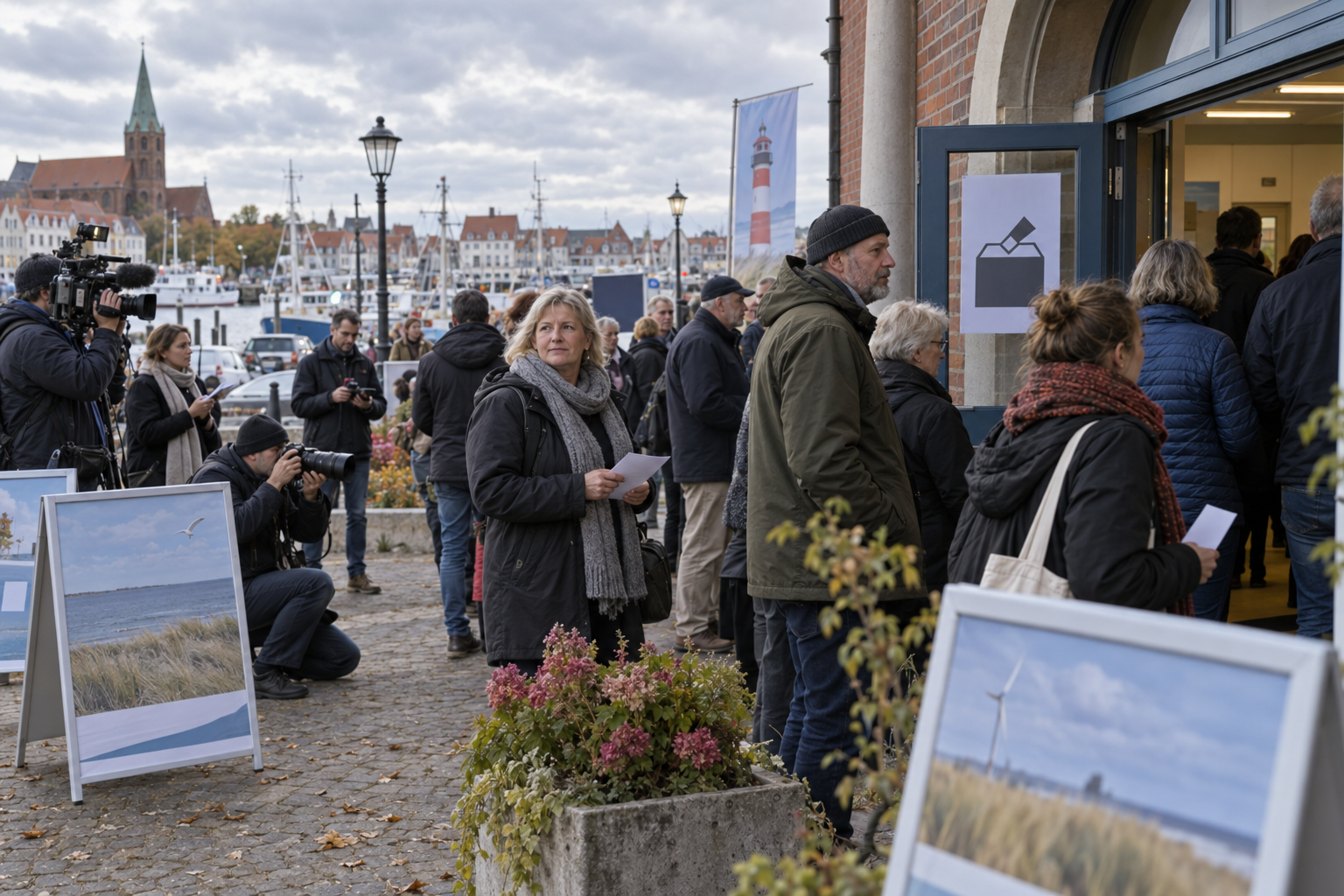
The article examines the political situation in Mecklenburg-Western Pomerania ahead of the state election on September 20, focusing on the governing Social Democratic Party (SPD) and its effort to prevent another electoral advance by the far-right Alternative for Germany (AfD). The northeastern state is Germany’s least densely populated, with 1.57 million residents, relatively high unemployment and the country’s lowest proportion of foreign nationals. Its economy and identity are shaped by Baltic tourism, shipyards, universities, national parks and the legacy of East Germany.
The state also has a troubling history of far-right violence. In 1992, riots in Rostock-Lichtenhagen targeted an asylum-seeker facility housing Vietnamese residents. Hundreds of extremists attacked the building with stones and firebombs while thousands of bystanders applauded. The building caught fire, trapping about 120 people, including children, although no one was killed. The incident became one of the most serious outbreaks of racist violence in postwar Germany.
The SPD has governed Mecklenburg-Western Pomerania for roughly 28 years in coalition with different partners. Popular state premier Manuela Schwesig, who now leads a coalition with the Left Party, is seeking to retain office. Her campaign presents her as a barrier against the AfD, using the slogan “The woman against blue.” Schwesig has attacked the AfD as dangerous to the economy, social welfare and women.
Although the AfD is polling close to the SPD, Mecklenburg-Western Pomerania is not considered an AfD stronghold, and the state’s domestic intelligence agency has not classified the party as confirmed right-wing extremist. AfD candidate Leif-Erik Holm draws support by emphasizing dissatisfaction with the government and economic difficulties, but he trails Schwesig in candidate comparisons. The CDU is performing poorly, while the Greens are struggling to clear the electoral threshold. Since all realistic coalition partners reject cooperation with the AfD, Holm is unlikely to become premier, though the election could deepen political divisions and complicate future governing.
Entities: Mecklenburg-Western Pomerania, Social Democratic Party (SPD), Alternative for Germany (AfD), Manuela Schwesig, Leif-Erik Holm • Tone: analytical • Sentiment: neutral • Intent: analyze
19-09-2026
The article examines whether economic conditions will influence voters in Mecklenburg-Western Pomerania, where a state election is taking place amid heightened attention to the far-right Alternative for Germany (AfD). The AfD’s nearly 44% victory in neighboring Saxony-Anhalt has reshaped Germany’s political debate, but Mecklenburg-Western Pomerania is not expected to produce the same result. State Premier Manuela Schwesig of the center-left Social Democrats remains popular, while polls indicate a close contest between her party and the AfD.
The state has economic weaknesses, including unemployment of 7.8% and median annual wages approximately €6,000 below the national average. Nevertheless, its economy has grown faster than Germany’s overall economy since 2020. Large agricultural enterprises, a strong maritime and shipbuilding sector, tourism, ports, public services and several major companies form the basis of regional employment. Shipyards in Wismar and Stralsund have benefited from increased defense spending, while tourism supports an estimated 150,000 to 160,000 direct and indirect jobs. The Baltic coast and the state’s lakes make it Germany’s second-most popular vacation destination.
Energy is another important part of the economy. The state lost some significance after Russian gas deliveries through Nord Stream stopped in 2022, but it continues to receive and distribute large quantities of liquefied natural gas. Mecklenburg-Western Pomerania is also expanding wind and solar power. A planned €5.6 billion data center investment by the Schwarz Group south of Rostock could further increase the state’s economic prospects. Overall, the article presents a region with comparatively low wages and limited large-scale industry, but with solid growth and significant opportunities in maritime industries, energy, tourism and new investment.
Entities: Mecklenburg-Western Pomerania, Saxony-Anhalt, Alternative for Germany (AfD), Manuela Schwesig, Social Democratic Party (SPD) • Tone: analytical • Sentiment: neutral • Intent: analyze
19-09-2026
France 24 reports that Germany is approaching two important state elections scheduled for Sunday in Berlin and the largely rural state of Mecklenburg-Western Pomerania. The elections are being closely watched because the far-right Alternative for Germany (AfD) is seeking to build on its strongest-ever performance in the recent Saxony-Anhalt elections. The party’s anti-immigration platform and rising popularity have made it a central force in Germany’s political debate.
The article presents the contests as another potential breakthrough for the AfD, which is hoping to make substantial gains in both regions. Its performance could influence the balance of power in state politics and intensify pressure on Chancellor Friedrich Merz. Although the supplied material does not provide polling figures, results, or detailed reactions from other parties, it emphasizes that the elections will be an important measure of the AfD’s momentum and the government’s ability to respond to the far right’s growing support.
Berlin, Germany’s capital, and Mecklenburg-Western Pomerania represent contrasting electoral environments: one is an urban political center, while the other is described as largely rural. This makes the two votes significant tests of whether the AfD’s recent success can translate across different regions and voter groups. France 24 characterizes the elections as “pivotal” and says they are expected to test Merz’s leadership. The report was written by Eliza Herbert, who also produced the accompanying video. The available text is an introductory news report rather than a full transcript, so it does not include the eventual election results or further analysis of party strategies.
Entities: Germany, Berlin, Mecklenburg-Western Pomerania, Saxony-Anhalt, Alternative for Germany (AfD) • Tone: analytical • Sentiment: negative • Intent: analyze