19-09-2026
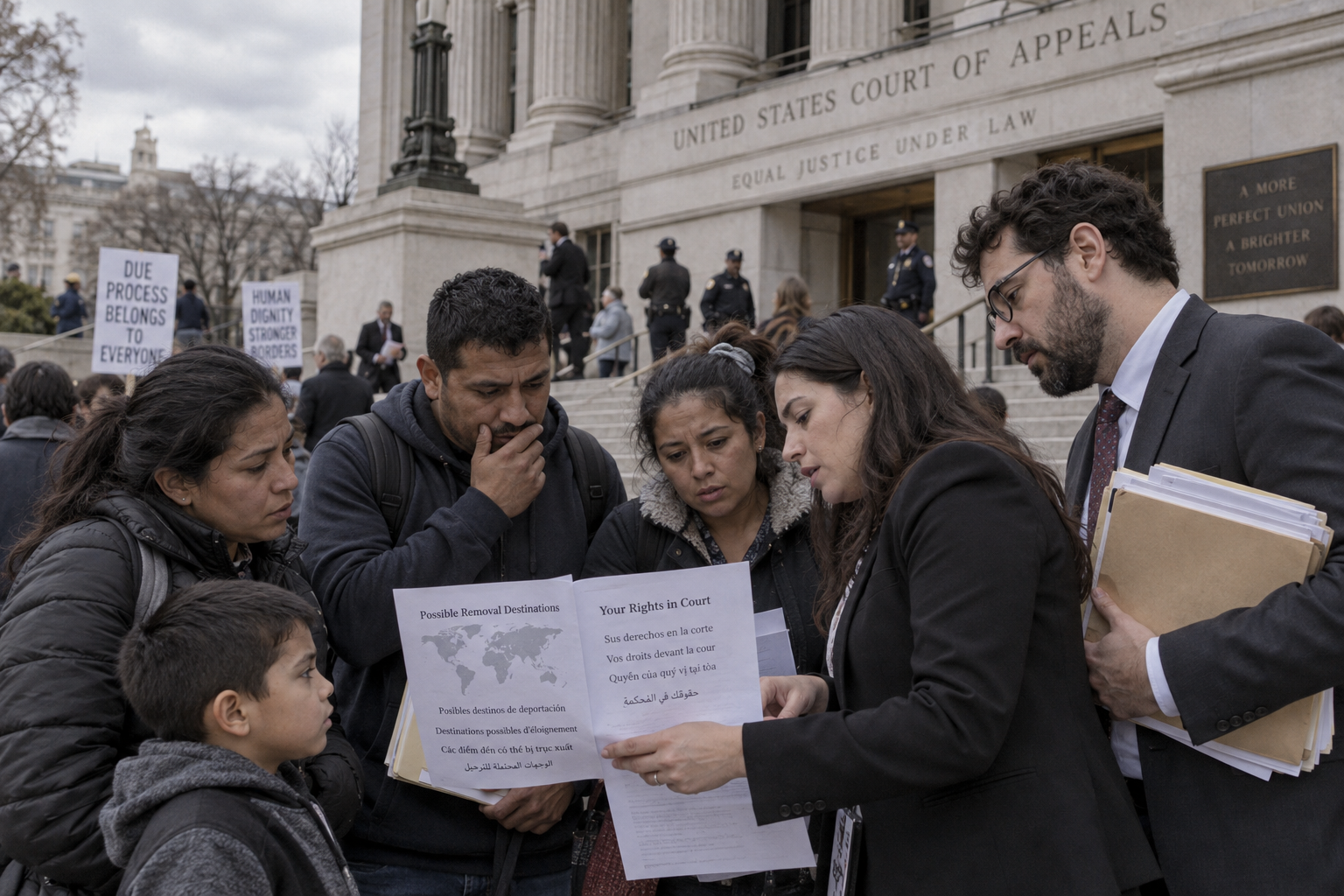
A US federal appeals court has largely upheld a lower-court ruling that found the Trump administration’s policy of rapidly deporting migrants to countries other than their own unlawful. The decision, issued by a three-judge panel of the 1st US Circuit Court of Appeals in Boston, centers on the due-process rights of migrants facing removal to countries with which they have no meaningful connection.
The court ruled that migrants must receive a “meaningful” opportunity to raise concerns that they could face persecution, torture, or other dangers before being deported. Judge Seth Aframe rejected the administration’s narrower interpretation of immigration law. The panel did overturn part of the lower-court ruling on procedural grounds, including an issue involving whether officials must first attempt to deport migrants to countries with which they have established ties.
The case was brought as a class action and is expected to be appealed by the Trump administration, potentially bringing the dispute before the Supreme Court. The Department of Homeland Security did not immediately comment.
Since the policy was adopted in March 2025, the United States has reached agreements allowing more than 25,000 migrants to be sent to at least 29 third countries, according to rights-group researchers. The policy permits removals with minimal notice when officials have diplomatic assurances that migrants will not face persecution. Critics argue that such assurances do not replace legally required procedural protections.
The Supreme Court has already considered the programme twice. In 2025, it allowed the administration to deport eight men from countries including Cuba, Myanmar, and Vietnam to South Sudan, despite a US government travel warning citing crime, kidnapping, and armed conflict. The administration described those removals as a victory, while rights groups said they violated basic safeguards. The ruling comes amid other recent legal setbacks for the Trump administration’s immigration agenda, including challenges to proposed visa restrictions and a rule concerning immigrants who use public benefits.
Entities: Trump administration, US 1st Circuit Court of Appeals, Supreme Court of the United States, Department of Homeland Security, US Immigration and Customs Enforcement (ICE) • Tone: analytical • Sentiment: negative • Intent: inform
19-09-2026
A US federal appeals court has largely upheld a lower-court ruling that blocks the Trump administration from quickly deporting migrants to countries other than their own without giving them a meaningful opportunity to raise safety concerns. The First Circuit Court of Appeals in Boston ruled that migrants must receive effective notice of the country to which they may be sent and a chance to challenge their removal if they fear persecution or torture there.
The case concerns a Department of Homeland Security policy allowing migrants with final deportation orders to be transferred to third countries when the US has received diplomatic assurances that they will not face persecution or torture. The appeals court warned that the policy could deprive migrants of important protections, particularly when they are sent to unfamiliar countries without adequate notice. The Trump administration is expected to appeal to the US Supreme Court.
DHS General Counsel James Percival argued that the policy remains in effect because the appeals court’s ruling has not yet taken effect. His comments came amid reports that two men deported by the US to Equatorial Guinea were arbitrarily detained, beaten, held at gunpoint and subjected to degrading treatment in a hotel used as a detention facility.
According to Third Country Deportation Watch, a project of Refugees International and Human Rights First, the administration has sent more than 25,000 migrants to at least 29 third countries since President Donald Trump returned to office. Destinations have included South Sudan, Eswatini, Uganda, Equatorial Guinea, Liberia and the Central African Republic. Human rights groups have criticized the agreements because some participating countries have repressive governments and poor human rights records.
Entities: Donald Trump, US Court of Appeals for the First Circuit, Department of Homeland Security (DHS), James Percival, US Supreme Court • Tone: analytical • Sentiment: negative • Intent: inform
19-09-2026
A three-judge panel of the US Court of Appeals for the First Circuit has unanimously ruled that immigrants facing deportation to a “third country” must receive advance notice and a meaningful opportunity to challenge that destination before being removed. The decision rejected a Department of Homeland Security policy that permitted the administration to send migrants to countries with which they had no citizenship, family, or other significant connection, often with little or no warning.
Circuit Judge Seth Aframe wrote that the right to contest removal based on fear of persecution is effectively meaningless if migrants are not told where they are being sent and given an opportunity to object. The ruling allows migrants to raise concerns about possible persecution or other serious harm in the proposed destination.
Third-country deportation refers to removing someone to a country other than their country of citizenship and one where they may have no personal ties. The Trump administration has expanded the practice after reaching agreements with countries including Liberia, Ghana, the Central African Republic, and Sierra Leone. The administration says receiving countries have provided diplomatic assurances that deported immigrants will not be mistreated. It estimates that approximately 25,000 people have been deported to third countries during its immigration crackdown.
A lawsuit challenging the policy argued that migrants were sometimes placed on flights without enough opportunity to object. The appeals court also found that the government had not adequately demonstrated which countries had offered the diplomatic assurances on which it relied. Reports cited in the article described Latin American men sent to the Central African Republic who said they did not learn their destination until several hours into the flight.
The ruling does not prohibit third-country deportations. Instead, it requires the government to provide procedural safeguards before removal and represents the latest development in a broader legal dispute over the administration’s immigration policies.
Entities: US Court of Appeals for the First Circuit, Department of Homeland Security, Trump administration, Circuit Judge Seth Aframe, third-country deportations • Tone: analytical • Sentiment: neutral • Intent: inform