19-09-2026
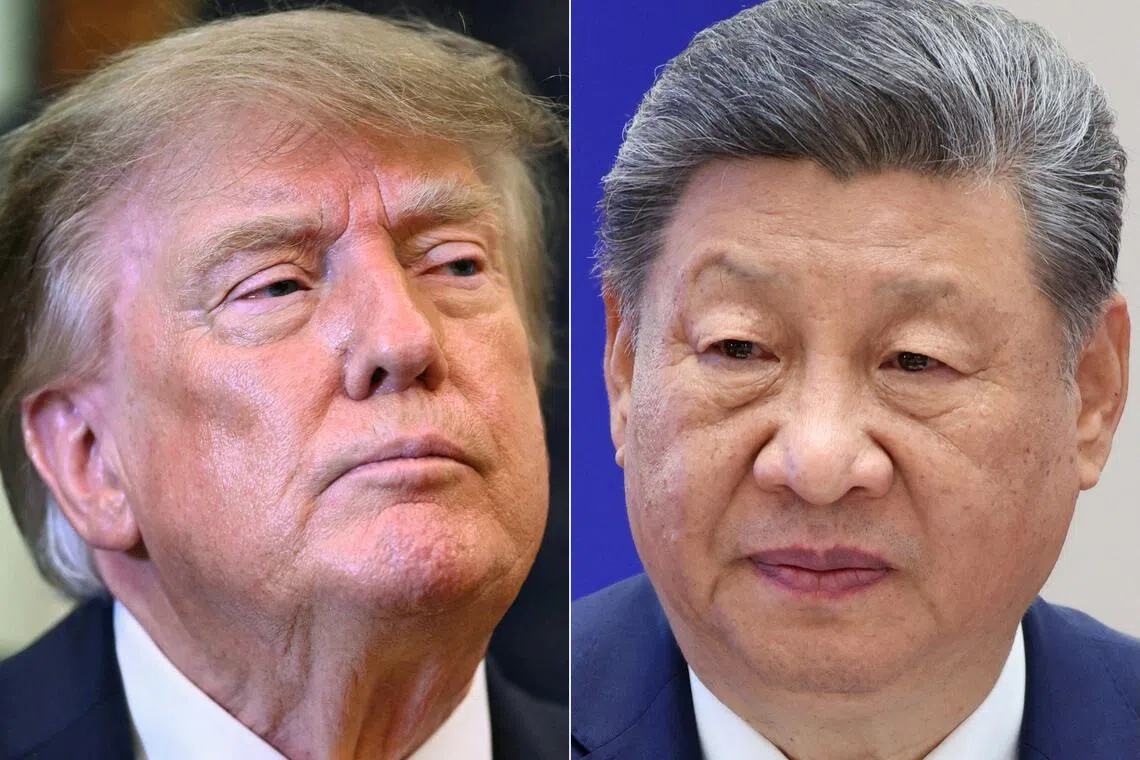
The article reports that Taiwan has conducted live-fire military exercises involving missiles and attack drones shortly before a planned meeting between US President Donald Trump and Chinese President Xi Jinping in Washington. The drills are presented as a demonstration of Taiwan’s military capabilities at a moment when the island is expected to be discussed during the leaders’ talks.
According to the report, Beijing is pressing the United States over Washington’s military support for Taiwan, which governs itself but is claimed by China. The timing of the exercises links Taiwan’s military posture to the broader strategic tensions between China and the United States. The drills signal Taiwan’s preparedness and highlight the island’s role in US-China security relations.
The article does not provide further details about the scale, location, duration, or outcome of the exercises, nor does it describe any immediate escalation. Instead, it focuses on the political significance of the drills ahead of the Trump-Xi meeting. Taiwan’s expected presence on the diplomatic agenda reflects its importance in the relationship between Washington and Beijing, particularly in disputes over US arms and other military assistance to the island.
Published on 19 September 2026, the report offers a concise account of a military demonstration occurring ahead of a high-level diplomatic encounter. Its focus is informational, emphasizing the connection between Taiwan’s defense activities, China’s objections to US support, and the upcoming talks between the two leaders.
Entities: Taiwan, Donald Trump, Xi Jinping, China, United States • Tone: analytical • Sentiment: neutral • Intent: inform
19-09-2026
US President Donald Trump plans to personally greet Chinese President Xi Jinping when Xi arrives at Joint Base Andrews near Washington, DC, on Sept 23, according to a senior US official. The airport welcome is unusual because American presidents rarely meet visiting foreign leaders at the airport, making it a notable indication of the importance Trump places on Xi’s visit.
The visit will include several ceremonial events, officials said. These are expected to include an arrival ceremony inside the White House, a military review in the Rose Garden and a state dinner later that evening. The dinner is expected to include prominent technology executives, including Jeff Bezos of Amazon, Sundar Pichai of Alphabet, Sam Altman of OpenAI, Tim Cook of Apple, Elon Musk of Tesla, Jensen Huang of Nvidia and Michael Dell of Dell Technologies.
Officials said Trump and Xi are expected to discuss major US-China issues, including trade, the flow of rare earth minerals into the global economy and artificial intelligence. These subjects reflect the broader economic, technological and strategic tensions between the two countries. The planned meeting comes amid continued rivalry and interdependence between Washington and Beijing, particularly in advanced technology, critical mineral supply chains and commercial relations.
The report, published by The Straits Times and sourced from Reuters, focuses on the diplomatic significance of Trump’s planned airport greeting and outlines the formal schedule and anticipated agenda for Xi’s White House visit. It does not provide details about specific agreements or expected outcomes from the talks.
Entities: Donald Trump, Xi Jinping, United States, China, Joint Base Andrews • Tone: neutral • Sentiment: neutral • Intent: inform
19-09-2026
US Treasury Secretary Scott Bessent and Chinese Vice-Premier He Lifeng are scheduled to lead trade and diplomatic talks in New York on Sept 20, ahead of a Sept 24 meeting between US President Donald Trump and Chinese President Xi Jinping in Washington. The discussions are expected to address tariffs, trade and investment, artificial intelligence, rare-earth exports, Taiwan, agricultural products, autos, technology, e-commerce and the economic effects of the conflict involving Iran.
The immediate objective is to preserve stability under a tariff truce that expires in November, rather than fundamentally transform US-China relations. US officials are also under pressure to limit inflation ahead of the Nov 3 midterm elections. The United States has delayed announcing new tariffs related to alleged excess manufacturing capacity until after the talks, while both countries have been reducing levies on selected energy and agricultural products.
China’s exports to the US have rebounded in 2026, including increased shipments of AI-related electronics. Beijing may offer additional rare-earth export permits as part of the negotiations, although exports of rare-earth magnets remain below pre-2025 levels. Taiwan is reportedly China’s highest-priority issue, particularly in relation to a planned US weapons sale.
AI has become a growing source of friction. Washington has restricted China’s access to advanced chips and accused Chinese companies of using American technology to develop domestic AI models. Beijing rejects US calls to slow AI development and opposes allowing Washington to shape global AI rules, although both sides acknowledge the need to manage shared risks and maintain communication.
The Iran conflict adds another layer of tension. China is Iran’s biggest buyer of oil, while the US is increasing sanctions pressure on financial institutions and may target Chinese banks. Disruptions to oil flows and a possible closure of the Strait of Hormuz could damage China’s economy and complicate the trade discussions. Despite the risks of renewed escalation, both sides appear motivated to avoid another major confrontation.
Entities: United States, China, Donald Trump, Xi Jinping, Scott Bessent • Tone: analytical • Sentiment: neutral • Intent: inform
19-09-2026
US President Donald Trump said the United States is “doing very well with China” and that he has maintained a good relationship with Chinese President Xi Jinping ahead of Xi’s expected visit to the White House. The visit, described as Xi’s first to the US presidential residence in more than a decade, is expected to include formal ceremonies, bilateral talks and a state dinner hosted by Trump and his wife.
Trump said the two countries could discuss several agreements and “a lot of different deals.” He highlighted the tariff relationship, recalling that US duties on Chinese goods had reached 145% before being reduced because they were harming China. Trump also dismissed concerns about Chinese espionage by saying that the US spies on China as well.
The talks are expected to address the future of the US-China tariff truce reached at the Busan summit, which is due to expire in November, as well as licenses for chip exports. Washington is not expected to exchange its controls on rare-earth flows for concessions, although the two sides are discussing lower tariffs on some non-strategic goods. Artificial intelligence, including possible previews of new models and oversight of Chinese open-source systems, is another anticipated topic.
Other issues include Chinese-linked fentanyl precursor chemicals reaching cartels in Mexico, Americans detained in China and tensions over Taiwan. The visit follows Trump’s May trip to Beijing, where both leaders agreed to pursue a “constructive, strategic and stable relationship.”
The meeting could affect global supply chains, technology markets and commodity prices. A durable reduction in trade tensions could benefit businesses tied to both economies, while renewed disputes over tariffs, semiconductors or rare earths could increase market uncertainty. Trump and Xi are also expected to meet at the APEC and G20 summits later in the year.
Entities: Donald Trump, Xi Jinping, Peng Liyuan, United States, China • Tone: analytical • Sentiment: neutral • Intent: inform