19-09-2026
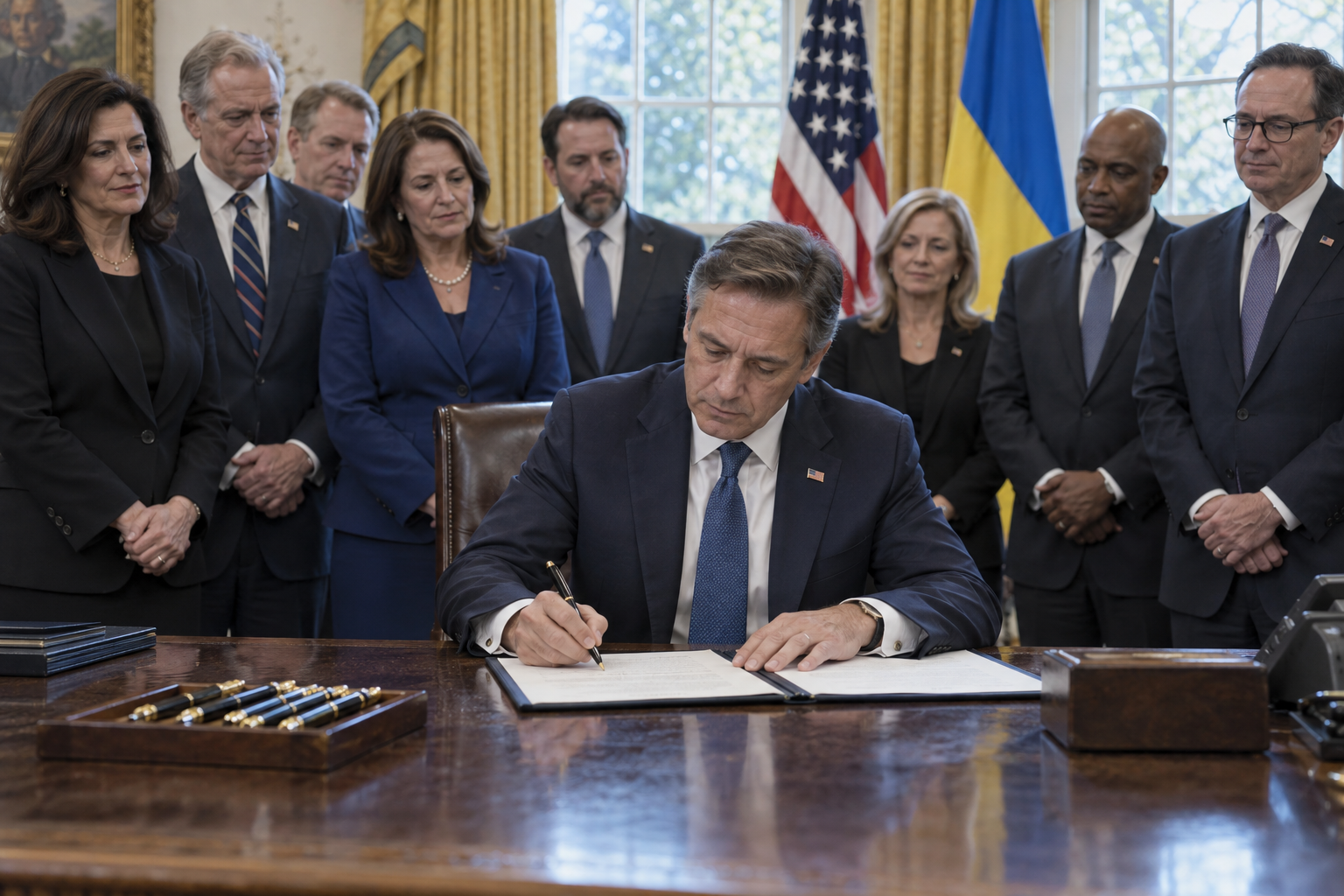
US President Donald Trump has signed the Lindsey O Graham Sanctioning Russia and Iran Act of 2026, a sweeping sanctions package targeting Russia over its war in Ukraine. The legislation, signed on Friday after receiving rare bipartisan support in Congress, is named after the late Republican Senator Lindsey Graham, who reportedly spent more than a year negotiating it before his death in July. Democratic Senator Richard Blumenthal co-wrote the bill.
The sanctions target Russian President Vladimir Putin, senior officials, oligarchs, banks and other financial institutions. They also cover Russia’s energy and defense sectors and the so-called shadow fleet of tankers used to transport Russian oil while evading Western restrictions. The legislation gives Trump authority to impose tariffs of up to 100 percent on the five largest purchasers of Russian oil and gas. The measure is expected to affect China and India most heavily, as they are the largest importers of Russian crude.
The law also extends sanctions on Iran’s energy and weapons industries. It passed the Senate in August and the House on Wednesday, with 58 Democrats joining Republicans in support. The article describes it as the first major Ukraine-related bill to pass Congress in more than two years.
Supporters say the package is intended to reduce the Kremlin’s revenue and pressure Putin to negotiate. Ukrainian President Volodymyr Zelenskyy called it an “extremely powerful tool,” while House Speaker Mike Johnson described it as placing “maximum pressure” on Russia. Blumenthal said the legislation could help bring Moscow to negotiations.
Opposition remains, including from House Minority Leader Hakeem Jeffries, who warned that the tariff powers could increase costs for American households and argued that the sanctions contained loopholes. India said it remained committed to protecting the energy security of its 1.4 billion people. Trump signed the law approximately one week before a planned White House meeting with Chinese President Xi Jinping.
Entities: Donald Trump, Russia-Ukraine war, Lindsey O Graham Sanctioning Russia and Iran Act of 2026, Lindsey Graham, Richard Blumenthal • Tone: analytical • Sentiment: neutral • Intent: inform
19-09-2026
US President Donald Trump has signed a bipartisan sanctions package targeting Russia over its continuing war against Ukraine. The legislation, named after the late Senator Lindsey Graham, passed the Senate by 86 votes to 11 and the House of Representatives by 262 to 159, reflecting substantial support from both parties.
The law imposes sanctions on Russian officials and important sectors of the economy, including banks and the so-called “shadow fleet” of tankers used to transport Russian energy. It also gives the president authority to impose tariffs of up to 100% on the five largest importers of Russian oil or natural gas, although some countries are exempt. Additional sanctions may be imposed on the five countries that do the most to help Russia evade energy restrictions.
The measures could increase tensions between Washington and major purchasers of Russian energy, particularly China and India. The legislation also establishes a framework for continuing sanctions against Iran through 2031.
Ukrainian President Volodymyr Zelenskyy welcomed the bill and thanked Trump and members of Congress who supported it. Zelenskyy highlighted Graham’s advocacy for Ukraine and said the senator had consistently argued that pressure on Russia should not be eased. Graham, a prominent supporter of Ukraine, died unexpectedly in July after returning from a visit to the country.
Zelenskyy said that fully and quickly implementing the legislation would be the best way to honor Graham and could help create pressure for peace. Kremlin spokesman Dmitry Peskov, however, warned before the signing that additional US sanctions would make efforts toward a peaceful resolution of the war more difficult.
Entities: Donald Trump, Russia, Lindsey Graham, United States Congress, US Senate • Tone: analytical • Sentiment: negative • Intent: inform
19-09-2026
US President Donald Trump signed a sweeping Russia sanctions bill into law on Friday, September 18, 2026, according to the White House. The legislation is intended to increase economic pressure on Moscow over Russia’s invasion of Ukraine and restrict funds that support its war effort.
The law targets Russia’s energy and defense industries, as well as its so-called “shadow fleet” of tankers that help evade existing sanctions. By targeting these sectors and vessels, the measure seeks to reduce the revenue available to the Russian government for financing the conflict.
The bill also authorizes tariffs on Russia’s major trading partners. Critics warn that this provision could create broader international economic risks, particularly because it gives the US president authority to impose tariffs that could remain in effect beyond Trump’s current presidency. They argue that countries could face economic penalties if they later fall within the administration’s crosshairs.
The legislation is formally titled the “Lindsey O. Graham Sanctioning Russia and Iran Act of 2026.” It was named in honor of South Carolina Republican Lindsey Graham, who died in July. Graham, described as a longtime critic of Russia, strongly supported the bill during its passage.
The House of Representatives approved the measure on Wednesday, after the Senate passed it the previous month. Trump’s signature completes the legislative process and enables the expanded sanctions and tariff provisions to take effect. The article, attributed to Reuters, presents the law as both a major escalation of pressure on Russia and a measure with potentially significant consequences for countries that trade with Moscow.
Entities: Donald Trump, Vladimir Putin, United States White House, Russia, Ukraine • Tone: analytical • Sentiment: neutral • Intent: inform
19-09-2026
US President Donald Trump has signed into law a bipartisan sanctions measure targeting Russia and Iran, named in honour of the late Senator Lindsey Graham. The law allows the president and future administrations to impose tariffs of up to 100 per cent on major importers of Russian energy, including India, Japan and some European Union countries, as well as on states or entities that help Russia evade energy sanctions. It also targets Moscow’s leadership and Russia’s so-called shadow fleet of oil tankers.
The Russia-related provisions are intended to increase pressure on Moscow to end the war in Ukraine, now in its fourth year, and to strengthen the US negotiating position. The article says Trump had initially been reluctant to sanction Russia because he believed such measures could obstruct negotiations, but later became more supportive as the war continued.
The bill passed the Senate by 86 votes to 11 before being approved by the House and signed by Trump. However, an earlier passage in the article says House approval was still pending, creating a contradiction in the account’s timeline and legislative status.
The legislation also extends the Iran Sanctions Act of 1996 for five years, preserving economic pressure on Iran’s weapons and energy industries until 2031. The measure is intended to reduce Iranian state revenue and constrain the country’s ability to fund its activities. Treasury Secretary Scott Bessent said the administration’s Operation Economic Outcast would continue targeting people and organizations providing material, technological or financial support to Iran’s government and alleged terrorist activities.
Darline Graham, Lindsey Graham’s sister and successor in the Senate, praised Trump’s signing of the law and said her brother would have been proud. She expressed confidence that the sanctions would increase US leverage and help secure lasting peace in Ukraine.
Entities: Donald Trump, Lindsey Graham, Darline Graham, Scott Bessent, US Senate • Tone: analytical • Sentiment: negative • Intent: inform