19-09-2026
Russian President Vladimir Putin accused Ukraine of deliberately obstructing peace negotiations and interfering in Russia’s three-day parliamentary election, which began on Sept. 18. Speaking to Russia’s Military-Industrial Commission, Putin claimed that Ukrainian offers to negotiate were not sincere because Kyiv had continued striking Russian targets. He cited a recent strike on a home in a Russian-occupied area of Zaporizhzhia that reportedly killed the head of a local election commission. Putin said such attacks were intended to prevent peace talks, although he provided no independent evidence for his broader claim that Ukraine was interfering in the election.
Putin also criticized Ukraine’s political system, calling it a dictatorship because it has not held a presidential election after the expiration of President Volodymyr Zelensky’s mandate. Ukrainian officials argue that elections cannot take place while the state of emergency imposed after Russia’s February 2022 invasion remains in effect. Kyiv, meanwhile, has dismissed Russia’s parliamentary vote as a “pseudo election,” arguing that the outcome is predetermined and that most anti-war candidates were barred from participating.
The election is expected to be presented by the Kremlin as evidence of public support for Putin’s policies and Russia’s ongoing war in Ukraine. The article notes that the conflict has become Europe’s deadliest since World War Two and is now in its fifth year.
In separate remarks, Putin reaffirmed Russia’s reliance on its nuclear triad—land-, sea- and air-launched nuclear weapons—but said the country must also improve its air and missile defenses. Ukraine has expanded its drone capabilities and conducted strikes against Russian industrial targets as far as 3,000km from its border, affecting fuel supplies and other aspects of daily life in Russia.
Entities: Vladimir Putin, Volodymyr Zelensky, Russia, Ukraine, Moscow • Tone: analytical • Sentiment: negative • Intent: inform
19-09-2026
Russians are reportedly leaving the country before the end of nationwide State Duma elections, fearing that the Kremlin could announce a new military mobilisation once voting concludes. The anti-war project Ark says requests for emergency emigration assistance and relocation advice have nearly octupled since July. Online searches for “how to leave” and “mobilisation” have also reached their highest levels since early 2023.
The reported wave of departures is driven by memories of Russia’s 2022 partial mobilisation, when an estimated 600,000 to 700,000 people left within weeks. Concerns have intensified because Russia’s electronic summons register can automatically impose an exit ban once a summons is issued. A reported case in Krasnodar involved a 24-year-old man who was detained at passport control and served with a notice preventing him from leaving. Former Moscow municipal deputy candidate Daniil Neonov said he escaped shortly after receiving an electronic summons and believed waiting even a few days could have prevented his departure.
The movement coincides with elections running from 18 to 20 September, in which only parties supporting Moscow’s war in Ukraine are allowed to compete. Kremlin critics and some Western governments suspect authorities may delay an unpopular mobilisation announcement until after voting ends. President Vladimir Putin has dismissed such rumours, while independent media have counted repeated official denials.
Most Russians leaving are travelling to visa-free destinations, particularly Armenia, Georgia and Kazakhstan. Armenia is preparing for a potential migration crisis, although the current exodus appears smaller than that of 2022. Ukraine has alleged that Russia could call up hundreds of thousands of troops by the end of the year and a similar number the following year; Moscow has not commented. The article also describes growing anxiety among officials, business elites and ordinary families facing the possibility of separation and renewed military conscription.
Entities: Russia, State Duma elections, Vladimir Putin, Dimitri Kavalerov, Jan Slovitsky • Tone: analytical • Sentiment: negative • Intent: inform
19-09-2026
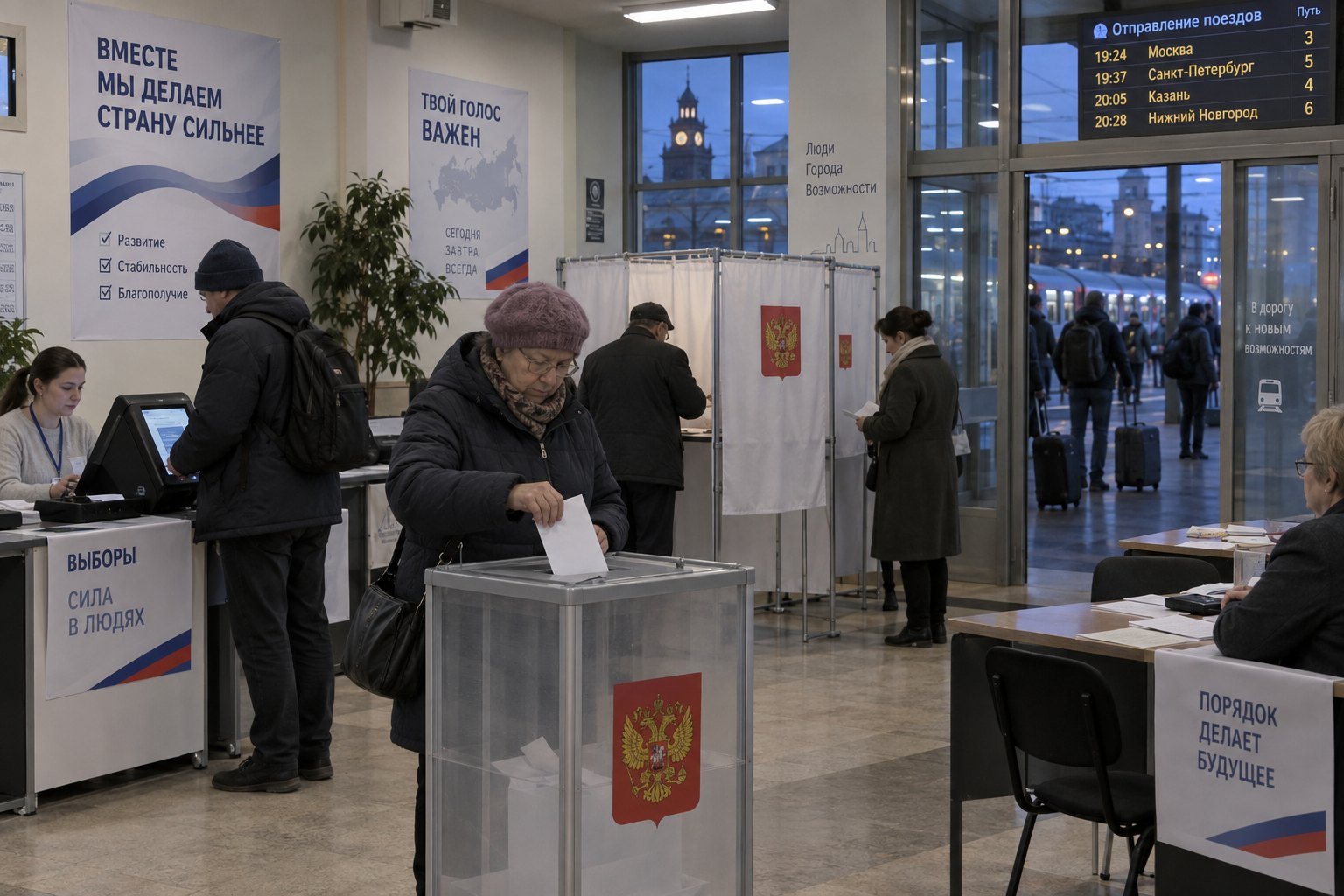
Russians are voting in a nationwide parliamentary election, the first since Moscow launched its full-scale invasion of Ukraine in 2022. NPR reports that although 11 parties are formally participating, the election offers little opportunity to debate the war or challenge President Vladimir Putin’s government. Yabloko, the only registered party openly calling for an end to the war, was removed from the ballot after a court cited an unexpected technical violation involving American copyright law. Party leader Nikolay Rybakov called the decision a pretext to deny voters a meaningful choice.
Political analyst Alexander Kynev says Russian authorities have created an extensive legal framework to exclude opponents, including foreign-agent designations, anti-extremism laws and other penalties that can disqualify candidates. Opposition figures such as Yulia Navalnaya remain in exile, while even mentioning the late Alexei Navalny or displaying his image can risk prosecution inside Russia. The parties still permitted to compete can discuss limited domestic issues, but criticism of the government, disagreement with the war and foreign-policy debate are effectively prohibited.
The resulting campaign has been largely scripted and subdued. Some televised debates have featured no candidates, while others have consisted of candidates delivering brief, noncontroversial statements. Putin has endorsed the ruling United Russia bloc and portrayed the election as evidence of national unity behind the war. Voting is also taking place in territories Russia claims to have annexed in Ukraine, with soldiers overseeing the process and war veterans appearing on party lists as part of Putin’s proposed new political elite.
The election takes place amid public anxiety over Ukrainian drone attacks, internet restrictions, the uncertain duration of the war and rumors of another mobilization. Although Putin denies that a new draft is imminent, Alexey Tabalov of School of the Conscript says recruitment is occurring discreetly through increasingly common forced contract signings. The report concludes that the war is likely to continue well beyond election day, with anti-war voices excluded and the military replenishing its ranks.
Entities: Russia, State Duma, Russian parliamentary elections, Moscow, Yabloko • Tone: analytical • Sentiment: negative • Intent: analyze