19-09-2026
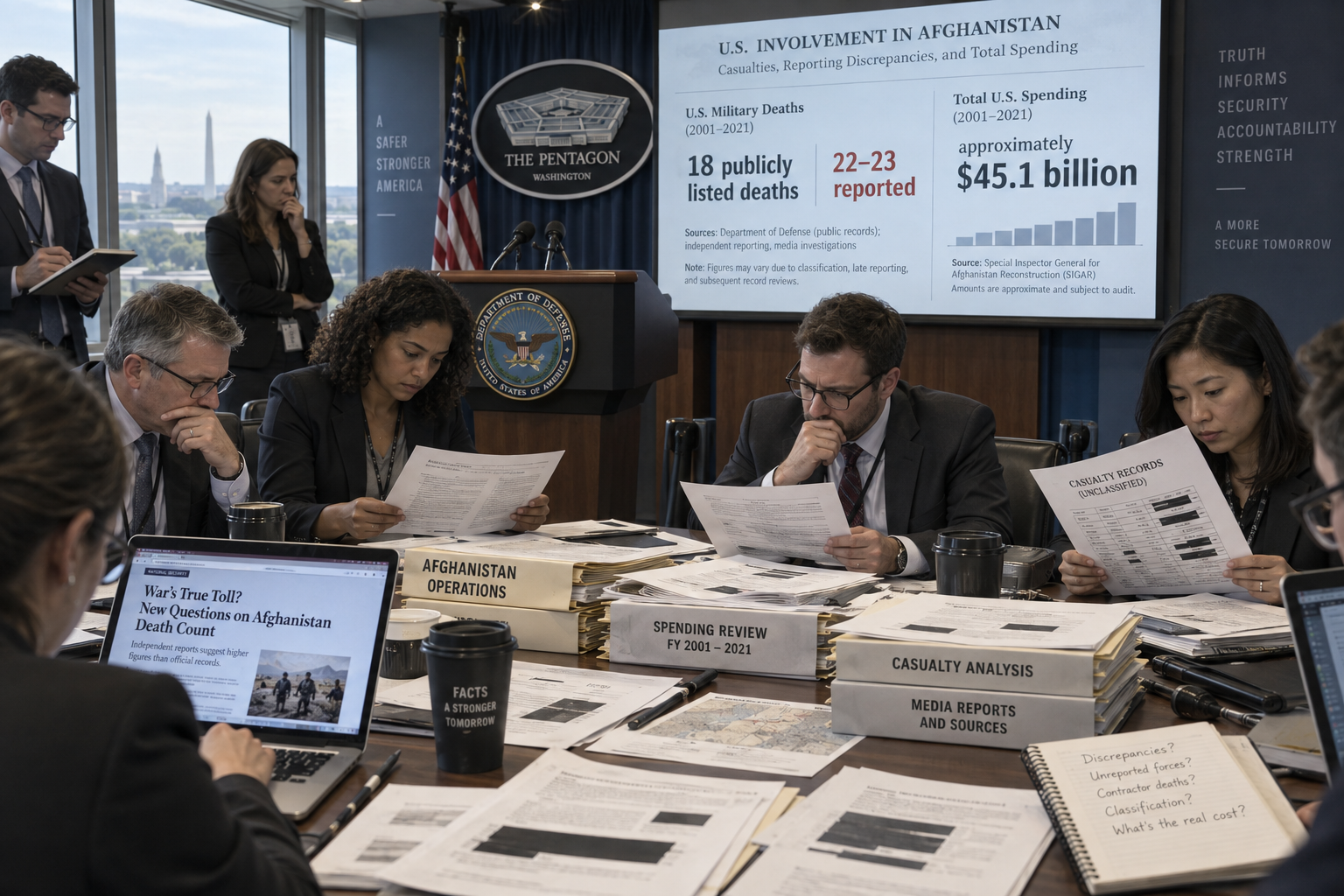
The article reports a dispute over the number of U.S. military personnel killed since the Iran war began. According to the Pentagon’s public accounting, 18 U.S. service members have died. However, The Washington Post, citing six unnamed Pentagon officials, reports that the actual toll is at least 22. The difference between the two figures has not been explained publicly by the Pentagon.
The report therefore presents a conflict between the Defense Department’s official casualty count and information attributed to internal government sources. The discrepancy raises questions about how military deaths are being recorded, verified, and communicated to the public during the conflict. The article does not provide the names of the additional service members, the circumstances of their deaths, or an explanation for why the reported totals differ.
Pete Hegseth, identified in the article as the official responding to the report, rejected The Washington Post’s account, describing it as “a complete lie.” His statement directly contradicts the newspaper’s claims and intensifies the dispute over the reliability of the Pentagon’s public figure.
The article is a brief news report focused on the competing casualty figures and the official response. It does not independently establish which number is accurate, but highlights that six unnamed Pentagon officials reportedly support a death toll of at least 22, while the Pentagon continues to publicly list 18 deaths. The report was published on September 19, 2026.
Entities: U.S. military, Iran war, The Pentagon, The Washington Post, Pete Hegseth • Tone: analytical • Sentiment: negative • Intent: inform
19-09-2026
The article reports a dispute over the number of US military personnel who died during the ongoing US-Israeli war with Iran. According to The Washington Post, at least 22 US military fatalities had occurred, which was four more than the number listed in the Pentagon’s publicly available casualty database. The Post based its report on information from five unidentified officials.
The newspaper also cited another unidentified official who said that not all of the unreported deaths were directly caused by the months-long conflict. Instead, some involved US personnel who were stationed in the Middle East while hostilities were continuing. This suggests that the discrepancy may involve differences in how the Pentagon classifies or reports deaths connected to the conflict.
US Defence Secretary Pete Hegseth rejected the report. In a post on X, he described it as “a complete LIE.” The Washington Post did not immediately respond to a request for comment, while the Pentagon reportedly declined to answer the newspaper’s questions about the difference between its public figures and the Post’s reported total.
The report highlights questions about transparency and casualty accounting during a major military conflict. However, the article does not independently verify the Post’s figures or provide details about the identities, circumstances, or locations of the additional fatalities. The claims remain disputed between the newspaper’s unnamed sources and the US Defence Secretary.
Entities: United States, Iran, US-Israeli war with Iran, US military fatalities, The Washington Post • Tone: analytical • Sentiment: negative • Intent: inform
19-09-2026
The article reports that the United States’ war with Iran has cost approximately $45.1 billion, exceeding an earlier Congressional Budget Office estimate of $38 billion through August 1. According to sources cited by CNN, the Pentagon told lawmakers that $43.6 billion had been spent by September 3, plus another $1.5 billion on fuel. The estimate does not include repairs to damaged US military bases and buildings or a complete accounting of indirect operational expenses. The CBO has projected that the conflict could cost an additional $2 billion to $3 billion every month for as long as fighting continues.
The article also raises questions about the publicly reported number of American military deaths. Six US officials familiar with the Pentagon’s internal casualty accounting told The Washington Post that at least 22 US service members had died in the Middle East since the conflict began, four more than the 18 fatalities listed in the Pentagon’s public database. One official placed the number at 23, while noting that not all of the deaths were directly combat-related. Three US contractors in the region have also reportedly died. The Pentagon declined to explain the discrepancy, and details about the additional deaths remained unclear.
Beyond direct military spending and casualties, the war has damaged or placed pressure on US military infrastructure, weapons inventories and global energy markets. US Central Command estimated that $28 billion had been spent replacing munitions and more than $4.3 billion covered lost or damaged equipment. Iran’s closure of the Strait of Hormuz and Houthi control of the Bab al-Mandeb Strait have disrupted energy and shipping flows. The CBO warned that higher energy prices could raise US inflation by 0.5 percentage points in the first quarter of 2027.
Entities: US-Iran war, Pentagon, US Congress, Congressional Budget Office, The Washington Post • Tone: analytical • Sentiment: negative • Intent: inform
19-09-2026
The Pentagon estimates that the United States’ war with Iran has cost approximately US$43.6 billion as of September 2026, representing the highest official estimate released so far. The figure was submitted to Congress’ defence oversight panels as lawmakers and the public increasingly scrutinize the financial consequences of the conflict.
According to a Pentagon document, US$11.2 billion of the total has already been obligated for operating expenses. These costs include fuel, combat pay, aircraft operations, medical care, spare parts and other requirements associated with sustaining the war. A further US$32.4 billion consists of unfunded replacement costs for munitions, damaged aircraft and other military assets. These expenses have been identified but have not yet been covered through existing funding.
The estimate is not comprehensive. It excludes the potentially billions of dollars needed to repair or otherwise address damage to US military facilities in eight Middle Eastern countries. The eventual cost of the war could therefore rise substantially as the Pentagon assesses infrastructure damage and replaces equipment used or destroyed during the conflict.
The release of the estimate comes amid growing public opposition to the war. Polls indicate that more Americans are objecting to the conflict, with its effect on the US economy cited as one contributing factor. The war is also becoming a major political issue ahead of the November midterm elections, potentially increasing pressure on the administration and Congress to explain both the military strategy and its financial implications. The article presents the Pentagon’s estimate alongside the political and economic controversy surrounding the conflict, without offering a broader assessment of the war’s total long-term cost.
Entities: Iran war, United States, Pentagon, US$43.6 billion war cost estimate, Congress’ defence oversight panels • Tone: analytical • Sentiment: negative • Intent: inform