19-09-2026
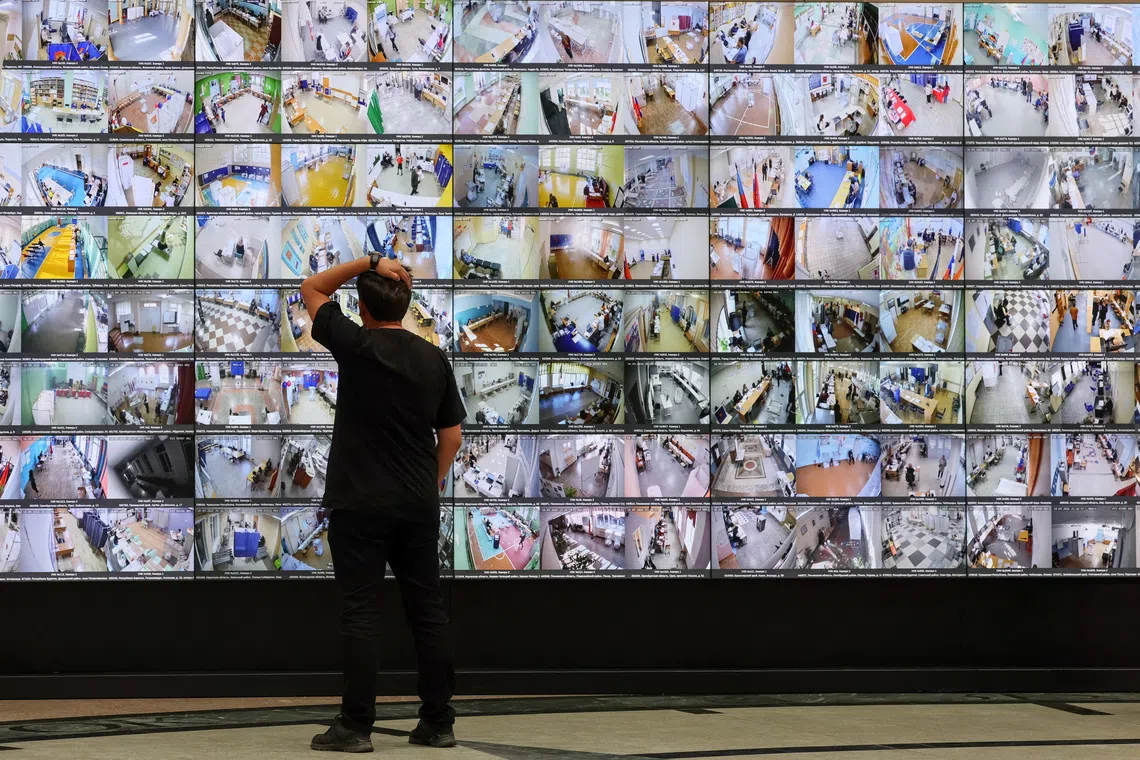
Russia’s parliamentary election entered its second day amid reports of cyberattacks against voting infrastructure and communication networks. The three-day vote runs from September 18 to 20, and Russia’s Central Election Commission said Moscow’s online voting system came under a major overnight attack. Commission head Ella Pamfilova said the attacks were continuing but had been successfully repelled and that the situation remained under control. Russia’s digital ministry separately reported an attempted sabotage of communication lines in the Far East, saying the attack was thwarted and services restored. President Vladimir Putin accused Ukraine of attempting to interfere with the election, though he provided no evidence.
The election has also caused a diplomatic dispute between Russia and Moldova over voting arrangements for Russian citizens in Transnistria, a breakaway, pro-Russian region of Moldova. Moscow says about 220,000 residents there hold Russian passports and should be able to vote. Moldova disputes that figure and says Russian nationals should vote only at the Russian embassy in Chisinau. It has rejected Russia’s plan to establish 15 polling stations in Transnistria as unacceptable and hostile. Russia urged Moldova to abandon its objections, while Moldova accused Moscow of interfering with efforts to peacefully reintegrate the region.
In another Russia-backed breakaway territory, former Russian federal official Marat Kambolov was elected president of South Ossetia, a result Moscow described as evidence of closer ties with Russia.
The election is taking place under the shadow of the war in Ukraine. The Kremlin is expected to present the result as evidence of public support for Putin’s policies, including the invasion, while most anti-war candidates have been excluded. The vote also coincided with regional security tensions, including Polish military operations during Russian strikes on Ukraine, Moldova’s report of a possible Russian drone-related airspace violation, and Russian strikes on a Ukrainian cargo ship and tanker.
Entities: Russia’s parliamentary election, Cyberattacks on voting systems, Online voting system in Moscow, Central Election Commission, Ella Pamfilova • Tone: analytical • Sentiment: negative • Intent: inform
19-09-2026
Russia held the second day of a three-day parliamentary election to choose 450 members of the State Duma, with voting scheduled to end on Sunday evening. President Vladimir Putin’s United Russia party, which already controls more than two-thirds of the chamber, is widely expected to retain its dominance. The election is the first parliamentary vote since Russia launched its full-scale invasion of Ukraine in February 2022.
The vote is taking place in a tightly controlled political environment. Parties supporting Putin’s war are the only groups registered to participate, while opposition forces have been excluded. The opposition party Yabloko was removed from the party list the previous month. Although the result is expected to be an easy victory for United Russia, the election is being viewed as a referendum on public support for the continuing military campaign, now in its fifth year.
Public dissatisfaction is reportedly growing because of rising prices, internet restrictions, fuel shortages and speculation about another mobilization campaign after the election. More than 110 million people are eligible to vote, and a strong result for United Russia would allow the Kremlin to continue its policies despite signs of declining support for the war.
For the first time in a Russian parliamentary election, Moscow is also holding ballots in occupied areas of Ukraine, including Donetsk, Luhansk, Zaporizhzhia and Kherson. Russia claims to have annexed these regions, but does not fully control any of them, and the annexations are not internationally recognized. Russia says more than 3.5 million residents of the occupied territories are eligible to vote. Ukraine has condemned the voting as illegal, urged other countries not to recognize the election or its results, and warned that those helping organize it could face criminal prosecution.
Entities: Russia, Vladimir Putin, United Russia, State Duma, Yabloko • Tone: analytical • Sentiment: negative • Intent: inform
19-09-2026
Russia is holding its first parliamentary election that includes residents of Ukrainian territories Moscow claims to have annexed during its full-scale invasion. The vote covers the occupied parts of Donetsk, Luhansk, Kherson and Zaporizhzhia, which Russia annexed in September 2022 despite not fully controlling them. The annexations have not been recognized internationally. Russian officials say the four territories contain more than 3.5 million eligible voters, and President Vladimir Putin has portrayed their participation as evidence of reunification with Russia and support for Russian troops and the war effort.
Voting across Russia began Friday and continues through Sunday, but balloting in the occupied Ukrainian territories and some Russian border areas began in late August. Authorities cited security concerns for the extended voting period. The election is also being held in Crimea, which Russia annexed in 2014. The article describes the vote as part of the Kremlin’s effort to consolidate its territorial gains, reinforce political dominance and demonstrate public support for the war.
Ukraine has condemned the voting as illegal and urged foreign governments and international organizations not to recognize either the election or its results. Ukrainian human rights groups have called on residents to avoid the polls and warned that participation in organizing the vote could lead to criminal liability. European Union spokesperson Christian Wigand likewise called the elections a blatant violation of international law and said the bloc would never recognize them.
Ukrainian activists allege that Russian-appointed election officials, accompanied by troops and security agents, have gone door to door to pressure residents to vote. They also report threats against public-sector workers and the conditioning of pensions, social assistance and humanitarian aid on participation. A Kyiv political analyst described elections conducted amid occupation, shelling and alleged coercion as a farce rather than a democratic process.
Entities: Russia, Ukraine, Russian parliamentary election, State Duma, Vladimir Putin • Tone: analytical • Sentiment: negative • Intent: inform
19-09-2026
Russians are voting in a nationwide parliamentary election, the first since Moscow launched its full-scale invasion of Ukraine in 2022. NPR reports that although 11 parties are formally participating, the election offers little opportunity to debate the war or challenge President Vladimir Putin’s government. Yabloko, the only registered party openly calling for an end to the war, was removed from the ballot after a court cited an unexpected technical violation involving American copyright law. Party leader Nikolay Rybakov called the decision a pretext to deny voters a meaningful choice.
Political analyst Alexander Kynev says Russian authorities have created an extensive legal framework to exclude opponents, including foreign-agent designations, anti-extremism laws and other penalties that can disqualify candidates. Opposition figures such as Yulia Navalnaya remain in exile, while even mentioning the late Alexei Navalny or displaying his image can risk prosecution inside Russia. The parties still permitted to compete can discuss limited domestic issues, but criticism of the government, disagreement with the war and foreign-policy debate are effectively prohibited.
The resulting campaign has been largely scripted and subdued. Some televised debates have featured no candidates, while others have consisted of candidates delivering brief, noncontroversial statements. Putin has endorsed the ruling United Russia bloc and portrayed the election as evidence of national unity behind the war. Voting is also taking place in territories Russia claims to have annexed in Ukraine, with soldiers overseeing the process and war veterans appearing on party lists as part of Putin’s proposed new political elite.
The election takes place amid public anxiety over Ukrainian drone attacks, internet restrictions, the uncertain duration of the war and rumors of another mobilization. Although Putin denies that a new draft is imminent, Alexey Tabalov of School of the Conscript says recruitment is occurring discreetly through increasingly common forced contract signings. The report concludes that the war is likely to continue well beyond election day, with anti-war voices excluded and the military replenishing its ranks.
Entities: Russia, State Duma, Russian parliamentary elections, Moscow, Yabloko • Tone: analytical • Sentiment: negative • Intent: analyze
19-09-2026
Russian President Vladimir Putin accused Ukraine of deliberately obstructing peace negotiations and interfering in Russia’s three-day parliamentary election, which began on Sept. 18. Speaking to Russia’s Military-Industrial Commission, Putin claimed that Ukrainian offers to negotiate were not sincere because Kyiv had continued striking Russian targets. He cited a recent strike on a home in a Russian-occupied area of Zaporizhzhia that reportedly killed the head of a local election commission. Putin said such attacks were intended to prevent peace talks, although he provided no independent evidence for his broader claim that Ukraine was interfering in the election.
Putin also criticized Ukraine’s political system, calling it a dictatorship because it has not held a presidential election after the expiration of President Volodymyr Zelensky’s mandate. Ukrainian officials argue that elections cannot take place while the state of emergency imposed after Russia’s February 2022 invasion remains in effect. Kyiv, meanwhile, has dismissed Russia’s parliamentary vote as a “pseudo election,” arguing that the outcome is predetermined and that most anti-war candidates were barred from participating.
The election is expected to be presented by the Kremlin as evidence of public support for Putin’s policies and Russia’s ongoing war in Ukraine. The article notes that the conflict has become Europe’s deadliest since World War Two and is now in its fifth year.
In separate remarks, Putin reaffirmed Russia’s reliance on its nuclear triad—land-, sea- and air-launched nuclear weapons—but said the country must also improve its air and missile defenses. Ukraine has expanded its drone capabilities and conducted strikes against Russian industrial targets as far as 3,000km from its border, affecting fuel supplies and other aspects of daily life in Russia.
Entities: Vladimir Putin, Volodymyr Zelensky, Russia, Ukraine, Moscow • Tone: analytical • Sentiment: negative • Intent: inform
19-09-2026
Russian authorities reported a series of cyberattacks and attempted disruptions targeting the country’s electoral infrastructure on Sept 19, the second day of a three-day parliamentary election. The online voting system in Moscow was reportedly subjected to a major overnight attack, while attacks were said to be continuing. Central Election Commission chairwoman Ella Pamfilova said the incidents were being successfully repelled and remained under control. Russia’s digital ministry separately reported that an attempted sabotage of communication lines in the Far East had been thwarted and that services had been restored.
President Vladimir Putin accused Ukraine of attempting to interfere in the vote, although the article notes that he provided no evidence. The election is the first State Duma contest since Russia launched its full-scale invasion of Ukraine in February 2022 and is being treated by Moscow as an indicator of public support for the war. The ruling, pro-Putin United Russia party is widely expected to maintain its dominance in Russia’s tightly controlled political system.
Most anti-war candidates were barred from participating before voting began across Russia’s 11 time zones. The Supreme Court ruled in August that the liberal Yabloko party had violated electoral rules, a charge the party denied. Some Yabloko candidates nevertheless remained in single-member constituencies, which make up half of the 450 seats in the lower house. Nationwide turnout stood at 32.58 per cent by midday on Sept 19, according to Central Election Commission data cited by state media.
The election also created a diplomatic dispute with Moldova over Russia’s plan to open 15 polling stations in the separatist, pro-Russian region of Transdniestria. Moscow said the region’s roughly 220,000 residents hold Russian passports and are therefore entitled to vote, while Chisinau objected to the polling arrangements.
Entities: Russia, State Duma election, United Russia, Vladimir Putin, Ukraine war • Tone: analytical • Sentiment: neutral • Intent: inform
19-09-2026
Russians are reportedly leaving the country before the end of nationwide State Duma elections, fearing that the Kremlin could announce a new military mobilisation once voting concludes. The anti-war project Ark says requests for emergency emigration assistance and relocation advice have nearly octupled since July. Online searches for “how to leave” and “mobilisation” have also reached their highest levels since early 2023.
The reported wave of departures is driven by memories of Russia’s 2022 partial mobilisation, when an estimated 600,000 to 700,000 people left within weeks. Concerns have intensified because Russia’s electronic summons register can automatically impose an exit ban once a summons is issued. A reported case in Krasnodar involved a 24-year-old man who was detained at passport control and served with a notice preventing him from leaving. Former Moscow municipal deputy candidate Daniil Neonov said he escaped shortly after receiving an electronic summons and believed waiting even a few days could have prevented his departure.
The movement coincides with elections running from 18 to 20 September, in which only parties supporting Moscow’s war in Ukraine are allowed to compete. Kremlin critics and some Western governments suspect authorities may delay an unpopular mobilisation announcement until after voting ends. President Vladimir Putin has dismissed such rumours, while independent media have counted repeated official denials.
Most Russians leaving are travelling to visa-free destinations, particularly Armenia, Georgia and Kazakhstan. Armenia is preparing for a potential migration crisis, although the current exodus appears smaller than that of 2022. Ukraine has alleged that Russia could call up hundreds of thousands of troops by the end of the year and a similar number the following year; Moscow has not commented. The article also describes growing anxiety among officials, business elites and ordinary families facing the possibility of separation and renewed military conscription.
Entities: Russia, State Duma elections, Vladimir Putin, Dimitri Kavalerov, Jan Slovitsky • Tone: analytical • Sentiment: negative • Intent: inform
19-09-2026
Russia’s parliamentary election has sparked a diplomatic dispute with Moldova over Moscow’s plan to establish 15 polling stations in Transdniestria, the separatist region that broke away from Moldova during the collapse of the Soviet Union. Russia says about 220,000 residents of the pro-Russian territory hold Russian passports and should be allowed to vote in Sunday’s State Duma election. Moldova disputes that figure and insists that Russian citizens in the country should vote only at a single polling station located at Russia’s embassy in Chisinau.
Moldova’s pro-Western government has described the proposed polling stations in Transdniestria as “unacceptable and hostile,” arguing that it has no control over voting procedures in the region. Moldovan authorities summoned Russian Ambassador Oleg Ozerov to the Foreign Ministry. Russia’s Foreign Ministry spokeswoman Maria Zakharova urged Moldova to withdraw its objections, accusing Chisinau of taking steps that conflict with democracy, international law and common sense. Moldovan Foreign Minister Mihail Popsoi responded by telling Moscow not to interfere with Moldova’s plans for the peaceful reintegration of the breakaway territory.
The dispute reflects broader tensions between Moldova and Russia. Moldova wants to join the European Union by 2030 and has condemned Russia’s war in Ukraine, while Moscow maintains close political and military ties with Transdniestria. In Russia’s 2021 parliamentary election, 27 polling stations operated in the region, with more than 59,000 people voting. The United Russia party, which supports President Vladimir Putin, received 76.2 per cent of the vote there.
Transdniestria is not internationally recognised, including by Russia, but approximately 1,500 Russian troops remain stationed there. Moscow refers to them at times as peacekeepers, while Moldova has repeatedly demanded their withdrawal.
Entities: Russia, Moldova, Transdniestria, Chisinau, Russian parliamentary election • Tone: analytical • Sentiment: negative • Intent: inform
19-09-2026
The supplied excerpt introduces a Washington Post article about Russia’s political predictability and broader uncertainty. Its headline suggests that the outcome of an election is straightforward to anticipate, while many other aspects of life and national policy remain unclear. The opening focuses on the concerns facing people living in Russia, rather than immediately describing the election itself.
The excerpt identifies three major uncertainties. First, Russians do not know when the war in Ukraine will end. Second, everyday economic and logistical conditions are unstable, illustrated by concern over whether there will be enough gasoline to commute to work the following day. Third, families are worried about the possibility of another military mobilization and whether they should send their sons abroad to avoid being called into service by President Vladimir Putin.
Together, these questions portray a society shaped by war, economic anxiety, and fear of state action. The reference to Putin’s authority emphasizes that military decisions made by the government can directly affect families and personal plans. The contrast between an easily guessed election result and unpredictable daily life creates the article’s central framing: formal political outcomes may appear certain, while the consequences of government policy remain difficult to anticipate.
Because only the opening passage was provided, the excerpt does not contain the article’s election analysis, reporting from sources, or further discussion of Russia’s political situation. It establishes a serious and unsettled context, presenting uncertainty as a defining feature of contemporary life in Russia. The article’s apparent purpose is to analyze how predictable political power coexists with widespread insecurity over war, fuel supplies, and possible mobilization.
Entities: Russia, The Washington Post, Mary Ilyushina, Natalia Abbakumova, Russian election • Tone: analytical • Sentiment: negative • Intent: analyze