13-05-2026
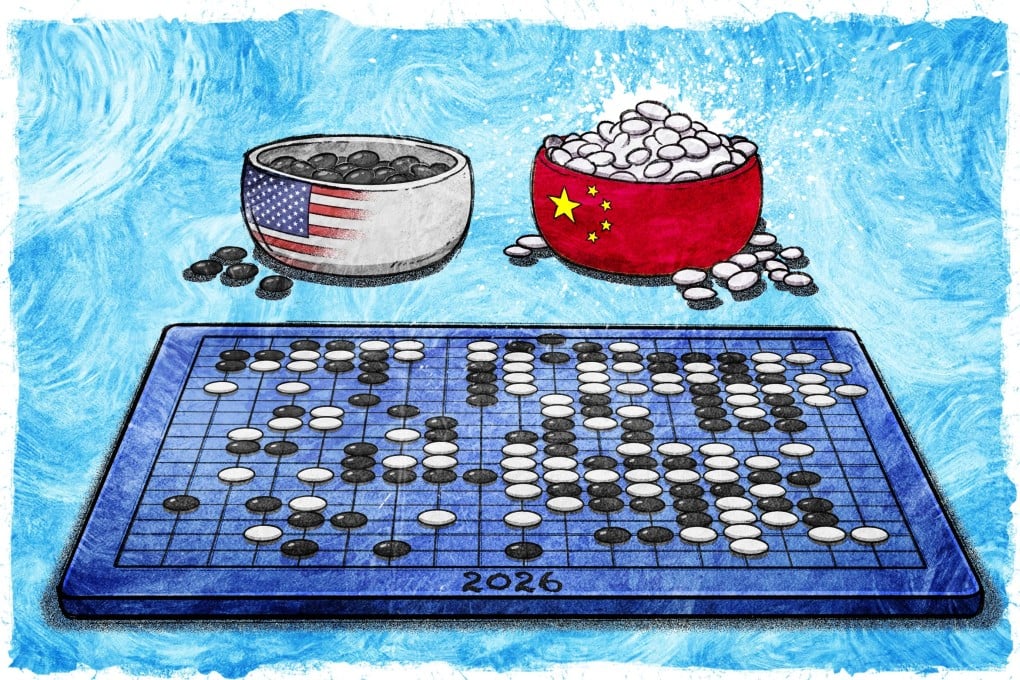
The article examines Donald Trump’s return to Beijing for a summit with Xi Jinping, contrasting the highly choreographed diplomacy of 2017 with a far more powerful and assertive China a decade later. It argues that Xi’s China no longer needs to prove itself as Washington’s equal; instead, it is openly projecting confidence through industrial policy, technological ambition, and a growing soft-power campaign. The piece uses Chongqing as a case study for China’s transformation: a sprawling, futuristic megacity symbolizing state-backed investment in robotics, renewable energy, AI, and advanced manufacturing. At the same time, it highlights the costs of this model, including heavy local debt, weak domestic consumption, a sluggish property sector, unemployment, and lingering political repression. The article frames the summit as occurring amid multiple pressure points—trade tensions, technology restrictions, Taiwan, and the added strain of Iran-related geopolitical conflict. It also shows how public attitudes in China toward Trump are mixed: some view his “America First” approach as damaging to the United States and indirectly beneficial to China, while others still see the US as a symbol of freedom and opportunity. Ultimately, the article portrays a relationship defined by strategic rivalry, technological competition, and mutual dependence, with AI and semiconductor access emerging as key flashpoints in a broader contest for global influence.
Entities: Donald Trump, Xi Jinping, Beijing, Zhongnanhai, Forbidden City • Tone: analytical • Sentiment: neutral • Intent: analyze
13-05-2026
The article reports that Elon Musk and several other top business executives have been invited to join a U.S. delegation accompanying President Trump to China for a high-profile meeting with Chinese President Xi Jinping. The trip comes at a sensitive moment, with global markets unsettled by uncertainty surrounding the war with Iran and its effect on oil supplies and supply chains. According to a White House official, the invite list includes leaders from major companies such as Apple, BlackRock, Blackstone, Boeing, Goldman Sachs, Meta, Micron, Qualcomm, Illumina, Mastercard, Visa, Cargill, Citi, Cisco, Coherent, and GE Aerospace. The article emphasizes that these executives have been invited but have not necessarily agreed to participate.
Trump said he intends to discuss economic and energy issues during the meeting. He described his relationship with Xi as strong and framed U.S.-China trade as highly beneficial to America, claiming the U.S. is now doing “great with China” and making substantial money. The article also notes that Trump delayed his China trip because of the conflict with Iran. On Monday, he criticized Iran’s response to a U.S. proposal to end the war, calling it “unacceptable” and “garbage,” and said the ceasefire remains weak and unstable. Overall, the piece ties together Trump’s China diplomacy, the business delegation, and the broader geopolitical tensions shaping the trip.
Entities: Elon Musk, Donald Trump, Xi Jinping, China, Beijing • Tone: analytical • Sentiment: neutral • Intent: inform
13-05-2026
CBS News reports that Pakistan, while publicly positioning itself as a neutral diplomatic intermediary between Tehran and Washington, allegedly allowed Iranian military aircraft to park on its airfields, potentially protecting them from U.S. airstrikes. U.S. officials cited by CBS said Iranian aircraft were moved to Pakistan Air Force Base Nur Khan days after President Trump announced a ceasefire with Iran in early April. Among the aircraft reportedly present was an Iranian Air Force RC-130 reconnaissance plane. Pakistan rejected the claim that military aircraft were being concealed at Nur Khan, saying such a large fleet could not be hidden in a populated area. Its foreign ministry later confirmed Iranian aircraft were in the country, but said they arrived during the ceasefire period and were there to support possible diplomatic personnel movement if peace talks resumed, not for any military preservation arrangement. The article also describes a related episode in Afghanistan, where an Iranian civilian aircraft from Mahan Air was moved from Kabul to Herat for safety amid Pakistani airstrikes and concerns about possible bombing. Taliban officials denied that any Iranian aircraft were in Afghanistan. The piece places Pakistan’s actions in the wider context of its deepening reliance on Chinese military support and Beijing’s interest in Pakistan’s mediator role, while noting that tensions between Iran and the U.S. remained fragile, with continued clashes around the Strait of Hormuz and Iranian drones reportedly targeting the UAE.
Entities: Pakistan, Iran, United States, Washington, Tehran • Tone: analytical • Sentiment: neutral • Intent: inform
13-05-2026
President Donald Trump is traveling to China for a high-stakes summit with Chinese President Xi Jinping, a meeting delayed earlier because of the war with Iran. The article says the encounter is expected to center on trade, but Iran, Taiwan, and broader U.S.-China strategic competition will also weigh heavily on the talks. Trump has publicly praised Xi and signaled a friendly personal relationship, while analysts quoted in the story argue that both governments want to stabilize the relationship and avoid accidental escalation, even as they remain locked in long-term rivalry.
The piece emphasizes that the Iran conflict could subtly reshape the diplomatic balance. Experts say China may feel newly confident because the U.S. is distracted and using munitions that matter for deterrence in Asia, though Beijing’s overall approach has not fundamentally changed. The article also notes that China is a major buyer of oil flowing through the Strait of Hormuz and has little public incentive to help the U.S. on Iran, especially after new U.S. sanctions targeted China-based firms linked to Iran.
Trade remains the most immediate agenda item, with the U.S. seeking narrow, quickly announced commercial wins and China focused on broader strategic goals. The article also highlights Taiwan as a potentially sensitive flashpoint: Trump expects Xi to raise it, and analysts say Beijing sees an opportunity because Trump’s rhetoric has at times been ambiguous. The story closes by stressing Taiwan’s importance to global semiconductor supply chains, AI development, and the credibility of U.S. commitments to allies in Asia and beyond.
Entities: Donald Trump, Xi Jinping, China, Beijing, White House • Tone: analytical • Sentiment: neutral • Intent: inform
13-05-2026
President Trump said Tuesday that Americans’ financial hardship is not driving his approach to negotiations with Iran, emphasizing instead that his overriding concern is preventing Tehran from obtaining a nuclear weapon. Responding to questions from reporters before departing for Beijing, Trump said he does not think about Americans’ financial situation in the context of the Iran talks and that “the only thing that matters” is ensuring Iran cannot get nuclear arms. He framed the issue as more important than even the stock market’s performance, which he noted is at an all-time high.
The remarks come as economic pressures remain a political concern in the United States, with inflation at a recent high, gas prices elevated, and public anxiety over fuel costs and broader living expenses growing. The article notes that a recent CBS News/YouGov poll found 51% of Americans view higher gas prices as a financial hardship. It also cites April inflation rising to 3.8%, the highest rate since 2023, and the national average gas price at $4.50 on Tuesday.
The piece also references Secretary of State Marco Rubio, who has argued that a nuclear-armed Iran could use its leverage to threaten global oil markets and push gas prices even higher, especially if the Strait of Hormuz remained closed. Petroleum analyst Patrick De Haan warned that gasoline could reach $5 per gallon if the strait does not reopen soon. Overall, the article presents Trump’s comments as part of a broader debate over whether national security concerns or domestic economic pain should shape U.S. policy toward Iran.
Entities: Donald Trump, Iran, nuclear weapons, Americans' financial situation, inflation • Tone: analytical • Sentiment: neutral • Intent: inform
13-05-2026
Asia-Pacific markets traded mixed on Wednesday as investors balanced several global risks and catalysts, including a hotter-than-expected U.S. inflation reading, renewed tensions in the Middle East, and anticipation of a possible Trump-Xi meeting. The article notes that markets were under pressure from concerns about higher oil prices and the implications of escalating rhetoric between the U.S. and Iran. President Donald Trump said the ceasefire with Iran was weak and criticized Tehran’s counterproposal, while Defense Secretary Pete Hegseth argued Trump would not need congressional approval to resume strikes. Against that backdrop, investors also watched for any signs of progress in trade discussions between Trump and Chinese President Xi Jinping.
Regional markets showed a mixed picture: South Korea’s Kospi rose after an earlier dip, Japan’s Nikkei 225 and Topix posted gains, Hong Kong’s Hang Seng edged higher, India’s Nifty 50 advanced slightly, while Australia’s ASX and some other indexes slipped or were flat. China’s CSI 300 was unchanged. In U.S. futures trading, S&P 500 and Nasdaq 100 futures were near flat, and Dow futures were marginally higher. Oil prices extended losses despite the geopolitical backdrop, with both WTI and Brent futures lower. The article also places the day’s market action in context by noting that U.S. equities pulled back slightly the prior session after recent record highs, with the S&P 500 and Nasdaq Composite retreating while the Dow managed a small gain.
Entities: Asia-Pacific markets, Nikkei 225, Kospi, CSI 300, Hang Seng • Tone: analytical • Sentiment: neutral • Intent: inform
13-05-2026
Chinese exporters are entering the upcoming Trump-Xi summit with a different set of worries than they had during last year’s tariff battle. After adapting to a volatile U.S. tariff regime by diversifying production, shifting supply chains, and finding new markets, many businesses now see the Iran war as a more immediate threat. The conflict is disrupting shipping lanes, especially through the Strait of Hormuz, raising freight costs, delaying deliveries, choking ports across Asia, and driving up energy and input costs. Exporters say these supply-chain and cost pressures are harder to manage than tariffs, because tariffs can often be passed on to consumers or offset through workarounds. The article argues that while the summit could still produce a short-term easing in trade tensions and perhaps a lower tariff rate through concessions, exporters are no longer expecting a return to the pre-tariff era. Instead, they are treating trade friction as the new normal and focusing on resilience rather than expansion into the U.S. market.
Entities: Chinese exporters, Trump-Xi summit, Iran war, Strait of Hormuz, Donald Trump • Tone: analytical • Sentiment: neutral • Intent: analyze
13-05-2026
CNBC’s Daily Open focuses on a fast-changing geopolitical and market backdrop, anchored by the late addition of Nvidia CEO Jensen Huang to President Donald Trump’s China trip. The article explains that Huang apparently was initially left out of the delegation, but after reports of his absence circulated, Trump called him and asked him to join. Huang then reportedly flew to Alaska to board Air Force One. Trump is traveling with more than a dozen U.S. business executives to Beijing, where he is set to meet Chinese President Xi Jinping later in the week.
Beyond the Nvidia news, the piece emphasizes that the trip’s agenda is being overshadowed by the war in Iran, which is expected to dominate discussions more than tariff tensions. The article notes that the conflict is worsening pressure on Chinese exporters, disrupting shipping routes, pushing up energy costs, and threatening global demand for Chinese goods. In the U.K., Prime Minister Keir Starmer is portrayed as politically weakened after ministerial resignations and internal pressure within Labour, while bond markets react sharply. The article also describes a mixed session across Asian markets after a hotter-than-expected U.S. inflation reading for April, with traders also watching oil prices and the Middle East conflict. It closes with a note on copper hitting a record high, fueled by demand from AI data centers, and cites Citi’s view that the rally may still have room to continue.
Entities: Jensen Huang, Nvidia, Donald Trump, Xi Jinping, Beijing • Tone: analytical • Sentiment: neutral • Intent: inform
13-05-2026
Nvidia CEO Jensen Huang has joined U.S. President Donald Trump’s China trip after initially appearing to be left off the delegation. According to CNBC’s reporting, a source familiar with the situation said Trump saw media coverage about Huang’s absence and personally called him to invite him along. Huang reportedly flew to Alaska to board Air Force One and is now attending the trip as Trump prepares to meet Chinese President Xi Jinping on Thursday and Friday. Nvidia confirmed Huang’s participation and framed it as attendance at Trump’s invitation to support U.S. and administration goals.
The article places Huang’s participation in the broader context of U.S.-China tensions over advanced chip exports and artificial intelligence. Nvidia’s most powerful chips have faced tighter U.S. restrictions on sales to China, and the company has said approved versions of its chips still had not been permitted into the Chinese market. China has been investing in domestic chip development and AI models such as DeepSeek to reduce reliance on Nvidia. Trump’s trip also reflects a broader push to present U.S. business leaders as part of a diplomatic effort to improve market access in China. The article notes that Trump publicly confirmed Huang was on Air Force One and said opening China to U.S. businesses would be his first request to Xi. Overall, the piece highlights the intersection of geopolitics, trade policy, and AI competition.
Entities: Jensen Huang, Nvidia, Donald Trump, Xi Jinping, Beijing • Tone: analytical • Sentiment: neutral • Intent: inform
13-05-2026
The article examines an apparent paradox in global oil markets: despite the closure of the Strait of Hormuz during the Iran war, oil prices have not spiked nearly as much as many analysts expected. Ten weeks into the conflict, nearly 14 million barrels of oil a day are being lost because the strait remains closed, and the resulting production and shipping delays could remove at least 2 billion barrels from this year’s total even if it reopened immediately. Yet Brent crude is only around $107 a barrel—high, but far below the $150-200 some had forecast for a prolonged disruption, and also below the $129 peak reached after Russia’s invasion of Ukraine. The article argues that the world is being buffered by two major forces, especially America and China, whose behavior is helping prevent an oil catastrophe. Implicitly, that support may be fragile: the piece raises the question of whether those countries can maintain this restraint if the Iran conflict continues and the Strait of Hormuz stays shut. The broader theme is that the global oil system is proving more resilient, and more geopolitically managed, than expected, even in the face of a major supply shock.
Entities: America, China, Iran, United States, Strait of Hormuz • Tone: analytical • Sentiment: neutral • Intent: analyze
13-05-2026
The article examines renewed Chinese pressure on Donald Trump to make concessions on Taiwan, echoing a long-running pattern in U.S.-China diplomacy that dates back to the Reagan era. It recalls how, soon after the United States and China established diplomatic ties in 1979, Beijing pushed for an end to U.S. arms sales to Taiwan. Ronald Reagan resisted a full commitment, instead accepting language in a 1982 communiqué that promised to “gradually to reduce” arms sales if China’s intentions were peaceful, while also issuing secret assurances to Taiwan to reaffirm American support.
The piece uses that history to frame current anxieties in Taipei and Washington that Trump may again be willing to trade away Taiwanese interests for a broader deal with Beijing. Taiwan is described as a self-governed island that China claims, and the article implies that any U.S. concession would be highly consequential for regional security. The opening anecdote suggests that China has long sought to use diplomatic leverage to constrain U.S. military support for Taiwan, and that American presidents have often resorted to ambiguity and dual-track assurances to manage the tension.
Overall, the article is setting up a geopolitical briefing about the strategic stakes of Taiwan in U.S.-China relations, the risks of transactional bargaining under Trump, and the enduring fragility of the cross-strait balance. It suggests that both historical precedent and present-day fears make the issue especially fraught, with Taipei and Washington watching closely for signs that Trump could offer China something significant on Taiwan in exchange for diplomatic or economic gains.
Entities: China, Donald Trump, Taiwan, Taipei, Washington • Tone: analytical • Sentiment: neutral • Intent: inform
13-05-2026
The article argues that Iran’s leaders are divided over whether to pursue diplomacy with the United States or prepare for further conflict. Although leaks from the White House suggest Washington and Tehran are closer than ever to a possible agreement to end the war, the situation on the ground is moving in the opposite direction. The United States has attacked an Iranian tanker in the Gulf that was allegedly trying to break the blockade of the Strait of Hormuz, Israel has struck Beirut, and Iran has responded by creating a new "Persian Gulf Strait Authority" and demanding payment in rial for safe passage. These developments underscore the article’s central point: even beyond Iran’s nuclear program, the dispute over the Strait of Hormuz may be the decisive obstacle to a deal and could trigger a renewed escalation. The piece emphasizes that words from negotiators are not enough to reassure Iranian leaders, who are watching military actions and symbolic moves more closely than diplomatic statements. The title’s question—whether diplomacy or more war lies ahead—captures the uncertainty, internal disagreement, and high stakes facing Iran as it weighs whether talks can deliver security or whether confrontation is inevitable.
Entities: Iran, United States, Donald Trump, White House, Israel • Tone: analytical • Sentiment: negative • Intent: inform
13-05-2026
The article argues that expectations for a sweeping economic breakthrough between Donald Trump and Xi Jinping are unrealistic. Rather than producing a historic “grand bargain” involving major trade concessions, market opening, or strategic military retrenchment, the upcoming Beijing summit is likely to achieve only a modest extension of the current trade truce. The piece frames the meeting as one shaped by long-standing rivalry and mutual suspicion, making ambitious compromise highly unlikely.
The article starts by rejecting the idea that the two leaders could strike an epochal deal that resolves broader U.S.-China tensions. Such a bargain, in the view of earlier optimists, would have combined balanced trade, greater Chinese market access for American firms, and some reduction in U.S. military presence in East Asia. But the article suggests that those hopes have faded. Instead, the most realistic outcome is the avoidance of a renewed confrontation, which would itself count as success.
By emphasizing what the summit will not achieve, the article highlights how constrained U.S.-China diplomacy has become. The main objective is no longer transformation of the bilateral relationship, but maintenance of a fragile status quo. The article implies that even a limited extension of the truce would be notable given the depth of economic and geopolitical friction between Washington and Beijing. In that sense, the summit is presented less as a chance for historic reconciliation than as a test of whether the two sides can avoid making things worse.
Entities: Donald Trump, Xi Jinping, Beijing, China, United States • Tone: analytical • Sentiment: negative • Intent: analyze
13-05-2026
This CNN live updates article tracks the escalating economic, military, and diplomatic consequences of the U.S. war with Iran as President Donald Trump travels to China for talks with Xi Jinping. The Pentagon’s acting comptroller, Jay Hurst, says the conflict has now cost the United States about $29 billion, up from the $25 billion estimate the Pentagon gave Congress two weeks earlier. A Harvard Kennedy School expert, Linda Bilmes, argues the eventual taxpayer cost could exceed $1 trillion when short-term military spending, equipment replacement, base repairs, veterans’ care, and broader economic effects are included.
The article emphasizes how the war is disrupting energy markets and everyday prices. U.S. Energy Department officials have raised gas-price forecasts and warned oil futures may stay above $100 a barrel in the coming weeks. The Energy Information Administration now expects retail gasoline to average $3.88 per gallon this year and $3.62 next year. The article also highlights damage to regional infrastructure, including a major gas processing facility in the United Arab Emirates that will not return to full capacity until 2027 and an oil spill near Iran’s Kharg Island.
On the diplomatic front, Trump says he plans a “long talk” with Xi about Iran but suggests Beijing’s help is not essential, even though China is a key buyer of Iranian oil and an important Iranian ally. Trump also sparks criticism by saying he does not think about Americans’ financial situation when negotiating with Tehran, insisting instead that preventing Iran from obtaining a nuclear weapon is his sole concern. The live updates also note continued violence involving Iran-backed Hezbollah and Israel in Lebanon, as well as Israeli concern that Trump could reach a deal with Iran before core issues are resolved.
Entities: Iran war, Pentagon, Jay Hurst, Donald Trump, Xi Jinping • Tone: analytical • Sentiment: negative • Intent: inform
13-05-2026
CNN’s analysis examines the high-stakes Beijing meeting between U.S. President Donald Trump and Chinese leader Xi Jinping, portraying it as a consequential moment for the world’s two largest economies amid a far more dangerous global backdrop than their last major encounter. The article argues that the talks are shaped not only by longstanding U.S.-China tensions over trade, technology, critical minerals, Taiwan, and artificial intelligence, but also by the escalating U.S. war with Iran, which has become the dominant issue hanging over Trump’s trip. Trump delayed the visit because of the conflict, but the war remains unresolved, creating uncertainty about how much leverage he truly has with Xi.
The piece frames Trump as wanting a trade reset, tariff relief, and help from Xi on Iran—especially pressure on Tehran to reopen the Strait of Hormuz and move toward peace. Yet it also suggests Xi may hold significant leverage, particularly because China relies heavily on Iranian oil and may use the moment to push its own priorities, including reduced U.S. support for Taiwan. The article notes that the U.S. insists there will be no policy change on Taiwan, though Trump’s comments indicate the issue may come up.
Beyond geopolitics, the summit is also expected to feature trade-related meetings, possible agreements in aerospace, agriculture, and energy, and discussions of a new U.S.-China trade and investment framework. The article concludes that the meeting is about more than bilateral relations: the personalities and choices of Trump and Xi could affect a global order already strained by war, competition, and shifting power dynamics.
Entities: Donald Trump, Xi Jinping, China, Beijing, Washington DC • Tone: analytical • Sentiment: neutral • Intent: analyze
13-05-2026
Pakistan has rejected a CBS report alleging that it allowed Iranian aircraft to use Pakistani airfields during recent tensions with the United States, calling the report misleading and sensationalized. According to Pakistan’s Foreign Ministry, aircraft from Iran and the United States were present in Pakistan only to support diplomatic personnel, security teams, and administrative staff involved in the ceasefire talks, and some aircraft and support personnel temporarily remained in the country ahead of additional negotiations. The denial comes amid heightened scrutiny of Pakistan’s role as a mediator between Washington and Tehran during a period of regional tension tied to the Strait of Hormuz and the broader Iran crisis.
The article says Pakistan emerged as an important intermediary in April, hosting senior delegations and helping secure a temporary ceasefire between the U.S. and Iran. Prime Minister Shehbaz Sharif, Army Chief Asim Munir, and Foreign Minister Ishaq Dar were central to those efforts. President Donald Trump publicly praised Pakistan’s mediation, describing its leaders as “great” and “absolutely great,” while also acknowledging the country’s key role in de-escalation. The CBS report had suggested Iran moved aircraft, including a reconnaissance variant of the C-130 Hercules, to Nur Khan Airbase near Rawalpindi, potentially to shield them from strikes. Pakistan’s government rejected that framing, insisting the claims undermined regional stability and peace efforts. The article also places the dispute in the context of ongoing U.S.-Iran negotiations, Trump’s diplomatic comments, and the broader geopolitical importance of Pakistan’s balancing act between its strategic relationship with the U.S. and proximity to Iran.
Entities: Pakistan, CBS, Iran, United States, Donald Trump • Tone: analytical • Sentiment: neutral • Intent: inform
13-05-2026
As President Trump prepares for a summit in Beijing with China’s top leader, Xi Jinping, the article explains how Beijing’s control over rare-earth metals and magnets could become a powerful source of leverage in trade and geopolitical negotiations. Rare earths are essential to aerospace, electronics, semiconductors, cars, defense systems, and manufacturing equipment, and many are refined almost exclusively in China. Since Beijing halted most exports last year and later imposed additional licensing restrictions, companies in the United States, Europe, and Japan have faced shortages, price spikes, and uncertainty about supply. The article says China has already sharply reduced exports of several critical materials, including samarium, yttrium, and dysprosium, affecting industries such as aircraft, chipmaking, electric vehicles, missiles, and drones. Business groups and trade chambers warn that the restrictions are disrupting production and may be intended to tighten China’s grip on global supply chains. While Chinese officials say the controls are about national security and dual-use materials rather than leverage, the timing of the restrictions alongside U.S. tariffs and other disputes suggests otherwise to many observers. The piece also outlines Western efforts to reduce dependence on China, including work by MP Materials in the United States, though companies remain reluctant to invest heavily without long-term customer commitments. The article concludes that the summit may produce an extension of the current reprieve, but if not, the issue could resurface at later high-level meetings.
Entities: Donald Trump, Xi Jinping, China, Beijing, United States • Tone: analytical • Sentiment: neutral • Intent: analyze
13-05-2026
The article portrays Chinese leader Xi Jinping as an unusually opaque but revealing figure in private meetings with foreign leaders, where he often adopts a lecturing, authoritative, and philosophically elevated style. Drawing from accounts by officials and participants, the piece argues that Xi treats major powers cautiously but is more direct and admonishing with smaller powers such as Canada and Britain. It highlights a 2016 meeting with then-President Barack Obama in which Xi reportedly expressed bafflement at Donald Trump’s election and warned that if an immature leader caused global chaos, the world would know whom to blame. That exchange is used to frame Xi’s apparent long-standing view of Trump and the challenge of handling him in an upcoming Beijing summit.
The article also describes Xi’s behavior in other encounters: confronting Justin Trudeau over leaked talks, instructing Mark Carney to keep concerns private and avoid public criticism, and reacting forcefully to Keir Starmer over Chinese-Japanese tensions. Beyond these moments, it depicts Xi as a leader who casts himself in the mold of ancient philosopher kings, emphasizing civilizational legitimacy, Confucian values, and broad political theory rather than mundane administrative matters. Accounts from Obama and Biden further show Xi engaging in abstract discussions about governance, democracy, and the supposed superiority of autocracy. The piece concludes with hot-mic remarks involving Vladimir Putin, reinforcing the image of Xi as a ruler who thinks in civilizational and historical terms, and who sees himself as helping drive epochal global change.
Entities: Xi Jinping, Donald Trump, Barack Obama, Justin Trudeau, Mark Carney • Tone: analytical • Sentiment: neutral • Intent: analyze
13-05-2026
The article explains how President Trump’s second-term approach to China has become far less ambitious than his campaign rhetoric suggested. During the 2024 campaign, Trump promised to hit China harder than any other trading partner, including very high tariffs and the removal of China’s favorable trade status. But more than a year into his first term, the administration’s posture is more cautious and transactional. Rather than pressing for sweeping structural changes in China’s economy, U.S. officials are now focused on stabilizing relations, limiting escalation, and securing narrow deals such as increased Chinese purchases of U.S. agriculture, airplanes, and other goods.
The shift is largely attributed to China’s ability to retaliate effectively, especially by restricting rare earth minerals and magnets essential to American manufacturing and defense industries. That response exposed the risks of an aggressive tariff strategy and forced the administration to scale back its ambitions. As a result, the upcoming summit in Beijing between Trump and Xi Jinping is expected to produce modest, short-term outcomes rather than a major breakthrough. Likely topics include agricultural purchases, anti-fentanyl cooperation, and perhaps lower tariffs on selected goods, but not major concessions on technology controls or Taiwan.
The article also highlights that while the administration remains publicly tough on China, it has increasingly preferred risk management over confrontation. Officials are continuing new trade investigations, but they have also shelved some of their most aggressive measures. At the same time, China appears more willing than ever to retaliate against U.S. economic pressure, creating a tense standoff in which both sides are seeking stability while preparing for future conflict.
Entities: Donald Trump, Xi Jinping, China, United States, Beijing • Tone: analytical • Sentiment: neutral • Intent: analyze
13-05-2026
The article examines whether President Trump and President Xi Jinping will use their meeting in Beijing to begin serious discussions about slowing the global A.I. arms race. It argues that although both the United States and China recognize the dangers of advanced A.I., deep mistrust and strategic rivalry make cooperation difficult. Each side fears that agreeing to guardrails could advantage the other in a competition for technological and military dominance. The piece describes how A.I. is increasingly tied to national security on both sides: U.S. officials say A.I. is aiding military targeting in Iran, while China has showcased autonomous drones and continues to emphasize the technology’s practical and security uses.
The article outlines several recent incidents that illustrate how politically fraught A.I. cooperation has become, including backlash over the NeurIPS conference’s initial restrictions on Chinese researchers and criticism of Senator Bernie Sanders for hosting a bipartisan public forum on A.I. risk. It also notes that both governments have been openly clashing over technology, with the U.S. accusing Chinese firms of intellectual-property theft and China blocking Meta’s attempted acquisition of the A.I. startup Manus.
Despite the tensions, some experts see a narrow opening for renewed dialogue, especially after the Trump administration expressed more concern about A.I.-driven cybersecurity risks following Anthropic’s release of its new model, Mythos. The article explains that previous U.S.-China discussions on A.I. risks have repeatedly stalled because the two countries define the risks differently: American officials focus on existential threats like bioengineered pathogens or superintelligence, while Chinese officials emphasize social stability, misinformation, and state security. Informal academic and think-tank exchanges have continued, generating ideas such as emergency hotlines and shared testing standards, but participants remain wary that political pressure on both sides could prevent any meaningful bilateral agreement.
Entities: Donald Trump, Xi Jinping, United States, China, Beijing • Tone: analytical • Sentiment: neutral • Intent: analyze
13-05-2026
The article examines how Donald Trump’s return to China for a landmark visit comes at a markedly different moment than his last trip nearly nine years earlier. It argues that China has grown stronger and more resilient economically, diplomatically, and strategically, reducing its vulnerability to US pressure. The piece opens with the example of An’Best, a Chinese toy exporter that felt less panic during Trump’s latest tariff escalation than it did during the 2018 trade war, because it had spent years diversifying away from dependence on the US market and shifting production planning toward Vietnam and Indonesia.
More broadly, the article frames this change as part of a larger shift in the balance of power between the world’s two largest economies. Whereas China in the earlier era was constrained by reliance on American markets and technology, it has since strengthened its trade diversification, developed greater economic leverage, and widened its international influence. Analysts quoted in the article suggest that these developments could make any future negotiations between Trump and Xi Jinping more balanced and potentially more favorable to China than in the past. The article situates Trump’s trip amid broader geopolitical turmoil, including the US-Iran war, rising uncertainty in global energy supplies, and renewed strain in Washington-Beijing relations, emphasizing that the stakes of this visit extend far beyond bilateral trade.
Entities: Donald Trump, Xi Jinping, China, United States, US-Iran war • Tone: analytical • Sentiment: neutral • Intent: analyze
13-05-2026
China’s ChiNext board, the tech-focused index of the Shenzhen Stock Exchange, surged to a nearly 11-year high on Wednesday, reflecting a strong rally in Chinese equities amid anticipation of a high-profile visit by US President Donald Trump to Beijing. The index briefly rose above the 4,000-point threshold for the first time since 2015, peaking at 4,025 in intraday trading. That move put it at its highest level since June 2015 and underscored renewed investor enthusiasm for Chinese technology shares.
The article notes that the Shanghai Composite Index also reached its strongest level in 11 years, suggesting the broader Chinese market was participating in the rally, not just the tech-heavy ChiNext board. The index includes a number of major emerging technology companies, such as battery maker Contemporary Amperex Technology Ltd. (CATL) and Apple supplier Lens Technology, which helps explain its sensitivity to investor sentiment around technology and industrial growth.
The market move came just hours before Trump was expected to arrive in China with a group of prominent tech executives, including Nvidia CEO Jensen Huang, Apple CEO Tim Cook, and Tesla and SpaceX CEO Elon Musk. The piece frames the rally in the context of heightened expectations around the summit and the presence of major US business leaders, but it provides no further detail on policy outcomes, negotiations, or market reaction beyond the intraday highs. It is a brief breaking-news update focused on a significant market milestone and the timing of the Trump-Xi-related visit.
Entities: ChiNext board, Shenzhen Stock Exchange, Shanghai Composite Index, China stock market, Donald Trump • Tone: analytical • Sentiment: neutral • Intent: inform
13-05-2026
Chinese and US trade delegations are meeting in Seoul in a compressed one-day round of talks aimed less at substantive bargaining than at finalizing deliverables for an upcoming Xi-Trump summit in Beijing. According to analysts cited in the article, the Seoul meeting is intended to smooth over any last-minute issues before US President Donald Trump’s planned arrival in China, with both sides seeking announcements that can be presented as wins. The talks are led by Chinese Vice-Premier He Lifeng and US Treasury Secretary Scott Bessent, and the shortened format marks a departure from previous negotiation rounds that lasted two days and were held in European cities and Kuala Lumpur.
Observers quoted in the article suggest the sides are prioritizing politically marketable outcomes rather than deep policy breakthroughs. Potential deliverables mentioned include China’s purchases of US agricultural products and Boeing aircraft, as well as a possible Ford-CATL deal involving Chinese battery giant Contemporary Amperex Technology Ltd. The article also notes pressure from the US technology industry for greater access to Chinese cleantech innovations, which they say could help ease energy constraints caused by rapidly expanding AI data centers. Overall, the piece frames the Seoul meeting as a strategic pre-summit cleanup session designed to produce headline-friendly agreements that Trump can publicly claim as victories in Beijing.
Entities: China, United States, South Korea, Seoul, Beijing • Tone: analytical • Sentiment: neutral • Intent: analyze
13-05-2026
Senior officials from China and the United States opened a new round of trade talks in Seoul, South Korea, just hours before US President Donald Trump’s expected arrival in Beijing, underscoring the high stakes of the broader diplomatic and economic agenda surrounding the leaders’ summit. The Chinese delegation is led by Vice-Premier He Lifeng, while the US side is led by Treasury Secretary Scott Bessent. The meeting, held at Incheon Airport and preceded by courtesy calls on South Korean President Lee Jae Myung, is the seventh round of negotiations between He and Bessent since Trump returned to office and began a global tariff campaign. Unlike earlier sessions, which typically lasted about two days, this round is expected to last only a few hours because Bessent will travel to China later in the day to join Trump. The talks are expected to focus on trade frictions and economic leverage points, including Chinese purchases of American soybeans, beef, and aircraft, as well as Beijing’s export controls on critical minerals. The article also notes that a key suspension tied to those export controls is due to expire in November. Trump’s trip to Beijing from Wednesday to Friday will be the first visit by a US president to China in more than eight years, marking a significant moment in the ongoing US-China relationship.
Entities: China, United States, Seoul, South Korea, Beijing • Tone: analytical • Sentiment: neutral • Intent: inform
13-05-2026
The article examines the symbolism behind the planned setting for Donald Trump’s 2026 visit to China, arguing that the venue choice is itself a form of diplomatic messaging. As Trump prepares to visit Beijing from Wednesday to Friday — his first trip to China as president in nearly nine years — attention is focused not only on the summit’s policy agenda but also on the protocol and locations chosen for the meetings. According to the itinerary described, Trump is expected to arrive in Beijing on Wednesday evening, attend a welcome ceremony, hold a bilateral meeting with Xi Jinping on Thursday morning, tour the Temple of Heaven, and attend a state banquet, before meeting Xi again on Friday for tea and a working lunch.
The article explains that the Temple of Heaven is not just a tourist landmark but a site deeply tied to imperial ritual and the traditional Chinese idea of cosmic order. Built in the 15th century and used by Ming and Qing emperors to make sacrifices to heaven and pray for harvests, the complex symbolized the emperor’s role as the intermediary between heaven and earth. By highlighting this venue, the article suggests that Beijing is using historical and cultural symbolism to frame the visit in terms of hierarchy, legitimacy, and political authority. It also situates the trip within a broader pattern of US-China diplomacy, where historic settings — such as Obama’s chats on Yingtai island and Trump’s earlier reception in the Forbidden City — have been used to send messages beyond the formal negotiations.
Entities: Donald Trump, Xi Jinping, Temple of Heaven, Tiantan Park, Beijing • Tone: analytical • Sentiment: neutral • Intent: analyze
13-05-2026
Nvidia CEO Jensen Huang unexpectedly joined US President Donald Trump’s trip to China after boarding Air Force One during a refuelling stop in Alaska, reversing earlier reports that he had been excluded from the delegation. Trump said it was “an honour” to have Huang on the trip and dismissed speculation that the omission signaled hostility toward the company. The White House confirmed Huang boarded the plane in Anchorage and also noted that Tesla and SpaceX CEO Elon Musk was traveling with the presidential party.
Huang’s presence matters because Nvidia is caught between US and Chinese policy pressures. The company has been allowed to sell its H200 graphics processing unit in China only under a condition that 25% of revenue be paid to the US Treasury, while its more advanced chips remain restricted. His inclusion also comes amid broader concern over Washington’s willingness to ease export controls on advanced semiconductors. A White House list released earlier had named 17 invited American CEOs, fewer than the 27 executives who joined Trump’s 2017 China trip, and Huang’s absence from that list had fueled speculation that tech export restrictions would remain tight.
The article also highlights China’s push for greater self-reliance in its technology sector. While US officials maintain controls, Beijing is intensifying efforts to develop domestic alternatives, and US Commerce Secretary Howard Lutnick said China had still not purchased any H200 chips. Overall, the article frames Huang’s late addition as a notable signal in the larger US-China contest over advanced technology, trade access, and export policy.
Entities: Jensen Huang, Nvidia, Donald Trump, Air Force One, Anchorage, Alaska • Tone: analytical • Sentiment: neutral • Intent: inform