13-05-2026
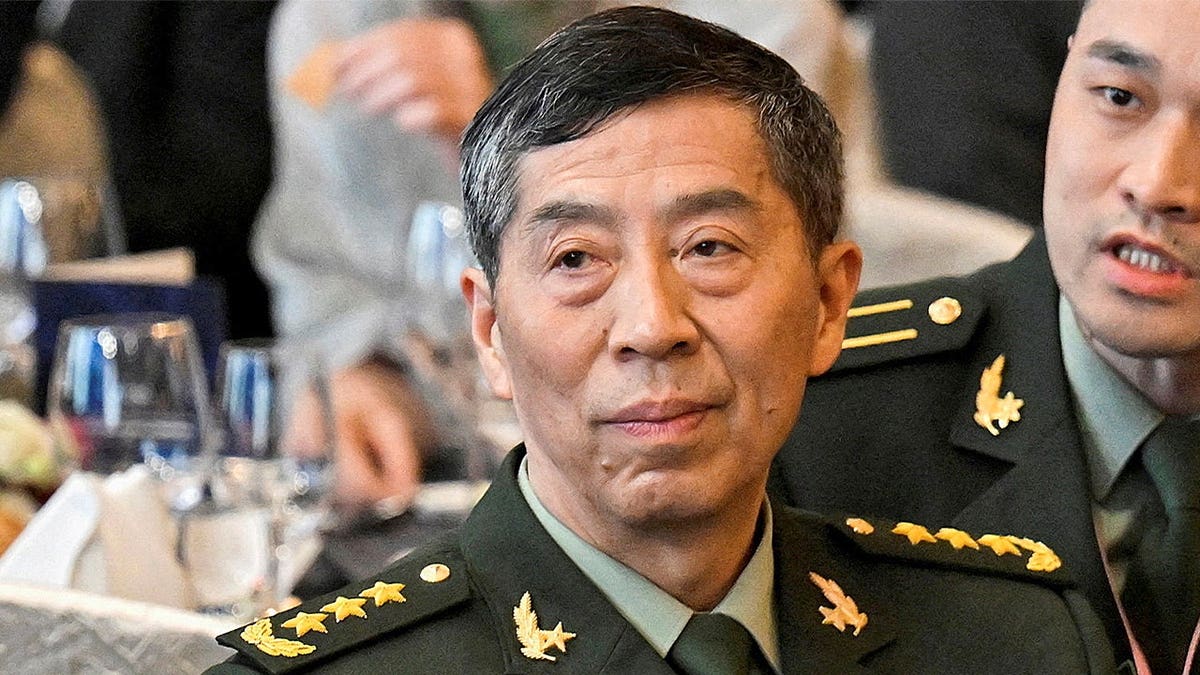
China has sentenced two former defense ministers, Wei Fenghe and Li Shangfu, to death with a two-year reprieve for corruption, marking one of the harshest punishments ever imposed on senior military officials in the country. According to state media cited by Reuters, the pair were convicted by a military court for accepting bribes, with Li also found guilty of offering bribes. Under Chinese law, such suspended death sentences are usually commuted to life imprisonment if the individual does not commit further crimes during the reprieve period.
The ruling reflects President Xi Jinping’s continuing anti-corruption campaign, which has targeted the People’s Liberation Army since he took power in 2012 and intensified in 2023 after investigations reached the Rocket Force and other elite military units. Both men had served in the Central Military Commission and previously led the Rocket Force, a highly strategic branch responsible for China’s nuclear and missile systems. They were expelled from the Communist Party in June 2024 and stripped of political rights for life, with personal property also forfeited.
The article frames the sentencing as both a corruption case and a signal of the breadth of Xi’s military purge. Security analysts quoted in the piece said the penalties are among the most severe levied against CMC members in recent history, while a London-based think tank warned that the ongoing purges could disrupt command structures and potentially affect the readiness of China’s modernizing armed forces.
Entities: Wei Fenghe, Li Shangfu, Xi Jinping, People’s Liberation Army (PLA), People’s Liberation Army Rocket Force • Tone: analytical • Sentiment: negative • Intent: inform
13-05-2026
Morgan Stanley is bullish on Chinese equities over the next 12 months, forecasting moderate upside driven by improving earnings, China’s role in global upstream supply chains, and potential yuan strength against the U.S. dollar. The bank updated its 2Q 2027 targets for major Chinese equity benchmarks, including the Hang Seng, MSCI China, HSCEI, and CSI-300, implying gains of roughly 8% to 12%. Strategists led by Laura Wang argued that China’s stock market offers substantial opportunities at both the single-stock and thematic levels, allowing investors to build targeted portfolios that may outperform peers.
The note highlights several areas Morgan Stanley views favorably: companies with strong technology and innovation capabilities, businesses aligned with China’s 15th Five-Year Plan, and firms capable of expanding their global footprint to help meet energy demand. It also points to catalyst-driven ideas such as U.S.-China summit beneficiaries and Southbound inclusion. The strategists said China’s competitive supply chain gives it an advantage in high-end power and green technology, especially as global attention to energy intensifies amid Middle East conflict. They also expect continued policy support for tech localization in AI, semiconductors, and biotech, reinforced by ongoing U.S.-China competition.
Morgan Stanley further suggested that the upcoming Trump-Xi meeting could produce symbolic policy steps, including selected trade relaxations and renewed talks on fentanyl and climate issues. Overall, the bank believes these developments could modestly lift Chinese indices as investor attention shifts back toward China.
Entities: Morgan Stanley, Laura Wang, Chinese equities, Hang Seng, MSCI China • Tone: analytical • Sentiment: positive • Intent: analyze
13-05-2026
The article examines Kinmen, a Taiwanese island archipelago just 3km from China’s Xiamen, as a symbolic and practical testing ground for Beijing’s long-term reunification strategy toward Taiwan. It describes how Kinmen’s residents live with the contradiction of being governed by Taipei while being economically and geographically tied to the mainland, especially Xiamen. Many islanders, such as taxi driver and tour guide Wu Shan-hua, see closer ties with China as necessary for economic survival because Kinmen has limited opportunities of its own. At the same time, the island’s military past remains visible in beach fortifications and in the memory of decades of shelling and propaganda during the Cold War. The article explains that Beijing has adopted a dual strategy toward Kinmen: offering economic incentives, tourism, and infrastructure access, while also applying pressure through coast guard patrols and other grey-zone tactics. Experts quoted in the piece argue that Kinmen is vulnerable because of its proximity to China and because Beijing sees it as a place where it can gradually erode Taiwan’s autonomy without direct conflict. The article also places Kinmen’s present in historical context, from its settlement and role in the Chinese Civil War to its transformation from a frontline battleground into a contested bridge between two political systems. Throughout, Kinmen is portrayed as a place where reconciliation, coercion, identity, and geopolitics intersect, making it a microcosm of cross-strait tensions and Beijing’s broader reunification ambitions.
Entities: Kinmen, Xiamen, Taipei, Fujian province, Wu Shan-hua • Tone: analytical • Sentiment: neutral • Intent: analyze