13-05-2026
Israeli air strikes in southern Lebanon killed at least 13 people, according to Lebanese state media, as the fragile ceasefire between Israel and Hezbollah continued to fray. Among the dead were two paramedics from Lebanon’s Civil Defense who were killed in Nabatieh while responding to an earlier attack; the Lebanese health ministry accused Israeli forces of deliberately targeting them, while the Israeli military said it was reviewing the reports. Additional strikes reportedly killed civilians in Kfar Dounine, a Syrian man in Tayr Debba, and three more people in Jabshit. Hezbollah said it retaliated with drone and rocket attacks on Israeli troops and communities in northern Israel and southern Lebanon. The article places these events in the broader context of an ongoing war that resumed after a March escalation and notes that both sides have continued attacks despite a US-brokered ceasefire agreement. It also cites the Lebanese health ministry’s claim that more than 2,800 people have been killed in Lebanon since the conflict began, alongside Israeli casualty figures. The story emphasizes the continuing danger to civilians and emergency workers and the ongoing diplomatic efforts, including upcoming talks in Washington, to try to end the fighting.
Entities: Lebanon, Israel, Hezbollah, Nabatieh, Kfar Dounine • Tone: analytical • Sentiment: negative • Intent: inform
13-05-2026
Iran executed a man convicted of armed rebellion on Tuesday, continuing a sharp rise in executions amid heightened conflict with the United States and Israel. The judiciary identified the man as Abdoljalil Shahbakhsh and said he was affiliated with the Sunni militant group Ansar al-Furqan, which operates in Iran’s southeastern Sistan-Baluchestan province. Authorities said he had been involved in armed attacks on police headquarters during the protests that swept Iran in 2022 and 2023 after the death of Mahsa Amini.
The article places this execution in the broader context of Iran’s wider use of capital punishment, noting that rights groups describe Iran as the world’s most prolific executioner after China. It cites a joint report by Iran Human Rights and Together Against the Death Penalty stating that at least 1,639 people were executed in 2025, including 48 women. The piece also reports that since the war with Israel and the United States began, Iran has increased executions, especially in cases linked to alleged espionage and national security.
The article further mentions that on Monday Iran hanged Erfan Shakourzadeh, who had been convicted of allegedly spying for the CIA and Mossad; rights groups said he claimed he was tortured into a false confession. It also references March executions of three men accused of killing police officers during protests, including wrestler Saleh Mohammadi. Overall, the article highlights the intersection of war, repression, and escalating state executions in Iran.
Entities: Iran, Abdoljalil Shahbakhsh, Ansar al-Furqan, Sistan-Baluchestan, Mahsa Amini • Tone: analytical • Sentiment: negative • Intent: inform
13-05-2026
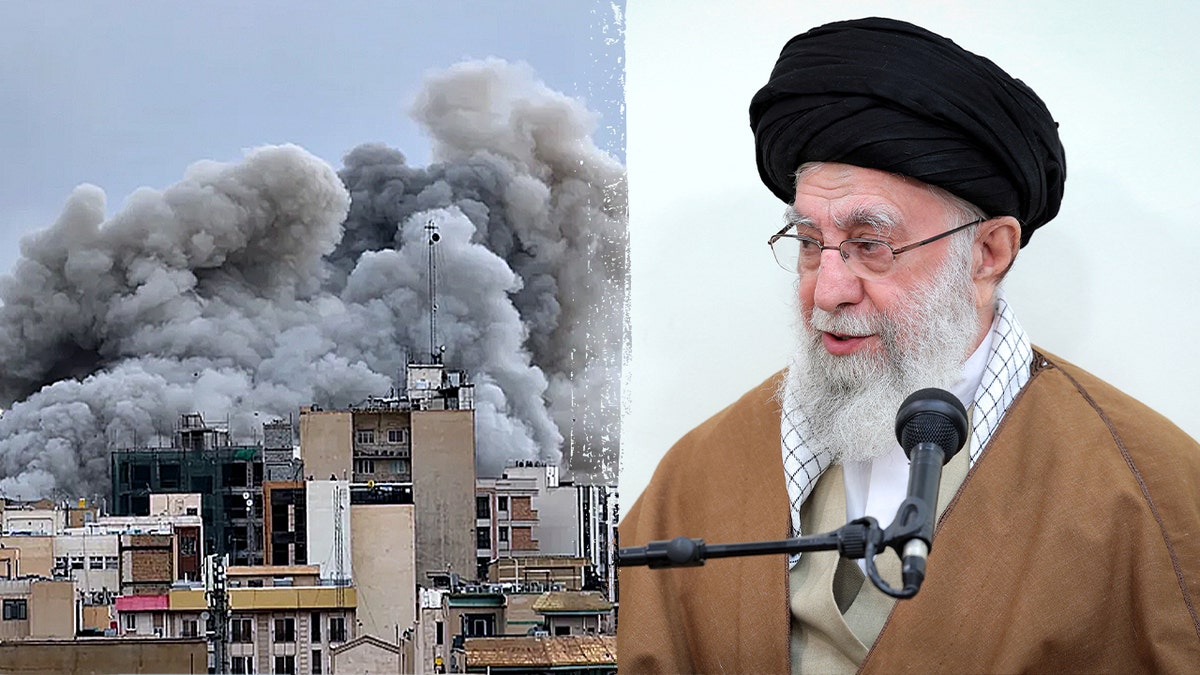
The article argues that the apparent collapse of U.S.-Iran negotiations, combined with military pressure on Iran’s leadership, could trigger an elite escape scenario in which senior regime figures seek refuge abroad, especially in Russia. Citing Middle East expert Saeid Golkar, the piece suggests that top Iranian officials may follow a model similar to Syrian President Bashar al-Assad’s inner circle, fleeing to Moscow if the regime’s situation deteriorates further. Lower-ranking officials, by contrast, might seek shelter in neighboring countries such as Iraq or Afghanistan, where the Islamic Revolutionary Guard Corps (IRGC) has operational ties.
The article places this possibility in the context of a broader crisis inside Iran, describing the regime as destabilized by the death of Supreme Leader Ayatollah Ali Khamenei earlier in 2026 during Operation Epic Fury and the reportedly severe injury or possible death of his son and successor, Mojtaba Khamenei. Golkar says the Iranian state was designed as an “invisible state” or Bayt-e Rahbari to survive leadership decapitation and institutional collapse, but that any high-level flight from the country would be viewed internally as desertion.
The piece also quotes Israeli Prime Minister Benjamin Netanyahu, who told CBS that regime collapse could dismantle Iran’s global proxy network and potentially weaken Hezbollah. Overall, the article frames the current moment as one of uncertainty over Iran’s future leadership, the durability of its governing structure, and the possible outward flight of its power players if the regime begins to unravel.
Entities: Iran, Russia, Syria, Iraq, Afghanistan • Tone: urgent • Sentiment: negative • Intent: inform