13-05-2026
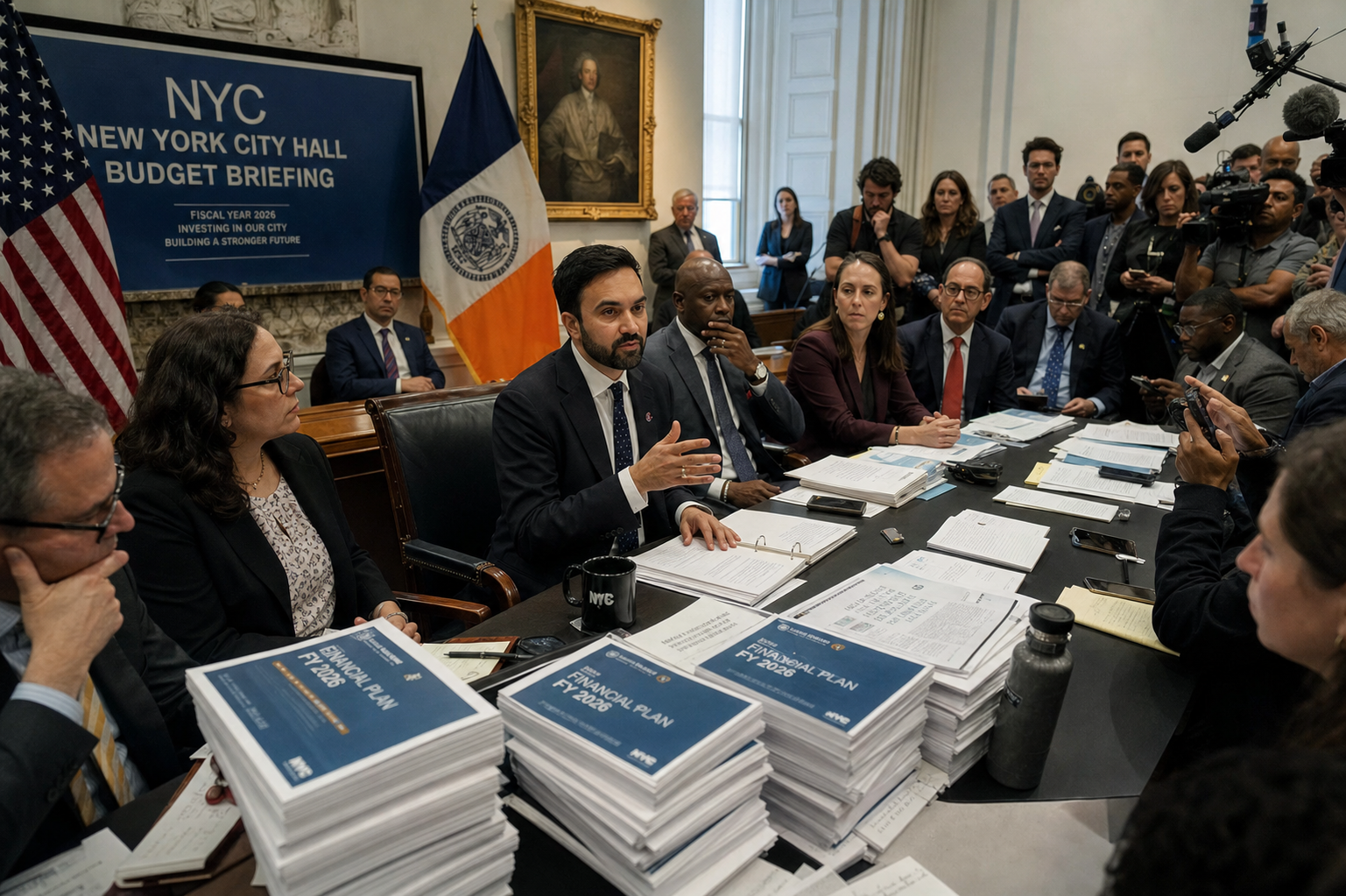
Mayor Zohran Mamdani’s first New York City budget proposal, totaling $124.7 billion, is presented by City Hall as a fiscally responsible plan that closes a multibillion-dollar gap through roughly $1.7 billion in projected savings over two years. But the New York Post article argues that much of the plan’s balance comes from what critics view as “fake savings” and hidden fee hikes rather than durable budget reform. The administration had already abandoned a controversial 9.5% property tax increase, but the article says it still intends to raise money through a wide range of measures that would effectively cost New Yorkers more.
Those measures include increasing ambulance transportation fees, charging for EMS services even when patients are not taken to a hospital, ticketing more vehicles in bus lanes, tightening enforcement and audits in areas such as the trade waste industry, public wholesale markets, and property tax credits like STAR, and hiking fees tied to permits, licenses, and tree replacement. Some of the claimed savings also come from delaying or stretching pension payments, canceling or shrinking programs, and relying on broad, vaguely defined efficiencies in the Department of Education and other agencies. Fiscal watchdogs and political insiders quoted in the piece question whether these changes amount to real savings, warning that the city still depends heavily on one-time measures and short-term accounting maneuvers.
Mamdani defended the budget as evidence of a new era of government that can fund priorities like housing, childcare, libraries, parks, schools, and climate resiliency while cutting waste. However, critics including Comptroller Mark Levine and the Citizens Budget Commission argue that the plan does not fully address the city’s structural deficit and still relies on temporary fixes. The proposal now moves to the City Council for review before the July 1 fiscal year deadline.
Entities: Zohran Mamdani, New York City, City Hall, New York City Council, Mark Levine • Tone: negative • Sentiment: negative • Intent: critique
13-05-2026
Michael Goodwin argues that New York Gov. Kathy Hochul and New York City Mayor Zohran Mamdani are engaging in reckless, politically motivated spending that will deepen the state and city’s fiscal problems while helping Democrats politically. The column frames Hochul’s budget support for Mamdani as vote buying: by channeling billions of dollars to New York City, Hochul is said to be financing Mamdani’s socialist agenda in hopes of securing higher Democratic turnout in her re-election campaign. The piece contends that both leaders are falsely presenting their policies as solutions to New York’s affordability crisis while actually making taxes, borrowing, and long-term debt worse.
The article highlights several examples of what it considers wasteful or inefficient spending, including Mamdani’s proposal for city-owned grocery stores and free city-owned daycare centers, both described as far more expensive than private alternatives. It also cites concerns from city Comptroller Mark Levine that the city’s budget relies on short-term savings and does not address deeper structural deficits. The column argues that budget growth in both City Hall and Albany has become unsustainable, with government expansion contributing to out-migration, declining quality of life, and worsening affordability.
Political implications are central to the piece. Goodwin portrays Hochul’s spending as an attempt to buy votes in New York City to protect statewide Democratic dominance, while suggesting that Republican challenger Bruce Blakeman has a chance to capitalize on voter frustration if he can increase his visibility. The overall message is a sharp condemnation of both officials and a warning that their policies will leave future New Yorkers with higher taxes, heavier debt, and a deteriorating city.
Entities: Kathy Hochul, Zohran Mamdani, New York City, New York State, Gotham • Tone: negative • Sentiment: negative • Intent: critique
13-05-2026
The article argues that Mayor Zohran Mamdani is presenting New York City’s budget situation in a misleadingly optimistic way, portraying recent state and city actions as a solution to a crisis that was foreseeable and not truly resolved. The authors contend that Mamdani claims to have “uncovered” a budget deficit even though warnings about the city’s fiscal problems had been circulating for months, and they criticize him for avoiding meaningful spending cuts or structural reforms. Instead, they say he relied on state assistance from Gov. Kathy Hochul and lawmakers, along with delayed pension-debt payments and other accounting maneuvers, to make the budget appear balanced.
The piece argues that several of the city’s supposed savings are either uncertain or temporary: revenues may not materialize as expected, overtime and service efficiencies may not be realized, and pension changes simply push costs into the future. The authors also criticize Mamdani for supporting the class-size mandate despite declining enrollment, saying the Department of Education needs consolidation rather than more spending. They frame the budget relief as a kind of bailout built on gimmicks rather than disciplined management.
Overall, the article portrays Mamdani as unwilling to confront structural spending problems and warns that relying on one-time fixes and state support will leave the city with even larger expenses later. The authors conclude that if he continues to avoid difficult fiscal choices, he will eventually be forced to confront austerity under much worse circumstances.
Entities: Zohran Mamdani, Kathy Hochul, Tom DiNapoli, New York City, Albany • Tone: negative • Sentiment: negative • Intent: critique