08-09-2026
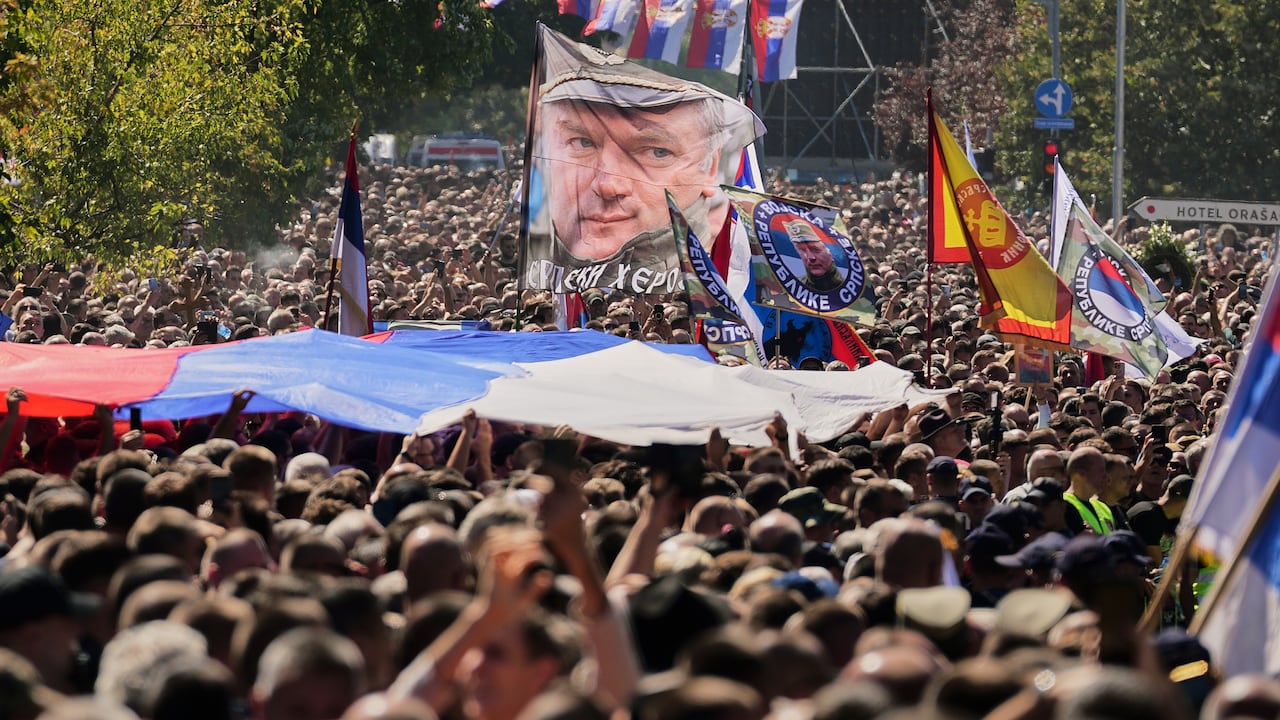
European Union leaders sharply criticized Serbia after Ratko Mladic, the former Bosnian Serb military commander convicted of genocide and other war crimes, was buried in Belgrade with military honours. Mladic died while serving a life sentence and remains a hero to many Serbs, despite his role in the 1995 Srebrenica massacre, in which approximately 8,000 Bosniak Muslim men and boys were killed, and the 43-month siege of Sarajevo, during which about 10,000 people died.
European Commission President Ursula von der Leyen and European Council President Antonio Costa described images from the funeral as “shocking.” They condemned the presence of senior Serbian officials and said the event demonstrated Serbia’s failure to confront its wartime past and contradicted the values expected of countries seeking EU membership. The European Commission has not yet said what consequences the funeral could have for Serbia’s accession bid.
Serbian President Aleksandar Vucic did not attend, but his son Danilo did. Justice Minister Nenad Vujic was also present, while Bosnian Serb nationalist leader Milorad Dodik and Russia’s ambassador to Serbia attended. Vucic characterized the funeral as an “emotional outpouring” as he tries to maintain support among nationalist voters ahead of a possible early parliamentary election while preserving Serbia’s relationship with the EU.
Britain separately summoned Serbia’s charge d’affaires, saying the involvement of state and military officials and the glorification of Mladic undermined reconciliation and stability in the Western Balkans. EU Enlargement Commissioner Marta Kos cancelled a planned visit to Serbia after warning that the funeral would test Belgrade’s commitment to European values.
The controversy comes before the EU’s annual enlargement report and adds to existing concerns about democratic backsliding, election irregularities and Serbia’s nationalist politics. Serbia could face restrictions on access to roughly €1.5 billion in EU funds. The article also highlights criticism of the European People’s Party, which maintains close ties with Vucic’s SNS party and has been accused of shielding his government from stronger scrutiny.
Entities: Serbia, European Union, Ratko Mladic, Ursula von der Leyen, Antonio Costa • Tone: analytical • Sentiment: negative • Intent: inform
08-09-2026
The article examines the political and social consequences of Ratko Mladic’s funeral in Serbia. Mladic, the former commander of the Bosnian Serb army, was convicted of genocide, war crimes and crimes against humanity, including responsibility for the 1995 Srebrenica massacre. Although Serbia formally denied organizing a state funeral, the participation of the justice minister, military honors, state-controlled venues and the presence of senior political figures conveyed official tolerance, if not outright support, for his glorification.
The funeral deepened existing divisions in Bosnia and Herzegovina. Republika Srpska, the country’s Serb-majority entity, mourned Mladic and promoted narratives portraying him as a defender of Serbs and international courts as unjust. In contrast, Sarajevo and the Federation of Bosnia and Herzegovina condemned the ceremony as a relativization of war crimes. Foreign Minister Elmedin Konakovic announced that most staff would be withdrawn from Bosnia’s embassy in Belgrade, while Presidency Chair Denis Becirovic called the event an “anti-civilizational act.”
The article argues that Mladic’s death has become a tool for political mobilization ahead of elections in both Serbia and Bosnia and Herzegovina. Nationalist politicians on all sides can use support for, or condemnation of, Mladic to appeal to their respective electorates. Political analyst Tanja Topic blames entrenched political elites for failing to confront the region’s wartime past and says the funeral reinforces a cycle in which ethnic groups exploit each other’s reactions.
The Office of the High Representative warned that glorifying convicted war criminals and denying genocide undermines reconciliation. Rather than closing a chapter, the funeral has reopened unresolved historical and ethnic tensions, frozen relations between Bosnia and Serbia, weakened prospects for European Union accession and imposed further costs on ordinary citizens and victims’ families.
Entities: Ratko Mladic, Bosnia and Herzegovina, Serbia, Republika Srpska, Sarajevo • Tone: analytical • Sentiment: negative • Intent: analyze
08-09-2026
Bosnia has expelled two Serbian embassy diplomats and suspended plans to sign a regional cooperation agreement in protest over Serbia’s handling of the funeral of former Bosnian Serb General Ratko Mladic. Mladic died on August 27 in The Hague while serving a life sentence for genocide, war crimes and crimes against humanity committed during the Bosnian war, including the siege of Sarajevo and the 1995 Srebrenica massacre, in which at least 8,000 Muslims were killed.
Thousands attended Mladic’s lavish public funeral in Belgrade, underscoring his continued status as a revered figure among many people in Serbia and Bosnia’s autonomous Serb Republic. The ceremony was attended by Serbian government officials and led by the head of Serbia’s Orthodox Church. Bosnia’s Foreign Minister Elmedin Konakovic ordered military attache Milan Dulanovic and intelligence adviser Danko Maksimovic to leave Bosnia within 48 hours, although he did not provide further details about the expulsions.
Konakovic also said Bosnia would not sign a memorandum on good-neighbourly relations and cooperation among Western Balkan countries, scheduled for October 1 in Montenegro. He said Serbia had “crossed all red lines” through its response to Mladic’s death and funeral. Bosnia had already announced plans to withdraw most of its embassy staff from Belgrade.
The dispute was intensified by the display of a huge image of Mladic at a Belgrade football match, showing him pointing toward Potocari, the site of the Srebrenica massacre. European Commission President Ursula von der Leyen called the funeral imagery “shocking,” criticized the participation of senior Serbian officials, and warned that Serbia’s failure to confront its wartime past could damage its aspirations to join the European Union.
Entities: Bosnia, Serbia, Ratko Mladic, Elmedin Konakovic, Milan Dulanovic • Tone: analytical • Sentiment: negative • Intent: inform