08-09-2026
Kenya has introduced a temporary amnesty for undocumented East African migrants following growing anxiety over the status of foreign nationals working in the country. The measure applies during a designated registration period, when migrants are being urged to formally register at their respective embassies. The government says anyone undergoing registration will be presumed to be legally present in Kenya, providing temporary protection from immigration-related enforcement while documentation is processed.
Authorities have also instructed security agencies and local officials not to subject foreign nationals to arbitrary harassment or discrimination. The announcement appears intended to reduce fears sparked by remarks from President William Ruto the previous week. Ruto had ordered foreign-owned small businesses to close by Monday, arguing that Kenya had not built investor confidence for hawkers.
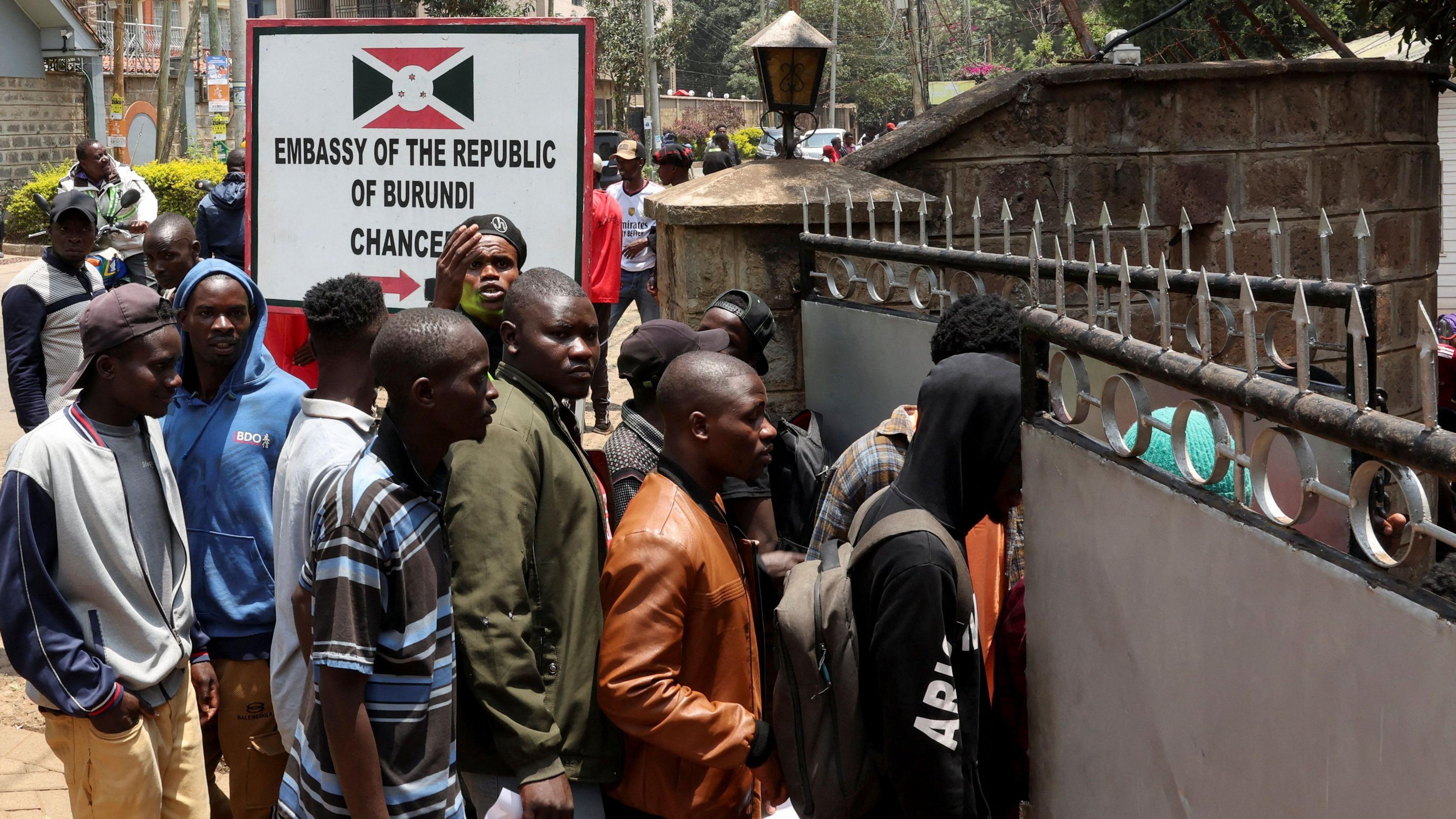
His comments particularly alarmed Burundians who earn a living through street vending in Nairobi. Many feared they would be forced to leave the country and rushed to obtain documents and make arrangements to return to Burundi. At the Burundi embassy, large crowds waited for hours with brown envelopes containing paperwork, while suitcases and plastic bags accumulated around the compound as migrants prepared for possible departure.
The temporary amnesty and assurances against harassment have eased some of those concerns. However, the situation highlights the vulnerability of undocumented East African migrants and informal foreign-owned businesses in Kenya, whose ability to remain and work depends on government registration policies and enforcement decisions.
Entities: Kenya, East African migrants, William Ruto, Nairobi, Burundi • Tone: neutral • Sentiment: negative • Intent: inform
08-09-2026
Hundreds of Burundians in Kenya sought travel documents at the Burundi embassy in Nairobi after President William Ruto ordered foreign-owned small businesses to close. Ruto gave foreign operators until Monday to shut down, arguing that Kenya had not built investor confidence for hawkers. The directive alarmed many migrants, especially Burundians who depend on street vending and other small businesses for their livelihoods.
Crowds gathered outside the embassy carrying brown envelopes, suitcases, and plastic bags as some prepared to return to Burundi. Several Burundians described the situation as abrupt and hostile. Pastor Jean-Baptiste Ndayizeye said neighbours had been attacked and robbed, although AFP could not independently verify those claims. He compared the events with xenophobic violence in South Africa. Another Burundian, Eric Bizimana, said he had never obtained a work permit because of its high cost. A Kenyan motorcycle taxi driver, Philemon Jaika Adamba, said the departing Burundians were saddened and that the treatment was unfair.
The dispute has regional significance because Kenya and Burundi are members of the East African Community, whose citizens benefit from freedom of movement. Burundi’s Foreign Minister Edouard Bizimana condemned alleged violence against foreigners and said the Kenyan government was responsible for protecting Burundians. He also warned that allowing civilians to carry out police functions could encourage violence, looting, and xenophobia.
Kenya’s junior foreign minister, Korir Sing’Oei, visited the embassy, apologised, and promised police protection in areas where violence had been reported. He said Ruto’s remarks had been misunderstood and that authorities primarily wanted to verify migrants’ identities, locations, and business registrations. Government spokesperson Charles Owino said Kenya had opened a formal documentation and registration process, acknowledging that some East African nationals, including Burundians, live and work in the country without complete documentation.
Entities: William Ruto, Burundians in Kenya, Nairobi, Burundi embassy, Kenya • Tone: analytical • Sentiment: negative • Intent: inform
08-09-2026
Kenya has announced a process to register undocumented Burundians and other East Africans living in the country, following anxiety and reports of hostility after President William Ruto ordered foreigners operating small-scale businesses to stop working. The directive set a deadline for Monday and followed claims by Kenya’s trade ministry that some foreign nationals were exploiting visa rules to work without the required permits.
The announcement prompted hundreds of Burundians in Nairobi to queue at their embassy for free emergency travel documents, while others tried to buy bus tickets or leave with their possessions. Some said they could not afford the cost of returning home and appealed for more time. Kenya’s government has since sought to clarify that there is no blanket ban on foreign traders. Government spokesperson Charles Owino said undocumented people should register through their embassies or high commissions and would be presumed to be legally present while their cases were processed.
A subsequent government statement gave foreign nationals 90 days to regularise their immigration status, work permits, business registrations and licences. It also warned that authorities would enforce the requirements after the deadline, but said implementation would be fair and non-discriminatory. The government condemned harassment and intimidation, while senior foreign affairs official Korir Sing’oei apologised to Burundians and promised increased security in areas where they live.
The dispute has caused diplomatic concern. Burundi’s foreign affairs minister, Edouard Bizimana, warned that continued anti-Burundian hate speech could affect how Kenyans living in Burundi are treated. He raised the issue with the East African Community, of which both countries are members. Leaders of the Burundian community in Kenya warned that the crackdown could have wider regional consequences because Kenyans also work in small-scale businesses across East Africa.
Kenya hosts hundreds of thousands of migrants from the region, including about 16,000 Burundian refugees and asylum seekers, although the number involved in small-scale trading is unknown. Ruto says Kenya remains open to foreign investment but wants investors to create jobs rather than compete with Kenyans in hawking and small shops. Critics say the policy risks fuelling xenophobia, an accusation the government denies.
Entities: Kenya, Burundi, Nairobi, President William Ruto, Charles Owino • Tone: analytical • Sentiment: negative • Intent: inform
08-09-2026
Kenya is tightening enforcement against foreign nationals operating small informal businesses, following President William Ruto’s call for hawking and petty retail to be primarily reserved for Kenyan citizens. Ruto argues that foreign traders competing in low-capital businesses undermine local economic opportunities and says Kenya should instead prioritize investors who bring capital, create jobs, and support domestic production. The government has indicated that enforcement would target unlicensed traders, while legally registered businesses and foreign nationals with valid work permits and licenses are supposed to remain protected.
The policy has prompted mixed reactions. Some Kenyans support the crackdown, saying unemployment is high and foreign workers may accept lower wages. Others support enforcement of immigration and licensing rules but oppose expelling foreigners, warning that a broad campaign could damage Kenya’s reputation and deter investment. Political economist Sheila Owigo Olang questions whether removing foreign traders would meaningfully create jobs for Kenyans, describing the policy as potentially populist and especially convenient ahead of elections. She argues that Kenya should focus instead on corruption and improving its business environment.
The article places the crackdown within a wider effort to expand local participation in the economy. The proposed Local Content Bill 2025 would require covered foreign companies to source at least 60% of certain goods and services locally and employ at least 80% Kenyan citizens. However, experts note that such measures may not address the deeper causes of youth unemployment and underemployment.
The scope and legality of the crackdown remain unclear. The government has not published a definitive list of affected businesses, and the policy may intersect with East African Community rules allowing regional citizens to move and provide services, subject to national regulations. Kenya’s actions are also being compared with anti-immigrant campaigns in South Africa, although the article notes that Kenya has not yet experienced violence on the same scale. Overall, the article presents the policy as an economically and politically sensitive measure that risks fueling xenophobia while attempting to respond to legitimate concerns about local employment.
Entities: Kenya, President William Ruto, Sheila Owigo Olang, Abraham Korir Sing’oei, Nairobi • Tone: analytical • Sentiment: neutral • Intent: analyze
08-09-2026
Hundreds of Burundians gathered at their embassy in Nairobi on September 8 to obtain travel documents and return home, despite Kenya’s announcement of a 90-day amnesty for undocumented East African nationals. The Burundians said they feared violence and harassment after Kenyan President William Ruto instructed authorities to shut down small-scale businesses operated by foreign traders, arguing that such work should be reserved for Kenyans.
Kenya’s presidency later clarified that registered foreigners would continue to have the right to work in other sectors, while undocumented residents would have 90 days to regularise their status. Presidency spokesperson Hussein Mohamed also warned that enforcement operations would begin after the amnesty period and said the government would not tolerate xenophobia, discrimination, lawlessness or violence against foreign nationals.
The assurances did little to ease the concerns of many Burundians at the embassy. Motorcycle taxi driver Habonimana Jacques said the president had treated them as if they were not human and argued that the amnesty appeared to have been announced only as an afterthought. He also said many Kenyans were already harassing Burundians. Second-hand clothes seller Eric Niyonkur said the community felt unwanted and that it was time to return home. He reported that some people had spent two nights camped outside the embassy without food.
Ugandan media also reported that Ugandans in Kenya were returning across the border, although Reuters could not independently verify that account. The United Nations refugee agency estimates that about 16,000 Burundian refugees and asylum seekers live in Kenya, many of them working in Nairobi’s small-scale trading sector. Critics of Ruto’s immigration crackdown say he is blaming foreigners for Kenya’s economic problems ahead of an expected re-election campaign next year.
Entities: Burundians in Kenya, Nairobi, Kenya, Burundi Embassy in Nairobi, William Ruto • Tone: neutral • Sentiment: negative • Intent: inform