08-09-2026
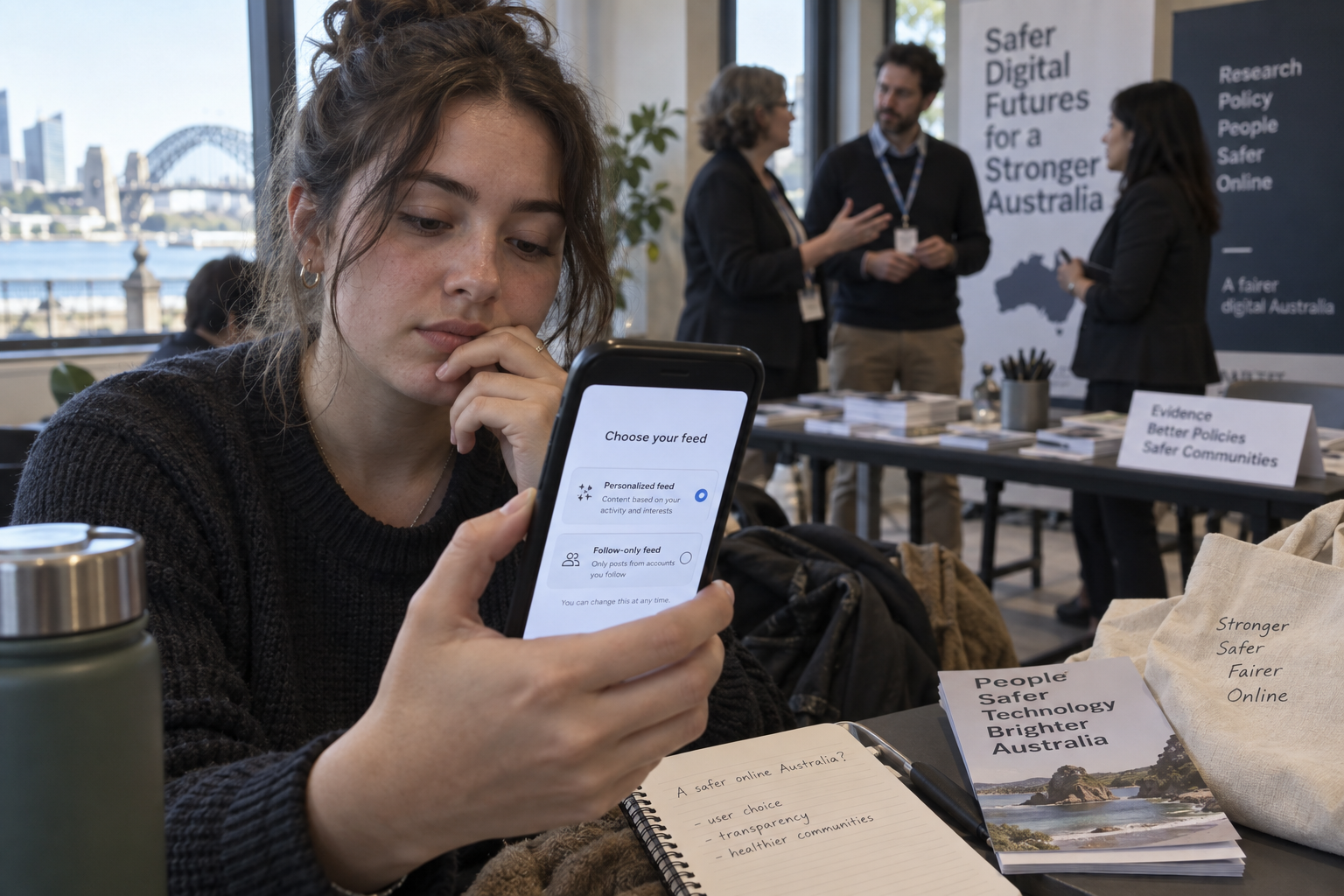
Australia’s government plans to require social media companies to offer users aged 16 and over a choice between algorithmically personalized feeds and feeds limited to posts from accounts they deliberately follow. The proposed “My Feed, My Way” legislation would require platforms to notify new and existing users about the choice and allow them to select their default feed. Companies that fail to comply could face penalties of up to 109.2 million Australian dollars, or about $79 million.
Prime Minister Anthony Albanese said the measure is intended to return control to users rather than give the government control over online platforms. The legislation, which is being released for targeted consultation and is expected to be introduced to Parliament later this year, would also require AI chatbots, online games and other digital services to address addictive design features affecting people under 18.
The article notes that several major platforms already provide versions of non-algorithmic feeds, including Facebook’s friends-only feed, Instagram’s Following and Favorites feeds, YouTube’s Subscriptions feed, TikTok’s Friends tab and Snapchat’s separation of friends’ Stories from public content.
The proposal follows Australia’s introduction of a ban on social media access for children under 16, a policy that has received mixed feedback. Government data found that 81% of Australian children were still using at least one age-restricted platform three months after the ban, compared with 86% beforehand. Daily or more frequent use declined only slightly, from about 60% to 58%.
The policy also comes amid increasing legal pressure on technology companies. Meta agreed to an $18 billion settlement in a U.S. social media harms trial and has faced other cases involving alleged addictive platform features and child-safety violations. The broader trend suggests governments and regulators are increasingly targeting algorithmic recommendations, youth safety and addictive online design.
Entities: Australia, Anthony Albanese, My Feed, My Way initiative, algorithm-based social media feeds, Parliament of Australia • Tone: analytical • Sentiment: neutral • Intent: inform
08-09-2026
The Australian government has announced draft legislation that would give social media users greater control over how content appears in their feeds. Under the proposed “My Feed, My Way” initiative, major platforms such as Facebook, TikTok and Instagram would be required to let users disable algorithmically recommended content. Users who opt out would see posts only from accounts they have chosen to follow.
Prime Minister Anthony Albanese said the measure would impose a “duty of care” on large social media companies while emphasizing that it was intended to give control to users rather than the government. The legislation is expected to be introduced to Parliament later this year and is likely to pass. Companies that fail to comply could face fines of up to AU$100 million, equivalent to approximately $72 million or €62 million.
Communications Minister Anika Wells said the policy would also contribute to protecting children online. Australia became the first country to restrict social media access for people under 16 in 2025. Germany, Spain, France, Denmark and New Zealand have since followed or begun developing similar age restrictions.
The government’s broader regulatory approach faces opposition from some technology companies, which argue that strict age limits and related regulations could push young users toward less regulated online spaces. The algorithm opt-out plan also faces opposition from within Australia’s ruling coalition. Overall, the proposal represents a significant attempt to regulate the way large platforms recommend content and to shift control over social media feeds from companies toward individual users.
Entities: Australia, My Feed, My Way initiative, Anthony Albanese, Anika Wells, Australian Parliament • Tone: analytical • Sentiment: neutral • Intent: inform
08-09-2026
Australia’s government has announced proposed legislation that would give social media users aged 16 and older more control over the content displayed in their feeds. Platforms would have to notify both new and existing users that they can choose between a personalized default feed driven by recommendation algorithms and a feed containing posts from friends and creators they have selected to follow. Prime Minister Anthony Albanese described the measure as providing “genuine and enduring choice” while increasing accountability for major technology companies.
The proposed Digital Duty of Care legislation would also require social media platforms to protect children from content promoting eating disorders, hostility toward women, pornography, crime, dangerous stunts and material that could cause serious mental-health distress. Online games, apps and artificial-intelligence chatbots would similarly have to address design features that may negatively affect children’s behavior, including addictive mechanisms and features that damage self-esteem.
The proposal follows Australia’s introduction of what the article describes as world-first laws in December that prohibit children under 16 from holding accounts on major platforms such as Instagram, Facebook and TikTok. Albanese said companies that fail to comply with the new requirements could face significant penalties of up to 109.2 million Australian dollars, or approximately $78.6 million.
The government’s announcement comes amid scrutiny from Australia’s online safety watchdog. In April, the regulator said it was considering court action against Facebook, Instagram, Snapchat, TikTok and YouTube, alleging that they had not done enough to prevent children under 16 from using their services. The proposed rules therefore combine greater user control over algorithmic recommendations with broader online-safety obligations for children and the technology companies serving them.
Entities: Australia, Canberra, Anthony Albanese, Australian government, Digital Duty of Care legislation • Tone: analytical • Sentiment: neutral • Intent: inform
08-09-2026
Australia has introduced a draft Digital Duty of Care Bill that would require social media platforms to let users opt out of algorithmically selected content. Platforms including Facebook, Instagram and TikTok would have to display a pop-up giving users this choice, with companies facing fines of up to A$109 million (S$99.6 million) for non-compliance. Users who opt out would generally see posts from friends and accounts they follow rather than personalized algorithmic recommendations.
The proposal is intended to reduce exposure to misinformation, extremist material, sexually explicit content, scams, deepfakes, grooming and content harmful to body image. The bill would also require companies operating AI chatbots, search engines, applications and social media services to protect people under 18 from harms such as bullying, eating-disorder content, misogynistic material and content glorifying crime.
Experts described the legislation as an important and overdue step, although most said an opt-in system—where algorithmic feeds were not the default—would have been more effective. They also warned that users may not take advantage of the option because social media platforms encourage passive consumption and make personalized feeds habitual. Platforms could also attempt to make the opt-out feature difficult to find, as some analysts say companies did under a comparable European Union policy introduced in 2023.
Supporters believe the measure could reduce social-media addiction and limit advertising revenues by decreasing the time users spend on platforms. However, the government faces likely resistance from technology companies and possible tensions with the United States because many affected firms are American. Prime Minister Anthony Albanese defended the proposal as a way to transfer power from global technology companies to Australians. An academic recommended independent oversight and a public education campaign so users understand and exercise their new control.
Entities: Australia, Digital Duty of Care Bill, Social media algorithms, Online safety, Facebook • Tone: analytical • Sentiment: neutral • Intent: inform